Translate

A CLUB OF SUPERNAL INTERESTS Christian Esotericism, Spiritual Science, Esoteric Christianity - All Authored by a Lodge of Christian Teachers (unless otherwise stated.) (All writings copyright) ©

Friday, August 20, 2010

Men, Women & God- 19th January 1996

Question:
Dear Teachers,
I have been reading a book which is about ways that a woman may learn to act out from her instinctual nature, her intuitive knowledge and her soul-self, and this is achieved with the study of certain stories that bring soul-pictures and understandings back into our beings, helping us to draw upon an inherent and noble strength (Christos?) within.
My questions are: What do you think of this, and furthermore how is it in relation to men and their ways of perception and knowing? Can men deepen themselves similarly and search their psyche for a deeper intuitive way of living? Do the paths differ for men as for women? Is there a preferred emphasis you suggest upon either?


WHILE it is that men view the world from the outside in, women tend to perceive it contrariwise, peering from the inside out. Man finds himself in the world at large, he gathers, he wins, he attacks, he must search, and he shall do this in conference all the while with that part of the self which maintains the inner reside.


Women must find their world through meaning - meanings which are implied rather than actuated. Suggestions of life sustain all life beginnings, and this is where the woman can be - she goes before and she goes after and she brings completion. She does not search for herself in the woody recesses or watery passes, for her 'sense' of time and place belong in the soul regions, which she must pass the gate before every thought, every care and deed accomplished. 


She brings the warmth to the flame, whilst he brings the light.


Oh pierced now, this unlit space,
With soldier force and brazen flame,
You contrast me as night does day.

So it is that the man has an opportunity to enter into his perceptions in that incarnation of manliness, with a purpose and a continuity which is not shared alike with that of the female incarnation. Whilst it is that the soul and the spirit of Man are amphimorous, they are characteristically female and male also - just as all odd numbers are masculine, and even numbers are feminine; the number one (that number of Father God Himself ) contrasts the duality of soul in which we know consciousness and come to know all others.

There are the two ponds of sight: one in where the foot is caught and held by weeds, the other to where we drown completely - that in men they are held and fixed to the specifics that they envision, whilst in womanly aspect we are immersed in the whole - the entire panorama does take us with its 'overallness'.


  • Aspect - Male
  • Patronage – Female
  • Time, in increment and divisioning – Male
  • Continuum - Female

The question brings rise to a state whereby a man may act out of such a meditative preliminary that he may access the higher knowing; both of his own and the corporate knowing of all men and of Christ. Of course this is possible, for in isolation man would be a sorry creature of intellect only, and whilst intellect canvasses the graph, it is not of itself, the conforming and non-conforming structures within.

When a man references God, Father God, he must travel past himself, negotiate the opinions and fixations of all others as well, that he may come further to the truth of that which preoccupies him. He is removed, that he may return. He can then be decisive, and decisive objectively.

When a woman references God, same God but that of His Holy and Quickening Spirit, she travels within herself and then hones in all the closer, ever closer to that which she must understand. She is neither removed nor temporarily static by nature, but impelled to search out the very nature and spirit of that which concerns her. In this we find that the ponds are transversed - women are then held by the particular (the male aspect of their knowing), whilst the men are given to the overall picture (the female aspect of their knowing).

To feel sure-footed, to be equipped, to feel firm within the world with a 'soundness' of reasoning, a deliberate purpose and a kindly nature which consummates in kind, means that we may meet with all living beings in the spirit so given in the original Paradise. We are humbled before life and marvel at its tenacity. We are neither blocked nor confused, but rather clear, detailed and divine.

This is so and not so when it comes to a man's most ordinary life. For it is that we often do not have such soundness to qualify our reasoning - our ground beneath is hesitantly trod, our kindness has withdrawn from our offering; for we are tight-bound with fear, fear of such uncertainties that feature in this our life.

So men (and men it is in particular) may be convened by daunting uncertainties which inhibit and restrict and cripple the pathway to God. The fears and offspring of anxiety are translated into activity, i.e. work or collapse. However, it is but a side-step to resolve, to exchange occupation for preoccupation. And it was that many great cathedrals were built in this manner - momentous works set about and made real, all by men who were fraught with such inner dilemmas which made them worldly productive.

For the women who are so taken by self uncertainty and conflicts of soul and self, the response and result can be quite different. 'Busyness' can step in and take over, without the great achievement that a man who is removed from Father God is caused to create. But when a woman is removed from the spirit and nature (of herself and of those things around her), she has all the flurry and disquiet of the ever-moving Spirit, but not the containment necessary to make perfect the moment or the situation.

The problems which ensue become more obvious and compounding in time. She will give rise to details which though highlighted are unimportant - unimportant to her in reality and to that which she endeavors to do. In other words, she, having temporarily lost her way inward to the connections with life-spirit to matters before her, becomes fixated with the inanimate and uninspired bearings that press into her consciousness with ferocity which the Holy Spirit drives.


Eventually, should a man 'work himself to death' (i.e. creativity over-bounds, but has not referred to God for resolution and is problem driven to the extreme, that Father God shall take him) he will enter into the Heavens carrying those worldly perplexes, and these may carry over and affect his bodily substance in future incarnations.

This is why it is to good reason that a man may cease his greater activity towards the end of his life and give over to 'finding God' in the quiet. To the extreme however, we may find that men who are peaceable and content with their relationship to Him may suffer a lethargy (no worldly enterprise), and this in the young is inappropriate to life. Ironically this too will weaken the future bodies of men as there are always the two forces implied in existence: that of sustaining and that of creating.

Our worldly activity does invoke and incorporate heavenly response, forces which are drawn upon and called upon only by our very actions here within the physical realm. In this way worldly activity is paramount to heavenliness. The soul of man does know this as it is his answer to remedy the feeling of lack of soul-life within himself. That his soul aspect is not insinuated causes the aggravation which entitles the work. He is driven by lack of, more often that not.

Yet! What should arise should a man come to both? That he is productive and active working out from such certainties which only Father God may maintain. It becomes then not so much a matter for the physical gestures within his time, moreover he begins to build his towering forms of creativity within the spiritual hemispheres: our future world.


What merit has esoteric thought for a man to become so ever effectual? Often this is deliberated, and not only amongst the novices who are understandably confused and mistrustful of its leadings. One may well wonder why we should cross kingdoms with our comprehension and come to study those unseen things, that some would maintain God Himself has kept secret from us. Argument comes also maintaining that loyalty to Christ is quite enough to bring us into a future of being. But we must add to this that it was Christ Himself that created the associated kingdoms, and though it is that Man is deft to some degree, he is also, comparatively speaking, immature and inexperienced. In time, as experience comes to him, he shall find that what was formerly unseen and held to be mysterious, is but as natural and as normal as what he now may encompass and accept.

Both men and women may learn to return to the quiet in order that they may confer with our Father God and therefore become with such intuition as is His. That a man may travel outwards from himself and the woman inwardly in search so also, our higher natures require a kindness and forgiveness of self. For no amount of quiet may be maintained in the chaos of self-contempt. 

Whether it be a vanity or a matter of conscience, there are persistent self-doubts which do verily wear away at a man to no good effect. We may gauge the valueless self-doubts from the useful self cautions by way of asking: do they strengthen or weaken, do they enhance or degrade, do they uplift or deflate?

The saints were not brought into personal and consuming sorrow because of their guilts and repentance. To this end the saints were joyous. When they did cry it was not for themselves but for the stragglers who were then bound for Hell. In ecstasy they would cry also, but this being an expression of mute adoration and the conjoining with Spirit as it touched their soul-mind.

Where are the examples of the textbook morality? In adult consciousness there are none so adapted as to be carefree and guiltless. However, (and this we say with emphasis) know your own sins and you know the world also. Know of them, rather than ignore them, but keep them housed with a tender compassion. Do not engage with overfeeding a self-doubt, for this only brings vitality to the very thought-forms so related.
We need to remember that the elemental thought-beings which comprise our personal atmosphere, enjoy upset as is remonstrated, and do encourage it, rather than peace. For in peacefulness there is no vitality to feed these accompanying creatures and they will moan all the more begging attention; for a time.

Truly a man, or woman, may well weigh all within their heart as the moment requires. The true conscience cannot ever be set ahead of time, for it is an active conference alongside the issues of the moment. Men must come to know for themselves, but also and more importantly, to rely on the proper means of this knowing, for no longer may exterial rules carry through with reliable compliance. There are many 'good' men who are dying from the less obvious sins which atrophy the heart.

Our highermost instinctual selves become presently known when we may manifest a likeness in active love. Such love may be witnessed in a concern for another, a true study for the study's sake, or in periods of deep empathy or communion when we are also encompassed by those angelic beings who bring light to the consciousness and then help to guide our worldly maneuvers and transactions.

Angelic influence such as this, does not bring monetary wealth to a man (as is often hoped), for money in itself does not appear tangibly within the associated spiritual realms. They bring to Man the causeways and the opportunities, the clear runs through, dictated by his desires then made enlivened. By desire it is meant "that which seeks, and promotes a man to go beyond himself, by the nature of that seeking". This is what desire is.

Desire furthers that which is. Desires target outcomes. Man then learns to discern the most 'desirable' outcome to infill his desire so invested in. There are lesser and greater desires. Beyond the greater, there are those which are sublime for which we hold an intrinsic understanding:
  • Desire to know God
  • Desire to be God
  • Desire to live (active)
  • Desire to thrive (aspire)
  • Desire to be (passive)
  • Desire to conform (the great laws which contain us)
  • Desire to maintain (Godly concern)
  • Desire to commute (to travel out)
  • Desire to arrive (to fulfill future, to grapple thought)
  • Desire to know
  • Desire to cease aloneness
  • Desire to excel
  • Desire to desire
  • Desire to be worthy (of God's love)
  • Desire to be worthy (for existence)
  • Desire to create (and procreate)
  • Desire to make known (to be seen to be tangible)
  • Desire to fulfill (others)
  • Desire to invoke love
  • Desire to invoke beauty
  • Desire to invoke chaos
  • Desire to empower self
  • Desire to contain self
  • Desire to empower God (and Christ)
  • Desire to contain God (and Christ)
  • Desire to incorporate the World
  • Desire to incorporate all men
  • Desire to promote unity
  • Desire 'Godsight' - divine interpretation (intuitive divination)
  • Desire for aptitude
  • Desire for potency and commensurate strength
  • Desire for surety and guarantee (universally given)
  • Desire for furtherance (for self and for others)
  • Desire for deliverance (for self and for others)
  • Desire for continuance (for self and for others)
Amen

These basic and inherent desires when thought of, shall help retrieve our personal sense of likeness to God, just as prayers and hymns which invoke elements of these, also may bring us both outwardly and inwardly to that primordial self which is independent of the worldly glamor. (Glamor in this context implies: garment of magical presentation - the glamor is an attractive facade, but facade nonetheless.)

We may couple those things on our table so given, after having worked through a primary contemplation, as each one may be added to all else and meditated upon in dual relation.

This avoids the vitality going out into specifics, and yet does make for potent reckoning, bringing impulse afresh to the very specifics we may target in our day to day life. It is important to bring the lively forces into those desires within our beings, because often as not the specifics if solely characterized, do not answer these needs, whereas the fundamental desires as inherited, stimulate the future in Man for all men and women alike.


Thursday, August 19, 2010

The Miracles Translated- 14th December 1995

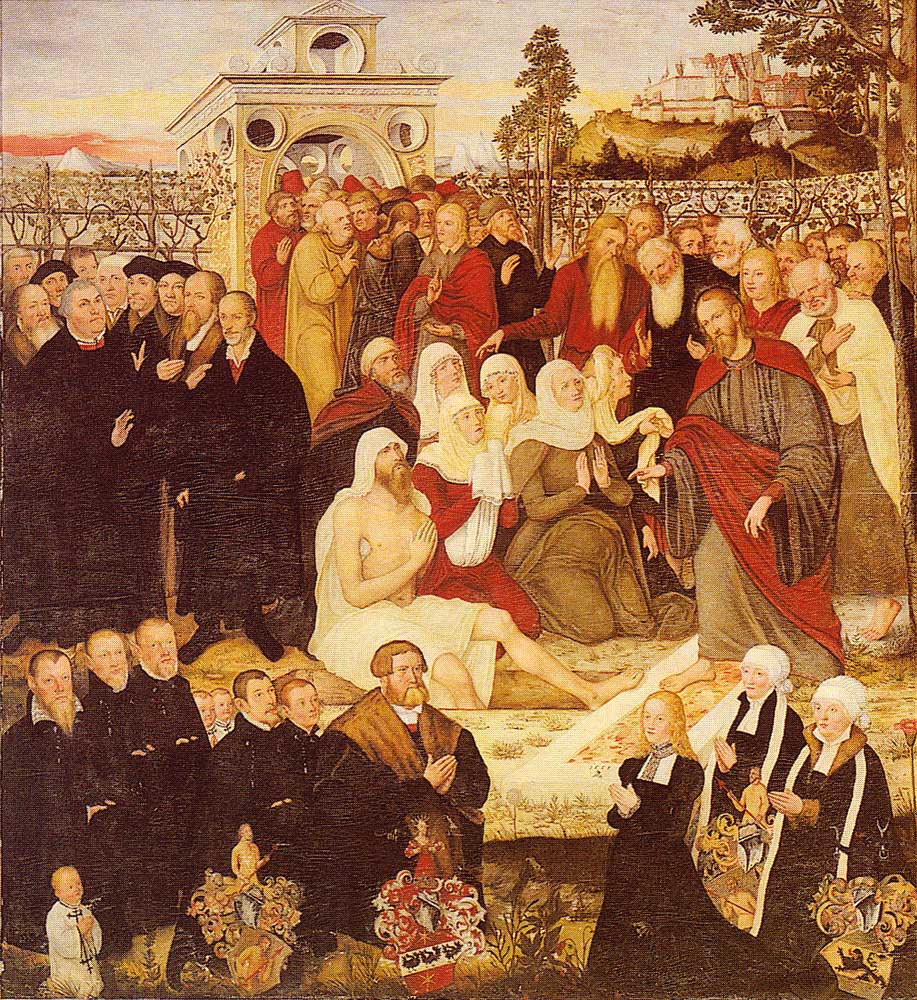
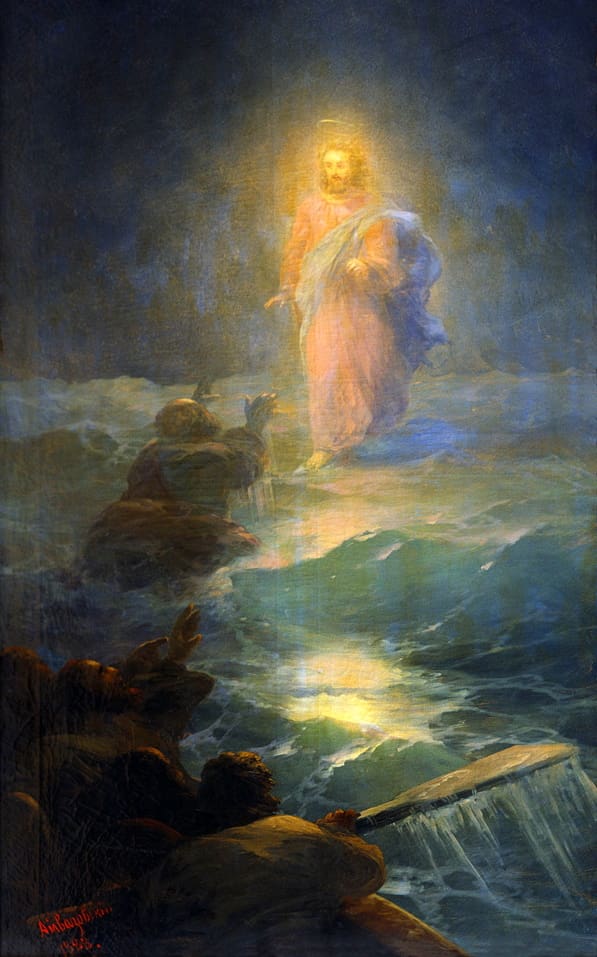
SIMON, dear Simon [Peter], brought many men to Christ whose destinies then altered; and during their submissions Simon would hope that his score could many the rest. None would allay his own doubting however, as this too had brought him to persevere, to search for those men who might qualify his reasoning and become his very mainstay. It was not a doubting of Christ as Lord, nor was it ever a question of His having being, it was moreover an uneasiness which rested within his own soul, particularly when the darkness was about to be quenched with a light invasive.

As if the breath is caught in expectation, our soul's cavity may seize when invaded with a life drama, and with Simon there were suggestions that he confused himself with Christ, and this also made him quick to comment otherwise. [Luke 22:61]

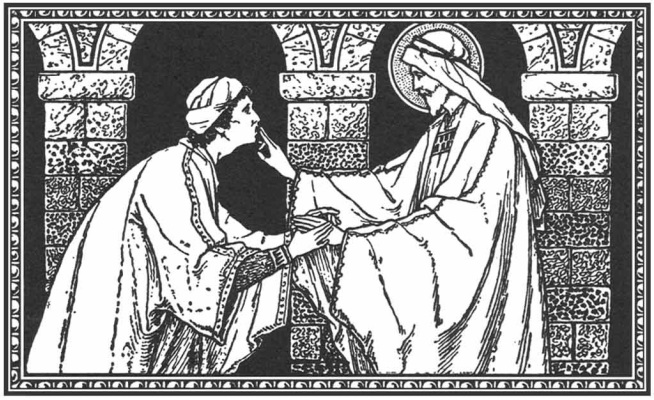
Can one imagine the many forces commanding which our Christ continually beckoned forth? And all of the mightiness that was contained by His Presence and brought to perfection! The forces which bring sight to the blind are the same as the forces which bring Man into this World. The entering into incarnation is made possible by Christ, moreso than before, because He now has protected each child and pledged their souls completely.

When men used to arrive into matter to be born amongst their particular people in a given skin and organism, there came to be a mingling of karma and a confusion of self which for the main, overrided the sense of the individual soul. In this way incarnating was extremely perilous to the ego, because a succession of lifetimes induced falsehoods within the consciousness whereupon a man was only partly himself and incorporated greatly with ancestral incandescence.


For Christ to bring those same forces which correspond and invoke our visual perception, he commanded that same discrimination, but which was now differentiated perceptibly within the consciousness also. No longer would a man believe that he was none other than whom he had been. He was now free to develop quite naturally along his own inclinations without the cooperative of his forefathers.

Accelerated developments did succeed because of ancestral tallying; however as a means to an end it was quite useless because the effects were only good given a single lifetime within the body itself and its surrounding influences. Men seldom retained the better qualities inherited unless they could consciously endorse them within their own egos. This of course took effort - and without effort (because it was already in place) it was not what it was.


For the lame to walk, the Christ forces brought to bear the same motivations as those which metabolize the furies. A man maintains his mobility and activity and connections within his parameters because of those forces which combust with the fires of creativity. Traveling hither and thither, Man busies himself within the world. We walk this way and forever on, the man being happiest when he is moving forward upon an active course, and here Christ assists us all in bringing also those forces which course the World at large. When man moves, everything else moves away from him.

Our weight gives us the augmentation to drive our wills as well as our limbs - and where more importantly than in the imaginative forces? Creativity pushes against the impulses of law and of will, and of presiding realities. Imagination defies all of these very rigid parameters thus defined, and yet because of Christ we have imagination which may go on to negotiate and walk against the winds of stagnant thought. The strength in the legs is the same strength that takes the mind into creativity, and this He brings. Before this men had not the abilities as they do now, to move forward in their thinking ahead of their experiences.

The lepers are cleansed: there may be two causes of premature death, one being decay and lack of life, whilst the other may be too much life overriding another. Decay itself comes from the desistance of life. Men would decay overnight were it not for the etheric influences which permeate their spirit's flesh. They would simply fall into dust, as was often occurrent in past times, when men were loosed from their etheric doubles.


Death by life may appear unconvincing, and yet we find that Man is host already to so many other life organisms and ethereal entities that he is unaware of; remarkable, that as a community he may exist with cooperation at all! This is predominantly our Christ's influence here as well.

Cleansing the lepers, in forces translated, implies that the commodity of flesh has been purified by Christ Himself. By His incarnation we know that the body of all Men is prepared for divinity to be properly housed, and those elements which cooperate in Man are made welcome, whilst all else are given no privileges and in time shall be cast off most permanently.

Our physical development is ongoing and far from perfection, however the forces now introduced have made way for such development which is to be fully realized as we go along. Of course we invite Christ to ourselves in our similarity to Him, and in this we must also invoke the forces He makes possible accordingly. As the soul of Man matures, and the ego also, he will introduce unto himself the possibilities for complete and perfect health. This will take time if it is to be individually won.


That the deaf can hear brings us to our correspondence with the interpretive faculties and forces that work within and without Man. Once it was that a man was only receptive to that which he understood, that he could not achieve comprehension or even acknowledgment of anything outside of his experience. Christ enabled men to interpret just this, and fortunately so, else none would have come to wonder of even He, if it weren't in the history of their family or their own.

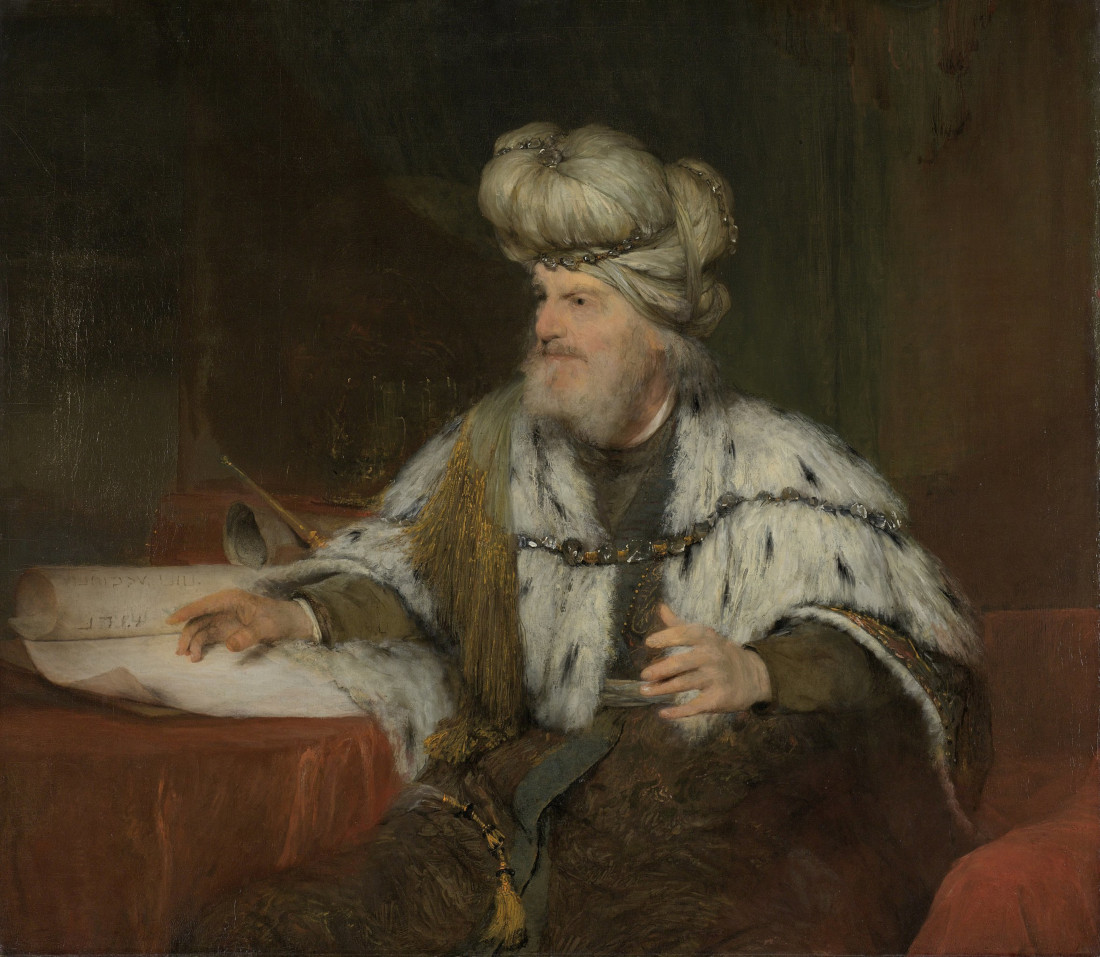
Of course even He was introduced into the World by preparing somewhat with an earlier arrival. In this way He could connect again with those souls to whom it was required. He was in part, King David.* David brought two lines of Man into being. It was the east and it was the west, and it came because there were two distinct types of soul so manifest.

Half of the men then born were truthful 'white-foots': they were pure and passionless and reluctant to incarnate. The other half were barbaric and uncouth, and with concentrated vim they broadcast their indulgences pushing irregularities with hearty defiance. Spirited and dangerous, these men were a prelude to the teams to follow, who as mentioned afore, began to be aware of selfhood before association. Christ became King David, although King David did not become Christ. He entered into the very forces of that propagation which inspired the offspring to follow. This appeared necessary that in the periods later such men would come to fully accept His presence as placed within the physical makeover then given.


David was John (Baptist-John). He was on envoy then, having tried unsuccessfully for incarnation some ages previous. It is not to say that other grand souls with lesser parts do not make their appearances - there are characters reoccurring throughout - yet the captain soul who was responsible for men before they came to this world, had to lead the path in that many more might follow and resume their corresponding connections. His influence ceased to be and was relinquished into the greater Christ at his death - John the Baptist shared then an identity so sublimely extreme that his departure took with him the appearance (countenance) of his beloved Christ. It was as if there were two to look upon him. [Matthew 16:14] (Or three, counting Simon-Peter). (Here lies a clue about James.)

The forces for raising a man out from his death are those same inspirative forces which motivate a man out from his sleep - consciousness! and our driving connection into this world. Christ brought a distinction here, for hitherto a man rarely knew the difference between his waking time and the world beyond in his sleep. Rather than there being a concentrated consciousness which maintained this world completely, the dreaming man was prone to death because the spiritual worlds offered no anchor for Man.

That Christ promoted the 'here and now' is evident by His call to repent. Repentance requires summation and conclusion, and as it is affirmed within a man it makes change possible. However and likewise, at the same time he is freed from past consciousness because he is enabled to forsake that which is not necessary to him, and retain in the present all that is worthy and wonderful to him. Therefore by repentance one may come to settle within the moment with all the joys of selfhood in that very moment, being freed from the scourge brought by unnecessary radicals within corrupting behavior. 


That the poor may have the Gospel preached to them offers a range of contradictions to a system which promoted 'fitness' and nobility of 'right'. We have a universe of good angels and principalities, but also introduced in conjunction with this world is a compassion which may bring the divine properties of angelic influence into the realms of demons and lower man. Worthiness was no longer solely won by merit. All beings have been considered worthy of the highest exaltation solely by merit of the fact that they are united and conjoined and born of the Father. Man is truly blessed when he may incorporate these new forces into his composite self. We can study quite readily what happens when spiritual malady befalls and corrupts these empowerments and the old ways return.


  • The false spirituality discourages men to meet ever with this world, but rather calls them to veil their earthly eyes and only seek out 'heavenly' visions. They are misplaced in time, and caused to great dissatisfaction. The world becomes acutely painful when a man closes his eyes to the happenings around him and does not wish to see the poverties but only the beauteous.
  • The false path deprives a man from his will and motivation and he becomes less and less effective within the world. He would rather lay down and die than lift the food into his mouth. His desire is vanquished and he becomes prematurely old. The limbs lose their purpose, as he too shall faint away.
  • The false path welcomes death, in that it will corrupt the organism recklessly. A consciousness which is derided by alcohol or narcotic stupor is but a lepered consciousness deformed and maligned. If occult practices cause the heart or mind deformity by over-stimulating other centers beyond their capabilities, then this too is an example of the retrograde forces as opposed to Christ's positive effect made possible.
  • The false path can also be indicated where no longer may the man comprehend the truth. Self-interred, this comes through lack of active loving whereupon he may truly find his relationship within actuality. We are insensible to the world by our selfishness.
  • The false path would dissuade a man from incarnation and lead him obviously into forgoing his consciousness. Christ's duplicity allows for Man to be able to commune in such a way that he can 'share' egos for a time and surrender consciousness at will; all the while the man retains his selfhood and may resume his own ego having gained from that experience of communion. However, the false path would encourage a man to give over his consciousness having no desire to return to it enriched or otherwise.
  • The false path would determine the recipients of its generosity. It is particular and full of pride, and so one may quite readily find those who have not the Christ forces developed in true charity and community, but prefer only certain company and believe that entitlement is especial. Beware these thoughts of fancy!
Blessed are they who may recognize Christ as He sweeps through the order bringing healing to our wanting souls. May He be received wholeheartedly and knowingly, incorporated into our prejudice and dilemma; known to us by His Perfect love made evident.

Amen


*David’s verses from Psalms: "My God, my God, why hast thou forsaken me? why art thou so far from helping me, and from the words of my roaring? " 22:1

"For dogs have compassed me: the assembly of the wicked have inclosed me: they {pierced} my hands and my feet.
"I may tell all my bones: they look and stare upon me.
They part my garments among them, and cast lots upon my vesture." 22:16-18

Wednesday, August 18, 2010

Into the Bays and Beyond- 16th November 1995

As to the local Church - if it is our express desire that we would wish to bring aspects of Christ into the bays and beyond, then we do so with the blessing of His Host. Philosophies corrupt because they tire - the initial spiritual precepts become diluted with use until they are untraceable - then only to be empowered anew, by becoming reborn in the hearts of striving men.
- The Sacred Art of Spiritual Teaching

ONCE again the homeopathic principle has been described, in the context of those philosophical ideologies which have ceased their vigor and dispersed within the world. By this we can see that should the fundamentals of their systems resonate with a true spiritual association and relevance to Man, then they shall empower the up and coming systems which the 'modern' man can embrace.

Therefore that which was seemingly lost to the past, in religiosity or with projected idealism, can be regained, dwelling in the very spirit of a kindred system; brought together by those men in which that spirit-sense lives.

Herein are known to some, these elements of spiritual purpose. Their throne, and principality for that matter, are from one familiar source; and yet it is that histories unite in those men in which the hopes are largely unique; grand masteries that sought to endow their humanity, and draw the Heavens (and God Himself) much closer to this World.

Yet this World with stubborn mass, recoiled from tidy plans contrived; but did prefer and always heard the heart of Man, when a man could love most genuinely. Matter hardened and hopes were bruised - with so many words issued upon a dying breath - but all to be reborn again! And none to have given over their expediency, still to lavish their enthusiasms for future Man ...

Many things are quickened within during the compartment of Communion. The tides are drawn much further in, knowing is enlivened, believing is enstrengthed and comprehension deepened. Further to this all manner of seeds are awakened - seeds which were saved from trees long fallen - and although we may go to the altar with only tiny remnant and slight example, we hold the mighty prospects also, that might be realized.

A man bereft of inspiration becomes hapless and unstable. Too often the true resurrection within cannot begin because he mimics life rather than is living that life. There needs to be real connections which inspire the affinities given to the future. Sadly most men have no care for the lifetimes ahead, they instead regard their present self and current world as the only continuum, and this is so when settling into a familiarity devoid of spiritual purpose. 

To many there is no conception entertained as to the impetus required or the necessity within Man. There is a silent but obvious protest which contends that indeed 'all will be well anyhow'. However, if this were the case then one should wonder why Christ Himself labors the night and day, and good men may fret knowing too well His Sorrow. Too many empty hearts and loveless grins; too many trivial pursuits with too few questions.

If all is not well now (and it is not), there is no guarantee that it will become so - unless something changes. Men themselves must wantingly effect those changes, defining their purpose with lasting application. It may appear that the advance thus far is too small to qualify its purpose; or is too crude, or too slight; yet all the while it increases and accrues and challenges the sloth which scorns those visionaries for Christ, and lovers of the World.

Wherever a man is placed he is given the opportunity for ennoblement. He can present himself with an open heart and offer himself to his immediate fellows, bringing before them such esoteric reasonings and Christly impulses. He can attend to his brother with a sincerity which is intrinsic to being, placing himself neither above nor below the individual he may reckon with. He can have knowledge on their behalf; he can be patiently observant of their praxis and of such in contrast - and he may introduce Christ further into their World because of his solicitude.

Little inlets and bays are as basins in which the tempered tides frequent. At the neck there becomes a crazy torsion within the open ocean, and although the bay appears to be the sea contained, it is not; for of course the ocean may circulate freely even though it is subdued and pushed back by the land to which it flows. 


The shoreline contrasts with the sea and the bays give the waters within their definition. Wherever our faith flows into, whatever the harbor by its outline denotes, the waters shape to take; there is Man separate and distinct from God. If Christ is drawn into this spiritual font (basin) we may have all of the seas in one.

The Church maintains to characterize our Christ. The notions may become perilously absurd to those who would prefer precise examination, yet all of the while there is He also, distinct from the parables and distinguished from all argument. There He stands.

Beyond the bays are more bays and beyond the images and portrayals of Christ there is The Christ. A man may need look no further than into the heart so given him by another - beyond himself - and yes, there is to be found his Lord also.

Knowledge, like Man, is comprised of a soul, heart, spirit and intellect - all of these things one may find in true knowledge. It is not disparate by nature, but is alive, warm, active amongst the ethers and self-characterized.

All of the truths maintain their own existences throughout the reaches of the infinities. They have substance - a permanence in their own right. They have love within them and are enspirited by God and connect with a reasoning both pure and profound within the community of thought, actuality and dreaming.

Knowledge comes to Man and he believes her to be his and his to keep. But he must tend to her heart and her soul and then come to know what she brings. The hidden answers are held in places deep. Beyond the bays we may sail our ship.

The Church was begun as a satellite for this our Sun - the seed for a new Sun, a new station for those aspects of Christ to be known. There is no exact way to create a future here. It needs men who by their very being shall qualify the task ahead, and as they say, make it up as they go along. ("It" meaning the future.)

We improvise, ever at the ready to respond to the actual moment's prompting. Freshborn, the new ideas bead the Earth like dew; and this with careful harvest we collect. We can no more measure His Light in each droplet than discount any one hope that will draw Him into this world. Each man does have his significance here and will come to his purpose knowingly vouchsafing the future for all men.


Tuesday, August 17, 2010

Faults & Flaws- 13th November 1995

Question:
Dear Teachers,
This morning I was wondering about some people I have met with or known, or for that matter, folk that I've only just learned about who are tremendously developed in some ways and yet quite obviously deficient in others. The development appears to be lopsided, that even with these grand souls - remarkable individuals - their 'faults and flaws' appear to remain.
My question has a few parts to it please: Firstly I understand that I am not a reliable witness to any other man's faults, however I believe that these people that come to mind would (for the large part) admit to them (or to others), and so I ask, do we go forward with some talents further and further, and yet destined to have some aspects left wanting always.
Also, we have been taught of the short road to perfection where a man shears off his lower nature altogether and submits his higher being into a 'sweet Nirvanic death' - how then should we fight this urge and yet wish for perfection if it is unattainable?
It has been suggested that we should be compassionate towards ourselves, and learn of the weak spots, and then we are 'safe' from them overcoming us.
Finally - are men 'allotted' their differing problems, and are we so different in all of this in the big and small picture, short and long term?
Thank you for your consideration of this.

NOT all men will go on to become better men. Not all men will exceed their brother's striving; yet some will advance having gained (unwillfully) because of some other's failing.

Never was there such a saying so true as: be careful for what you wish for - and wish well! Men are too easily content with small and mean wishes. Half of their difficulty is in their belief of nonsense, i.e. that one's destiny is nonexistent, that life is haphazard and random and therefore outcome is also. The other half to their problem is that they cannot creatively work upon a new destiny, for they have been no respecters of the meanings brought before them, presenting ever and ever again, requesting a man to 'awaken' within his being rather than shut down into a familiarity which quietens the enthusiasm for life itself, and therefore disperpetuates the receiving and giving of more life - being further destiny.

Very seldom one finds a man who is 'balanced' within all of his virtues, and this having been so, he is generally found to be mindless also - without thought, without the abilities required to reason with criticism and comparison - an idiot. These incarnations are useful, and not put to waste; and although not all idiots are balanced within their virtues, there is where you will find the closest thing to what you are looking for in perfection emanating out from a man; or rather, Angelic Man. 


All men as babies starting off in life are angelic too, they exude virtue, but not with a balanced concentration (an infant can be impatient for example, whereas also it fully loves in the complete sense of the word, and adults do realize this and respond to this concentration of pure love emitting from the being of the child).

Firstly we must ask: who ever said that 'balance' is a desired prerequisite for perfect Man? Need a man be perfect in every attribute so given to qualify in his development? We do not believe this to be so. The criterion for perfect Man is just like it is with perfect baby: it is love alone.

Secondly, a man may improve his technique, he may build upon that which he has already known and then inquire further; however this will always mark gradient improvement and not become as a new acquisition to him.

The ability to think appears to be a great distinction concerning the differences between modern men and primitive men. Worldly thinking (which is splendid coincidentally) develops quite readily where language and bodily circumstance permit. If a soul incarnates within a particular town into a body quite suited, then participating with thinking can be picked up most easily. Equally, should a soul incarnate into a body which has not the capabilities there (etherically also), or has grown up with wolves for example’s sake, then he shall have no difficulty in not thinking; being quite content with the sensual world and all of its impressions physically and soulfully.

We may be mistaken about a man and his overall development if we are to judge him purely by his fluency with thinking. To degrees he is quite affected by social circumstance and responsiveness of intellect also - interacting upon exposure. So it is very true that the forming of certain concepts and our prowess with managing our thoughts is acquired for the most part from the other thinkers around us to whom we exercise our reasoning with. Once again this is no true indication of a man and his overall and ongoing development.

Furthermore, very intelligent men may expire much of their thinking with narcotics and the like - bringing a soul-death to those forces which would otherwise bring in a divine connection between thought and its reality. Here we find that even brilliant men can cease their radiance with their minds becoming as tarnished as silver once true.

Yet it is by way of our thinking that we can enjoy our relationship present and future, with knowledge and its wisdoms. Our thinking services our egos in a way that only it can do. It is not confined to this World, it is not to be found in a brain, even though a defective brain will inhibit the capabilities whilst the soul is conscious and attached to that body. 

Our thinking in the spiritual realms comes from our observational skills here. It is also adherent to the thinking which goes on without us. This is an interesting point because in Heaven there is thinking that one may 'overhear' and consider well, becoming so absorbed as it were, that often individuals believe it to be that of their own.

In other words, good thinking is shared. Sequential thinking, logical and progressive thinking goes on into the expanses. It may not be current either. It may have been 'thought' a very long time ago, but still heard. Out there in the waters of space there are many, many, many stanzas of pure thinking, riding backwards and forwards with the tides.

To learn to observe effectively within this world we must hold a loving interest and be non-critical of its being. Criticism features certain particulars, cites them and concentrates upon that very picked out particular. Observation at its best is something which can take on the whole landscape even with its indefinable lines and hues and blendings, for which our lenses are both focused yet relaxed, but not narrowed.

Worldly thinking is narrow, yes, but within the spiritual worlds the thinking there is anything but narrow. It is precise, it can be pure, but it always leads on to wider vistas - something a critical eye does not.

So our question to follow on from here is, to what purpose is thinking within this world if impartial observation is indeed what leads to our thinking within the spiritual worlds? Our thinking, when it is coincidental to actuality reaffirms our egos in a binding way which incorporates the consideration. The thinking we experience in Heaven will come and go - the waves do wash over us, and though beauteous in the moment it requires great adept adroitness to contain much of their meaning.

So our definitive thinking in analysis, with observation pure and observation in contrast (with criticism), in debate and with aspiration, this definitive thinking brings properties into our egos and begins to form our future destinies.

To say that a man should be compassionate about himself is correct. As issued above, it is the love that is paramount to all else; and it is with a love of self we may alleviate the criticisms that spike and spur and worsen the weaknesses. They do this because criticism intensifies that which it is highlighting - by bringing attention to something, it becomes outstandingly more apparent. When this is to do with a fault within ourselves or a judgment upon another we are causing grave insult because it will only promote the problem concerned. This is so.

The only remedy for this is remedy itself, issued at the same time. In other words, if we make a differentiation into the negative with something (anything) we are obliged to counter it with a thoughtful protest and healing of an answer; remembering also that when we cause harm to something (which, as explained, criticism does when applied alone to faults and flaws) then we are implicated also in further experience until set aright.

The first and complete healing is Love itself. A man however cannot reasonably love all men or himself during periods of aggravation. If he is aggrieved by some extraordinary problem which he calls to mind and picks the flaw, then it will be difficult for him to see past that flaw and through to the man to whom he would love were he to know him completely.

Perhaps we should examine for a time what the definition of fault and flaw could be? Perfect tension runs contrary to the Universe. Perfect balance can cause annihilation. For every being, every soul so made, there could not be a mix which corresponded with a tension made impartial unto itself - this would cause great expiration. Sometimes the earth will give way to small flaws that it may have great movements and save itself from becoming rendered in two by one almighty crack caused by such perfect tension. In a man this is so also. His constitution was such ere the beginning, and although certain faults as perceived are typical of circumstance or transitory experience, there shall be imperfect marks within his corporeal enterprise which will not take on the light or the aspect which otherwise would have infilled him. However, we are causal also to others. We need not be that representative of a perfect humanity all on our own. 

This is the grand point here to be had. The Christian path has accepted men as they are in the present, through the collective Christ who has sought to shoulder all ills. The path for perfection without our Christ brings men to isolation at best and into annihilation at worst. Christ has incorporated us into His Ego, just as we in lesser ways incorporate our beloved into ours.

There shall be outstanding individuals whose destiny and perseverance will carry them further than the majority of their brothers. Some achievements will be greater, some in their masteries will become as gods. However and regardless of their imperfections their one way in will be through love, for it alone can answer the incongruities stark and apparent. Bring true love unto another and you will boost them into that greater destiny, but offer them criticism and you appeal to further their ache and aggravation. Sometimes discriminatory thinking is confused with criticism and further judgment. It is good for a man to recognize that which he does not wish to become, however comparisons that are unkind are devoid of the remedy required with their presentation.

This may seem as though it offers little to answer the questions and yet the effect is great and lasting. We are to know that if one is serious about this path of progression (joining the front-runners) then one's own remedy lies in attitude and application concerning the weaknesses of others. Let them pass... commit them to God... forgive them and forgive your own offense...

Develop your strengths and delight in them (therefore bringing them more life)... and always hold before you the happiest and highest possibility to be realized, learning to be able to wish well.


My Blog List

Followers

Esoteric Christianity Archive