CHRIST will not be franchised. The spiritual realities will not be denied of their existence. Materialism is never useful.
It is materialistic to believe that spiritual powers and properties of sanctity may be invested artificially where they are not actively due. It is materialistic to maintain that Christ prefers a given when all is given by Him.
If men are to deny the esoteric teachings partially (i.e. they are not completely ignoble to higher thought, but are rather more dubious about the exotic and the fantastic) it is usually because they lack the imaginative powers to carry them forth into a sense for the extraordinary.
The word "imagination" is not used to imply an unreal fantasy or delusion, for it is the imaginative forces which penetrate through into those realms the senses cannot correspond with. It is the imagination which works our sympathetic and empathetic processes whereby we may travel through to another's soul and give blessing, recognition, communion, healing and love. And if not from our recollections of direct and immediate experience, it is our imagination which may instruct us so as to 'know' something of the instinctual, intuitional art-pneu-veau.
The Petrine way was to restrain the creativities, even though in Christ-quality man has been given to life-as-art, life-as-soul, life as life. 'Freedom' horrified Peter, and in this he continues to deny Christ today, in that aspect so continued of the Church. In measure of safety, the confessors are withheld from greater realizations of the Christ as He lives and moves around the present-day world. The mediocrity insists that it has the whole value tied up, prior to the heavenly attainment to follow; and the established hierarchical systems feed themselves before all else - for this is the way of the papacy and the like, when the order so ordered, is said to be decreed by divinity. The concession that "God has no favorites" did not extend to the unnaturally elevated status awarded their own.
Understandably there shall be men whose place it becomes as a spiritual leader, who may guide men prudently and share their well-earned wisdoms. As Paul made a list of, there are officers and stations befitting many separate talents. But the Church itself is no more in complete dedication to our Christ, being rather in dedication unto itself - Oh! The perpetuality of a rotten corpse!
We do not discount that which the Church in intention has and does, and will come to stand for, but there are empty hearts and wondering men, who are of an age that presses for knowledge of our Christ in His action, as He moves here amongst us and calls to us to know Him better.
 Question:
Dear Teachers,
I have a pressing question: The Black and White Christians (God Bless them) react with abhorrence to the threat of 'occult' powers - for example, Red Indian Devas (but also etc. etc. etc.)
This contrasts with our approach of sympathetic firmness.
What are the actual negative effects with respect to:
- The Christ Impulse
- The Devas
- The adherent
- The communicator - be him Red Indian or no
- Others?
We have answers with our teachings, but I was thinking that perhaps a warning against abhorrence would complement our package on this subject?
-J.W.
ABHORRENCE loathes, it is repulsed and repulsing; born of a hatred within he who recoils and abhors. It is more than just a simple and innocent reaction within the man or woman, it is active and disabling, destructive and demeaning, it is insultuous and unvirtuous, even though it becomes habitual to some who thereby go on to profess their own worth thereby.
Contempt dwells within us when we are caused to will an immediate disassociation of ego. The abruptness which accompanies our displeasure helps our beings to summon all forces inwardly and draw back, the man then becoming contracted and most shrunken, withdrawn in the literal sense of the word.
There are men who by habit of such are most shrunken etherically. Were one to perceive their emanatory bodies, they would find that what should have been a light-filled man has been hardened into but a shadowy darkness, largely contained in a bubble of thought which persists with a repetition, dirge-like and monotonous.
The monotony of this constant but lifeless thinking strengthens the man's ego in one respect, whilst in another he has lost his elasticity as it were. He has forgone in time, the capability of excelling any further than he has already gone. So he may well have become an icon of frozen thinking perhaps sublime, perhaps just fixed. However paradoxically, unless a man is open to fresh and new thought and 'lives' his thinking, then he loses the ability to live out and experience the sources of thought he holds important. It is not enough to become a mausoleum to ideas and ideals, for the thoughts shall expire if not given renewal by release, to decease and then return, reborn.
Furthermore, a man clearly cannot embrace any thought with life if not with love also. So there are decrees by the thousands one may discount on that criterion alone.
Here we are brought to abhorrence, an issue from Man which goes further than contempt, as it is indeed a stronger poison, assuming it knows when clearly it does not, for it has not the light of love to illumine the wisdom. It is then a falsehood, and being such yet experienced and entertained by the man, requires self-justification to offset the uncertainty then produced in the disdain.
If I have a sewing box and am asked for a certain hue of thread to match a cloth, but have not that color and know this to be so, and my spindles are few to begin with, I am likely to look nonetheless and compare, busying myself with an impossibility. More often or not it is human nature to actually go ahead and pluck one of their spools of color and offer it up, with a half-hopeful-helpfulness which says "Perhaps this is more or less right?"
Well, it is less and could never be more now can it? "Perhaps the cloth is wrong" or "the color is to be complementary?" they suggest - and so it goes. If the ideas and concepts of a faith do not match with their own shades and color, then there develops an antipathy for anything varied or different as a result of entertaining an impossible match.
It would be unreasonable to expect a man to accept something of which he has absolutely no experience. Our first question to attend to here is to ask how it is that certain men may embrace the esoteric concepts, whilst others have not the experience to make their way into such recognition. One must wonder why, particularly when the esoteric thinker maintains that even the materialistic man has a soul and qualities which are undiscovered by him.
The steps up into higher development are achieved when an individual has himself made the transcension from suffering and sorrow through to striving, enduring, and then culminating in further won ability. If difficulty has been met with and then embraced, a man may choose denial, bitterness, anger or resolve. He may go on in further years when coming up against the very hint of the same difficulty to respond with either abhorrence or with peace; and the way of his nature so responding shall make way for his future development also.
It is understandable that most men should not react with joy to that which has been known to them to be most painful. Physically a man may partially excarnate into shock when he has not the capacity to meet with the conditions he is placed in. Sudden death because of great bodily injury is shock of a kind also, and in this instance the consciousness of the man as removed cannot make the connection back to the body he so loved. The condition of all shock is the extreme of an unnegiotiated circumstance, and this may take place also in our thinking or our experiencing the ride of manifold emotions and responses in the world. But shock breaks coherency. Once it has been arrived at - the 'safety-gate' you may call it - then there is no returning in consciousness to that upset, it shall have to wait until the review after death, when it may be dispatched then with a measure of separation.
So in the first instance we have covered what is to many the only 'reliable' reaction to that which they do not like. It may describe the action of an insolentry whereupon the man does not want to know and verily cannot know, for the threat and the grief and the pain and the pressure has caused his escape so sealing the ego even from the memory until a future lifetime, when he will assuredly be placed with exactly the same set of conditions, given all the pains and the difficulties, in the hope that he may be capable of absorbing the experience in a further try.
If we ever tell ourselves "I do not want to know" and it is something that we already do know, then we are asking for shock to overcome us and lift us up and out of that which is making us uncomfortable in that knowledge. Yet this is a miniature suicide every time, for we forfeit a little of ourselves when we forego a knowledge that is part of ourselves. When we bury our understandings, no matter how painful they may be to us, we bury ourselves into the bargain.
The second response to pain, as discussed, is abhorrence. If we are stirred to reminisce some sense of former suffering, or forewarned perhaps of some impending condition, it may be that our primary reaction is one of abhorrence.
In the beginning of this talk we suggested quite gravely that abhorrence is both insultuous and aggravating in its nature and manifestation through Man. If men were to realize the demons that they do conjure continually they would certainly think twice before unleashing them into the world. The prettiest dinner parties are often full of them. It is surmised that the indignant and the angry are entitled to their upset when it is born of social interest, affliction or simply on behalf of the rest, as a corporate anger as it were. However anger itself, when expressed from any individual (developed or undeveloped, civilized or uncivilized) is an act of hostility and of violence.
Any individual who has been overswept with their own personal sense of self enough to be enraged, uses their own etheric vitality in the process, and quite often is found to become very sleepy after the dramatics for this reason. Anger cannot be sustained indefinitely, it demands much more from a man than it often affords (except in instances of defense when a man may be endangered).
The will of a man sometimes outgrows his character. In other words, he may be very good at exerting his will, particularly over other men; but he may not be very good at applying himself in ways of restraint and self-discipline. Character building requires both. We must know when to be willful and when to relax our egos and concentrate our efforts into spiritualizing an otherwise taxing event.
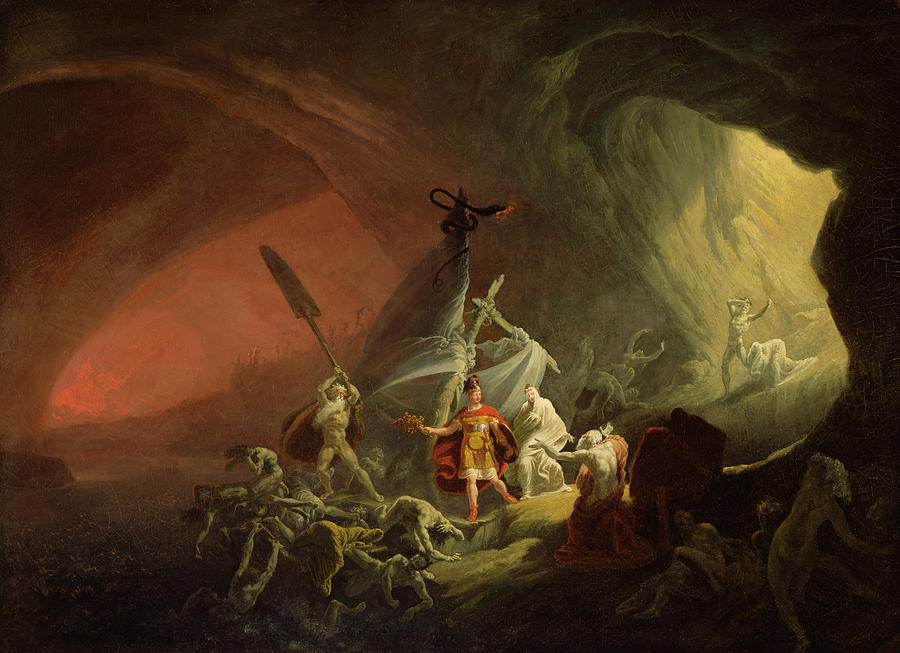
When a man has altered his conscious response from such anger or abhorrence into a paradoxical peace, then he has defied the demon of the difficulty and transformed it into a little angel - redeemed the demon of sad circumstance with a pity and a mercy and a supplication asked and received from God. This in turn brings the man his spirituality consciously won. From this he shall receive a clarity and attention which increases his perception of the heavenly worlds and their aspect; he has befriended Christ in league for a love higher than anger or residual bitterness.

The awareness of the higher worlds from this vantage does come from the inner senses derived from metamorphosed sadness and suffering. One might explain the martyrs’ trials in the light of this edict. Certainly one can say that there became a sweet compensation; and yet remembering also that each one forgoed his 'escape-gate' of shock too, that they entered into their persecutions past the limit of any ordinary endurance encountered, and sought willingly to retain their consciousness and remain for as long as was possible, connected within their circumstance, within their afflicted bodies, all the while denying any 'well-earned' anger, giving it all up to God.
Conversely there are many aggravants which overstimulate men - situations need not be found so obviously difficult as to cause upset. The more a man is inclined to anger, the easier it shall be for like demons to grip at his heart for little for no impending reason. The reasons themselves can become manufactured, and all the while the surge of vitality enjoyed by the angry man turns to become a pleasure whereupon he feels more alive than ever, even though his 'aliveness' is causing certain aggravation within his world. His temporary surge of etheric charge encourages his activity and fires his liveliness, whilst yet of course he shall bear the karma of this aggravation and also come to expire himself far earlier, losing mind, body, or both to deterioration. Negativity looks after its own, as they say, in the way it knows best!
The many devas associated with this world are, for the main population, alike to children. They are beloved to us, and are as innocent to the eruptions of Man. Being made of goodness their consciousness lives in the light and the water, and the tree, and the sounds which come from the water's falling and the tree's rustling; and the shades of light often bring about their mind's intensity also - that they are so responsive to nature that they are that nature! They are as the trees or the ethers or the waters or the fires personified. Some are so imperceptibly close to their kin that one might well fancy them to be that which they inhabit.

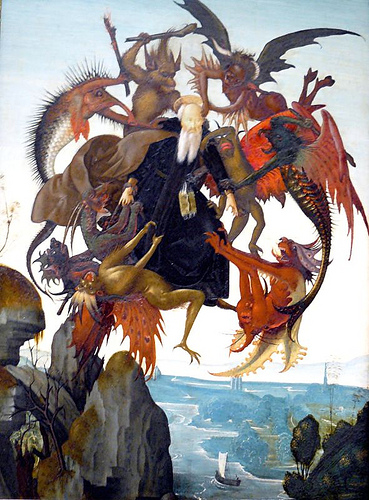
Equally also, there are lowly beings whose spinderly frames live in darkened places with odorous deposit; and these creatures are once again remonstrative of that part of nature that they live and know and dwell in upon. By and large they are creatures of association and wherever there is earthly life there shall be devas to accompany it within its etheric counterpart.
Equally so, there are those who are responsive to man and to angel and to alien. Some would be worthy counselors and good friends to have, whilst others are wicked, attached to evil thought. The highest in their development are independent of man and plant, and although have not the keys into death and rebirth in this world, they are as dear to Man as Time's memory is itself. For these beings have watched many men come and go and then return again. Dispassionate as they may be for the incumbent worries of Man, they are ever curious as to the sublime and divine workings within all systems which cradle him.
Men have 'crossed worlds' and met with all forms of these beings. With direct vision (moreso in former times), in the imaginative powers they have been called also to sense behind sense. The first-born Christians acknowledged the unseen realms and associated powers, teaching a man to differentiate the true natures, within himself, the unseen worlds and the present work-a-day world.
On the subject of spiritual gifts let us read:
"There are varieties of talents, but the same Spirit; varieties of service, but the same Lord; varieties of effects, but the same God who effects everything in everyone.
Each receives his manifestation of the Spirit for the common good. One man is granted words of wisdom by the Spirit, another words of knowledge by the same Spirit; one man in the same Spirit has the gift of faith, another in the one Spirit has gifts of healing; one has miraculous powers, another prophesy; another the gift of distinguishing spirits, another the gift of 'tongues' in their variety, another the gift of interpreting 'tongues'. But all these effects are produced by one and the same Spirit, apportioning them severally to each individual as he pleases.
As the human body is one and has many members, all the members of the body forming one body for all their number, so it is with Christ. For by one Spirit we have all been baptized into one Body, Jews or Greeks, slaves or freemen; we have all been imbued with one Spirit. Why, even the body consists not of one member, but of many.
If the foot were to say, "Because I am not the hand I do not belong to the body", that does not make it no part of the body.
If the ear were to say, "Because I am not the eye, I do not belong to the body", that does not make it no part of the body.
If the body were all eye, where would hearing be?
If the body were all ear, where would smell be?
As it is, God has set the members in the body, each as it pleased Him. If they all made up one member, what would become of the body?
As it is, there are many members and one body. The eye cannot say to the hand, "I have no need of you", nor again the head to the feet, "I have no need of you". Quite the contrary.
We cannot do without those very members of the body which are considered rather delicate, just as the parts we consider rather dishonorable are the very parts we invest with special honor; our indecorous parts get a special care and attention which does not need to be paid to our more decorous parts. Yes, God has tempered our body together with a special dignity for the inferior parts, so that there may be no disunion in the body, but that the various members should have a common concern for one another.
Thus if one member suffers, all the members share its suffering.
If one member is honored, all the members share its honor.
Now you are Christ's Body, and severally members of it.
That is, God has set people within the church to be first of all apostles, secondly prophets, thirdly teachers, then workers of miracles, then healers, helpers, administrators, and speakers in 'tongues' of various kinds. Are all apostles? Are all prophets? Are all teachers? Are all workers of miracles? Are all endowed with the gifts of healing? Are all able to speak in 'tongues'? Are all able to interpret?
Set your heart on the higher talents. And yet I will go on to show you a still higher path.
"Thus I may speak with the tongues of men and of angels but if I have no love, I am a noisy gong or a clanging cymbal; I may prophesy, fathom all mysteries and secret lore, I may have such absolute faith that I can move hills from their place, but if I have no love, I count for nothing; I may distribute all I possess in charity, I may give up my body to be burnt, but if I have no love, I make nothing of it.
Love is very patient, very kind. Love knows no jealousy; love makes no parade, gives itself no airs, is never rude, never selfish, never irritated, never resentful; love is never glad when others go wrong, love is gladdened by goodness, always slow to expose, always eager to believe the best, always hopeful, always patient. Love never disappears. As for prophesying, it will be superseded; as for 'tongues' they will cease; as for knowledge, it will be superseded.
For we only know bit by bit, and we only prophesy bit by bit; but when the perfect comes, the imperfect will be superseded.
When I was a child, I talked like a child, I thought like a child, I argued like a child; now that I am a man, I am done with childish ways.
At present we only see the baffling reflections in a mirror, but then it will be face to face; at present I am learning bit by bit, but then I shall understand, as all along I have myself been understood.
And now abideth faith, hope, love, these three; but the greatest of these is love."
- Corinthians 12:4 – 13:13
Thus "faith and hope and love last on, these three", but the greatest of all is love. Make love your aim, and then set your heart on spiritual gifts.
THE title of teacher, father, master or instructor, may well be entitled 'gift-giver' as well to explain that true transaction as hoped for by the would-be disciple. Envy of those who hold tutorial positions is quite unfounded and deceitful to the cause, for all good and not-so-good teachers alike, bear such great responsibilities towards their pupils, their investments, that said student could indeed cause their personal downfall into many lost eons of contaminated karma and subsequent learning.
Think not that the 'status' as held by any teacher outweighs in glory the solid and grueling responsibility he enters into. When a man assumes any form of authority over another, and that is so accepted by that other, it then becomes an agreement on many condescending planes: that he who has assumed the more advanced vision has offered in promise the truth of its reality, and he then does owe such by said promise; and depending upon how such knowledge is valued and used, the teacher is most answerable also. So it is no easy or light matter for any teacher to advertise and want for his brothers to seek his offerings out.
For this reason it is that we may examine the three parts to discipleship in earnesty, understanding that a sensible teacher hesitates before imparting any true and valued gift, and we would be prudent to do so likewise. True teaching is active loving - meeting needs and concerns pertinent to the individual, rather than for amusement or pseudo-status. Teachings are to be applied and not pontificated; having said that, may we begin.
The three parts to discipleship are:
- the call
- the training
- the commission.
The disciple, or the learner, has the material 'givens' in order that he may qualify - that the necessary preparations have been set in place for him to be responsive to the call.
There are several strata to great knowledge as it works its way out from and into this world. True knowledge is holy; its substance both feeds the angels and streams from angels in an oncology which survives the perturbations of insultuous perversion.
Let us explain: Within each and every man resides the microcosmic mirror-wisdom. Indelibly placed in spirit's own substance, we each hold memory, deep memory of those beginnings of our being and of all being and all things as was and yet to be. Our Christ within us, our own alpha and omega gnosis, enables us to come to great definition, which in time is contrasted against other such wisdoms, all of which fly loose in time and space, projecting forth into manifestation and out again.
When a young bride leaves her house to go to another house she may be known as then being from one of two families. To some they may recognize her as they have known her only in the context of her maiden household, whilst to that newer circle of relations and companions she will be recognized as belonging to that family of her husband. And she is all the while, the same person. This is how it is with the truth.
We have departed our Father's house, our cosmic heritage and spirit's wisdom, in order that we may take on a new relationship, that our egos seek out a knowledge which comes of a different name. Knowledge which is coupled with experience has that factor of experience to enhance it, and so it is with worldly learning.
We began as perfect beings and in truth that still remains the same. But now we go out into the world and seek to make addition to that virgin wisdom - we shall mature our thought and meditations, we shall pray and be prayed for, envelop and enhance, rely on and cause to hunger for a spiritual companionship in the wisdoms that we now seek to share. It is by mutual realizations that we cause to set the definitions within infinity and make further cause to those agreements, such as would manifest within their own making.
So it comes also that there are souls who have exceeded their brothers' capacities and by such advancement are then obliged to make apparent where asked.
The angels are perfectly coordinated to the original truths. Their bearings are set on the past, and it is from there, as the unwed maiden, that they travail from. However, and in comment to this, we find that Christ Himself departed from such innocence that was known only in His Father's House and came to be as Man that he might deliver Man and make him more: For verily he took not on him the nature of angels, but he took on him the seed of Abraham. (Hebrews 2:16)
So to the call (or the 'caul', as we jokingly put it), being something in which the lesser cannot demand upon the greater. We may entreat our Father God, we may beseech Him and implore Him, we may plead and grieve until we are met with His Compassion, but we must never believe that we are entitled to insist our case. We therefore need ask, but then wait with the patience which is prerequisite to all good learning.
Whyfor to learn? It is a pitiable notion which suggests that there is no need within a man for betterment - and betterment is learning. Although we all do inadvertently bring many good lessons amongst ourselves, it is far wiser to acknowledge those who are more capable whose example may be profitable, and recognize our inadequacies, working upon, repairing and building what we can, than to try to become a teacher in what we are not.
It was said by another that "to follow is to understand leadership", and we would add to this to say that before one can ever seek to take the lead they should understand what it is to follow - the reverse interpretation is misleading as one cannot ever come into obedience by seeking to overrule.
We would differ on the term 'spiritual equality' as a given, in us being all teachers and pupils, for this in relation to development is a misnomer. If there is anything Heaven is bereft of, when it comes to individual beings of hierarchies (so named for a purpose) or simply in the divisionings of men, it is spiritual 'equality'. That we have an individual distinction is shared, and are loved by God regardless of our many differences is shared, but in no sense can we assume an equality, as being upon being cannot be placed into comparisons or likenesses - having individual attributes fractioned from God with unequal portion and proportion. Without the comprehension of that position, in which we hold to our deficiencies, then we have no means to correct them and no gifts worth giving to pass on. 'Following' per se is not honorable within itself, but rather what glorious light we may choose to follow in an otherwise murkitroyd world, denotes its worth.
For there is nothing hidden which will not be revealed, nor has anything been kept secret but that it should come to light. If a man have ears to hear, let him hear. Then He said to them, Take heed what you hear. With the same measure you use, it will be measured to you; and to you who hear, more will be given. (Mark 4:22-24)
When Christ works through us we become as Him, speaking as for our Father ("For it is not ye that speak, but the Spirit of your Father which speaketh in you." Matthew 10:20) for whatever time, in the capacity of teacher, we call upon the soul within another to respond and hear well. In the larger sense there also comes a time within the development of an individual when he is 'called' to acknowledge his spiritual allies and choose with conscious deliberation where his soul best sits - to what corner it belongs. This is most important, most relevant, and cannot be assumed for another. No amount of cleverness can meet with divinity here; even some wisdoms cannot discriminate in the choices which are set before Man.
Some issues go beyond the simple learning; whilst they are intrinsic to our Manhood they may be lost to sophisticated striving, should we forget our elders and believe ourselves to be the uppermost examples of humanity. When we depart from those who would guide us well we begin the solitary and dangerous route, having left their protection and their pathway. We can therefore be grateful to those who have gone ahead and literally illumine our way before us. We may trust in their being, that for each man who beckons them with need, they shall turn back from their own upward trek in order to guide their brother further forward.
The training - the second part to the discipleship - is offered by those who may give it. Whilst it may be regarded as 'life itself', there are those individuals who may offer guidance, and do it well. It can be said that in this we may establish two things, that firstly a pupil does not equal his teacher, however and secondly, he may represent his teacher as though he were that teacher, and in this way he too may impart the gifts also.
The disciple is not above his master, nor the servant above his lord. It is enough for the disciple that he be as his master, and the servant be as his lord. (Matthew 10:24)
And
the training precedes the commission, necessarily; for as it was
aforementioned, it is a perilous task in deed and in word as well, were
one to teach (to give out) something proven heinous by their student.
The
teacher, no matter how exalted, takes to himself the actual development
of he whom he earnestly endeavors to teach. This must be so, because
once the karma is implicated and the responsibility set, he is then tied
to that outcome for better or for worse. Therefore, if as a teacher we
have brought the knowledge of poisons as medicine before our pupils,
but they have then used them in murder, we too shall fall into that
afterworld of hell and suffer the death and the consequence and the
karma of our knowledge.
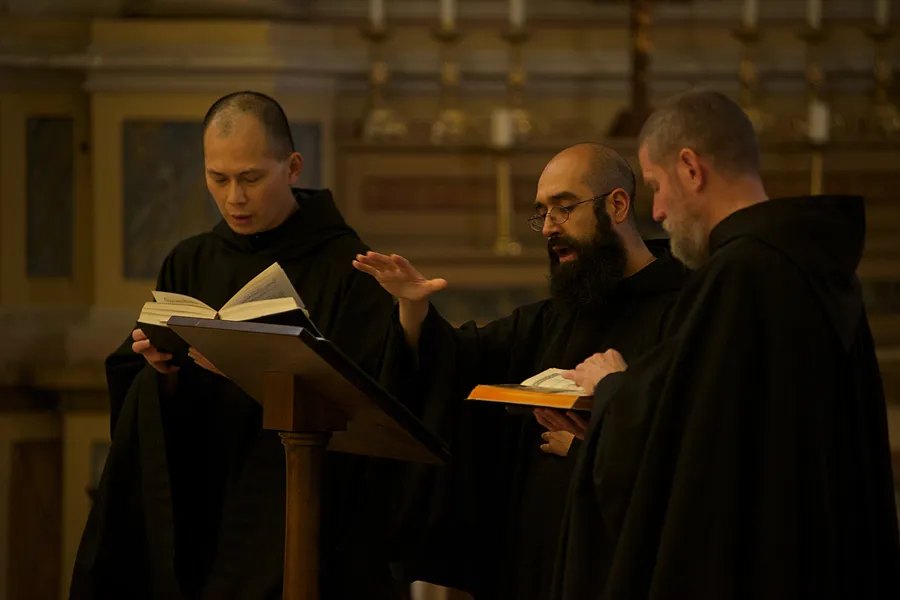
It is for this reason that certain souls do not dally amongst the weaker in humanity. Fain to promote, some individuals who advance out from their brothers recoil from association; just as the hermitage monks who would avoid the diseases of the soul and the afflictions of the lesser's sin. There are risks, more than rewards, in being and becoming a teacher.

Behold, I send you forth as sheep in the midst of wolves: be ye therefore wise as serpents, and harmless as doves. (Matthew 10:16)
In this we may find our guidance in understanding the offerings of good teaching. The wolves of the world would shred us to pieces and surely ravage our goodness by their very untamed natures. And so as sheep, we are sent forth, but with wisdom, as our mercy and goodness of intent are to be our savior. Here it is that Christ has delivered the teaching profession - can you understand here where the cycle was broken once and for all? It was never in the name of defiance that this be so, but it was for the sake of all goodness to survive and be protected.
Before Christ, those who were 'at the top of the tree' were continually toppled by the weight of the stragglers there beneath them. It is a simple equation, men will make mistakes, and there were fewer that could assume immediate disciplines, fewer still who had the heart qualities and character of their beloved teacher. Fate decided time and time again that teachers and pupils suffered alike. The waters were contaminated and the sympathy and suffering abounded.
The transformation Christ brought here was to release the teachers from the all-consuming nature of this karmic bond. Were they to enter into their guiding instructions 'as harmless as doves', as pure in intent with only the purpose to give in His Name, then it was that their assurety was assumed and the teachers did not risk the liabilities of their pupils.
However, two things do remain - should any person assume authority and show the way to injure, or go the way without Christ, then there is equal karma shared between the two.
Out of the same mouth proceedeth blessing and cursing. My brethren these things ought not to be. Doth a fountain send forth at the same place sweet water and bitter? (James 3:10)
The 'fountain' has by character a need to be as harmless as a dove, sweet and true to the purity that it would impart. There is no reliability in a man to whom words spill forth in defamation, and then to issue the 'truth' of the angels. The teacher needs be with "wisdom that is from above first pure, then peaceable, gentle and easy to be entreated, full of mercy and good fruits, without partiality and without hypocrisy." (James 3:17). Or let him rather be a good pupil then, than hazard the vocation of the would-be master-instructor!
We call for sympathy to be afforded to all teachers in the World - whether they be apt or not capable, specific, technical or logically reprehensible. The deep regard which may spring from the heart of the admiring pupil may come too with the knowledge of the very risks that other soul has taken upon their selves for the sake of their own.
A teacher may well lose his elevation - not in relation to his pupil in likelihood, but more because the pupil can be the very cause of it! And so we all cling and cleave to Christ to deliver us safely from that conceit which pre-empts and excludes our true salvation and that of our brothers, and pray hard for us all!
Amen
How brittle and cracked were my bones without Him,
As each splintered and tore at the flesh beneath skin,
And I bled and I wept,
And it hurt as I breathed,
And my time was complete, for my life was diseased.
How hopeless my fortune,
Barren my lot, without Him,
As I called from the void,
With a voice cracked and grim;
In ineffable turmoil,
This dark sea of scream,
Forming yet another tear-fall,
Into the eyes of a waiting angel.
I should lie wasted,
Sore-tested,
Without Him,
Stripped of will, vulnerable to the demons of Sin,
Those Carnivores who set upon Man,
That brother upon brother, as cannibals became.
The waters should recede into nothing without Him,
Back into the spaces before Time, time and time again.
Withdrawn, the Holy Powers back,
As spectrums quelled, converge to black.
And Father God with parent's grief,
To lose His Son would surely weep,
With ceaseless wails throughout that time,
As Love's defeat from depths would climb,
Out from the cold and into the slime,
Making swamp of the active Waters Divine.
And now it comes to this - the dread,
His Life now gone, His Passion dead.
Oh Christ return! Come forth this day!
Leave not our souls to death's decay!
Please live for us, as we for You,
And know our love to be pure and true.
And He said unto them. With desire I have desired to eat this passover with you before I suffer: For I say unto you, I will not any more eat thereof, until it be fulfilled in the kingdom of God.
-Luke 22:15
WHEN a man experiences desire, he has hold of that action of the Holy Spirit working within his otherwise complacent system. He is fired and motivated and moved out from and into the activities which work productively or corrosively. It is desire which initiates his pump and power, and this desire he employs is most feminine.
When a woman lives passively, surrendering her ego's willing and wanting to a yet higher law which convenes within her soul experience, when her intuitive foresight and bearing overrides the projections of any self desire but rather goes to the heart of that goodness she may work to maintain, this working connection to our Father in deep intuitive living is masculine.
Man without desire becomes sinless. And it was to the female that Desire attributed Sin within the male then so faulted.
Lethargy due to God-consciousness in the male who denounces his 'sin' and spirit, comes from desirelessness - unless of course he may convert this action into yet higher desires, which work no less within the fiery movements of his inner streams and soul causeways. In this way Adam could well blame Eve as he tripped out from the peace and the protected relationship he had then enjoyed with Father God. His personal life took on a chaos, Man had begun to be actively placed in relation to his concerns, no longer just an onlooker to Creation, he became a sub-planner, master builder and laborer all in one.

The tasks set before a man within his worldly life contrast greatly from those in which a woman is placed. If we consider that there are experiences offered a soul in which he has incorporated both divine aspects over successive lifetimes, then we should not in any way look to these differences with a competitiveness, concern or complaint; for they are what they are, different and distinct, quite splendid each within their usefulness, both being experienced by every soul in turn.
Furthermore it is conjectured that as time goes by the two shall make a blend, so that the sexes themselves will make union within the one body during the one incarnation, sublimating themselves if you will. However this would be no fair exchange to lose such definition, and although pictorially it serves to bring images together of the procreative forces which shall mature in Man, it does not serve to explain that the distinctiveness of the two forces will indeed remain. Souls shall prefer one to the other and make manifest accordingly.
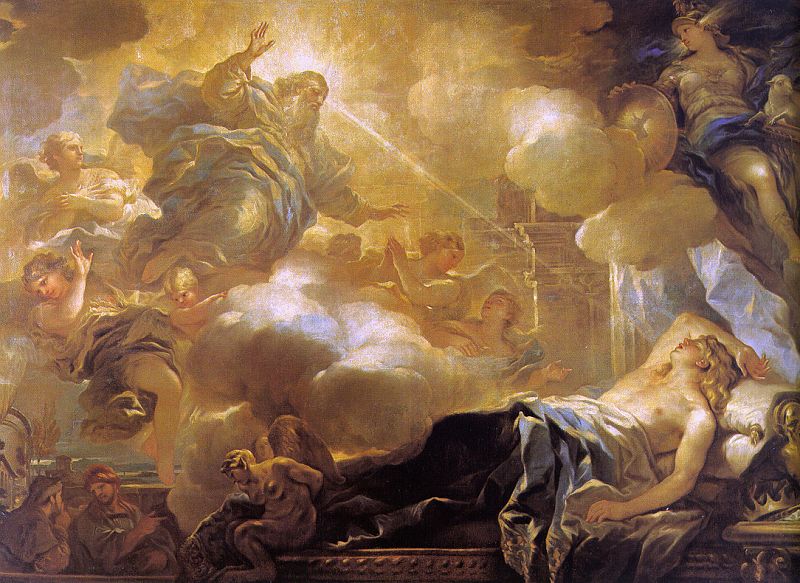
There is the question: Do men make for more effectual priests than women? To this we can say, yes most definitely. The priestess, the sibyl and the inspired eunuch, all have an inverted presence. When they call upon the ethers to make a spiritual connection subjugated and impregnated with etheric forms, they have not the desires complete enough to carry the blendings into existence. They can however, sustain them once there, and it was often in this that a woman was so utilized that she could supply the causal fluids about herself in which visions could be made to materialize and be supported. The nature of the woman gives the buoyancy to the waters with prayers adrift. The desire promotes the sails, just as the wind invisibly holds direction and impetus. Thus it comes to be in a mixed congregation during prayer that it is the men who summon the angels in and it is the women who cause them to remain once there.
The power of blessing as is accredited to the priest requires two parts to its effectualness: firstly, after having much preparation - i.e. a repetitive petitioning, which in time builds upon his etheric powers and are stored within his body; absolutions, upon many rehearsals purging as best can the vessel then given over to Christ's margin; determination, that he does consciously put to effort the heavenly proprieties and then knows what he has set out to have done - this preparatory status entitles the first part, whilst the second is as the tinder to the fuel, that in the magical moment he reaches up into the Heavens with his desire to make that connection and so is answered.
Now in the instance of the woman who tries for commensurate powers of blessing, she too may prepare herself to make for a clean and perfect witness to God, but when it comes to making the call she is impotent, as impotent as a solar house during an engaging eclipse. However, what she can bring about as emissary between worlds, is not the gift of being a ritualistic initiator, but instead she may be the 'tea and trolley' lady, she can be an illustrious example of those forces within the higher worlds which permeate the physical essences, sustaining and nourishing, containing and bemothering. She offers, outstretched, the sanctified arms of a tenderness which holds the spirit high above the ruins of any disappointment, she brings the atmosphere itself in which all bright expectation can drive out into and return fulfilled.
So when a woman has fixed herself within the priestly ritual and begins to initiate a ceremonious blessing, she has the capability (if so prepared with a wholesome disposition) to make welcome those beings of influence which bestow their remedies and retorts as required. These beings can bring enlightenment and spark a sought-after wisdom within the consciousness. They may bring a comfort, not only to the mind but in answer to the nature of the trouble also. They may be muses to the empty of inspiration, they may ride the tea trolley with an innocent humor that would simply and joyfully lift the spirits and lighten the heart.
So the action here becomes an individual one, necessitated by the men who are present about the prayers and receiving of the womanly priest. Her congeniality makes way for the mysterious implications, but does not of itself have the power to bring them to be; and so it may or may not be the case that they are, depending upon the concentration and intent of the men presenting at that time also.
Of course, when we speak of priests’ offices and their effectiveness within the ritual, we can also add that the male offering requires that his desire be perfect to the mark in order for him to make the right and proper heavenly connection also. There is no usefulness in accreditation alone, for every moment, especially in heavenly reality, is important unto itself. One cannot simply get by on the strength of that which has gone before. There is no more an honest proving ground than right here in the spiritual democracy.
If the priest has been without his meal and desires his food in a most natural way unto hunger, then it can mar his effectiveness in desiring the conjoining of himself with Christ as the moment does call. Should he desire his sleep or a holiday also, then the congregation shall be empty of the task completed and the service will be but a cheerful performance, if that. Things cannot be what they are not, though facades may give appearance without substance, it is the soul that will know regardless.
Men become partners with desire, women become partners with godly knowing, and as great Desire enspirits the Divine Wisdom, she, Sophia, keeps Desire alive and ongoing.
"With Desire I have desired..." that Christ brought to Himself her company and her great fires to seal the now immortal pact, that by similar desire, same known amongst the men, the kingdoms shall become infused and know Him as He knows them, now and for ever after.
Amen
My Blog List
-
Differences Between Boys & Girls - Rudolf Steiner
-
We can then see, beginning at puberty, in the outer behavior of both girls
and boys, something that often baffles their parents and teachers,
something t...
-
Wagner & Buddhism
-
There is an amalgamation of Buddhism and Christianity in *"Parsifal".*
This, as we know, is also one of the hallmarks of Manichaeism.
Richard Wagner was...
-
Chapter 14- Reaching for the Stars, Exercise 1
-
*Exercise 1*
*Tools required:*
- *A Questionnaire*
- *A conversational partner*
Concluding a conversation, ask the person you have been in ...
-
Augustine Asks the Big Questions
-
Augustine in his Confessions 6:9 asks: tell me, O merciful One, in pity
tell a pitiful creature whether my infancy followed yet an earlier age of
my life t...
Esoteric Christianity Archive