Translate

A CLUB OF SUPERNAL INTERESTS Christian Esotericism, Spiritual Science, Esoteric Christianity - All Authored by a Lodge of Christian Teachers (unless otherwise stated.) (All writings copyright) ©

Tuesday, January 12, 2010

The Soul- 7th July 1992


The starry mantle was but a cloak
‘round her head. . . Uncommoness.


THERE are those things which are not the same, which never could be held to be the same, but are distinguished most properly as being both separate and special. We may hold to aspects shared and qualities lent and thus identify much that lies within the world; but we may also look for that which most properly exclaims a uniqueness and a purpose, and a soul.

For it is the soul that does offer, give over, the ability to become most sublimely unique; that all which does go before it and trains after it and does encircle it, makes only for the garment of the soul. But the soul does make the garment - it is spun and woven and sewed and fashioned, by this our soul.


There used to be many a story given about the places in which the soul was hid: under a rock, atop a crest of a mountain, in treasure chest, and so forth. For it has been known to man that most of all, the mystery of one's own soul is as illusive as the setting sun.

It was for these souls that many a pious man has fervored to retrieve and make holy again - to exalt, to restore dignity to, to re-establish a love between a man and his soul that he might love the Father with thanksgiving. It was for the sake of the soul moreover, than deeds in actuality. And it was the purging of the soul, rather than the remaining of innocence, which drew the crusader's sword from his sheath.

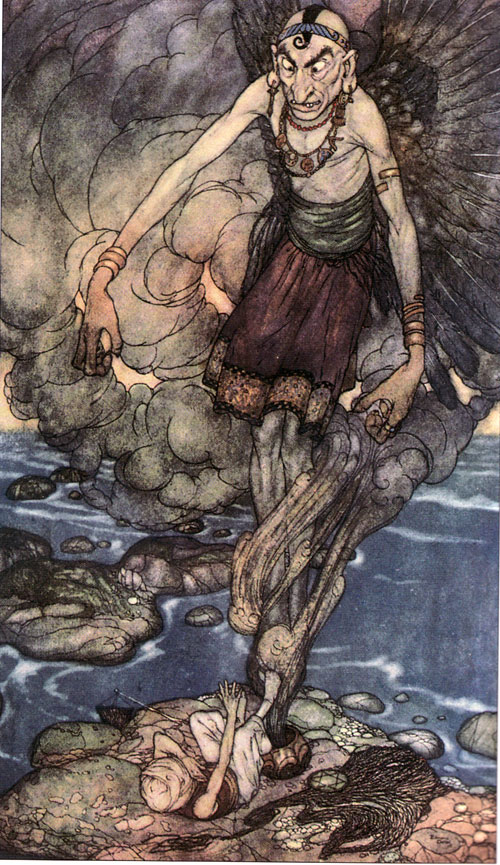
But what of its characteristics; who may view and express what it does look like? Quizzically, we have your attention! Here, the vaporous genie in the bottle! For one to see a soul they would have to have soul-eyes to do so. And if it cannot be described as to what a soul may look like in representation, one can say how it feels, and that the beauty of such is as a reflection of sunlight upon the water. For this is the reflection from His Being- out of which we have our spirit-spark enclothed in soul.

I am what I am firstly because I am the soul, not because of the faculty which does recognize such, without which I would still be and still are - in slumber, in wakefulness, I, my soul, endures.


The sense of I, id - individuality in relation to the worlds - becomes distinct because I have a soul; without which I should not come to know that I know, but should gravitate to and around that which I am most sympathetic to. And it is to the ego that we attribute experience and also that which follows experience - and it is the egg-shaped ego which encloses the soul, with essences of: fiery activity (cognition), fiery ethers (form and the plans thereof), divine impulses (characterizing streams of being, planetary rays etc.), vitality fluids (of which there are many), memory (akashic recall), sympathy ('bonded to' influences, signature keys etc.), substance (particles of quality, that which is of elements known or to be known - e.g. copper and its corresponding planet etc.), metabolism (related to sympathy, access to Pneu of Man at present), Desire (subtle body which makes sense of sense, sensitive to fiery activity also), Greater Desire (sensitive to the impulse of greater cognition, motivation, and exclamation) and last but not least, Joy, Love, Laughter, Compassion and Happiness: which are natural to the soul and the ego, and characteristic to the expression of being, as being.

Whilst these divisions have been met with, one may also say correctly that they are all reflective in each and are not divisibly unrelated, but rather cohesively organized and cooperating with submission to the soul.

The personality and the physical body have not been outlined because the reference was to the naked ego disincarnate- none of which should really be briefly summarized and believed thereby to be understood. However, beginnings must be ventured into somewhere.

The physical body is as complex and as intricate - and changing also - in its relation to the kingdoms which belong within the family of Man, and to Man himself. It is not purely a matter of physical matter. The cohesive qualities of physical matter are dictated to by impelling design as given from beings who encompass the Earth, but are not themselves men.

Men could not foresee and embrace the designs that are adequate for them to manifest within presently. Although the souls are in agreement, and all is developed to the point of there being corresponding sympathies and progressive designs, Man does owe his incarnating form and void to those beings who do live amongst the greater elements and work within the service of Man. There are caretakers for each and every kingdom. There are in fact Masters who adhere to the specific realms of incarnation, overseeing and incorporating - a little like stationmasters at a railway junction.

"Many a bit is borrowed" is the phrase - taken from the Moon (exhumed from the Moon!), one animal offcast becomes another animal’s development. Evolving requires sharing. Ecology and interdependence requires mutual involvement, expenditure, and such coexistence that shares also.

Forever adapting, the physical body of men of the planet is shifting and changing, and is not even reliably similar to what it was a matter of two or more thousand years ago. Folk often mistake that which is tangible to be that which is permanent. The higher worlds offer far more permanency (if that can be the word), because they are more fixed in aspect and quality, and are remotely predictable; unlike the physical world.

Men are more readily responsive to exterior planetary impulses than is thought. Aside from the general influences of which we talk much of, there are actually 'goings on' amongst the societies which inhabit such realms that can filter down to the global happenings as regards Earth. A cosmic barn-dance or a cosmic struggle can enter the winds that encircle the Globe and bring such hints as do speak to men persuasively in disruption or in overactive expression. Of course we must return to the cohesive factor with impending systems of greater ecology. There is nothing extraordinary about extraordinary influences.


Forms do exist similarly throughout the cosmic stratospheres. A dragon is a dragon is a dragon is a dragon. All form known to man is known to man because of its prior existence and expression elsewhere. Often it is presumed that the higher worlds are formless, intangible, indecipherable and so forth; but only because that is how they are to one who is conscious of this world, not because the higher worlds are unrelated.

This is not to say that the higher worlds are as the physical either, but that essential form is not plucked from nowhere. How much we may learn from our own world that will guide us well in all places of little Heaven!

If we live according to our first motivation and if we are willing to bend to He our dear Creator, and acknowledge that without He the meaning would be lost within Creation, then we may progressively incorporate the treasures of our findings within those hidden spaces, recesses, in this our being. But if we do not bow to He, then it is as though all manner of findings shall be repulsed from us, because our very own ego has decided it so. If we close to all Grace, if we are abhorrent and abhor, then it is decreed by the one who is ignorant of such glorious and powerful truths, that they are for a time exposed to none, not even this Love.

There are many immature souls who frequent the Earth. It is impossible to make judgments upon this or that predicament. The only judgment one can lawfully make is that all men require assistance at some time or another, and that we must be prepared to render such. If it conspires that it is we that are in need of such assistance, then we are to ask and be glad and humbled; and not to be intolerant of our own failings. All men would prefer to entertain true success! No one is alone in that.

Truth has an uncommon beauty, the soul too. Every soul is one single truth, livingly stated. Furthermore, little Heaven and greater Heaven would not compromise that enspirited soul. We would not be without one! For in truth there are no vacuums in space - gateways to higher worlds yes, vacuums no.

We may marvel at precious life. We may marvel at our very being.

Monday, January 11, 2010

Death in Venus- 6th July 1992

How come the pretty mirror-bell,
To stalk the graces of the night?
Who deep enfolds with great inventory,
Whose magic summons all manner of priority.
And come thee hither,
Towards concealment,
Inscribe thy name on such bleached parchment;
And know tomorrow is breath now spent,
In hide and hollow, thy mark is rent.


THE inventor of barbed-wire thought more than laterally, conceptually. He who impressed the first egg-carton impressed his fellow men also. Ideas, apportioned and applied, do surprisingly take a considerable time and effort before becoming part of the real world. Surprising, when one considers that the possibilities have been there since anon, and that out of so many people, one, two or three were required.

Industry has certainly made its advances, but not because of the accepting populace, and basically it is not due either to the would-be inventors who would further their maintenance and subsistence. But rather, because of the whisperings of Genii which have so prompted upon visitation, and pointed the way to those certain required understandings.

For good or for bad, the inventions flow in and the scramble commences. The 'enlightened' mind is one that enhances that technology which now exists - the leap into total newness has not arrived. Progressive thinking and developing is far different to naive exploration. The naiveté, for example, was dominant back when the Globe was still a mystery. When faraway places were concealed and unknown, folk would speculate and ponder. This is not the way of the modern man today, because haughty as it is, he believes that he knows: that there is nothing hidden from him. Master Science has had it all wrapped up! The naive crevice has closed; and not so long ago when one considers only but a handful of generations. 

Worse still, it is presumed that we all know what we do not. Not only have we conquered those primitive places within the world, but we would seek to indoctrinate ourselves as to the value and meaning of an extraterrestrial existence. People assume much. They are complacent as regards their lazy forms of thought. They are complacent about complacency. The extraterrestrial ideology is an overhang from the concept which says Master Science presumes all: that the naiveté as regards mystery is gone. 

To some it is shocking to admit "I do not know" - at least without the follow up that "It cannot be that important to me anyway". It is the "I do not knows" that tend to hold the most importance and relativity within a man's life. But the ability to question hard has been blocked within men, blocked in such a way that even sensibility may not disrupt, provoke or submit. 

"Doesn't it worry you that you don't know?" you may interject. Watch the blank repose, the face which pretends to question, the eyes that flicker down, the sleepy almost distant reply as they dismiss it with "Well, I guess I never thought about it. Who knows anyway?" End of conversation. 

So the question is, why are we not stimulated to question hard. What exactly is the difficulty in doing so?


We have discussed before the child's delight in questioning for questioning's sake. That the child may 'sense' the answer in such questioning and wonder at wonder; if not discouraged by curt or ridiculous sharp-ended replies. And that adults have tended to meet with many a bad experience in their struggles to acquire some worldly knowledge, and are generally all but stifled when it comes to inspired or mystical concepts. 

However, there is also a factor in this our so-called 'blockage'; one which is pertinent to today's conversation. Namely, that which we call, Stupidity- laugh you might! 

What is the cause, the concern and the nature of Stupidity? Firstly, to make a proper definition as regards men, Stupidity is the inability to know what should be known. It is not ignorance, nor is it mistakenness, but rather refers to that very 'blockage' (and others just like it) whereupon a man holds divisions between knowledge and himself; unsurpassable divisions, which correctly should not be there.

The imbecile is a good example of this, as it is often the case that the man has all of his faculties intact, with no perceptible difference in such, and yet is indifferent to making any lasting connection with intelligence. The ability itself is thwarted, whilst the soul of said individual is generally as any other. There have been attempts made with such individuals to encourage any mediumistic powers they might have and infill them with 'spirit-speak' and entities who could or would inhabit the vacant frame. But this does not work at all. (Thank goodness, of course.) Furthermore, there are attempts of various types of mechanically based teaching, so that in parrot-fashion there is some recall; however, little or no cognition results from this intense learning. 

To a limited extent we find that all men are inflicted with various forms of stupidity. The term “enlightenment” actually refers to the removal, the lifting of stupidity- as in 'all at once'. It is not so much that one is hurried into a perception of it all coming into place, although that is a consequence, but that the veil of stupidity has risen, offering subsequent enlightenment to a prior shadowy comprehension.

So one might say that the aspirant endeavors to remove from himself those stupidities which he carries. This is but one of the fields of endeavor, one of the tasks and the duties, forthcoming. Stupidity (stupendous, as in large, unsurpassing) encapsulates a man in veils upon veils, (think back to The Denial of Life) protecting him also from that vast knowledge - fiery knowledge which would otherwise overwhelm his consciousness and render it dumb in the face of such great and glorious activity. That a man might assimilate piece by piece, fragment by fragment, frame by frame, concept by concept, sphere upon sphere, he has the necessary Stupidities which make for divisions between him and the unveiled mysteries.

It may sometimes be the case that one has too little or too much of a 'good thing'. The stupidities are as a heavenly grace. They promote slumber: they lead us into unconscious sleep - this being a condition of passing through the veil, but having limited ability to recall either side of such veil, hence unconsciousness. 

Forgetfulness in the elderly comes when they begin to make entrance beyond the veil (a veil), and such passage requires their vitality and their concentration be spent there. Such gentle withdrawal is most kind to a soul who is 'easing' his way into new life and new wonders.


Stupidity is enhanced when a man welcomes her enfoldment- to be sheltered from the world, sheltered from painful reflections or that which is decidedly uncomfortable. And it may take to any aspect of one's cognitive or receptive faculties. One may be enhanced and astute in a specialty area, only to become more stupid in another, retrogressively. This may occur for one of two reasons:

Firstly, that which makes us wise does also make us stupid. This is a paradox of the first degree! It is because we assimilate that which we know, we take it unto ourselves and make it part of ourselves. Then, therefore we later hold the ability to recognize and interpret it at a later stage when required. We do draw it out from such experience.

However once one has acquired a little knowledge it does begin to make a strain (tension) upon related aspects within the associated veils. This makes cause for the veils to actually broaden (thicken) in response to this new activity. It does settle down, but in the process of assimilation there is a push me/pull you incorporation.

Secondly, knowledge tells us - usually - what we do not know or of what we have not recognized as knowing before. The intimations of knowledge, true knowledge, are not conclusive or set (as indefinite truths so experienced are), but rather it is a living, fluid, comprehension which of itself is as a plastic, impressionable mirror (albeit ether-mirror). In this way it may be deemed to be ‘back to front'. 

Men may become lazy and ask Master Science to do their inquiring for them. It can become second-nature to incorporate the thinking of the day rather than refresh one's ability to stretch and try the limits of the veil. The gathering of knowledge is a wondrous effort which, by the way, needs be experienced by the individual rather than accumulated in the same mode as a computer. Unapplied knowledge quickly dissipates and does not impress the consciousness, nor is it carried within a man. It is something which only modern schools might find useful as a gauge to a student's short-term memory capacity. 

Therefore any learning needs be thorough and considered and experienced if it is to hold lasting benefit for the examinee. However, having said that, there is also an experience of knowledge whereby the minor preceding waves of encounter do lead to the tumultuous and larger variety. There is a sequence in learning, in accord with all cycles of rhythm, whereby the small gradients are interspersed with larger, much larger, repositories of that family- usually as a conclusion to one cycle and an entrance to another. And so the veil becomes as transparent in a seemingly mighty moment. That moment has been preceded by much preparation that the knowledge, the insights, are gathered and in place. The larger vista is apparent! A new set of particulars is before thee! And so we go on with precision, and with inquiry!

Sunday, January 10, 2010

Colors- 5th July 1992


COLORS express and expel certain fragrances or 'tastes' (more correctly), and may well be thought of through these connections. We are all familiar with the taste and scent of a crisp, bright green. Of course of all of the colors this would be most understood by us, for the doorway into etheric realms is colored green (that yellowy bright green).

Colors do differ in degrees, and by such shades are very different in character and in tone of what it is that they represent. Two greens may resemble each other barely much at all, save that one might recognize them to hold the essence of green within both. However the light and one or two other ingredients, shall determine the nature of their qualities. (The one or two other ingredients may be: essence of blue, essence of yellow, for example.)


So it is the combining of essential rays which promote the overall hue which one color will recognizably predominate and rule - and that which is distinctly the 'loudest' is what is known to be that color. However there can be a turning point, a mingling whereupon one cannot decide if the green is in fact a blue, the blue a violet, the red an orange, etc... It is these particular mixes which are very exciting, because usually they are vibrant too, these 'twin' colors. (It is a little like the argument about the tomato being a vegetable or a fruit - red or crimson?)


Although one may split colors into basic divisions of three primary, seven spectrum etc., one cannot fail to recognize that the palette before the eyes does incorporate hundreds of thousands of combining hues; which by contrast are all very different indeed. They are unmistakably different (for those who are fortunate enough to have a healthy eyesight), and are doubly unique in relation to those other colors which surround and contrast them. 


In point of fact, it is far more difficult to match up colors exactly within a room or wherever, than it is to find them all vastly different and contrasting. When one does find a pair (or more) of matching colors (most easily in reproduced - printed material for example) one will discover that there is a sympathetic field between the two. Folk that have tried to sense colors while wearing blindfolds and using finger impressions (on or off) might have best established those colors which are as matched. So rather than knowing a green from a yellow, one could distinguish that, yes, these two are the same and these two are not. By this one can find that those which are the same - as in exactly the same - hold an extreme sympathetic resonance with one another. 


It is no mistake that uniforms share replicated colors. The football team will actually play better together upon all receiving new guernseys - because after a short while there shall be a degree of fading, and shades will be distinguishably different. Conversely, if one wants to remain apart from such a group where the uniform is compulsory, one may alter the hue just a fraction and much relief will be gained therefrom.

The colors (the natural colors) of our foods ingested, are of extreme importance. Obviously fresh foods are preferable, and one may recognize a healthy and desirable color immediately as opposed to that which is unsavory, unsightly, unattractive and unpleasing. One should definitely become aware of these differences of radiance of color-tone, and the qualities of that food will be known very much on this basis.


How cunning the industries who elaborately tamper with the coloring factors - and how interesting that a child will find a highly colored jelly (brilliant green, or purple) to be attractive, rather than a neutralized shade which appears more naturally edible. Now the adult would normally hold an aversion to a plate full of severely colored food, particularly if the food family was colored contrary to its natural colors- if the broccoli was blue, the meat a bright red, the pumpkin quite purple, the butter black, on orange bread, and so forth. The jelly becomes palatable because it is formless, and therefore (to the adult) it shall be tolerated to the level of passing through the mouth. The other food however could not be consumed unless one closed their eyes whilst devouring; and even in this instance it would be extremely difficult to do.

Now one might complain that the food had been altered by the colorants so used, and that this was the basis of objection. But here we are discussing first reactions to a fact, rather than other, although relevant, objections. Because no matter how satisfied we were that the food was harmlessly altered - with natural food dyes for example - we should still make the objection, because we are intimately bound to that which we eat, and may discover quite readily many qualities through this experience. By the way, isn't it interesting that our first food in the world is white (bluish white)?

Now we may examine two things in relation to color and food: Firstly, it may be argued that the colors of food are representative of certain qualities only, but do not of themselves offer qualities which are inherent in the color. We are inclined to answer to this, that in fact certain colors are great representatives of many things, but also do of themselves emanate qualities which are imparted to the man who ingests them; or furthermore in the case of there being colors within reasonable proximity to a man, these too will of themselves, hold certain effect upon his personal constitution.

Secondly it can be stated that there are also very real differences in the origins of the color as represented. A color which is inspired and mixed artificially (particularly mineral composition), will not hold for the same rules of qualities in the same way as those colors which of themselves have emanated from a 'lively' article- an organic color. Having said that, there are shared qualities with the very emanation of that color signal, which of itself does lend itself to that family of harmonics: that color range it imparts.

So it is largely a case of both yes and no - and in the case of foodstuffs they will most definitely hold an effect upon the constitution as regards assimilation. However the wrong color will awaken the body to information which is entirely wrong as regards the mix and nature which is inherent to the article. Yes, one's constitution can most definitely decipher colors, and one is not dependent upon eyesight to find colors to be valuable. 


The spectrum tells us of cosmic elements which are actually qualities of impulse, with an indefinite number of combinations. In our perception we find that in the twilight, the characteristics of colors take on an entirely different hue to ordinary sunlit varieties; and as the dark mantle drifts in, the colors become less and less distinguishable. Quite so in bright light also, it becomes harder to discriminate the variations of color there as well. So one is dependent upon the correctness of light received by the sight, in order to ascertain and distinguish their colors. Unless objects emit a luminance of their own (which if alive, in conditions usually unseen they do), then one is reliant upon outer light and its fractions, that they may begin to differentiate at all. It is a standing joke about the space traveler out in the darkness "Hey, will somebody put the lights on!"


When one begins to make study of the differing elements which comprises Creation's Nature, they can often begin to recognize the workings of that particular element throughout all phases of existence. If I am to begin to view the nature of colors and the elements of their emanations, I can begin to view the natural world and greater, with this in mind. One could almost believe that the world was built upon the symphony of colors which today it does hold! But no matter how complex, one must be reminded that it is but one element within many, and not the key picture in entirety.

Therefore if one is to consider the properties of a particular green, and endeavor to make use of this knowledge, it shall be as good as far as it goes; but that which is green requires too many other elements besides, bestowed in order to be manifest, in order to concurrently relate to that which it does emanate from. One must remember that there can be a family of general rules, whilst also such particulars which would take lifetimes of notation, as regards the natural world (and greater) in detailed aspects.

Having said that, let us run down the spectrum with our notations upon the matter:-

WHITE
White represents the light from which all colors are inspired. It is as water is to the earth. The greater ego of color, incorporating and making 'space' that elements may predominate in range.

BLACK

Colors which are undifferentiated in time. Unseen. Black is not a color of itself, but contains as many colors as there are, unillumined.

BLUE

Blue is the impulse of serenity. Serenity does actually exist. One must remember that all inner experiences known to man are outer realities so known. Blue is the impact of divine continuance, it holds the wisdom of that which has gone before, that which flows throughout the ages and spills into the present. Blue will not only invoke images of water - because water may be green, brown and so forth - but rather, of thought which is content and inspired, depending upon the violet, or the yellow content. Essential blue is serenity.

YELLOW

Yellow is verily the color of hope. Hope tells us of possibility, and brings forth those qualities of possibility. This is why it has been known to be the happiest of all colors - entirely fresh, vibrant, with the message of new life and of beginnings. Where it streams it is but Spring. It is essential to life.

RED

Red is the color of that motivating desire which drives the will. That there be cognition, that there be force, that there be activity, that there be movement at all - red is the color of Will activated.

PURPLE: (Red/Blue)
Purple is by definition the color of sanctity. For this reason it assumed regal propitiousness, but moreover is the harmonious balance between the two opposing impulses within Creation. As discussed before, Creation is unpredictable, and yet the laws of Nature so created are but steady. The paradox between the relationship of Blue and Red so united is that serenity is as far from the driving will as the doing word is from the verb! And in this union we come to holy sanctity, that the two may be manifest within the one: purple.

CRIMSON: (Red/blue)

Crimson, of course, tells us that the will is predominant as impulse, and that the active principle is concurrent with an underlying serenity, however, very much motivated.

GREEN: (Blue/Yellow)
Green is the color of new life, of manifestation. One can see that such a combination is as a great force of inspiration, for both hope and serenity make for peaceable relations, drawn down into the world to nourish the old.

ORANGE: (Red/Yellow)

How active a color! You can feel it jumping up and down, pulling at the hem of your garment! This is the color of youth. Dynamic, ceaseless, vibrant, the impulse of hope activated with great and motivating desire.


Thus outlined are the general fields of impulse as acquainted with the spectrum. The gradients of pale to dark indicate impulse spent, impulse weakened or impulse unseen. In the case of a dark hue, it may be that it is at a turning point of change, that there is a conclusion impending. Speaking of which, we shall conclude today, right here.

Saturday, January 9, 2010

Meditation- 4th July 1992

IT is paramount to all concerned with parachutes and impending falls, planned or spontaneous, that they check their connections - all vital cords - afore leaping.

We may form a 'mental' parachute, one which may shelter ourselves and take rise upon the free-falling terrain, that our journey through this sky may be delayed in time enough to capture some of the scenery, rather than rush to meet with an otherwise unfriendly bed of earth below. One's parachute does fit snugly away; it is quite a contrast of area to mass, once opened. And we are not confined to white either. What would the design be? You might ponder this through until comfortable with a personal hue or appliqué. And remembering also of its radiance as so lit, between you and the Sun.


In a Hans Christian Andersen story, there was a little boy who would hold a magic umbrella to sleeping folk. . . and they would dream; dreaming dreams of pictures and visions, as were best coming to them: Ole Lukøje. And this child would visit bringing his small dome of imaginings to their bedside, and they would be sweet, untroubled and picturesque. 


As smoke which curls and spirals and wafts and wavers and drifts and dissipates until dissolved, one may look to the sections of their overhanging parachute and see whereupon, such visions unfold in this and that section; in color, in format, in imaginings played out. For this be our special parachute; the one which affords us the time to envision the skies intimately.

Here is an old favorite:-
There is a world we see,
and then a piece of ground: a mountain.
On the mountain there is a forest, in the forest we go to a tree.
Atop a tree a tangled nest.
In the nest an egg, upon does rest.
And in the egg a bird springs forth,
and opens mouth.
His voice rings out and out and out.
It flies from the egg, from the nest, from the tree.
It calls from the forest and the mountain, to the sea.
It goes twice around the planet, and comes back to me.


Within this presentation we find the action of the focusing pupil within the eye - which, by the bye, shall be physically strengthened by such inner contemplation; for we may actually direct our thoughts in ways of exercise which give to our systems a rhythm or a re-establishment of a kindred inclination. We are powerful in our imaginings, and hold sway over all related functions.

The parachute imagery may help one to begin, begin into the sky-dome meditative state, until it becomes easier to unfold one's parachute, or conversely, fold it back up and pack it away again.

What of meditation? Meditation is a conscious step out of time whereby the individual who looks inward has forgone the world and its limitations, and allowed time to be afforded for this rest, repose and concentration, out of time.

It is not that we are to be at all times 'carefree', nor that this is the main feature of any practiced meditation. However one can say that if an individual lends himself to such practice, he shall benefit from the 'slack' - from the conditions of such great rest which do accompany his meditative endeavors. And this is a result which is not to be bypassed as purely relaxation, but moreover a relaxation of inner tension (inner, inner tension), in alignment with all other tensions, the whole way through.

The first happy result comes from the fact that one has given time to it at all. For this is special time, the veritable 'quality time' permitted to self, by self. Furthermore it is not as an escape from the world, insomuch as a mutual bonding with those aspects of the world unnoticed by the 'fast fall, nose-dive'.

One need not become as the extreme yogi who almost disincarnates with shallow breath and sublime extraction, with merely a fine thread remaining earthbound so attached. This meditation which takes us to those moments after waking or before slumber, will produce a slowing of the pulse, and of the breathing quite naturally; but does not need in any way to be severe to effect enormous change.


Folk may be daunted by suppressed pictures, resurrected memories or challenging, nagging thoughts, all which present and impinge upon the quiet times. Even the quietest of conditions may be interrupted and made noisy. It is important that one remains in good humor throughout, without the stressful attempts to make an aggravated peace with such presentations. For in patience they too will quieten; and yet having said this, such reflection and examination, real examination, is very good of itself. That one may be awake enough to project into that which is before the mind's eye and meet with it and commit it to an orderly place once and for all.


Too often one may try impatiently and proclaim "Well let's get to the good bit" (meaning the deeper aspects of a meditation), and then feel most abashed when sleep calls and no immediate results, result. If we are to observe something about development it is this: any results which occur instantaneously in a large manner are good for a short time only, or are more trouble than they are worth.

If development ensues over time with steady preparation and results, in its own time, which is conducive to the rhythms and the constellations and one's personal aspects, then it is to be regarded as substantial progress. Therefore one shall not find immediate results in meditation, but a gradual strengthening and wellbeing shall follow slowly behind.

To give time to oneself for renewal and for discipline, for exercise and general improvement of all of the constitution, is an attitude of 'caring' for oneself. The vitalities respond far more deftly with precision, with tenacity, because of this consideration. The 'time out' is never forfeited, for it is actually extended and furthered (in terms of years) to each and every person. The fact that some may live very long indeed, may give you an idea of that which is invoked by this 'living out of time'- an actual extension of worldly time, physical worldly time, afforded by this practice (made perfect!).

It is because one's constitution has a limited capacity for assimilation. Life is ceaseless assimilation: worldly life requires that we incorporate worldly substance within our being's being. And to an extent this is a sufferance. Of course one does not mean to say in grim terms, that the privilege which is life is of suffering. However there are tensions within a man that do protest the cohabitation of certain demanding conditions, which may be viewed at times within the world particularly to conflict, or be in argument, rather than conducive to all aspects which comprise a man.

Now as regards assimilation, we are only 'good for' a limited capacity of worldly material before there calls the need for assimilation in higher requirements. And as we know, the body does tire within the world, and ages from this calling of the higher man. However in the case of meditation we are actually submitting to an assimilation which does please our higher being and nourishes it, relaxes the tensions which are from level three down (explanation later); and have lost nothing in the practice at all. For it is the assimilation of oxygen, the ability to do so and combust, that makes for incarnation, and this time-out will afford us ability to take in yet more time, as one does work with the other.

Conversely we may examine the deathly impact of a relaxation of the lower aspects and the tension thereof as regards alcoholic beverages and the like. Here the aspirant (good word, 'aspire'; also as in breathing) becomes as a perspirant (from the Latin persparare: to blow, from per- through + sparare to breathe); whereby the regulation of such assimilation of time is as with meditation, but not as is with meditation. For in the one case the aspirant may actually enhance his ability to incorporate the world within himself upon return from meditation, and in the other, the perspirant does not of himself so 'give over' to this timely consideration, but rather has forced himself from his shell and cannot assimilate time well at all. And the illusion of timelessness is because of inability - a no-man's land, which in the long run detracts from such abilities in later life to work the constitution thoroughly, adeptly and with precision.


One may be sufficiently 'relaxed' in death, but this does not mean to say that total relaxation is desirable. This is why meditation and meditation's accompanying contemplations are referred to as exercises; for in truth the individual who makes effort to manage himself in these realms of behavior, shall be qualified in subsequent tension also. That one becomes strong from the ability to venture in and out of these conditions at will.

One could be with such strength from these exercises that any conditions as set by the world, would inflict little pain, if any. And though we might weep for those who are imprisoned: be it jail or in withering limbs, one may readily see the benefit derived from the abilities to enter into meditative contemplation, and withdraw and re-enter accordingly.

If after twenty years of such practice one could say, "I now really feel the benefits!", then how wonderful it is - especially when one considers, that in twenty years hence the benefits may be well needed! Enough humor! 


Meditation on meditations is recommended to all men and women. The only but or hesitation we would add is that meditation as used for magical purposes is undesirable. For we find that if there is a 'forcing' within that relaxation of inner tensions, the unguarded may find that the resultant tendencies become obsessive and overruling. That, that which is adopted as practice may be indeed difficult to shake, and negate decisions of will in relation to the strength of experience. In other words, we may all try so hard and so well, that we develop into living fixations, that only one particular spot on the parachute be illumined.

If I am to contemplate the Holies, the Mysteries or the natural wonders, I am to throw myself out from myself and be cast into those qualities which I seek to know. But if I am determined by a desire to invoke a magic or a phenomenon within myself, then I am not at liberty to submit to the higher knowledge of these mysteries, as I am taken up with the effecting of properties as pertaining to myself. There are totally different results from this. The necessity of perspective is a large issue to the would-be aspirant.

All lofty thought makes for good material substance for meditative contemplation, for it is through the avenues of such inspiration that we may travel the paths to the essential wisdom of which they are offspring; and by their nature, invocations will vary. Furthermore, the aspirant himself is always the better judge as to the quality and the representation of any given meditative contemplations.

Commentaries are useful and enlightening, and for the beginner much treasured as candles illumining the visions. And potent visions will come as soul pictures. The aspirant will learn of the nature, the direction, and the action that such pictures take. It is not dissimilar to one's own dreams, whereby the best interpreter in the world is oneself.


Canons are very sure of themselves, but have no personal sense of direction.

My Blog List

Followers

Esoteric Christianity Archive