Translate

A CLUB OF SUPERNAL INTERESTS Christian Esotericism, Spiritual Science, Esoteric Christianity - All Authored by a Lodge of Christian Teachers (unless otherwise stated.) (All writings copyright) ©

Friday, January 22, 2010

The Organism- 11th August 1992


ALL organisms are cohesively designated allotted allowances for space, in actuality. It is because of provision given, and freedom also, that they may multiply, diversify and maintain their true-to-form appearances within the vastly populated world.

As there are organisms within organisms, there are also provisions for such in harmonious cohabitation; and yet sadly there is not always exemplary behavior which proves only this. At times, times which are regulated and determined - featured mainly upon the fixtures of the dominating constellations - episodes give over to rapid reproduction of certain invasive bacteria (and genii) in waves, in moss-like habitat mixed with humid warmth, even within the stratosphere in upward draughts.


The conditions may blossom and bring down upon the yawning and welcoming environment, yet more of that substance, infant matter, lively and zealous. The world is enwrapped in a blanket of fern-like, branch-like tentacles amassed - the likes of which are imprinted within the formations of snowflake and branch of crystal. This structure is woven throughout the upper ethers and down into, down onto, the ground, the sea, throughout. It is not so much to be described as fibrous, but more as the vine with thorns, totally woven in. Yes, exactly alike to that which encircled the castle of the sleeping princess - as she who was caught within also the enchantment.

It is amongst this frame of frames, that concurrently the beginnings of organic life must flourish and attach itself. For organisms require nurture and sustenance, and do not derive such from 'thin air', but rather that which is remote to the air - the captive grids of vitality.


High above in the encircling heavens liquid vox [?] slathers until, in turbulent downpour, soaks the remaining undergrowth of thorny catchment. The vines glow golden, and each point has light set upon it; and if seen, one could confuse its radiant outposts as stars set in the night-sky. . . or a railway terminal's illuminated map.

The saber of Michael produces the winds which encircle this Globe, in a fury of spin and whip with fast velocity. This saber is rent upon the Iron Dragon which protests periodically and requires the appeasement which only a sword of remonstrative law will answer. Every threatening groan which issues from the lusty beast is given a swish, and a certain reply. The outfall from this is the winds which swing by, and the flecks from the back of the dragon.

Down swirl these particles, swept into the yawn and gape of an ever receiving organism: the one big encompassing organism which, in her belly, contains all others, minute and scant.

Thursday, January 21, 2010

Water as Fire- 8th August 1992


SALTWATER, as distinct from soft, pure water, gives to the land mass the solution of powers, as drawn in through the dynamics of salt in the water. Salt of the earth! What exactly is this salt?

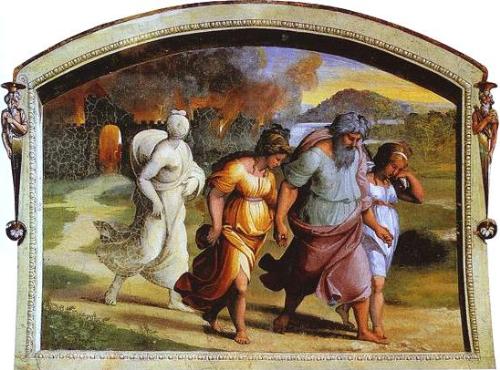
Salt is the remains of deceased organic matter which has undergone a transformation resulting in such residue as is plastic to the etheric world. Dynamic to our physical condition, it is revivifying, electrifying, corrosive, compelling, and above all, it is the past, the very edge of death, the substance one would glean from the end of the world. Here is the turning point, salt the catalyst, as it is reformed death, recomposed and still consuming; matter having resurrected, but becoming salt. Faceless salt.

Further still, we know how the organic may embrace those elements which are inorganic, and of the planetary elements. How close they become, the two bodies intertwined! The marriage between earth and element, ether and mineral.

To have one's body be turned to salt (as some unfortunates have been said to do), means that the death forces have well and truly entered into the body of that man or woman. This would be the condition of all men, if it were not prohibited by a contrasting and opposing condition, cosmically imposed, desisting such outcome. For all matter does work its way to certain points naturally; and salt being the outcome, needs be halted in its progressive activity throughout the human (and other) organism.

Of course without some measure of salt/s we would die. This is because of two reasons: Decomposure is matter released from form and fancy- by fancy we mean that characteristic which dominates the form in expulsion and release, whereby the constituents are spun into localities separate from existing bonds, and circulate within limits, freely. Salt inhibits such activity - it is verily as the specter of death inhibiting the free passage of otherwise wayward souls! It stands before matter and says "Look to what you might become, if you go further - come to me, or stay as you are!" And because of this, that which is held together in unison, resists the drawing of the salt, and is fixed in its presence.

Therefore, within the constitution, one needs salt for indeed two reasons. That there are two forces in question here: one, that of salt, and one, that of etheric distribution, of disintegration. The salt shall keep the lively forces in check, whilst the etheric forces shall most constantly maintain the position of salt.

How may one extract salt from saltwater? Magnetize the salt with salt. How may one extract the water from saltwater, apart from evaporation? How does one defy death? It is a matter of gravity and also of buoyancy. If the water no longer enables the salt to resist the impact of gravity, it shall amass downward, making separate the rest. Dissolved particles must return to aggregates, however salt can do this most readily. How then to remove the buoyancy from water, other than distillation? Set fire to it. Setting fire to water. Curious isn't it?

In Timbuktu he lost a shoe,
And bade the cobbler make another to match,
"Quite simply sir, why not buy another pair?"
"But" retorted the client, "I do not care for another pair."
But your shoe is of gold, and the seams are too stiff,
And the clasp's made with ruby" he said with a sniff.
"I cannot make another, for I have not the gold,
Nor the gem, or the craft, for this shoe now I hold."


So he went to the jeweler, who knew naught of shoes,
And he bade that he join them, or at least sell the tools,
But the man was indignant, that such treasure become hosiery,
And could not contend, with riches worn below the knee,
And so from that day, one shoe on, one shoe off,
And he hopped, and he hopped, like a clod with one clog,
For he would not part, with the half that remained,
And no-one could replicate such beauty again.

Now the cobbler was gravity, and one can remember this because of one's shoes being the closest to the earth, between a man and the ground he stands. The cobbler could not oblige with a shoe which was unlike the ordinary shoe: a shoe of gold. The shoe - which by logic would be heavy indeed - was of gold, which was light - light, buoyant light. It was against his nature and his capabilities.

The jeweler was the craftsman of cosmic impulse. And cosmic impulse will not ingratiate itself to be fully insteeped with matter to the point of setting itself 'below' a certain point: That the gold would not adorn the feet, for it would not enter into the realm of earthly magnetism. Whereas the forces of gravity resisted the comprehension of light - the light too, does repel and resist the lower nature of gravity.

In the case of saltwater we find that the old cobbler cannot enter there due to the nature of the water itself. If one were to deluge the water part to part, with salt equal in mass, separation would occur. But the water for that time should not be as water, but would be sacrificed to the salt. And water does sacrifice itself. It may contain light, and yet have the light driven from it. It may bleed the light, refract the light, or be the vessel of the light. When water is 'taken up' and made heavy, and absorbed within matter, it is for that time, impressed with that which it has lent itself to, and vitally permeated.

It is this which enables light, and for that matter, etheric vitality, to enter into the physical boundaries which are under the influence of gravity and its callings. That there is a protective body - for the light would not otherwise tolerate the atmospheric pressure of an ever impeding earth. Where there is no water, there is no etheric vitality - one can readily picture the lusterless vistas as portrayed within certain atmospheres of aged and withered stars, dried and decaying - if they are waterless, they are as corpses.

Physically, we excrete salt through bodily fluids. Think of the cycle:

Water (body of light, etheric vitality, & conversely etheric fire & warmth.)
Organic Organism (Born of water, permeated by; incorporating lower minerals, combusting etheric vitalities.)
Light separates from gravity and withdraws, thus, death to organism.
Deceased (unattached) organic material which has not re-embodied back into physical substance - gravitation, orbiting a spirit within matter, becomes salt (nucleus unto itself, gravitation fixed in nature of itself, turned in on itself, as it were).

Salt has become a self-determined magnet of attraction. Salt has given over to salt, and resists all urges to comply with other orbits of matter. It draws unto itself the water also: the water, which of the light, would usually give over to living life. Etheric fire is captured within the waters, having salt, which too bows to the water, only to water, and repulses the inclinations which the light does bring. It is through such repulsion to etheric force that it becomes formed as crystal. It is responsive, but resistive.

Water shall sacrifice itself to any gravity which absorbs it; having cavity and vortex to receive. Salt, by nature, draws water unto itself, but has absolutely no need for the vitalities which accompany the water! There is no life to be sustained. There is no ongoing organism. The salt remembers back to its needs formerly and repeats the pattern however. It calls to water and lusts after the vitalities. Salt may miraculously harbor such vitalities and discharge them in uncertain episodes; of relatively larger amounts.
Salt itself can become a body of cosmic influence, as it takes into itself certain etheric forces, and does release them according to certain conditions.

Salt still loves the earth, even though it is divorced from such activity as is natural to the evolving species. Salt would tell you that she is the queen of her evolution, and for this time has many roles to play within the structures of apparent beings and their evolvement. For this she will be redeemed and given life again, which is lively life that may become 'close' once again. She is self-centered matter. She has been overwhelmed by that impulse of which all self-centeredness is formed; but not ensouled.... Unlike all other self-centered beings, for whom their orbits create personal gravity and matter attachment.


Wednesday, January 20, 2010

Spontaneity, Procrastination & Deliberation- 8th August 1992


THE first and true measure of spontaneity was of course, the act of Creation and all of her designs, having popped up and out and into existence. What marvelous spontaneity, with all the verve and go that one assumes that word to carry! For it is neither more nor less – it is not only typical of new action, but new action abruptly decided and delivered; and one should add, it should be delivered extremely well to be effectual.

What makes for spontaneity? Is it merely a question of time perception or timing itself? True spontaneity comes from an inner response as to knowing correct action, and so acting upon that realization. A madman who is unpredictable and haphazard is not viewed as a largely 'spontaneous' individual. One does not remark that the child in all of her unqualified examinations or outbursts is being spontaneous. But rather, it necessitates that one has prior comprehension as to varied avenues of behavior, and swiftly identifies the preferable and acts on it without hesitation, without reserve. Therefore spontaneity is not characteristically mindless or senseless, even though it may appear as such for all of those who have not been as prepared as he who they have witnessed.



When viewing evolution in the light of this determination one may wonder at the conjecture which suggests that life is spawned in various spontaneous outbursts, all of which belong to the 'mad' category- that Nature herself is given to fits and seizures of complete deviation - divinity is not realized, beauty of pure form unaccounted for. And so the divisions are placed: that it is one thing entirely to suggest that nature may be, by our standards, unpredictable and with uncertain outcome, but another matter to fault the over-prevailing ego which of itself shall be decisive, albeit, quickly.

What of the ego, of she who is this planet so embodied? She who trembles on the outer skin, is pricked and prodded, and ravaged by men. She submits with forbearance, with determined fortitude, as she dances the skies with continued precision.

Alike to the Queen of the fairies with all of her attendants, the many marvels which enhance Creation are constantly renewing, resurfacing or even recreating, in a myriad of composition.

Spontaneity is tireless!

• It is a leap into existence.
• It drives the shoot up into open air;
• It changes a man, who, caught within the shadow of anger upon his face, suddenly turns to a smile;
• It gives the final moment of birth as the canal is negotiated and there is no turning back;
• It gives the corn its color, yellow;
• It gives an improviser a sure hand, a confident flourish.
• It is neither erratic nor misplaced.


Love is truly spontaneous by nature: it springs forth without reserve, for love is not challenged by doubt or by indecision. He who loves knows how quickly and swiftly the associated actions outcome, and the responses, which are not guarded. It comes most naturally, profoundly arising upon an impulse which exceeds all lower impulses.

We may be moved to many activities, and for those in which we are spontaneously inspired to respond to the higher impulses, definite, enlightened and swift action does ensue. Of course, there is a time for deep consideration - the solemn face of understanding, the quiet repose, the unadventured response. Hesitation has its place. Many an oracle has been consulted, many a seer has been pleaded and queried. How to decide, or make choice, if not with spontaneity, but only with sure hand and mind? Even when one has all the knowledge gathered in, one may still be unsure of said choice - procrastination being the opposite to spontaneity. Procrastination of course is a form of action, albeit to the negative.

How often one acknowledges that a conscience ignored is a conscience sorely thwarted - that we may pass up those opportunities to make good or make correct the ills which we know continue. And with heavy heart we may neglect such callings. We procrastinate, even though we are moved within as strongly as ever before. It is as though we are seized by a confusion which binds all ability, and that which would have come spontaneously is inhibited - the real man not forthcoming.

We are drawn in piecemeal to many obligations; obligations with unequal importance. There are two views on this: that one's greatest obligation is that which is of the moment, or conversely, it is the obligation which is as yet unfulfilled and awaiting. Whichever way, the inner man is not only restricted by a sense of pressing obligations (such as obliging the lower man, obliging all lower men, obliging that which he has committed to, etc.); but also he has disadvantaged his own judgment by making many mistakes in the past, by which he has suffered. The disconcertion which arises from this predicament is also procrastination. The imbecile hearkens not to failure, and rarely procrastinates - or hesitates, for that matter. But remember, one may hesitate with due caution or procrastinate unduly, and deter oneself from the chosen activity otherwise set in place.

Hiccups are procrastination.

Next we come to deliberation - that we have considered wisely and moved with deliberate intent. We have wrestled our procrastination, we have weighed all mighty arguments, and decided to be assertive in the particular. This is good. It is good that a man exercise his ability to deliberate and make action on it; that he decides for himself and becomes strong in this self-command. 

Too often, unfortunately, men are ill-prepared to find self-direction and to take responsibility for the ensuing challenges which decision making requires. One will find usually that a man has either too few or too many such decisions which require his deliberation - and better to be practiced, than caught in the sea of uncertainty. Men actually need to make positive affirmations. It is not so much the trial or the substance, but that they assert actively out from themselves, and exercise this from self and awareness of self.


The painter deliberately places each brushstroke to his satisfaction - perhaps with spontaneity, perhaps with careful precision - but all the while has also the sense of self, because of such intent carried through with. The expression is important to the man. This is why it is essential for the workplace that all men be given constant opportunity to assert themselves and their expertise, under their own governance, their own directions, because if weakened by an overriding set of directives laid down and made inarguable, the man shall suffer sickness (physical sickness) by repression of his own expression. Not to say that one makes ten men captain, but simply put, it is imperative for all men to make and qualify decisions daily. Often as not they endure repetitive habit which does not confront the exercise of will or judgment. From morning to evening they develop a 'sameness' in the day, which shies away from confronting deliberation. In this way habit-activities may be mistaken for spontaneity, insomuch as the individual is not required to 'hold back' from that which he jumps into. However, the same morning-tea is not spontaneity, although often exclaimed as though it were a new thought: "I think I'll have a donut today!"

Certain routines make good servants to men, and should not be interrupted for the sake of 'new expression'. It is via the rhythm of routine in which a man may go further and be better equipped to enhance his overall ability.

So we must look to correctness in all forms of response, that spontaneity be positive at all times and true to the inner knowledge of correct behavior, that procrastination will not dissuade us from such course as identified as correct and proper, but that if need be, careful deliberation accompany those doubts which are warranted, and the best action ensues accordingly.

Tuesday, January 19, 2010

Wishes- 1st August 1992

CIRCUMSTANCES may well leave one to ponder regrets when reflecting upon those courses which were taken by us, or for that matter, denied. Regrets when experienced are bittersweet. They invoke imaginations such as suggest more suitable endings or happier outcomes. Regrets are of themselves an invigorating panacea to a present complaint.

One can identify the measure of a current concern by the attitude of regret, which clings as a cloud-shadow hovers over a hillside. How often - more commonly however - it is, that one does not wish to change much of the past that has gone before, but that dual efforts, multiple lives, could have been 'tried out' and perfected, that knowing what one knows now, is perhaps a little over-late. It is not that time has been wasted, to the contrary, but that one would dearly have more time, much more time and opportunity.

And there is not one man who has not wished this for himself; many a good man too, who makes wish of this for others as well. We watch the innocent babies born, the struggles of youth, the demands that ensue. . . and there is cause to ponder the good sense in a life which may be so easily used before properly valued.

However, the resolve which is distilled from such regretful melancholy, with unfulfilled desires, with manuscripts unwritten - this resolve and inclination makes for a worthier existence held especially within the future. It is not lost or discarded by a man. It is forever valuable to him. The suffering as is known by all unfulfilment is quenched by the answer of future involvements, future presentations, of those very longings.


Explicitly one may also state here, that it is usually the case as regards longings. As one can well imagine, this is a difficult point if one hearkens after something detrimental but mistakenly delightful. The reason as illustrated by this is, that it is to great purpose that a man be given what he desires; even though disdain will inevitably ensue. For without the experience and firsthand knowledge of the nature of that which he has attracted to himself by such longings, he should be forever returning to such desires until answered. So in this respect our Father in His Wisdom did decree that all men be answered according to their wishes, and receive exactly what they ask for.

This point has been entirely overlooked by those fanatical fringe-groups of positive thinkers who make a point of decreeing for all that they should wish for. Yes, it is in accordance with the way of men that this should be so, but they omit to inform their demanding fellows in respect to the 'undesirous' being desired and received. 


The fact that in the short-term these desires may be in part fulfilled (hurriedly) is a little surprising, for one can add here that usually one does have to wait for one's wish to be fulfilled; particularly a good strong wish! Furthermore, there are two distinct types of wishes - those which are inherently good, and those which are inherently disastrous. And there are two types of wishing: those who would wish for themselves, and more potently, those who would make wishes for others. 


A gambler most fully believes that the fates are on side with him at the time of his winning: that he is answered, that he has made a wish which was granted. He is impatient to test and try this law. He does not know that this law holds good for many wishes: former wishes, soul wishes, and even illusive wishes. He is insecure in this knowledge, and in seeking constant reaffirmation of his status within the universe - which would otherwise overwhelm his sensibilities - he is verily 'at odds' with himself.

Know that we would never be denied, and that contrary to the opinion of those high and exalted souls who are qualified in many regions of grand wisdom - contrary, because they would assess that Man has much too much license over his affairs - we have abilities undreamed of. And as they are dreamt of, so they become.

The point being therefore, that it is necessarily of the greatest importance to know where one is coming from, and to what destination one should like to maintain. That we must focus upon the worthwhile and fruitful, industrious, illumined, and above all with the grace of pure love, an intent from the heart that commits all action by us and to us to be of God. If one may hold this before them and measure all regrets and inclinations by their sanctity, then the worthier future will also present.

All of our innermost longings which are dear to us, actually live upon our person and slumber until awakened into actuality. No hope or longing is ever wasted. No love is ever unrequited. If this were not the case we would surely be so distressed by the ills of the world as to be thrown into perilous despair. To all appearances, many dark and contaminated woes inflict most men; many of whom have not the capacity to see their way out from their troublesome plight.

We may well be frustrated at ourselves and at others. But if this frustration is not of itself violent by nature, or with vehemence, then it too, may hold purpose as an imprint within one's resolve. If one may encourage and inspire men to hope for more, and then be content to leave the future to fulfil itself in its proper time - not to be impatient for immediate results, but rather to be content to lay the groundwork for such greater desires - then most properly, the stimulation will cause rise to a more awakened man with a defined future.

It is precisely that men do not know where to look, or how high to reach, that anticipation is quashed because of the falsehood of discouraging outcome. Men believe that they need to know now or not at all, and that they shall be the same throughout eternity. Even sainthood is undesirous, because it appears unattainable; and it shall be unattainable if unsought and unhoped-for.

It is a matter of focus, of longing and of desire.

• To perfect our desires and not abandon them.
• To not be afraid of regrets or upset at our longings because they are at present not forthcoming.
• To be generous with ourselves in the true and proper sense, and then equally generous with all men, for such wishes afflict each and every brother, even before actuality.
This is why a body of men who have grouped together with a purpose defined, become an awesome strength within the world. It is that they do mutually desire and wish for a settlement envisaged - and the outcome will advance. And today there are legacies from such groups of men as did pass away many hundreds, nay even thousands of years before; but they were so strong in unity and intent that their wishes remained until that day of fulfillment - and that they knew this, so much the stronger!

The best proviso in the world was 'Thy Will be done'! Only in this attitude of soul may we step safely into the world and into activity. Without this soul-attitude, we are before perils which of themselves, may take an eternity to intimately come to know the proper dangers and deceit therefrom. So we humbly come to our circumstance praying to be sustained throughout the dangers, carried across the waters; and that we may only wish as our Father would wish - that our choices be good. It is surely foolhardy to wish otherwise.

My Blog List

Followers

Esoteric Christianity Archive