Question:
We have a question from one of our dear friends about an episode which happened when she was a child.... There was a time of great distress for her around the passing of her father, when at the funeral lunch she had been told to leave (because of her age) and go to her neighbor’s residence to be cared for. What transpired was that sometime after the upset she actually found herself sitting in the gutter of a nearby street - with no recollection as to where she had been or how she had got there. No other person could help her with this, except to say that it seemed to be three hours or so which had lapsed. Her question to you is: Can you help explain what did happen?
Thank you.
Question:
We have a question from one of our dear friends about an episode which happened when she was a child.... There was a time of great distress for her around the passing of her father, when at the funeral lunch she had been told to leave (because of her age) and go to her neighbor’s residence to be cared for. What transpired was that sometime after the upset she actually found herself sitting in the gutter of a nearby street - with no recollection as to where she had been or how she had got there. No other person could help her with this, except to say that it seemed to be three hours or so which had lapsed. Her question to you is: Can you help explain what did happen?
Thank you.
FIRSTLY we may reassure all such people who have had similar experiences of memory deficit that there shall be due occasion prior to death and most certainly after death, whereupon they may review the happenings unknown which will then become most plain.
This is a comfort to the many that have vacant spaces yet to be filled; and it may also be pointed out that whilst there are great differences between unconsciousness and semi-consciousness, all men in their conscious receptivity are lacking somewhat in their observation and retention. There requires that time indeed, whereupon they may explore the events with a fuller aspect of ingenuity, and so one cannot expect to have such a defined 'grip' on the happenings around them at any given time, let alone with a reliable continuity.
This is not to suggest either that all men are mad. Fortunately this is not the case at all; there are measures of reality established concurrently and the more obvious truths are received en masse. However this is leading into an interesting realm when we try to understand how it is that men may comprehend events in the first place. By what tools do they interpret the happenings of the world?
To define our daily waking consciousness we may begin by agreeing that it does differ from the consciousness which has moved on and out of the body during sleep. During nightration, when the body rests without the will of the man to guide it, the animal of the man is somewhat divorced from the governing soul which inhabits his body. Just as you may tie your mare or stallion to a post, we depart our bodies nightly with but a slender unseverable rein, exchanging our charge for the wings suited to Heaven, returning refreshed with feed for our physical body, which is knitted together with all of the necessary cosmic forces which comprise the physical substance life-bestowed.
Consciousness cannot be in two places at the one time. It is where it is. It may certainly be projected out from a thinking man, and the man is therefore transported to that place or that person which he has cast his intentions (or love); however, it may not be here and there, as it is the foot-runner to the soul, going first, presenting first, at all times. There should be great divisions made within our nature if it were to be otherwise. If creatures or men, could manufacture a secondary consciousness then it should happen that they would be two beings and not coherent or consistent within their own whole.
The way that this is tolerated is quite wonderful. We are afforded the abilities to step outside of our own selves. In wakefulness we may negate the responsibilities of our earthly representation of ego and will (in the instance of a stroke say for example or in the briefer sense the departure through meditation or in active combining) and forego the necessity to drive ourselves with complete detail.
The expression 'to be lost in thought' denotes that occurrence when the man himself has directed his attentiveness into a realm where he shall leave his ego or powers of willing behind temporarily. He doesn't as a consequence, keel over in a swoon from such a process (the point being that should this occur there still remains the capacity for reorder and finding the way back); however he frequents realms of thought and beyond, in a way that cannot be fully retained at that time.
We can find an immediate experience of this when we are caught by such beauty which inspires us to leave ourselves in the very transaction of contrast. When we are witness to an ambient sunrise or sunset we are almost incapable of comprehending the occurrence with an active consciousness. The event does not relate to our own selves, in the sense that we have not willed it to be so. We have willed that we be there for the happening, this is true, but once there, as we stand we may find that the colors in the clouds take us out from ourselves, not with split consciousness, but with all the vagueness of one who is experiencing a marvel without needing interaction of self. Much joy comes from this.
We can know joy, because of that 'selflessness', given in the meaning just described. You may understand that we are enhanced by such happenings, for this is not injurious in any way to a man, he becomes forgetful of self only temporarily. However several things shall ensue from this condition which we shall describe.

In the first instance, in relation to the sunrise example the man has ceased with a tension inside. Maintaining constant consciousness in active willing - deciding and thinking, planning and involvements - wakeful consciousness may be depleting to the man as it requires self exertion to be maintained. When we exert our selves (even in opinion) we are responsible for that effect which we give out into the world; and reasonably we may assume that until such a time in which we are adept at carrying ourselves and our beings with the profile of an angel and all of the positive forces of Christ, then we may assume for the time being that we (understandably) are given to error and misjudgments constantly. We are liable to cause more havoc and consume more than we offer; we become karmicly entangled over and over with a seemingly impossible store of mistakes to make answer for.
Our true self-consciousness is seldom rarefied, being somewhat enmeshed within a substitute mind, self-made and repetitive, rather than responsive in the minute, in the present, in the very here and now. A sharper consciousness would be painful and we all settle for the buffer-zone thinking, relatively speaking. The point being expressed here is that the individual is taxed by the repeated exertions of self, and he may find a respite when he can invest his attention elsewhere.
This holds good of course for the immediate also. The here and now is an eternal, and when we find sense of the immediate, of the here and now, we thereby experience the duration of the eternal. We find God in that - not in the minutes, but in the minute, not in the divisions which identify, but in the underlying spirit shared.
Now the fact that we can commune in such a way is remarkable; and that we are not rent apart in the process. In the story as given from a little girl in sad circumstance, it may be said that this was a time whereby her sense of self was exchanged for her longing for her father. Some individuals are so placed with empathetic longings that they may well go in consciousness apart from their own egos, and in this instance, it too must have been the will of the father that this be so. Because as explained, it was not a matter of will for the child once there. What kept her apart from herself would have been her father himself, who as it is to be remembered, was very much present at that special time. Her longing coupled with his love and longing to, drew her out from herself to where he could be found.
Usually it would be that the father would have gone to the child (or whoever), and he would flit in and out of their consciousness that they would be distracted by his presence. However here we have a little child who had traded her ego-consciousness fully. Her own will forced her self to repel away from her ego and be with the soul in consciousness that she chose to be with. A child can manage this best for their consciousness and projected imaginings are empathetic with the world rather than taken with their self's self - this being but an extreme example of a very sensitive individual whose love went beyond herself.

The memory of what transpired shall return and become a treasured keepsake for the soul who now feels the need to understand. We often try to recapture such realities that do not translate into the reasoning because they cannot translate into the reasoning, however the soul's perspective and comprehension is there, in which the account will be found, and therefore such experiences are not lost but rather recovered with merriment and great meaning. When this recovery does happen (particularly after death) our consciousnesses has thereby adapted everything in full knowledge. This is why our faith may bring us privileges after death that cannot be realized in life. All of our findings are exalted. The sunrise which saturated us then, is seen in full glory and comprehended in totality and it is magnificent.
Remarkably, the principle as described before applies right here, and it can be said that there is a greater will which receives us within the sunrise that we may go to it. The invitation is there, the consciousness meets with our own and we commune with a mutual affection. The sun we may lovingly cast ourselves out into, at dawn or at twilight, does truly know us. We are received. And our joy so known, though oft forgotten in clarity, inspires rapture in the infinite, to be realized in our being.
IF a man may hold even slightly to a possibility, that measure of faith shall bring him to a condition whereby the future may begin to unfold and make itself apparent to him.
In our physical development and our current status, there may be ways in which our senses and our thinking are quite unsuitable to the soul who has come to that divine logic which travels a broader reach. Nightly experiences during sleep may not form coherent pictures within the waking consciousness to the degrees known in the extraordinary senses. Various centers, physical organs, may require time for transition, when the inherited characteristics or past modalities within the system have been confronted by the inner man who has pressed ahead of his physical capabilities.
The renewal and revitalization of the constitution expresses the 'new' man, who has met with death and yet taken the road to change, rather than continue on with the repetition of the past. This reworking of the system takes time, however we are obliged to consent that our physicality is very much suffused by our very selves, and we may understand that debilitation is not vacancy, but rather a prelude to new forces which are to come and work within the man as he prepares.
The perception of our Christ at present, within this time and physicality, is at best dull. His occupation is filled with bringing to us the substances of our worldly reality and the substances of our heavenly traces. He does not emphasize Himself, but is 'hidden' in these substances which are all about us and known within us.
Were Christ another god, one to whom there required an obeisance to ego, He should have impressed us all with visions of His great being, albeit modified, that we should comprehend it. Universally there are galleries upon galleries of such gods who became hardened to all time - hardened in the sense that their first vision was to define their greatness and build upon it.

The laws which apply to Man seemed to pertain to these heavyweights conclusively, that by the very process of retaining 'self' without the receiving of true life from without, they became sclerotic and slowed to the pressures and forces of change which inevitably came in upon them. Some sought to bring life into themselves by consuming it from others; then there were those too 'pure' to tolerate the lesser emanations. The results were the same, that the minor gods who ceased to draw willingly from the higher spheres became disparate and were overcome by sloth. Being so fixed in that which was their own creation (mainly themselves) they forgot to honor our Father God and their influences were thus diminished.
The fairy folk play hide-and-seek with Christ because He is everywhere and nowhere. They are charmed by that kind of intrinsic magic, which to them is far more appealing than the fireballs and thunder shows given to the tensions in the angelic realms. The etheric realm is lit with that same golden richness which comes from a ripe and languid sun. It is the place of late summer days and then spring beginnings, with never a winter or an autumn to follow.
Then to the contrast, we may find in the World, the icy masses, impenetrable seas, the membrane of cloud, down to the baubles of dew. With perpetual reticulation, from aggregation into humidity, condensing and expiring, infilling and free-flowing, the transparent waters give form, though themselves are formless, being an immediate example of this paradox of knowing Christ well.
Illusive - why, even our saints are intrigued! The mystery and majesty never ceases. Necessarily Christ is way above and beyond us and cannot be totaled therefore by our perceptions. How then and why then? (As the question was asked.)
We are taught that much rests upon our own self-determination, inasmuch as it requires for men to desire and to accept the blessings of Heaven that they be administered. At any point a man has the freedom to be satisfied with who he is and has become, and just as the minor gods aforementioned, who did become immobilized by their own fixations, we too may mistake our own flash of divinity with the whole of Divinity, believing them to be one of the same.
Understandably this is attractive to man; it also is part of the parcel of knowing our God and our Christ. But still, as wonderful as it is, it is not enough without the added labor it requires to hold distinction, that we may find the Christ outside of ourselves and appreciate Him from the outside in, as it were, as it is also.
We began by discussing that Faith provided the bridge into the future, and here we find that the Christian faith is especially proven. It is the ticket onto the boat. It is the pilgrimage into the future. For the souls who have aligned themselves with Christ and go to Him in a confidence which is seemingly unjustified, there becomes an inspiration of possibility, because in that process they are instantly drawn out from themselves and so humbled.
When we come out to meet with Christ we return with new life, a life empowerment which wouldn't have been received had we not requested it. This Christ-life quickens within the Man in various actions, some which will continue on after death and enable him to incarnate quite differently further on. It is a matter of preparation. It is a matter of future.
It is not the naming of Christ which is so important. The name of Christ has gathered unto itself an attachment to Him and strength which does follow, but is not His true name. It is not His proper invocation. It has no universal patent.
When a man seeks to know Christ he has immediately conceded a great truth. He has also conceded his own humble standing in relation to a far higher and grander ego than his. Once again we may express the importance of this concession occurring within the psyche and intelligence of that man. The atheist defies God by his snubbing, with such stupidity which confounds the wisdoms which cannot reach into him. His willfulness sadly removes him from his own source of life; and in the case of Christ, once again the man who is not prepared to accept Him as his life, is going to 'miss the boat' time and time again.
So it is not a question of instantly knowing the unknowable, but rather an inner perspective for which we may identify the great soul of Christ as Lord over all, and prepare to receive His Ways in Man and for the World in preference to the challengers a'many to whom men may profess submission to.
Before the point of death a man shall have Christ before him, just as He stood at the side of the crib. As the memories trace back to this beginning of the lifetime, the man will know his Christ in the same way he could receive Him then. The little infant has not yet made fusion with an active ego, and receives his Christ with a heart and mind which are one. This experience will return again at the point of death, and is most fitting, because the soul of the man should know of the love which has contained and embraced him from his beginnings.
One can never predict those vital moments which come upon a man in his consciousness or in his activity. What may be foretold is that truths which are presented to him during the course of his life, remain within close proximity always after; that he has had the connection with them. So that whether or not he has come to consciously concede or comprehend such a valued truth, it is there nonetheless for that time in which he may come to know it.
Also the domino effect comes into play; particularly when circumstance (as in just prior to death) realigns the thinking in such manner that overturns the habitual reasonings. It can be that so many worthwhile offerings as brought to him by others who have come to their faith or their truths delighting in them, catch the intelligence and are made known as for the first time.
It is an especial privilege for the one who makes wishes for another, to witness this process of realization. It does happen this way frequently, because not only do our desires for another's wellbeing draw us closer in actuality and karma, but also after death we are privy to the consequences as well.
The fervor which comes to 'Christianize' the World is far from being selfish; without it the World would be barren, it could not prepare to receive Him further.
As pictures which flit before the mind's eye too rapid to be seen, we glimpse the future's horizon, and we know that He is there ... Though His silhouette is barely visible, His Love is known by us and will carry the infant Man through into the reaches of faith and then ... beyond.
ALL individuals have a right to privacy - their private individuality - which may well contradict another's title-holding to them, such as with family, with commerce or laws given to social and state positions placed within the assumed jurisdictions. It is a blessing that we or others, cannot storm in upon the thoughts of all else, uninvited and unempathetic, and foraying their inner seclusion. Each must do his own thinking, feeling and willing, dreaming and realizing, to choose and be as he sees fit, knowing his own heart and mind with far greater authority than those who would usurp it for their own, if given the occasion.
It is true to say that like attracts like, that we win love with love, respect, with the giving of respect; and gravity by measure of our own serious aspect.
We can assume from the start that all men mean well, that they are embellished with constant trying; whether mistaken or true, they happen upon their circumstance circumspect, loath to bring the heavens down upon them. Even reckless people, so named, are not so carefree as to deny their soul's margins. They are living on the periphery, for it is there that they feel placed, not because of defiance to life with incredulent scorn or apathy for life; they are rather, uncouth in their in involvement, skating at the edges as it were.
From man to man (as in one soul unto another) there are myriads of relationships which span the lifetimes, and weave a constant story. The value of soul-kinship brings to each endowments which could not be understood or made known through relationships with other kingdoms directly. Perceptions come to us because of realities shared and quite often forged by past hopes mutually built upon.
Modern thinking tells us that things are as we make them, that reality is as we do - in a manner of speaking. However, reality is realized by the power of two; and two or more may effectively call into being, whereas one on their own may not.
The higher angelic beings know us when we come to know ourselves as mirrored by another. Often the joy as expressed and received in company is directly related to those beings’ excitement who participate as from afar. It is as a light made possible by deflection, as the consciousness of one satellite, one man has been met with and is received by another. Effectively we become as suns and stars of their inner-reaches.
Likewise, such evolvement amongst men in communion, affects the animal realms quite also. For here the ego of man is rendered quiescent for a time, and it is during that episode that the animal-soul may begin to comprehend its parent, rather than by being excluded from the activity as it most normally is. It becomes as if the audible world produces words now understood, it is their way in, when there becomes such incorporation.
Further to this becomes the opportunity for evolvement in the passing on of various developments. As stipulated before, one may not make something out of nothing; we are in that sense, predestined to be what we are already, kept hid or manifest within our being. But subject to this is that we may lend some of that which comprises our beings, and share those qualities with another, thus transferring them by way of the signature keys. This is how a master may teach a pupil for example, how it is possible for the pupil to be brought much further than if he were to study by lone observation or merely with equivalent colleagues.
It works also to the principle of nutrition precisely. And it is natural for a man to seek the company of those who are in high commune, for the instinct for such ways to betterment is as old as his being. This is how he began and is compelled to continue.
Our Christ does not distinguish one love from another. Where He finds it He is. He has no preference to any particular Church or institution, nor union named or unnamed; He is not partial in His Nature. Love is the supplication, and the ennoblement of Man, it is the realization as it is the gateway through to all else.
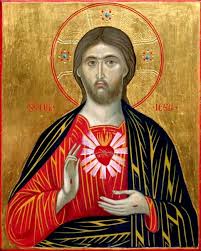 THE Christian Christian always holds to the greatest ideal; with mercy at the stead, he is graced and ever forgiven. There is a parallel and there is not, in those things he may be subject to, contesting his prudence as an encore to sin rather than reproof.
Ideals are not a vanity, nor are they imperishable. The preponderance of ultimate virtue often brings argument, for one virtue may insist upon another- the libertine will find this (libertine - free thinker). It does not decry the Virtues in all, but it does censor their convenience.
If we as men give preference to counter considerations equally, as they assemble in the cloisters of the conscience, if we are sincere and unafraid to examine them all, we shall be equally bemused if not guided by a differential of a promotion of reasoning and forsooth of circumstance, with the assumption of Love.
THE Christian Christian always holds to the greatest ideal; with mercy at the stead, he is graced and ever forgiven. There is a parallel and there is not, in those things he may be subject to, contesting his prudence as an encore to sin rather than reproof.
Ideals are not a vanity, nor are they imperishable. The preponderance of ultimate virtue often brings argument, for one virtue may insist upon another- the libertine will find this (libertine - free thinker). It does not decry the Virtues in all, but it does censor their convenience.
If we as men give preference to counter considerations equally, as they assemble in the cloisters of the conscience, if we are sincere and unafraid to examine them all, we shall be equally bemused if not guided by a differential of a promotion of reasoning and forsooth of circumstance, with the assumption of Love.
The Christian Christian is not in the business of sin for sin's sake. His quandaries are of different category, his choices are for which higher principle; and he must come to be a man who truly knows his heart and acts accordingly. Therein the highest principle may be settled upon, for out of Love rather than fear must we be stimulated into effectiveness.
"But we speak the wisdom of God in a mystery, even the hidden wisdom, which God ordained before the world to our glory: Which none of the princes of this world knew: for had they known it, they would not have crucified the Lord of glory.
But as it is written, Eye has not seen, nor ear heard, neither have entered into the heart of man, the things which God has prepared for them that love him.
But God has revealed them to us by his Spirit: for the Spirit searches all things, yes, the deep things of God. For what man knows the things of a man, save the spirit of man which is in him? even so the things of God knows no man, but the Spirit of God. Now we have received, not the spirit of the world, but the spirit which is of God; that we might know the things that are freely given to us of God. Which things also we speak, not in the words which man's wisdom teaches, but which the Holy Ghost teaches; comparing spiritual things with spiritual.
But the natural man receives not the things of the Spirit of God: for they are foolishness to him: neither can he know them, because they are spiritually discerned. But he that is spiritual judges all things, yet he himself is judged of no man. For who has known the mind of the Lord, that he may instruct him? But we have the mind of Christ."
1 Corinthians 2:7-16
Question: It can happen in families that there are distinct differences between child and parent, which may manifest at an early age, or become obvious and difficult as the child reaches maturity. As a consequence there may be discord and unhappiness from either involved. Can you tell us of the purpose and reasoning for such? We have a parent who has asked this, who has wondered to what purpose she has been placed in tensions aggravated by another.
IT is not our sole duty to appease the nature of another, when mishap and mayhem are cataclysmic to one particular individual. It becomes a natural instinct, praiseworthy and imperative, that we desire to make aright and restore some order to a chaotic and rowdy personality. Yet so said, it is almost an impossible task to forcibly quieten another by any means without it causing due harm to them and consequently to yourself into the bargain.

Such frustrations brought about by the disruptive influences which challenge our own sense of equilibrium, bring about untold injuries in time, during episode and thereafter, if not met with capably. Assault in the ethers directed from one individual to another, can take many forms, be them obvious or not, intentional or otherwise.
Underlined verbally or held in thought, there are critical violences occurring when the will of one man comes up against the will and ego of another and the two do not coincide. We have therefore, a problem and an examination within the question. The study is as to why the problem is, and as to how we may best answer the torrid and the persuasive with minimal 'wear and tear' upon our being's resistance.
Firstly, our differences between one another and the world at large are accentuated by Christ as much as they are answered in Him. This rule is important to go by and to honor, and needs be taken for consideration. The careful balance of our being incorporates our godliness which excels each man foremostly, and encourages him to qualities known and experienced, such as certainty, surety, forthrightness, willingness (and to a lesser degree willfulness), the making in creativity and so forth. He has a cosmic confidence if you like, which enables him to be insufferably obstinate and definite, forming himself as he goes with those God-given elements making him so remarkably wonderful in all that he truly is.
To realize our talents as well as our soul's attributes (realize, as in put to use), requires that our ego (our sense of our selves and that which knows that we are what we are and not something else) may discriminate in favor of our own personal will and wishes. This ability to cordon off extraneous influence and become self-interred is a function (cold word) of our self's egohood, that we may begin to examine the differences which confront us between what we have and are at any given moment and what we may become. Then we are conscious of a choice, a deliberate choice in which our will comes into play should we revoke our interest.
Our interactions with souls who have been brought to us by way of the family (bloodline or not) are most usually involving some carryover from past conduct. For us to be connected so intimately as we are within the family means we are refined - it is as a planetary dance of mutual magnetisms. We are held in our position by like individuals who share long and lasting histories of involvement with us. By and by, our relationships increase all the more from lifetime to lifetime. Therefore the few which we are met with and held with in terms of family title, are especially favored by us, by our soul-selves, who in overview regards the significance maintained.
Our personalities differ from lifetime to lifetime. The inherent traits which appear to be much of a man are often as not no clear indication as to the soul within. Our personalities belong to the activity of the lesser self in which we are settled within for most of our waking day. One's personality does not regard another's because it is incapable of weighing such consideration. It is rather, responsible for becoming the vehicle for activity and is marginally decided by extraneous factors such as our liaison with time tides and how we correspond to various planetary influences which work their way into the corresponding substances which receive them. Our own cosmology belongs within our biological system also, and we can reflect the heavenly transfigurations (or more accurately, certain aspects of) by those materials we attract to ourselves favoring this or that particular influence.
The personality equips us with a false veneer of being, protecting the sage as well as the idiot. It is disposable after death and we are unencumbered long after its effects have been dealt with. Our lesser selves, on the other hand, are developing also, for in accordance with them are 'families' which are attached to us invisibly and who are brought further within their development should we increase the value of our lesser selves by effort of a higher desire.
The willfulness of a child is distinct from the willfulness of a fully grown adult. Karmicly a child is ineffectual within the world and cannot be brought into account until he or she has broached the passage of puberty or beyond. Although this is no comfort to many who may have come to grievance with a young being, it is not intended to be, it is just simple fact. We can go further to discover what influences therefore may contribute to such a youngster who suffers an unruly disposition.

The occasion of parenthood brings the individual to his uppermost trial and glory. In the tradition of God we are brought to self by selflessness, brought to love by that love we offer, brought to another by our service to that other, resigned without question, misgiving or fear. Souls who come to us for that care to be had in infanthood and through to maturity (and beyond), have chosen us because of the indefinables; and it may be noted that no matter how wonderful or awful the past conditions encountered were, the mutual love to be had belongs right in the present and beyond, and therewith is the true significance.
There are many items one could mention, and yet all important relevancies would still be left out, for it can be witnessed within the spiritual realms how exactly it is when one soul chooses those future families to correlate with. It is as a quick recognition which flashes like a fire in a diamond, a fire which may travel the expanses of a spirit-filled space to find its likeness and its future home to go to.
As we are born we are given to an assortment of difficulties, and although there may be many who benefit in learning from our shortcomings at any given time, it cannot be pure reason alone which decides for any weaknesses that we do endure. As children we are protected from harsh consequence, inasmuch as the individual within will not suffer that which the child endures. The naiveté of the child extends right up and into its higher mind, and comes to a conscious bonding gradually as the years progress, coming to know, decide and retain that which has passed.
All the while as the individual is forming, there are indications as to their overall nature and eventual selves, and yet they are incorporating into their manner, imitations of those who hold the greatest bearing within their short lives. These attributes are magnified, intensified and overtly displayed therefrom. The child can become a caricature of his surrounding personalities; exaggerated and worked upon with a happy nonsense this mimicry equips them in the world.
Why it is that children differ in their disposition to characteristics so inherited from parent and others is another matter. The point of origin lies with the surrounding adults, and if recognized may be answered by that adult also. This does not only work on the basis of imitation and example, it addresses the problematic thought-form to which the child and adult have become subdued.
A thought-form is that which has been characterized by the nature and the passion for which the thoughts reside. All men acquire them, all children are impressionable to them. We may clear them by revoking our vigor; and most particularly where there is conflict so known, for with conflict there becomes an expenditure of vitality which acts as a magnetic encouragement to every neighborhood demon in the immediate.
The child will exercise his will against that of the adult. As a man he shall need this strength and capability of will in order that he may withstand all that is wrong for him in the world, and consciously make choice for all that is good and correct to be put into action.
There can be children to whom there is a marked purpose requiring that they may exert themselves now so that in the future those properties are developed to meet the tasks ahead. Quite often where there have been worldly souls who are given to help shape humanity's changes, we find that there are sporadic outbursts and intemperate moods, as the pulse of their life-force drives rapidly and the individual is eager to acquire much, but frustrated by the necessary time it does take in the process. Therefore the child should be brought to enjoy childhood as long as is possible and distracted from his impending adult advancement.
Most would encourage the maturity in every form, believing that the child is capable of knowing what to search for, and it is understandable that we should follow the progress of an individual and seek to answer it. However, there are those things which may not be hurried, and when the will dominates the child's life with an urgency that he is ambitious to greet the future (as is the case with a worldly purpose-filled soul) he expires much healthy vitality of himself in the effort, and then draws from others as well.
We can bring a child back into childhood by those things which feed his soul rather than his intellect. Where cunning or cleverness is concerned, through to thoughtfulness and straight intelligence, the child may continue with relevant school work as is, but requires the release from his thinking as well. What brings him to simple joy, what leads him to take the time to find beauty (in nature or in art), what helps him to lose himself for a time that he is not so tight fixed within his ego? For he is acquiring his sense of self too rapidly to be given time to develop that self most adequately.

When we relax our ego that we may come to meet with the world, we then incorporate that which we have come to know and to delight in. Thus the world becomes us, as we are the World. This principle holds good for adults as well as for children, and yet there are those for which the opposite concentration must apply, who have to restrain from their advance out from their own egos and become more practiced in defining self.
The problem of weathering another individual's outbursts or 'assaults' as described earlier is one where there is a definite contrast known between being comfortable in the presence of someone, to being caused a discomfort by their behavior directed towards you or to another. It is not advisable for one to take the attitude that they ever 'deserve' incongruities which cause upset, nor that they should at all times somehow receive an insult or onslaught because they are duty bound as it were. We can and should be gracious about another's weaknesses and not retaliate to any degree, and yet we are also responsible somewhat for the continuance of their mistreatment of ourselves should we encourage it by our very acceptance of it in the first place.
Inner tensions do not begin or resolve necessarily within the mind. There is a delicate play between one and another, and usually a concordance which both may entertain each other without distress. Then for a variety of reasons, one may step beyond their license and try to exert their wilfulness upon the being of the other. It may be for a seemingly trivial 'reason' so given, whereas in fact there is the pleasure in the will's urging moreso than the noted endeavor.
Our freedom as given to all men, enables us to refuse the will of any man, creature or being. In the short term (and speaking in overview terms) the worst that can befall a man is an early death when he rebukes the will of another. They may intrude only that far, but they may not take his soul lest he give it. The choice as to whether or not he does give way is always and completely his alone.
Taking this axiom into squabbles identifies the truth of the matter sufficiently. We may be compassionate to any man who tries to persuade us with this or with that, but we must be restrained from ever seeking to please such a man who is unreasonable with their requests. The strength that it requires to meet up against a practiced persuader soon tires if that is all that we have, and so if necessary we may direct our concentration away from their attentions and say this prayer within (the words themselves are not important, just the sense of it) –
Dear Christ,
Give this tenant his draft-plan,
And me mine also.
Bring him the good manners he lacks,
And me the good grace to receive him,
Where can and where not.
Enable me to withstand,
That I shall not corrupt myself
By failing myself and You also.Amen
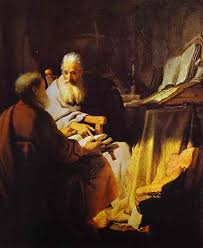 TO teach is to assume authority; we assume, we take on the pretext that we are more capable or knowledgeable, or that we have a value to add to the pupil who is submissive to our thought. It is a responsibility when reckoned with, both lawfully and dutifully, that we have managed well, that that which is taught is advantageous and not destructive to our pupils, and delivered with perfect intent, reason, preparation, deliberation and sensitivity to their comprehension.
The teacher must be prepared to adjust and adapt accordingly. Yet also there is a definite plan (as opposed to a conversing style which is led nowhere in particular) and a beginning and an end; whilst also a consideration and an understanding for how it is being received.
A teacher is set apart from his subjects during that time of presentation. He may relax after the matter, but in the tradition of all leading teachers before him he must honor the task and compel himself to its proper execution rather than swing in and out of his service into familiarity and nonsense; for the confusion to the student annihilates the trust required for the egos involved to fully absorb that which is being brought before them.
TO teach is to assume authority; we assume, we take on the pretext that we are more capable or knowledgeable, or that we have a value to add to the pupil who is submissive to our thought. It is a responsibility when reckoned with, both lawfully and dutifully, that we have managed well, that that which is taught is advantageous and not destructive to our pupils, and delivered with perfect intent, reason, preparation, deliberation and sensitivity to their comprehension.
The teacher must be prepared to adjust and adapt accordingly. Yet also there is a definite plan (as opposed to a conversing style which is led nowhere in particular) and a beginning and an end; whilst also a consideration and an understanding for how it is being received.
A teacher is set apart from his subjects during that time of presentation. He may relax after the matter, but in the tradition of all leading teachers before him he must honor the task and compel himself to its proper execution rather than swing in and out of his service into familiarity and nonsense; for the confusion to the student annihilates the trust required for the egos involved to fully absorb that which is being brought before them.
A good teacher can never be too thorough. Remember that with the spiritual precepts, once a meaning and a concept has been comprehended by a man and taken to himself wholeheartedly, it has been won by him forever after. Therefore should we manage to truly assist another along his way to one pure truth comprehended, then we have offered a jewel for his garment of self which will burn with a brightness ever and anon.
It may be that it shall even come in an unexpected event. Our study which qualifies us daily, and our practice of delivery, is brought into place at that time so needed for that person who requires our participation in their learning, that then the title of 'teacher' has fairly been deserved with evident merit.
Without a clairvoyance it may be difficult to gauge our effectiveness during a presentation. It is usual for some - without particular criticism - to merely address their pupils as though they were completely naive to the subjects brought before them.
In the categories of ethics and Spiritual Science there are plateaus which are not dissimilar to the summit, but are nonetheless a succession to be won with a constant re-learning and a progressive engagement. So we find that once the origin-concept has been identified as a spiritual reality and experienced by the man, he may then have the key concept to go on and progressively comprehend its application within the more profound; for paradox and principle repeat within an ever-widening panorama of interpretation and use.
The call to teach is not distinct from the priesthood, but rather a follow-on from a soul which requires that he may share his revelations. He may draw upon those lifetimes in which he stood removed from the ordinary mind and became saturate with those inspirations which have entitled him now into an easier receiving than most.
The priest works in a differing way to the teacher. His responsibility is largely given to God, his effectiveness is borne by God and his inner reckonings are usually kept between himself and God, whereas the teacher is moved to go beyond himself and risk his opinion amongst others.
There is a need and a supplication to the darkness in spirit caused by that terrible ignorance which keeps a man from his insight, foresight and Christ-sight. (And all three terms have nothing to do with ordinary vision.) There comes a time when we may compare ourselves to those periods in which we have been without the splendid truths which now illuminate our wonderings and our innermost realities. The arid planes of material thinking, although with purpose, were simply not enough, and the heights which we score with conscious jubilation ever remind us of those who remain earthbound and without the joys of spirit.

In our knowledge we watch eternity unfold and may settle into a calmness which projects all success into that embracing future. We see the karmic interventions warp and weave their courses obliged by the dignity of Man, and we are prone to respect the hidden worlds and hidden causations which inspire the one life as it opens out before us. We sense our own strength, in particular in that pocket of our own timelessness; and we may impart those same inferences which offer this spiritual peace. No longer shall the will of a man tussle with his God to the point of exasperation (for both). When the knowledge has been happened upon and the square-set of esoterics received, then the man is inspired remarkably to peace.
The set task of preparing and conducting an instruction is specific to its purpose; it is not, for example, the same as the stand-up comic would script, for the action of laughter is brief, and whilst the knowledge goes in, it also goes out. The comprehension is sporadic and the distraction of the humour's effect counterbalances any fast and easy acceptance so won.
Our own teachers support us, just as theirs are ever with them at those times when we have assumed that desire to make the spiritual incarnate within the higher mind and consciousness of Man. We can go to them and draw from their wisdoms. We may search for their encouragement and pray that if worthy, our attending fellows shall be receptive to such enlightenment that shall provide them with their humanhood fully.
The teacher must trust in himself and in his worth. He can have confidence enough that the wisdoms on offer are of fine material. Whether or not they are opposed [by some] is irrelevant to his demeanor; it is rather decided at the outset as to whether or not they are true or false, worthy or unworthy and so forth. So he may not go about measuring his abilities by the evidence in the moment.
Certainly he must not enter into instruction, unsure of that which he presents. Surety is no guarantee of correctness, and yet it is essential that we assume our correctness that we may deliver it well. We do not address our students that we ourselves may learn - the action is completely different, and it is to be decided exactly what the role of the minute is. Of course we too may become 'student' at any time and return from that platform, but we should not confuse roles or come to cross-purposes.
Largely it is attitude. It is the attitude which we take upon ourselves in reverence to the wisdom and to the truth, and to our kindred lovers of that wisdom. It is a humility born from respecting our teachers and our relationship to them, with a patience commensurate with the distance there is. It is a love and a concern for the men whom we seek to teach. And it is a courage of sorts, for we are completely responsible in every way for that which we bring to them; be it correct or incorrect we are answerable as to its use and effect, and therefore vulnerable besides.
May it be said also that the joy of each and every exercise in the here and in the hereafter is also translated from pupil to teacher, and although this is not the underlying motivation of the Master it does empower his own furtherings also. So saying, should a man teach that which inspires demons it will be precisely that, and that he shall bring upon himself, and so learned he will become!
Opinions are a lesser assumption of authority but not without the same consequences provided. We are responsible for our opinions wherever they be accepted (and they travel far upon the ethers and they often produce shoots upon the stem of likemindedness), so that even the casual or careless point of view or the misappropriate conjecture put forth, then becomes intrinsic to the future. All of these, whether haphazard or pertinent, shall be accountable to he who offers it, and such consequence will be known by him as well.
Now to the practice. Obviously we must consider at first what it is that our students are familiar with. If there is ever a time in which we lead them away from their buoy of accepted lore, then we shall lose them to the deep. There is no question of that. We aim for men to consciously learn only that which their will and discrimination decides; even our attitude must restrain from the zealousness which could only be described as forceful if seen for what it is. The aspect of forcing is counter-productive and happens more often than realized, even amongst the best of us. The temptation rests in all teachers at all times, for it occasions our own frustrations when we desire to be apt in our delivery.
Tension will be lessened by agreement. A simple agreement between both about an observation or opinion will ease this tension; however it is often a misused tool when the forcefulness steals its way into the then relaxed conversant. The tensions between the two are not equal and the recipient is unawares and often coerced effectively in this manner. The teacher must honor his work enough that he need not rely on maneuvers which gain little or no advantage to the soul anyhows.
There is a premise we may work from in our initial formings of any presentation, namely that all men are ready to receive goodness. It comes naturally to them. (And not to all beings of the Cosmos.) This supposition will enable us to test the 'goodness' in what it is we wish to bring before them. For men will understandably recoil from concept pictures of conflict, disease, dispassion and corruption. The ego is guarded against harboring such considerations which are tainted with these upsets - complaint will win attention but not understanding.
So we weigh what it is we believe that we can offer them, we ask ourselves not generally, but specifically, exactly what it is that may be best received. And once decided we do not distract ourselves from that.
Upon the question of how the teacher may best manage the blows of criticism (which are assuredly directed right at him) and sustain his equilibrium maintaining his presence of self, unhurt or unhindered by those who express their contradictory opinions, we are equipped firstly by understanding what takes place when the teacher's authority is revoked.
Many teachers seek approval, working on common ground with long-tired ideas. They are 'safe' in their roles, yet if bringing nothing new to their pupils, are effectively one of them and no more. However, at any time there is the freedom of a pupil to refuse a teaching (in any circumstance) and so the teacher shall not be deemed teacher (at that time) if his authority upon the matter is refused.
This can and does happen at various stages because, let it be understood, that usually a teacher shall travel right up to the perimeter’s edge of their pupil's understanding and then travel that little bit further, so that in time it is somewhat inevitable that at that point the refusal shall be made. Then and quite rightly, does the pupil withdraw into his ego limits and resolves the issues brought to him, mollifying their consternations.
He may then, after a period (days or a lifetime) choose to return, should the work have affected him favorably. The 'time out' for consideration is necessary - imperative to one properly receiving and working through any given knowledge - and one would expect this time to be afforded, else it indicates that the pupil has long before been introduced to this wisdom or has in fact gone and 'tossed the ball'. So we may anticipate the quiet withdrawal; however and by contrast there may also be reactions to our teachings in which a hostility becomes manifest. This hostility is alarming to the teacher because foremostly, he has emptied his heart into his offerings and is 'exposed' to harsh comment uncannily for that time he has given. For it is the part package of the principle of authority that we are to be more vulnerable within our ego than the company which we are addressing. This is how it should be. If it were otherwise we would be forcible - if you get the point. Our armor is off, our pure self is apparent. A true teacher cannot put forth his work with deceptive tricks or enticements or deliveries untrue. What is given is of him. Unless this is so it is perverted.
It is no small wonder that the teacher is wounded by such contentious, quarrelsome, combative, belligerent and argumentative discourse, as may ensue by those who contest him and his own. If the reactions are noticeably hostile the cause lies usually within a deeper happening. The soul of the aggressor suffers the hatreds inflamed within his astral body, and the ego identifies with the pain of the soul and it is closed to consideration. The angry reactions result from past anger (elemental in nature, and therefore to be felt strongly the more reinforced that they are), and so by their ferocity alone the teacher can gauge that it is not merely a reaction of the moment which is directed at him. He is not the cause of the angst. He is however, responsible for the distress should he decide to further it.
Our responsibility is relinquished by rebuke, however in attitude we may care for our fellow men enough to seek the means to quell the argument, regardless of personal attack. However, to concede in such circumstances enforces the aggression; it does not allay the assertion put forward. As a teacher we are expected to stand firmly, there is no need for false concessions, for unless we are pressed to truly question our own correctness upon an issue, it is preferable to remain confident in our approach and tenacious in our terms.
If we are decided but given to the wounding, there is no great alleviance in the immediate. Those who are righteous do suffer, and then further on, they are rewarded for their strength. If there was a way to feel better and deflect the commoner's angst it would be to the disservice of them. It would be but an added aggression, which may be handled apart from us by another; this is possible and practiced often, but may not be maneuvered by ourselves to escape the onslaught.
It does not mean to say that one welcomes bad behavior or insults from another, nay, one is not required to put up with it, and the urge to flee is a sensible one. However, such an urge will come and then pass (providing the aggressor is tolerable) and the teacher will, in the long run, be fortified by such episodes. He shall be enstrengthened by unreasonableness, and can resist the argument with his inner constancy. In time, with practice, this is so.
Also, should he be remarkably put to question and alluded to as a liar upon such truths which are magnificent and most holy, he is further rewarded with the blessing of their reality which he has promulgated; (after death this comes) because every time a man defends the Heavens they are drawn ever closer to him.
As to the topic of speaking slowly and the important properties of annunciation, we find that the delivery of any presentation works upon the ethers carried in the voice. When we speak slowly we not only emphasize each single phrase and meaning, but we place our own intention into the delivery, and it is this which flows through to the hearers. In other words, if I slowly recited the verse of Humpty Dumpty it would still impress the listener with the aura of the intention alone. It also gives passage to time. Time as perceived, is quite irregular. When we perceive the slowing of activity, we are cautioned to an importance taking place, as crucial moments are experienced (relatively) slower. By sleight of tongue we can mimic this and impress with slowness. Do any thing with deliberate pause and the soul shall be impressed with that activity. It shall be noticed.
As to the local Church, if it is our express desire that we would wish to bring aspects of Christ into the bays and beyond, then we do so with the blessing of His Host. Philosophies corrupt because they tire. The initial spiritual precepts become diluted with use until they are untraceable, then only to be empowered anew by becoming reborn in the hearts of striving men.
One truth does not discount another - for a time, it may well hold preferred place that it may incarnate and work its way into the being of Mankind for all time. And it may be for this greater purpose that one intuitively knows that there is good cause for esoteric education, and that there is not the sustenance required for the soul of Man dispatched within the orthodoxy of today. And yes, you can remind them that even 'orthodoxy' changes.
If one's motive is to be disruptive for the sake of chaos then efforts shall be short-lived. If the intention comes from the love of Christ and of men, then unquestionably the Future needs you to help deliver her whole.
We, as fellow teachers, aspire to the uplifting of each and every man as he is entitled. May God speak through us, may Christ realize His vision by us and may we replicate their hopes for Men, becoming in eminence the luminaries that are required.
We ask for commensurate perception, that we may learn to interpret a man and his needs and be responsive with accuracy; we ask for perseverance that we may be undeterred by the unqualified and their vulgar remarks, withstanding their hurt upon ourselves and the bodies of angels (as fairies dying with the mortal's disbelief, as elementals are dissipated and devastated by our ignoring, as Charity is injured with every uncaring); we ask for prudence and discernment and the ability to ever take such time to learn anew, and to know when and how to be the teacher and when and how to be the student.
Amen
THE astral domain and substance of this planet is sub-physical, being 'beneath' the etheric and physical cultivations - the plasmas are orientated to being lesser developed and further removed from the spiritual worlds than the physical/etheric system. For indeed, it is the World in combination - the Astral/Physical World (predominantly astral) as distinct from the Physical/Etheric plane, which is announced physically because of astral qualification.
Our physical 'presence' is mirrored in the stars, born of starry fluids which gravitate unto the Globe. The planet’s being is manifest because it has become encased in astral/physical plasmas which mirror the physical/etheric reality.
It has been assumed that the Physical World properties are as 'low' as you can go, being titled as gross and underdeveloped substance. What is not taught ordinarily is that such manifested substances do not perform alone, but in conjunction with each other they are borne. As with us, they are what they are in relation to each other so realized. This principle extends into the advanced regions also. The body of soul and the body of spirit may be addressed similarly. The spirit’s existence is mirrored within the substance of the soul constantly. There are physical/soul properties too and accordingly the substance here is developed quite differently in relation to this.
As yet the physical world is not defined at all. It is not what it will be; it is in the throes of making - being neither here nor there, if you get the picture.
The astrality, the higher astrality, is primordial whilst the etheric properties are actually 'older', if it could be placed in those terms; whilst the enspirited physical world is yet tender to perfect realization, having not been fulfilled in being as yet, for it requires the development of Man in order to do so. The perfected result will move further away from the lower astral sheath whereupon it rests, and it will become more identified with its Creator's etheric fabric, which cradles the spirit/soul most perfectly.
***
Comments on the "Toronto Blessing" phenomenon:
If I interrupt the power supply, disturbing the current from an electric appliance, it will surrender its conductivity and recommence with a surge when resumed. The force of surge shall be irregular in relation to the previous constant and there is the possibility of overload and burnout to those more sensitive components of such equipment.
This practice used to be a popular comedy amongst heathens- for heathens who remained heathens long after the Act. It had no ramifications of betterness being guaranteed simply because of its out-of-body manipulation quirking the individuals. It did however, predispose men and women to epilepsy, narcolepsy and incoherent mutterings.
Our connections with this World should be valued and certainly not toyed with by another’s instigating. Whosoever succumbs to this parody has entered into a relationship with the performing magician who has caused the initial collapse. All of the people he has tampered with are now softened to his will and instruction furthermore. Whilst it cannot be said how far the misuse of this capacity extends, nor shall we cite particulars, it is to be warned of possible consequences which are well implicated in all such similar events.
Disincarnating is a serious undertaking. It is contrary to our liveliness and our wakefulness. Whilst it is true to say that portions of a man disincarnate and regenerate remarkably and constantly, it must be acknowledged that the wonderful ribbons of consciousness and being are conspiring around that man and his soul-status - and yes, because of Christ, the lesser gods… and the bodies of Angels also; yet all the while in accordance with his Higher Self at all times.
Only in the case of violent interruption - accidental death, murder or abortion - do we find that temporarily the coherent forces within a man become unraveled. The harmonies are unsettled and the soul is pained as it moves to continue on. Although the effect is nowhere near as drastic as homicide, when these Toronto 'bashings' preside, we find that the connections are momentarily severed and the bliss which is experienced is the very reconnection as it were.
The folk have not been given anything that they did not have before, when they first walked in the door - they had it taken from them and then returned. It may be argued that they have been brought to consciously examine the miracles that they are, however the trade-off is that they have enfeebled their constitution's stronghold thereby and given the keys to their house to another soul, who if not himself, has dubious friends with less trustworthy regard.
As a matter of faith the manifestation of Life is the miracle. We have never subscribed to electroshock therapy for mental duplicity, nor do we endorse these shocking assaults, which are of themselves to no good purpose and an insult to God.
 WHEN submerged in water we must retain our breath lest we inhale the very water itself. We take from the World that which we are used to, draw in that formula of atmospheric mix, causing no great change upon our resources within. We cannot readily adapt the water in relation to our lungs, or our cavities in relation to the water. We cannot extract or metabolize - we would be caused to death should we try to dispose our systems with such expectation.
The 'atmosphere' in which we enter our selves within during prayer, is as foreign to our sensibilities as fluid is to the lungs. In a different condition, in a corporeal body better suited, we may have consciously stepped worlds, without the transition or brevity as is required today. In place of breath, when we submerge, it is our thought that we must hold. The thought bears with it those elements of contemplation - intention, inquiry, fantasy (fantastic projection and interpretation - i.e. requiring the imagination to propel the consciousness into further realms than the immediate physical observances), and those sensory recollections also - sight being that in particular.
The question was: What do we see when we pray? The answer may be given as this: picture if you will, a man who is held within a cave, a watery cave, for which the only way out is to submerge himself and travel the passage through to that place where the water flows freely out and into the upper regions where he may then surface into clearer air and pure sunlight.
If we understand the cave to be our worldly consciousness, the hardened rock being the skull itself which enwraps and protects the moving and contained consciousness, we understand that a man is firstly required to submerge within himself when in prayer, traveling down into the heart, making the passage without any new breath of activity of thought or sense received - but with that which he has taken at that time of deeply diving. He must make his way to the heart that he may pass through it and up into the spiritual worlds for which he hearkens, into the spirit's place to be revivified, insteeped therein by an atmosphere much clearer and brighter than that he knows.
WHEN submerged in water we must retain our breath lest we inhale the very water itself. We take from the World that which we are used to, draw in that formula of atmospheric mix, causing no great change upon our resources within. We cannot readily adapt the water in relation to our lungs, or our cavities in relation to the water. We cannot extract or metabolize - we would be caused to death should we try to dispose our systems with such expectation.
The 'atmosphere' in which we enter our selves within during prayer, is as foreign to our sensibilities as fluid is to the lungs. In a different condition, in a corporeal body better suited, we may have consciously stepped worlds, without the transition or brevity as is required today. In place of breath, when we submerge, it is our thought that we must hold. The thought bears with it those elements of contemplation - intention, inquiry, fantasy (fantastic projection and interpretation - i.e. requiring the imagination to propel the consciousness into further realms than the immediate physical observances), and those sensory recollections also - sight being that in particular.
The question was: What do we see when we pray? The answer may be given as this: picture if you will, a man who is held within a cave, a watery cave, for which the only way out is to submerge himself and travel the passage through to that place where the water flows freely out and into the upper regions where he may then surface into clearer air and pure sunlight.
If we understand the cave to be our worldly consciousness, the hardened rock being the skull itself which enwraps and protects the moving and contained consciousness, we understand that a man is firstly required to submerge within himself when in prayer, traveling down into the heart, making the passage without any new breath of activity of thought or sense received - but with that which he has taken at that time of deeply diving. He must make his way to the heart that he may pass through it and up into the spiritual worlds for which he hearkens, into the spirit's place to be revivified, insteeped therein by an atmosphere much clearer and brighter than that he knows.
As we travel out from comparative darkness into the light we are momentarily so overcome unless given time to adapt or adjust. Our spiritual sight is over-filled, yet not with vision with all of its contrast and pictures defined, but rather with light or the brilliance alone of that light. Our original thoughts begin to expire, just as breath itself will tire. We have to return to our consciousness. With practice the excursions out may become longer. Indeed, we may pray eventually with inexhaustible agility.
However, until such a time when the constitution of the organized consciousness can adapt to the differing atmospheres we shall be locked into retaining but a parcel of thought at a time and be committed to pick it up on the way through re-entering the 'cave' of thinking once again.
If a man could frequent his heart and his God knowingly with an active consultation, he would accentuate his consciousness, removing it from the mundane, traveling deeply within and then up and out into the expanses of the Holy Sanities - and we know this by the restorative effect our prayer answers us with, in that peace upon returning, with that knowledge that the knowledge is there, that the consciousness searches to make translation for.
Before diving into these waters we leave our shoes behind (our earthliness) so as not to inhibit our paddle, and so too our costume that we be naked before God without the pretense and embellishment of personality and personality's effrontery; and as one last final breath, our parcel of thought is held tight and will take us into that place of repose, whereupon and wherefrom one day we shall not return, should we choose rather to stay indefinitely in death.
[A response to Bishop Oliver Heywood’s question to the congregation at Holy Trinity, Hampton, Victoria, June 1995.]
THE power of life of that which is the precursor and precedent, the true foison and surge from which ennoblement must follow, this force, above all sub-forces is: youth, strength and the impulse behind all creativity.
So it has been that men seek to contain and direct the holy impetus. To do so effectively, a man becomes godlike and god-imbued.
There are times whereupon the strength shall pour in upon this man and he shall bathe in these powers; indefinably the contrast here is attested to personally, yet impromptu does it ramify and congest within his soul-self. Spiritual supplication is as the rarefied air of the mountain, and the giddiness which takes us from this world into the upper ethers of soul comes from the essences of time becoming active.
If we have known such elation invoked by prayer or by rapturous occasion, when in humility we have foregone our own exertions of ego for a time, it shall happen that by such surrendering of self we may receive the higher forces and be pleasantly overwhelmed and worked over anew. The essences so remarked upon belong to the memory of self which has carried through over countless incarnations, through journeys which began on starry satellites long lost to greater dusts, and it is that there are those distillations we still contain from former times and former selves which are as a richly marbled iridescence, kept pure from lesser concentrates.
Our minds rarely perceive this 'essential self', just as supposing that the flower gives scent but cannot of itself smell that scent disposed, and would that it were collected and thus pooled to great strength, there still should be no 'nose' in bud to know it any better than it does. Etherically the action of any flower may be identified by itself, to itself and from itself. However when it may 'kiss the cheek of the sun' as it reaches its mouth to the sky and expires the scent, then, as warmth and essence meets, there is a perfume which was never so complete afore the fiery action. In other words, there is a relationship between the essence and that which works upon it that it be realized.
The essence becomes fragrance with the forces within the warmth and becomes matured thereby, whereas there are 'green' qualities to those essential scents which are kept contained and retained tight within the properties. Similarly a man and his effluence becomes radically stimulated into mature properties which are enhanced outside of the immediate self, and in activity upon all different levels there are episodes and examples of this principle - such as with the essences extracted from times in his past being into present time. 'Spiritual' experience may be gleaned anywhere, given that the conditions are right, and no less in the physical realm, for as it may be inferred most deeply, the spiritual worlds are ever present and awaiting our advances.

As discussed, the 'goodness' to be had in the clouds, in the stars, in the heart, is 'goodness' itself, and not just implied in the parcel containing. This is true. Contrariwise, there are elements of spiritual goodness always present where life is manifest, and where death wins over, all love shall succeed onto a higher plane saving that goodness in transition. So in our remains of memory, in that essential self left over, we have only that goodness which is known; only that experience from which we have prospered and enlivened to God.
Such essences become active when impressions are drawn into the depths of one's being which correspond to the essences, and by this we shall become, eventually spiritually mature in this. For example: A man may have traveled to many lands and peoples but never found true sanctuary or 'belonging' amongst his own or those further out. Then unlike his former experience within the world, he is once again content in a place, although he knows not why or from where such contentedness arises. The landscape is of pleasing proportions, he is stimulated, invigorated and jubilant. He would prize the soil, he would cherish each landmark with an affection deep and grand.
This is not unknown to many people, that they have returned to a place which there was great love known to them in a previous life. When the recognition works within the consciousness and stirs the memories so happily, the man begins to experience himself as he matures in relation to the present place in present time. Alike to the flower who does not have the wherewithal to sniff the scent, he has, until met with the present, not known his past being. It has been contained within his ego, defined and contrasting to the greater world at large - but now it is hearkened out! There are corresponding joys which he may find himself; and find himself he shall!
Most folk presume that the recollections from past detail are to be necessarily of pain and of hardship and of all of those outstanding sadnesses which chequer the joys of the toil. Admittedly there are the sharpening stones and dubious corruptions, which along the way characterize the wisdoms won. Yet what is often misunderstood, as well might, is that hardship is not retained by the soul or in the essential man; it is ever transmuted and dignified, and that which is ingrained with a permanence is that of God and naught else.
The joy of man, as given by God, defies the Devil. He has no place for it, no understanding of it. He is serious beyond measure, but not common to the elations of joy past or present.
If we review our occupations we may ask of our involvements, is there a joy known inspired with such transaction? For there are desires a’many which lead men into employments, prosperous or void; but is there a joy to the soul expired to firstly? A joy which is before the fulfillment of the desire.
There is a transverse action here, that we may love what we do therefore, not because of what we receive from our investment, but that we are in love with the present, right in the heart of each minute involved. In this circumstance a man brings the past to spiritually mature with the present. Our travelled man does not simply go on from one place to another with the next address further fixed in his consciousness whilst frequenting the present. Furthermore, he does not stay in order to go back in time - i.e. he does not seek satisfaction purely from past recall. It is that he has found his place in the here and now and knows it to be so.
Exactness in the present is ordinarily difficult to maintain. All men oscillate, for stability in this regard would be deathly. The reason for this is that whilst it is within our natures to move in and out of a past consciousness, past reasoning with past affinities into the present and onto the future (and we do this millions of times a day) (yes, millions) it would be stultifying to be fixed solely in the present, or lost to a future that pre-empts our experience. Man is a fluid being, ever moving, and we rely upon that expediency of being that we may continue on with a past, present and future self, honoring all accordingly.
J.P. has asked a question about whether or not we may reincarnate as Christians, given that we consciously give ourselves to Christ this lifetime. And will we be guaranteed to be born amongst Christians or should experience count for otherwise?
Certain knowledge of Christ is reaffirmed after death with qualifying vision won by faith. Any truth so great (of which there are few - the greater, the fewer, of course) cannot help but be of great and lasting consequence to an individual, who believes now that he may believe always. There are those realities which by contrast are dimly sensed, yet undeniable also. Given that the being of Christ meets us after death with an unforgettable presence of Compassion and pure Love, we are obliged to retain such memory and carry it over into the subsequent incarnation.
There are souls who choose to be placed in amongst cultures who are naive to His impact, however progressively the World will come to Christ; in the not too distant future and all men will identify Him in the very least. Different ages will bring with them the realization of His different attributes, and the commitment as pledged in the early years until now, will be unusual to what we now know. Steadily He shall be recognized in the World itself, His presence will be plucked from biologies and naturalisms. With this, a man may not work to know him inasmuch as He shall become as obvious to Man as the Sun in the sky. However the importance and the being of Christ may not be particularly discerned for many ages hence.
To be entrusted with a glimpse of His Being motivates a man to seek Him yet further. For these individuals there shall be a good fabric to work upon ever yet further on, that the zeal for His discovery be increased. The others, who do not come to Him of their own meaningful measures will find Him nonetheless; but entranced by the overall rapture of the reality, they shall be disinclined to look further, being hastily prepared and unfit to penetrate the mysteries deeper.
Mysteries there are - one simple and profound truth that extends all the way back to our Father God's being, Mysteries of Christ's own knowledge - His fulcrum - and then further to His Future design. Within the next thousand years all men will be born as self-titled Christians, but the way in which He is perceived and received shall be of immense importance for Man to differentiate.
The consciousness of Man really requires an educated appreciation in order to begin to interpret the spiritual Worlds and the Christ which permeates them. There shall be forces within men which drive out the inclinations to inquire or make objection, and therefore to properly realize - and not only the intellect and its finery will be prone to abandonment, but the true nature of the heart may be lost to all of this also.
If the Antichrist had no audience he would not be as fearful as he is. We have seen impressions in the future which would caution us to the susceptibility within mankind for sleepiness - a non-discriminatory acceptance without valid appreciation. Usually this comes because of immaturity rather than laziness; and it happens that men would miss the fireworks for want of a match.
On the brighter side, it can be said that good men who have the drive to share the 'good' word - i.e. that they by their action of realization, of stern and mindful prayer, constancy and denial of autocratic disposals (honoring Christ before men) - these crusaders, wherever their charge, shall assist to orientate the world into that leaning a little closer to God.
And what does He ask of us? That we believe and that we may love one another as He does all souls. The criterion is plain. Therefore you may ask, why then must we work towards such a conscious winning of the Christ? Why look further than what we have?
The answer comes like this: Christ loves all men alike and if they believe in Him they shall, by their own will, permit His Grace upon them. May they know it? That is another matter and another man. The man who may meet his belief with a knowledge which is qualified by effort and intent, in weighing through each precious finding, and then furthermore with the imparting of each inspiration onto others, that man meets with the Christ in Mind. In Heaven, such conductivity translates into that realm of perfect reasoning, the experience of truths which are there finally to be met with and gained by their reality. The conscious seeker is rewarded for his yearnings, and brought to houses he had formerly gone to in the workings of his imagination.
The Churches which support Christ may at times fall into error when they artificiate law, requesting obedience to men before obedience to Christ. This happens more often than noticed, as it is a dynamic of selfhood that we 'come in by the back door' as they say, rather than the direct and obvious door. The inference offered is that men require lesser laws as they desire them to fulfill their existence, whereas these stipulations are empty if not understood by each individual's heart and concern.
Repetition alone will no longer take you into Eternity - wherewith the matins without celebrating each morning? It is the exaggeration of a pronounced and active believer which will lunge further the greatest advance; he who uses mind to receive his Christ, where and when he can.
It is a pity when the sense of the mystery has left the men who proffer the Mystery. May we inspire them to desire to know, pray God, our Christ in full consciousness, to love Him moreso, for the more we shall find of Him, truly the more there shall become of us, now and forever.
Amen
My Blog List
-
Differences Between Boys & Girls - Rudolf Steiner
-
We can then see, beginning at puberty, in the outer behavior of both girls
and boys, something that often baffles their parents and teachers,
something t...
-
Wagner & Buddhism
-
There is an amalgamation of Buddhism and Christianity in *"Parsifal".*
This, as we know, is also one of the hallmarks of Manichaeism.
Richard Wagner was...
-
Chapter 14- Reaching for the Stars, Exercise 1
-
*Exercise 1*
*Tools required:*
- *A Questionnaire*
- *A conversational partner*
Concluding a conversation, ask the person you have been in ...
-
Augustine Asks the Big Questions
-
Augustine in his Confessions 6:9 asks: tell me, O merciful One, in pity
tell a pitiful creature whether my infancy followed yet an earlier age of
my life t...
Esoteric Christianity Archive
 Question: