Translate

A CLUB OF SUPERNAL INTERESTS Christian Esotericism, Spiritual Science, Esoteric Christianity - All Authored by a Lodge of Christian Teachers (unless otherwise stated.) (All writings copyright) ©

Sunday, January 17, 2010

Calvary & Sorrow- 15th July 1992


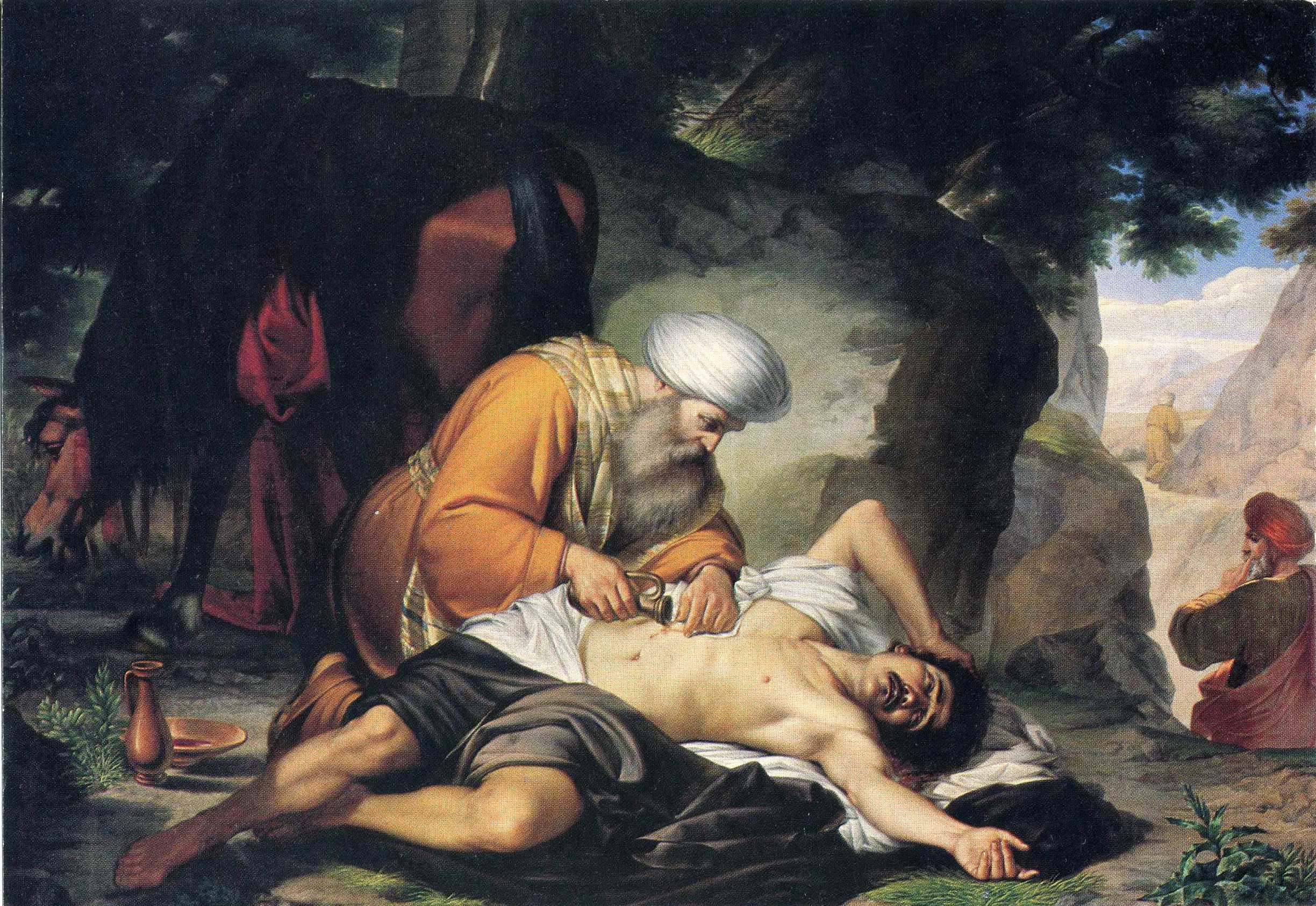
IF we are insensitive to another man's great grief, if he endures injury or suffers anguish caused by our ignorance, then we should regret and repent such sorrow, such loss, such defamation. 

Too often men await the guilt, afore addressing those sins which press inwards. It may be that they are forgetful and heed their conscience not. It may be that the trappings of the sensory world expel all thought, and strangle their divinity - yes! suppress and suffocate the divinity which suggests that the uncomfortable price of luxury and indolence comes from the pain of those duties not attended to. If sympathy distresses us, perhaps it is better to rebuke and forget those, who with forlorn and crazy circumstance, tug at our garments and cry for remembrance?

When we work, we not only work for the needy today and the needy tomorrow, but we labor on behalf of those souls who are unrelinquished, who have come but half the way: those who suffered and labored to 'make good' of the world and as yet are not satisfied. There is a body of such individuals, whose ghosts do linger and call to the world of men who err. Moreso, there are those who, departed and downcast, flummage through their own mess, flay within the folly now spent; and who having tried and proven the ways of such sins, call out to the living to amend!

Shall we abide those torturous inflictions? Shall we be so consoling to our brothers that we consort with the sicknesses themselves? If we are determined that we shall not offend, then we shall remain silent. How then does one speak out about the hapless waste of human spirit? It is cruelty which man does inflict upon himself, and injustice whereby he contaminates another with the cruelty which scorns all souls. Ponder how remiss, is this balance of injustice.

Slavery - by any name it takes - has to be one of the greatest of such injustices known to man, that one may dictate to another, and freedom lost to one, makes for freedom for he the tyrant. How careless, how unsympathetic! Treason to men. 
Men may draw their own veils, that they do not suffer such sorrow of knowing of conscience-speak. These veils are called the insolentries, for there are for every virtue so known, equals in opposite. When a man becomes to the power of the negative, insomuch as he abandons those inclinations of virtue which would otherwise be breathed by him, then he does separate himself from such, with veils which are self-drawn.

The insolentries require a consensus comprising of consciousness, self-doubt and sympathetic nerve. When one 'does wrong' and does not hearken to the conscience, and concurrently has sympathetic recall sufficient to know that one does err, then it must be an actual 'stifling' of the sympathetic nerve (which would otherwise twitch and writhe), so that the man may continue on in the deliberate fashion he intends. This is characteristic of the insolentries. However there are different species of such, and they are varied in application also.

Without the insolentries a man who erred would be a man in constant agony of agonies caused by himself. In truth, there is a reality whereby he does hold a sympathetic nerve as a mirror to his world of activity. All that he imposes is discovered, without the panacea of the insolentries, shortly after death when his recall is profoundly accurate and undetermined by a willing consciousness. We may make comparisons after death, as to accurate judgments of our 'correctness' of behavior.

When we may undermine the wishes of another,
when we cause grief because we ignored rather than addressed an injustice,
when we chose to take sides but picked the side which was mistaken;
when we lavished ourselves whilst our neighbor or our family hungered;
when we spoke of love but in secret bethought them to be fortunate to have that love;
when we hid within a body of men who spat upon the losing team;
when we steal or deceive, or make trick,
or disapprove of that which we do, but in others only

- these and more, give rise to the veils of insolentry.


Why then, insolentries? The angels do not have this vehicle for the doing of evil, that cannot quash or redetermine the pain which springs instantly from wrongdoing. They are at the mercy of a heart which cries loudest and unashamedly. Yet too, our karma is delayed. We are saved from the immediate pains of our worst contributions, and saved also from immediate repercussions of such. Some might believe these two factors to be contributory to account for sins. And they are, and they are not.

How often it is said that one's best teacher is one's mistakes. To a degree we consciously err: we suffocate our conscience, we draw the veil of that insolentry which is sufficient that we may accommodate the sin within. But come the day when this is revoked, that we no longer take of that particular insolentry, and expose ourselves by choice to the honest aspects of our own permeations, then wondrously, the enfoldment of a powerful humanity begins to radiate as never before. For it is the conscious effort which enlivens the soul-activity and is the difference between the bud and the blossom.

Quite assuredly, the elements of sin are mistakenly attractive. They are the mistress who presents as seductress, but is verily a snake, or whatever the nature of the poison within; an enchantress who binds you to her, but would enslave; but is not cohesive to the free spirit and defying will of man. For man by nature, will not be 'caught' indefinitely- as elusive as quicksilver, he ducks the arrow, he jumps the sword!


In wooded crest, on dappled breast,
The name is borne, upon the chest;
Our hearts made bare, with no contrition,
Seams rent, intent is the greatest volition!


The young have not, what it is they seek,
That they seek against their youth;
And the bud which has expired, spent,
Has now the proof all youth has lent.


Beneath the deeds, the deeds of men,
Good heart! it does procure and propound
And issues all, with pulse and sound.


Make strong the heart, with vital love,
For within the mask, afore the arrow,
The heart leads all, be it man or sparrow!


Saturday, January 16, 2010

Repressive Memories- 14th July 1992


Of all the things that I could be,
I could not be what I am not,
And of all the things that I could see,
I could not see that which is me,
And try as I might, to catch a phrase
or turn a word,
They're never heard,
These unmuttered words ...
I am a key, I am a lock,
I am the memories, you have forgot.

WE write everything out in triplicate, we inscribe it in the public records of the akashic memory. We incise such experiences as are, and as are invoked within our own memory, and we indelibly impress that repository of recall with all of the company we share.

To be seen through another's eyes may not distinctly run concurrent with the actuality of events and of lasting impressions. However with all folk, and for that matter all beings and all matter, we leave impressions of ourselves: our conduct, our vitalities, our desires and subsequent emanations - and not even so much in the karmic sense of such impressions rendered. We leave a 'scent' such is ours which indefinitely lingers.

The impact which we create with our relationship to all within the world is vital to our future associations. The reason for this is plain: if I am to rehearse something, I shall become ‘good’ at that something because practice is the art of incising memory impressions, which shall be locked into when confronted again by that which drew the original experience together. I may certainly become 'good' at something because of repetition, but moreover the reason for this is because I have laid down the memory, of which I may excel and improve upon. To repeat does not mean to further, however impressions within tangible records make this possible.

One can say too, that the ideas which may surround another man which directly concern you - as far as his impression and his personal recall - dictate another form of repetitive replay, which may hold effect upon certain parts of one's constitutional personality. It is unwise to keep company with those who misjudge you (unless of course they misjudge you for the better). Often a juvenile is corrupted to a greater degree by the actual suppositions and impressions of him, by those elders who regard him a criminal as from the first.

The powers of envisualizing do have effect upon what is to be 'brought out' in characteristics of others. Fear unfortunately, with certain images cast, shall attract to that man those attributes which are envisaged - if there is a level of weakness within the individual to begin with, which usually there is.

The question is for us: how often do we remember aright. Are we just and without criticism when we recall another? Or are they restrained to an embitterment or downcast by our demising dismissals?

We err and we damage the subtle bodies with subtle attitudes. And yes, mere 'thinking', or more correctly, our envisualizations as stimulated concurrently with episodes of memory, are potent and potentially destructive - particularly when there is a grievance, for such will be perpetuated by active recall; and the likelihood of the fellow partner causing more disturbance is incited by the repetition of his character-formation as cast by such memories.


If we were to consciously meet with every memory which does arise, and try to correct those elements within those individuals whose circumstances have brought pain within, and make of them what we should wish of for ourselves, then the pain would be eased in more than two ways. We may release our brothers to perfection, and for the sake of future worlds, it is imperative that we begin to do so.

How often one exclaims "Why, he is exactly as I thought he would be!". The memory impressions have begun with assumptions as placed upon the man in the first instance. How often there is a public man who is confused with an extraordinarily low sense of self, who unwittingly falls to near death or complete exit - impeded and imposed upon by dire public pressure of opinion.

We are not however, so distracted by those impressions as others hold, as to be overcome. For the main part we do remain our own person, with seasonal and cyclical fluctuations presenting opportunities in many levels of being and expression. But it is sufficiently important that one is mindful of the consequences and reactions stimulated from one to another. It is natural to try to please, and one can see from this explanation the psyche of the 'peer group', as is dictated throughout with expectation.

We are to be reminded that we never view the whole man when we relate to one of our brothers. Circumstances have but enlightened us to one or at best a few of his attributes, and we are not privy to see beyond that moment in time. We recognize that all men are capable of more - of giving more, of being more - and one can make it a constant practice to envisualize it so, when in company (and when out of company, for that matter).

Some may view this as an active lie or untruth, that the positive thinker is in some sense delusionary. However it must be reiterated, that the only truth about a man, is that he will always be more holy and inspired than we shall come to consciously recognize. All men may be troubled at times - conflicts are inherited that we might actually prosper from such - and we are all loved equally.

Our view of our fellow man is not as disposable as we would like to believe. Our active thinking, our impressions as given to the soul from such attitudes, remain with us and live within us - and not only do they hold attraction to the person with whom we share such memories, but they do also in the long run, make effect upon our own personalities. As we explore those elements which make for the greatest impressions: the outstanding, the vitally imbued - be them for good, or for disapproval - we begin to turn inwardly and explore those characteristics.


No wonder it was that the old monks went into retreat, far from society! (No wonder we do either! A joke.)

Test and be tested. If not today, then tomorrow! Our brotherly ties are of extraordinary importance, whereupon our most difficult, demanding and fulfilling obligation, is to come to understand and make peace with all men. Alike to the most complicated jigsaw puzzle imaginable, it is to accommodate soul with soul with soul. For this is active creation; the spill-off from those beginnings in which we were envisualised and impressed with the makings of a man. Our definitions are largely determined by us. Our projections return 360 degrees.

But what of oppressive thoughts, and oppressive people? Oppressive people usually demand that they be memorable - that they are not content to be regarded slightly. One has difficulty with such company because one may not necessarily wish to gravitate to their field of influence, as is asked. Furthermore, if one is trying to establish a healthy approach to this person, rather than fall prey to irritation, then there is a double task at hand :

1) Effort to distance oneself.
2) See beyond a tiresome personality to higher man.


Some folk actually feed from the attention of others. Remember back to the memory impressions activated within associates. In the case of the oppressive personality they actually strive to impress you as they would see themselves, and draw from such.

It is an interesting point because this can and cannot be done. It depends on the qualifications of will and conspiration of the individual concerned. Some do have a remarkable ability to impress upon another man exactly the image that they would wish to project - in the sense of that which is consciously drawn from. It becomes a twofold memory impression insofar as the soul draws its own conclusions and they remain, but are not actively recalled because overriding the true image is that picture as imposed upon the man.

Now usually, it may be said, the memory impressions are tinged (as before stated) with all sorts of personal presumptions which stray from the complete and comprehensive reality. Such examinations are given over to the soul but are individually characterized. In the case of the oppressive personality, this is also so: that the projections impressed willfully negate the opportunity for the individual to make of his own impressions, and rather does receive those as given to him. This scenario may be built upon in future repartee.

How suggestible are we? And how do we recognize our own misadventures in memory assumptions, whilst also those unwelcome impressions dictated to us? The greatest fortress of light is that of the truth. As simple as it may sound, a man of good character who ekes towards the humble and positive truths - concerning other men, concerning the world at large - will find that discrimination becomes an easier task and more refined, as more he refines. 


Men can be suggestible as regards all manner of quirks and phases of being. So much of the day itself may be without motivation: self-motivation, active motivation. One wonders that if this is the case and the conscious activity is so quietened, then the individual in part, must give over to suggestions as offered elsewhere.

However men are stubborn too, which correctly says "I shall only be pushed so far!"; and will only abide an oppressive personality for so long. For although we may be in part impressionable as others would have it, we do know within when those impressions do not match: theirs with ours; that all is not right. And it is the submissive, who for many reasons, have to receive past that feeling, ignoring that knowledge, suppressing inner expression. Obvious to say, this is unhealthy.

If we can concentrate on the better man, even in the case of the suppressive personality, we shall find that the response from our partner is wonderful to behold. The encouragement we give, is the encouragement we shall receive. That not only for this reason alone, but nonetheless with it in mind, we are cautious and tardy as to hurtful recollections. We may re-impose within our own history notes those aspects which were formerly overlooked, that with maturity we may overlook the troublesome man and amend the past with the comprehension as to why it may have occurred.

Friday, January 15, 2010

Transience- 13th July 1992

TRANSIENCE, in the golden rule book - of precepts and laws - is the persuasion of time, the gift-bringer of all possibility that changes become negotiable. We have permanence, of which one has won the place which gives over the right to remain, and we have transience, the immature, the undecided.


Many beings do not live in time or by time, and their consciousness has swollen to encompass much of what has past within the oceans of existence. Furthermore, because they are not time-orientated, it happens that they may converse with archetypes or even gaseous blow-ins. They may 'peer' at those stories, as brought by whom or what is before them, and view the past, by their cloak that is woven with certain history - impregnated with personal memory.

It is more or less those beings who are within time who do forget- although there are many conscious beings who are not quite stirred to remember anything. . .many an amoeba with only a thought for today! Flip and frivolous!


However, the question was: How can it be that there are forecasts given to great Cosmic outcomes, that certain knowledge is said to be preordained - especially in the case of high beings to whom we may study the nature and influences of.

It is said that the beams of starlight come from a time which has passed many millions of years before. This is in part correct, but also incorrect. However the example is a good one, for in the case of stories which concern great cosmic battles and their outcome, they are purported so because they have arrived at a conclusion - even though we may still hold influences which shower down upon the globe and affect our kingdoms considerably in a manner which is, relatively speaking, out of date.

The influence long carries on, as small waves radiate out from the larger, until tired - and so we may well confuse a god or two for that very emanation so imparted and perpetuated; allowing also for those very elements which are so permeated by such influence as to perpetuate also past impulses, past emanations. This is why certain outcomes are predictable; however, not strictly in the preordained sense. Because, what has already been may not be termed as 'fated'; it is just that it is yet to be experienced within the relevant realms. 

Added to this there are beings who are entirely sympathetic to the greater ones, and are either related offspring or related as pupil/successors to those elements, which by nature are so characterized and inspired by their originators - and being such, do cleave to 're-enact' much of the drama which has passed before (way back in the bosom of remembrance). As a play so recalled, so dramatized, these kindred beings do take over the part and become the personified arm or leg of the greater above.

Now in this case we may have a singularly different outcome to that of the original drama. The sequence of events may alter but be based on those terms as laid down in the greater heavens. So one may not so easily distinguish present day occurrences with those which have gone before; and it is to the point of great initiation whereby one may actually view the earlier sequence of events preceding these. Yet if one is to hold an affinity for qualities as witnessed raw, magnificent and awesome, it may well be difficult to return with an objective attitude of history and law.


All great beings have living representatives. They may also be divisible of themselves. They may also have lower offcasts which are of themselves and duplicatable. They may leave their impressions everywhere. We should be overcome were we to come face to face with even the shadow of an exalted being. There are even those who are hateful and loathsome in the extreme, but so magnificently so, that one would be 'taken' by the magnificence and strength of their emanations. We are most protected from such visions.

There is one who has tamed Himself that He would not overwhelm to distraction; and we are His in duplication, for He is the King of remedies. How may the elements coexist without warring? Without such domination as to pre-decide, what shall make a man a man? It is because of the properties as given by Christ, of Him. Otherwise we would be rent apart or overshadowed by such beings as do also hold elements within us.

It is the happy mix of divine toleration and resistance which inspires a man most slowly. It is time and the manifestation within. Even with guise and guile, it became preferable for man to dwell in 'sleepy hollow' than combat the forces, naked and without armor.


Transience implies a position which is not fixed. It is within the ability of Man to duck and dodge, to warp and weave, to run, jump and sprint... through powers, be them the smaller or greater. It is this freedom of agility for which he is most envied. And only such is it the way of Men, because of Christ to whom this is attributable. The Powers of themselves are disproportionate and persuasive to dominate. They characterize certain definition, without ability to encompass a mass of qualities; particularly within the immature souls.

Therefore one can forgive a god readily, if it is said that he does 'want for his own way', for to him there can be no other - nor question of it. Without some measure of resistance to his charming nature - whatever the impulse/impulses brought forth - one would be beckoned into a reservoir of his design and tempered accordingly. 


How marvelous it is that Man stands at the juncture of true character forming! This is god status, with choices not even they have been afforded. Of course there has always been the argument that it is desirable to be extremely good at one thing rather than not particularly able in a score and multitude of others! And this might be so to some- however, there is time! And after time. . . some other time! (Another form of time - the same, only longer! A joke.)

Here we may come to another point: about development. It is assumed by some, that there comes a time when the innermost struggles do cease entirely, that one might 'overcome' their self (which is poorly worded, for this is not the case), and be in total accord. Having said that, one wonders how this can be so.

We may assure you that it can become easier to manage - to receive assistance, and to cite problems and weigh them as all good challenges. But who is so developed that they may actually look a god in the eye - malevolent or benevolent - and receive him within and be unchanged? You see, the sharper one's perception becomes, the more defined and the 'larger' the realities of such impulses become apparent. How can one really believe that they are beyond the entrapments and enticements of jealousy or envy, for example? For it may be true that particular forms of jealousy or envy are to be 'rooted out' and disclosed, and that we may be foreign to they who are at the apex of such streams of impulse. But on the other hand, there are higher forms of such, which we must be on guard against, and to the larger part, resist - if it is undesirable to do so, for one must remember that jealousy and envy hold their upside too - the springboard to much development has been such. So it is a constant re-balancing, a re-ordering within one's abilities to make use of such; and determine and redetermine. However, the matter of taking on the God of Jealousy, single-handed or single-minded, is preposterous. Even with an army of angels looking on, it would be the folly of conceit which would suggest that development is such - simply because one strength would negate another. 


It is precisely the innocence of Man - the ingenious stupidities - which do save him. Those and of course, our beloved Christ. For He is the way out from the veils of Stupidity. (Caught between the Rock and a hard place.)

Thursday, January 14, 2010

The Search for Specifics- 9th July 1992


RAZOR sharp accuracies, definitively speaking, are as the will-o'-the-wisp, save for fundamental mathematical notations, however one may hold a sense for accuracy, one which, alike to a focus, narrows in on any given specific and pinpoints it as such.

It is a complex question: that of defining a true and exact accuracy. Accurate thinking when applied, is both satisfying and stimulating, for the closer one is to a specific, the closer one may come to the comprehension, the formula, and the actual sense of reality and of the pneu. Usually when one bears down into a sequence of phases of thought, there is an amassing of congenial concepts, which by their structure offer a pictorial representation by their overall grouping. The associations may of themselves be vague, but collectively they depict a decipherable image. 

In point of fact, most people who do not work on achieving a consciousness which is awake, quite often have memory pictures and affinities before them, but rarely enter into specifics, working from antipathies and desire without any actual thought in lively production. 

Excuse the typist and the grasp of sentence structure, if this is meant to be a pure example of specifics! 

The action within a man who is studying a concept with purpose, with defined perspective, is that of a rising up within; much like one would stand on tiptoe to reach a fruit on an upper branch. The cavity of the chest swells and the expression is of expansion. The individual who is endeavoring to 'reach' for a specific feels a push, a direction and a target of which he will find there is a certainty of aspect which is interesting, which actually precedes the 'narrowing down' and the grasping of the specific. 

This has much to do with the "upright nature of a truth", as entered into on previous occasions. That we may come to recognize our processes of longing, and also quite rightly, hold certain to the manner in which we derive our specifics and refine our definitions pertaining to worldly activity.

The notion of specifics does appear to run contrary to the notion of spiritual investigation. One may become bewildered at the possibility that the two may in fact coincide- because it is often presumed that there is little or no clarity in spiritual insight, that at best we will be hazy or shadowy in lofty or inspired thinking. However, parent thoughts do dwell in the upper ethers and are as clear and exact as one could ever experience.

There are two forms of experiencing a lively thought and two directions which one may come by: Firstly, we may reach into a thought because circumstance has drawn a corresponding affinity with the actual thought, and for whatever reason we are within the vortex of an experience which is overwhelming for a time. From the senses up this can apply. In this instance we are not actually striving outside of ourselves for added conjecture, because we are essentially overrun by such experience and are taken with that alone. The time for active thought searching is usually when we are removed from such experience as does overwhelm: Full on or full off.

The second experience of one's thinking is the search for specifics, whereby we come to actually acknowledge the reality of that which is before us, or that which we seek purely for the sake of it and its identity. It is dwelling outside of us - insofar as it is separate to us - and we wish to know further, but know well. It is born from a desire to become correct and 'earthed' within a positive truth. 

The search for specifics does not mean that there is but one conclusion. When speaking of computer logic, this is something that a computer cannot do. Another paradox! One would presume that a computer does nothing but, but the machine goes to what it is told is factual, and is as a driven specific, and does not identify the nature or the correctness inherently within its own investigation. It cannot compare, it cannot re-evaluate, and is drawing from a colorless well of 'sameness' as regards details. Not to mention that it cannot conceptualize. It may draw graphics as a grouping of set point- square references, it may assimilate sequences of play or of search, but it cannot hold concept. 

I wonder if the phrase 'there's a light at the end of the tunnel' is talking about death. In our search for specifics we may wonder in all honesty, how we should know if our progress goes well. For clear and sharp thinking with lively investigation is not always recognized by the disabled thinker. Here is a test one can follow through with:
You stand at the opening to a large and dark mossy forest. At your feet is a rock which you turn over to examine what lies beneath. Underneath there is a depression - quite a deep depression. And as you peer down into that hole your eyeglasses fall off and into it.


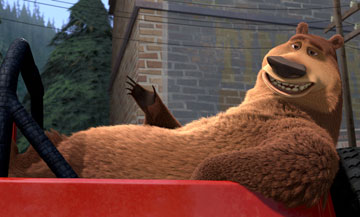
A bear comes up behind you and moves the rock back into the hole, flattening the glasses. He then does a dance, takes you by the hand and draws you into the forest. You then sit by a campfire eating toasted cheese with your hairy companion.

Now the point is: what exactly did that story inspire in you? Was it in any way offensive or irksome - or conversely did it feel right? The point here, in the way of thinking is, that one would have to say that the story did not feel right at all. It did not satisfy any moral pictures, it did not satisfy any search for meaning - or did it? If the answer is indeed yes, then the meaning would have to have been extracted by abstract examination, one whereby the influence of the parts of the story were taken image by image and dissected so. 

However, the story presented as a whole, is not satisfactory because it is annoying, unfulfilling and ridiculous. That is interesting, because one may be actually enlightened by similar stories which could be held to be equally as ridiculous, but in point of fact are not, because the nature of the story actually has a very real basis in actuality: be it as representation of worldly occurrences or spiritual pictures of soul-life. If we are disturbed within a sequence - such as in a story - then our disturbance will cause us to search for the specific that is missing. 
If we return to our dark and mossy forest we find immediately that this is representational of the unknown. That is fine as it stands. We are standing at the perimeters of the unknown - which is just about where we are. Then we find a rock. Underneath the rock is a hole. One would expect to find something in the hole. The hole is unsatisfying without there being a finding, because the story bothered to have us look. And instead of feeling dissatisfied at there being an empty hole, let us put something inside it to be found. 

Already we are happier. Our sensibilities tell us that it was worthwhile. The episode of one losing their glasses within the hole, later to be crushed, is very upsetting and provocative, because it suggests to one who is considering the tale, that they have little chance of knowing the unknowable (apart from the fact that they just had the discovery that they needed glasses to do so; that if they couldn't see into the forest before, they have no chance of it now). Very unsatisfying. 

The bear is a complete buffoon. He is irritating and commanding, and represents the feeling when everything gets 'out of hand' and one is at the mercy of fate's charge. And we are drawn witless into the unknown . . . by a dancing bear. Only the thoughtless would be appeased by the image of toasting of the cheese as a fitting ending to such a terrible representation. Furthermore, some actually do perceive life to run like that! 


It is not a question of pleasing men with entirely happy or fitting circumstances within a story, but it is a case of pleasing the sensibilities as to what feels right, from what feels most certainly wrong. If we do not begin to feel firm about discrimination and confident that we are able to begin to investigate such, then we shall be caught in a forest toasting cheese with a bear, content and without glasses!

My Blog List

Followers

Esoteric Christianity Archive