Translate

A CLUB OF SUPERNAL INTERESTS Christian Esotericism, Spiritual Science, Esoteric Christianity - All Authored by a Lodge of Christian Teachers (unless otherwise stated.) (All writings copyright) ©

Tuesday, February 23, 2010

Movement & Voice - Memory & the Future- 27th January 1993

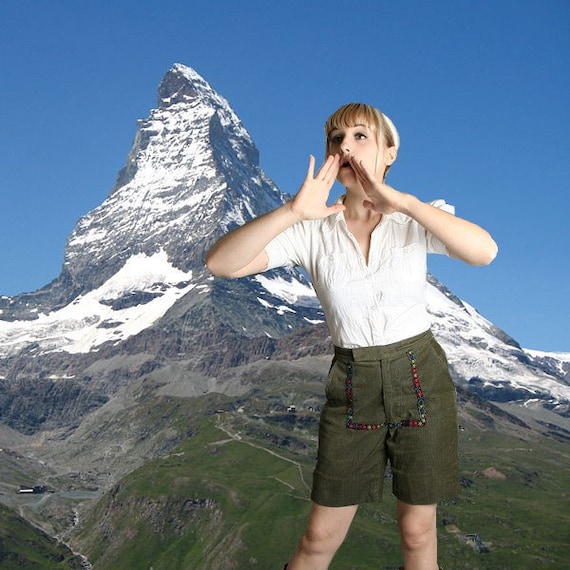
THERE are two exquisite means of expression: yodeling and gesticulating. The yodel, when properly produced, rises up and out of a man with an almighty expulsion, bringing with it a variety of near spent vitalities, whilst also those clinging impressions of the day - be them happy, sad, angry, confused or otherwise. The art of the true yodel is to learn a maneuver of the larynx which does not require the roof of the mouth in the exercise. The benefits from practice are well worth examining; and for both the lighthearted and downhearted, complementary.

When we release ourselves by vocal issue we learn to regulate and fix our relationship to the world also. The man who yells as loudly as he can, but with aggression, has come to irregular disruptions as a volcano, and spews his irritations back into his hostile locality. He assumes relief by discharging his anger vocally, however he contaminates and aggravates the fibers of his own surrounding shell; which for the most part contains much of his emanations. 
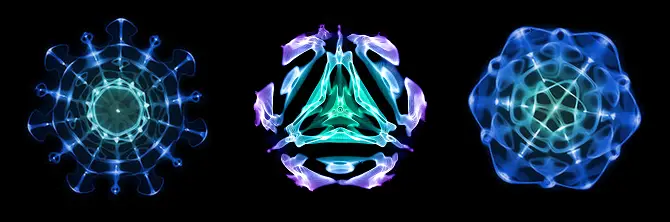

The greater way to release those forces alongside sound is by means of rhythm and pure (particular) notes- the gravity of which oscillates in accordance with the fiery scales. Therefore, whilst the angry issue is apt to be abrupt, sharp and defensive, it is contained within the exterior of a man. Whereas those issues of melodic content are in transit, way above and beyond he who did give rise to them.

Sound is tangible in the spiritual worlds. It was not always invisible to men; nor was it of the same specific weight. All sound pulses - it is not apparent, and may be confused with the means of issue, but sound of itself actually pulses within perimeters. Alike to the elastic wall of an artery at the periphery: expanding and contracting:-


That being the pulse, whilst the central force is not decipherable as physical radiation.

It is the relaxing and expanding central motivation which carries the 'life' of the sound- such life-supporting attached characteristics. The ink within the pen, the blood in the vein, the air in the lung, the marrow of the bone, sound is the physical vehicle for 'nuance' - the derivative of Creative Balance. The balance to the Creative Powers is the manifestation of Creation itself. Asked and answered, in the divine sense, the Creative Powers 'ask' whilst the formation of Creation 'answers'. The nuance of sound is party to this equation.

The magic of men is empowered in (literally in) their sound. Anyone who has heard a baby cry and felt the summons, knows such power as can be directed! It is greatly of the future, and as yet so underdeveloped that it is barely conceivable by men.
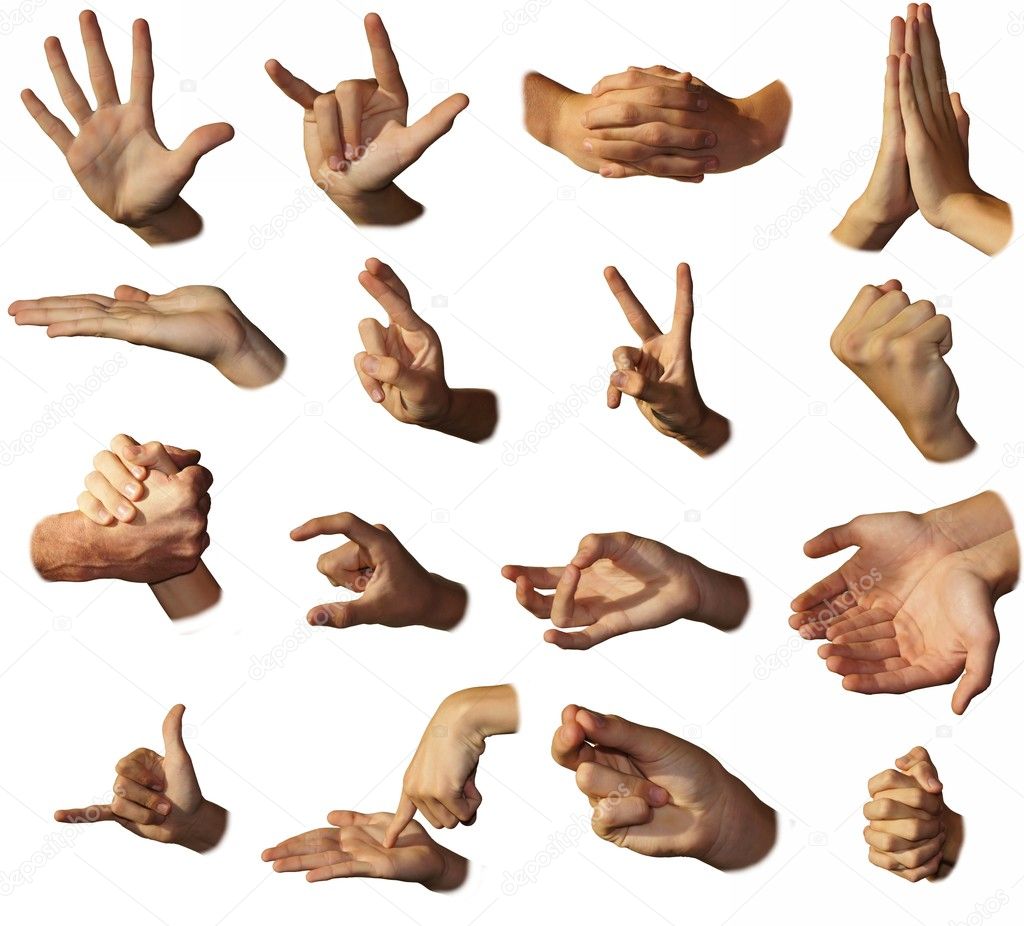
Gesticulation makes impressions within the surrounding ethers, whilst also, once again 'works in' on a man. The very actions he follows through with - for the main part unconsciously - are instrumental in creating a vortex of activity in which his picture-memories are contained. He may draw back the curtains of the stage of memory, by enticing (itching, scratching) within certain hand/body mannerisms; usually in repetition of sequence. This will work its way into strengthening such picture memories and enforcing them, as they are ennobled with vitality.

The powers and ability of memory (actual memory view, not retention-recording) come from the powers as given by Cosmic Memory, which once again are essential to the bargain between the dream of Creation and Creation's fulfillment. For without the substance of Memory - Divine Memory - there would be no laws laid down, no laws worked upon, no springboard for Perfection.

Whilst on the subject, much purpose, driving purpose, would be lost if e’er memory faltered. It is one thing to be made as separate from distinguishing memories and have to carry them unconsciously, they are still nonetheless there and intrinsic to our very substance and individuality. But it would be clearly an impossible defamation of Creation to totally divorce such memory from a man permanently. There would be no wisdom in this, or him. However it can be too, that some are adopted and shared.

Philosophically it can be questioned that were one man to be given the full complement of another man's memories - with all of the melancholy and sweetness, in due sympathy - what should be the difference between the two individuals, save that one is blameless? It will come to pass that men can share memories earned, to the extent that others will truly relate to them as if they were their own.

Also, that one man may call forth images through gesticulating in a particular way, and that the partner will perceptibly interpret such memories as alluded to in physical remonstration. For this type of communication there is no need of words at all; however there is no provision for new and active thought either. It is pure experience. Of course a man need not have limbs to hold memories; and yet there is much within the limb system connected to the powers of memory.

When we divine and distinguish certain pictures as kept within our subtle body, we call them forth because of something which pleases us to recall. Involuntary uprising of painful memory is another matter again - in the case where a man may be haunted in dream or in fear and startled repeatedly, as if a phantom urges him to relive such fear. If we are provoked unhappily then it can be that release of such unwanted memories may be brought about by yodeling or song. It is interesting to note that if one pictures the very depressed, the sorrowful, they are as the clenched fist, curved in and unable to loosen the memories.

The men who beat their own breast give strength to the already fortified memory-impressions. The men who shake their legs to an unheard rhythm are recalling and reinforcing surfacing memories and are not dividing their attention between themselves and the world evenly. The men who comb their hair, smooth the hair, pull the ear etc. are wrestling a memory, or reliving one. The dancer says "I am a creature of the past, let me show you what I know of then". The teacher raps the board with cane, and then perhaps the pupil too.

We build upon memory, we strive to imbue our memory and we seek to ever fortify our memory; and yet can we balance this against our living in the present: the eternal now and providing for an ever new future? It will help if we sing. For we are empowered with an ability to work what we have, not only to 'collect' memory-stuff as it were, but to transform it and ourselves and put it to use. Have you ever noticed the beauty of a sad song? That the sadness is redeemed and quite transformed? That it is almost a pleasure to 'lock in' to the message of the sadness imparted and experience it?


By dance, we have memory. As with the great cosmic dances of Heaven, when conditions are laid out and remain, drawing from laws as of the past, unfurling them once more.

It is with voice that we make new futures. As with the cosmic throng which blends all manner of transfused suffering, longing, hope, courage, laughter and grief, strategy, nobility, repentance, happiness, conciliation and consolation, bestowment, fathering, nurturing, mothering, hesitation, procrastination, divination, hopelessness, adoration and absolute love - from which, is orchestrated the future.


Monday, February 22, 2010

Peat Moss under the Broadstick- 20th January 1993

Question:
How are we to think about seeming incongruities in our work?


THERE is a difference between straight knowledge and its value in relation to the particular, and to Man. Consistency does not have to be comprehended to be there; whilst, vis-a-vis, comprehension of 'perfectly placed logic' need not place it the nearer to truth. However, if we pledge to strive to uphold truth and all of its family associates, we become ill-content with deviations therefrom - being as a beam of light thus distorted, refracting broken colors untrue to the steady light.


Straight knowledge, in the sense of factual notations, may be enlightening as long as it is relevant and worked upon by he who would consume it. So often the questions come but are as one another in the asking; and the answer no matter how splendid, is wasted away, discarded and dropped, in place of another hurried exposition. The practice of questioning is good, and yet further work will qualify the end value. Some men are desirous to know all at once, and are impatient for not only immediate realizations, but realizations that they have not prepared for.


If it is understood that all students must suffer frustrations, longings and perplexities, it is not to say that the prerequisite to higher knowledge is such suffering; but moreover, that it is the frustration which shall later flavor the reward of result. It is the longing that will enstrengthen the embrace that holds the final prize, and it is the perplexity which ennobles the wrinkles as born, which dissolve come the new day of true and rightful knowledge received.

One does not work these tasks for a diploma. All study requires firstly a love for the study thereof. It is good to wish for the grace of higher knowledge, it is better to heed that which we already know.

If there is a conflict of opinion within this work, it may be that there are slight misunderstandings on behalf of any of those who do partake - including us. And it shall be said, that problem-solving is honorable in this regard. For where there are solid misunderstandings, both student and the work becomes ill-affected - somewhat diseased - and so it is no light matter.

Therefore, even though it may be moderately painful to review ourselves and our thoughts and our work, and even though it may involve years of such quiet pursuit, it is a useful and worthy endeavor to 'seek out' such inconsistencies as are bothersome, or loathsome, and readdress the issues- providing that we are not personally troubled by citing and applying ourselves to the troublesome perplexities. And there will be many. Even this is what the scholar thrives on, the inventor invents from, the chemist makes balance of.

There are symptoms of inconsistency which may help us decide as whether the ineptitude lies with us, or with the facts as presented. If it becomes apparent, after much thoughtful inquiry, that there are radical and opposing differences, then we may be positioned to have to choose one above another. Most usually one can divine one from the other for themselves. If there can be a blending of thought, well and good, it may stand as it is with that possibility.

The greater realm of difficulty lies when we venture into knowledge which is component to meaningless facts - which is not to suggest that knowledge is or can be meaningless of itself, but that he who would weigh one against the other is too ill-prepared to 'take in' any value of comprehension. Thus the problem of inconsistency may well lie in the outer facts, for he has no way of beginning to qualify what is before him.

This may appear a simple point overly stressed, but it is most relevant to the ways in which we approach and receive these studies. We must never give up deciding for ourselves; and decide importantly, in courtesy to the truth.


What use has a babe to recite the names of the Apostles? But give him twelve jacks and color them differently and he will experience their vivacity as he watches them lean and topple in relation to one another. He can comprehend the value of the relationships of the twelve Apostles by the very act of this contemplative play. To experience the value of this, he need not name them. But come the day when he does name them, he shall know something of their constituents.

If you wish to teach, by all means let folk touch something and interact. We can carry the significant thought above, further into everyday relevancy. Many a teacher has taught with his ensemble of visual and tactile tools.


Men need to experience participation in lively learning. This is another reason for the advancement of those who are supported with a group, as opposed to the sole student who has not the benefit of clashing, sparking, stimulating discourse with shared discoveries.

It is not meant to be condescending when speaking of the lesson of the baby. For one can find the colors and meditate upon twelve pebbles, for there will be an inner correspondence made evident.

On the subject of falsehoods in esoteric thought: Some lies are perpetuated by miscomprehension and worse than those, are the falsehoods delivered because of the intention for deception for the purpose of self-gain. They are all poisonous and may not be 'passed over' or encouraged to remain.

There are inner paradoxes as well. Not the least which is certainty - despite our mistakes in the past. How may sureness cohabit with naivety? But it does, and each of the two are no less valid because of one another. That we may experience uncertainness, and reflect and reconsider; and that we may know with definite certainty convinced and unwavering, is a gift of a struggling self-consciousness and a paradox within.

Take sunshine for example: it is different things to different people. If we were to be truly concise we could devote an entire dictionary to descriptions strictly about sunshine, and all of it would be correct - all of it. If we are uncomfortable with the prospect of unending study then we may rest upon the single answer and be content.


If Christ is shattered and refracted and in limitless form we may be no closer to Him to know this - whilst He is but a breath, a sunbeam, a tear, away. This is why we return to the thought that participating in great truths requires that we look inward to the heart of that mystical providence, and sit in that quiet space from which all else does pivot. The eyes will see, the depths of the mysteries will be penetrated, and drawn deep into the soul.

Remember too, many great and worthy concepts are there to sit evidently before one's soul - even if the personality has not the means to digest them. It can be also, that by profound considerations we impart to our immediate fellows similar parcels of great and wondrous insight. This is why men seek out great men and clamor to touch them and to be in their vicinity. They instinctively know that a man imparts much by his being; and importantly in that of which he is highly qualified.

The 'mechanical approach' as highlighted in a question, is an interesting view of laws and their operations. In other systems there is predictability, for when laws are so 'tight' and balanced, there are consistent provisions for such 'sameness' perpetuating upon itself.

One has only to look at the diversity of Men of ages past and of their abilities, to crack a smile at there being rigorous 'mechanical' applications that are to be in place and enforced. Even the very form of the human frame is not expressive of uniformity, symmetry, mechanical predictability (separate to soul) etc. There is another paradox, as we are obedient to very definite laws but are free to move in and out of them; and they provide for destiny's bargains.


As for the predominance of some currencies, it is not unusual for men to be summoned to a task, that are best fitted to a need of that time. If one were to trace further the apostolic trends and 'match up' similar divisionings, it could be found that overall the currencies are relieved periodically. If you were to actually name the three currencies according to their characteristic, would you name them as Water, Old; Fire, New; and Earth, Current? It is interesting. Sometimes when we look for patterns we may be looking for the wrong ones. Look at your two hands. They are a pair, and not a pair the same. Their markings are different, their singular operation is different and they are unique to any other hand in the entire world. The greatest and most wonderful perplexity is the provision for individuality with our cosmic law.


So we may seek compliance, consistency and conformity within our knowledge and be reasonable in this; whilst realizing that it is those distinguishing characteristics which make what we seek conform to our knowledge worth knowing.

Many a tidy sewing-box, with many an untied thread!

Sunday, February 21, 2010

Perturbation of an Illness- 16th January 1993

THERE are ills from without and those from within; and it may be noted also, those which begin within and determine their way into exterior expression.

Ill-health, or rather the breakdown of the constitution, occurs with overwhelming rapidity to those who have not the sequence of 'foci-knots': cross-reference points as it were - in which the flow of various vitalities and obliging forces stream in and connect within the constitution. For 'flow' is not enough, without intersecting and containment by connection. Radiating impulses are everywhere and need be challenged by those points within the subtle body exchange. It may sound a little like a telephone exchange system; and rightly would appear as such also. This is not so remarkable, as all functional ideas literally come from a basis in pre-existing manifestation. So we are struck with the impression of our 'starry-grid man' in whom there are intersecting points of various vitalities, some of which are characterized; some of which are as homogenized (speaking generally).

As we have expressed before, it is in the equation of two that we find impacting realities. It is precisely the relationship, the value that one thing becomes in the light of another, that by the other's impact holds certain and particular virtue/value.

Here is one of the more perturbing and invigorating insights into the significance of the cross: in that the heart of the intersecting points becomes as so combined that manifestation of the whole is achievable, and quite distinct from the poles as known when separated. Together, they are living and dynamic and expressive of life by such conjunction; separated, they are but strands of life, apt but inactive.

This is entirely so within the subtle, starry constitution. This law works through to physical manifestation itself, and is compliant to structures/formation of etheric force, and dominated by soul character, inherent ego and divine will. The will is divine in the case of incarnating, as it is not primary to he who 'gathers around him', but is 'borrowed' from He to whom we, the original idea, sprang out of.

It would not be enough that our own driving will be employed in the 'gathering' of physical mass, especially when one considers the multitude of underdeveloped beings to whom evolution is naive to. We need 'borrow' the strength of a greater drive to propel ourselves into manifestation. Having said that, we do contain certain powers of withdrawal from such: the relationship to physical life. In other words, the divine will may assist our being in obtaining a place in the world - or other worlds for that matter - but plays no part in keeping us there. One can choose to dissolve the partnership as soon as the process begins, if need be.

Conjunction is life: + The sphere being the containment of - in this case, physical life: + .[Circle should enclose cross]
Whilst it is essential for the living to hold to the view that living is essential, it is not the perspective supported by the soul at all times. Radical dismissal from those bonds which verily connect us to physical life is not a point of grief or upset within itself. So one must realize that life is very precious, whilst death also. It is the soul which determines which is the stronger desire; unless of course, there are extraordinary circumstances of murder or self-murder.

We do take on and adopt substance anew. It is a misnomer to believe that death is constant unveiling and unraveling, without assuming a new fabric of persona. For it is natural to our abilities to draw around ourselves the relevant substance to which we may come to (the physical substance being but one).

Furthermore, many regard the 'descent' into gross matter as a compromise to the spirit within, but as a challenge it surely is not a degradation; and as substance itself, it is holy and unique. That we are involved with the evolution of physical matter, is being privileged witness to great transformation- there being much 'magic' abounding. It has proven flexible and plastic, and more considerate than other combinations of manifestive substantiation. Therefore we regard our physical bodies as wondrous accomplishments, not to be despised or neglected.

For the record, one can never forget that there is major purpose to our physical incarnation. It appears that all too little is emphasized along these lines by spiritual teachers today. It is the duty of Spiritual Science to reveal the purpose of living this life, even if it is by the necessary instruction of what may follow after, or come to us through realms invisible and unrecognized. We do not parley with total intangibles or tempt the student to desire death. This life, this minute, must be grasped and accounted for, that the path to a true spiritual acknowledgment be laid down ahead of time.

We 'meet' with life daily. This requires great concentration and effort on behalf of our being. For in resisting death, we resist life also. And we are challenged by impeding forces with constant repetition, in waves of differing magnitude, depending. Depending on what? Depending upon climatic conditions: local and cosmic, depending upon ecological factors, domestic predeterminations: depending upon humidity, depending upon extraneous hindrances, and depending upon onslaughts of poisonous contaminants affecting metabolic consideration. These factors will prove relevant concerning tides of influence.

Just as we hold within that one half of knowledge which, as a magnet, is necessary to the interpretation of the experience of knowledge, so too we hold that one half which is the key to attracting physical substance.

When we suggest that a man suffers poor health devastating to his wellbeing, we must question as to where his problems lie in relation to his 'connections' with life. We look to his conjunctions and find that not all is as it should be. (By the way, if one wants to picture the points of such conjunctions lit within a man, refer to the stars of the Zodiac!: the celestial Body.) His illuminating points of activity and conductivity are failing - not all, by any means, or the man would be dead- but a sufficient amount to be the malady of afflictions.

No virus is 'conjured' by man by means of physical conjoining. Many lively happenings occur in glass tubes, but are not essentially born there to begin with. The causal bodies of those beings of disease are not man-made; however, they occur because of their relationship to men, the invitation by men. For disease could not enter into man without signatory (key-signatory) consent. That there is a relationship between virus and man proves that there has been an unnatural relationship between the body of a man (not the man who later contracts the foe) and the demon/virus who impedes his wellbeing. The demon has established entrance into the constitution by certain deception. How well he remains, is dependent upon how similar he and the man may be.
In the case of strong health there is but a short route that he may follow before subjugation; for he cannot attach himself indefinitely. The fiery ethers are summoned - 'Checkpoint Charlie' thwarts him at every crossing; he is expired.

In the instance of continuing poor health (in relation to viral infiltration) there are one of two considerations: Firstly there may be an overall inability to summon a charge of those fiery ethers as is required to 'turn over' the alien freeze. Secondly, as with the host of related nasties prevalent today - the AIDS group - there is a relationship between Man and virus which is extraordinarily developed. The virus has not only signatory permission to enter, but a signatory correspondence with particular characteristics also; this making distinction and separation very difficult. For a man cannot slough off something which is indiscernible - even though this virus promotes the constitution to 'go all out' to do so. It continues to try at the expense of its physical wellbeing. The body is 'out of time' and no longer capable of untiring discharge. For the very ethers summoned not only afflict the body of a virus, but the body of the man- if unrelenting.

The demon may go to and hide in those parts which will have him. In the case of the related AIDS family we find that the virus has an uncanny ability to withdraw onto a subtle level and conceal himself there. Much of the damage is done far before the manifestation of physical ill-health.

The blood of Man is not only the vehicle for the driving will, but that of the Divine Will as afore stated. There can be no question as to the evil of such a virus which assumes a 'likeness' to that which we receive the Divine Will into ourselves with. Death results too early. The hold on life too thinly supported. It is not enough that we will to be and be attracted to earthly matter, but that we continue to receive those impulses of Divine Will, such as live within the blood, in order for us to gather to us earthly substance.

It is not a simple matter therefore, to prescribe a herb, a powder, a decoction; for this particular demon is not only bound to animal/man but is attached also to his very drive for incarnating. Expelling one can expire the other, as often does.

The battle with this and other such demons is not actually to be won within the constitution of one man. It is firstly to be won on higher ground, removed from physical interaction. This does and will happen, and then a physical remedy shall appear concurrently.

One might ask: but why not the physical remedy first - what need for combat elsewhere? And who is to fight? The physical remedy is as a prize for winning the duel, and is so named by he: the victor. It may be decided to be pumpkin, it may be a derivative of the color puce, it may be a trombone playing G. It will be a remedy pertinent to the nature of the vanquished character of the secretive demon.

Often such beings come before or as a result of a great war, having lived in spent blood. (There is only so much one is advised to enter into here.)


However, it can be said that the battles of one man, affect all men. And all challenges are referred to be met and played out on behalf of all men - out of time. It is a little like a group-plan. If this were not so, there would be too many seeds of destruction and not enough measures to inhibit them. Death would predominate.

Sadly, there is a lapse of time, in which many individuals do suffer before the spiritual tonic can be given. This has a been the case over and over, and also a main factor in the process of readaptation, where whole species are found to alter in order to compromise some extraneous factor. Such adaptations are necessary and occur continuously.

One has to wonder how many will suffer the effects of dried soup before we may counter the Pneu of such. . . and readapt Man that he may tolerate it!

Saturday, February 20, 2010

The Secret of Striving for Perfection- 8th January 1993


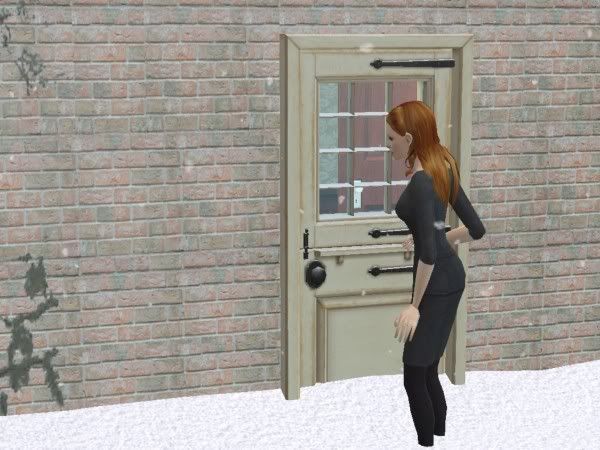
HEAPED up, like snow against a door, like muscle contracting a fissure, like the shell of a pod deliberating season - with such intense conflict, we are 'up against' the simplest of notions to be made evident once again to our soul.

Why is this so? To learn and perfect the tune, the sequence of harmonies, and then as individuals, interpret and express as no other.

If absolute perfection, uniform perfection, was the ultimate manifestation of dream-Man, then it could and should have been arrived at - even before the dawn of time, literally. If such perfection was all that was called for, being of primary importance, then to reiterate, it could have been achieved.


That men do err and 'take time out' to gather in experience from such, affords us speculation which says that the overall goal, first and foremost, is not perfection - self-made or otherwise - but rather love and love for perfection. Furthermore, whether or not we ourselves can be considered as perfect, we can begin to appreciate and love such perfection as is outside of ourselves. This is a form of development which provides an attraction, an attraction of fixed intention, drawing unto ourselves the desirable (in this case, perfection).


For in the case of the spirit of Man, all things work their way from the inside out, spawn to reality. Inwardly, his measure of considerable perfection is to be realized by the love of such. It is not enough to be made perfect, appear perfect or even to simply train one's will alone. Nor that another being be called upon to effect exaltation, for perfection may not be imposed or even assumed, as reasonably as we are Men.

The welcoming of sin is another matter. Does a man find that the flavor is enhanced because it is a sin? If so, this is a bum steer of a directional intent. There are several considerations of law and denial of such.

  • Firstly, a man may unknowingly err; in which case he is simply and swiftly provided for and shall be afforded the opportunity for inner correction.

  • Secondly a man may err knowingly because he suffers a conflict of circumstance and that the actual sin is a part of an intricate web of factors which are reasonably mixed - this can be a conscious decision to accept the outcome, as outcome there will be.

  • Thirdly, a man may sin knowingly but is careless to the fault or the outcome, denying that he is answerable - usually on an overall premise that the "world is unjust, therefore ...", and unwittingly he gives over to just about any raving which suggests anarchy by way of protest.
  • Lastly, he may sin for lust of sin, in which his nature has perverted and he has forfeited capacity for clarity - clarity of thought, reflection, remembrance, affection, sympathy, etc. He no longer recalls why he would sin, but sins for sin's sake. His humanity is 'on the edge' as he injures both himself and his associates.


The question of there being Sin in the definite sense, is often dismissed by those who really can tell 'which side is up'. Usually a little conversation will reveal that those who protest the meaning of the word sense its stern implications and they know right from wrong. That there really is a rightful right and its deceptive twin.
Yet whilst the abstract may be agreed upon, we may find that one's personal comprehension is made the more difficult because of the community of men and their ways - their provocations of which, we are nestled in. Those of whom we live with, work with, share town with, and so forth - these other men address social sin, perpetuating certain behaviors in this regard, in like manner to their immediate fellows. This may contrast one's personal innate experience of perfection and sin. In fact, better to say explicitly that in great measure, no doubt will! One only has to travel a few countries to witness the differing social customs and their systems and determine that the 'inner man' could not be comfortable with all of the conduct. In other words, there is acceptable sin and punishable sin - laws applied and laws unspoken - which largely determine a man from his community. There can be enormous difficulty for a man who would question the constraints of such. Even if he does so from the heart and in all good sense, in the most 'civilized' of communities, he shall find extraordinary conflict and pressure to conform.

It will be noted that we have discussed the fact that wherever there is a bonding of men there is as it were, an adhering being who in like nature is drawn to these men. The provisions for social sin and perfection are endorsed by such beings and are like barbed wire around a cloud - remarkably ineffectual but very apparent.

For although the men shall sense their being and even push others to conform to those accepted persuasions, inwardly there is little or no attraction; particularly if there is no self-evident goodness resulting.

Men become too used to living complacently. They settle for an empty promise and hope for nothing more than a 'comfortable' life. Rarely will they be comfortable, particularly if it is comfort they seek. Often one can find that the man who cries out for perfection is really consorting with the wish to be comfortable also. That he believes he cannot 'rest' within himself until he is godlike, and sits upon an appointed throne deliberating his personal glowing goodness. Alas! This is self-centered. It may or may not be admirable, but nonetheless is self-fixed and is restricted as regards the true appreciation of what perfection stands for: That we should strive for it despite of self, despite of self-comfort or glory, for the sake of perfection alone. How often a good point is missed!

Our views concerning Karma, concerning sin and subsequent result, our conscience and our opinionated society, are all assessed with a view to come close to acting from our hearts and not our restrictions. Sin itself has not the element of love: an act of sin does not know the permeation of love. It is true that by our actions, strife will sometimes follow, even despite of deep meaning, well meaning, good intentions. We can afford courage to learn by this. However, if it is true clarity upon the matter we seek, then we come to the inner knowledge that it is upon our own discernment that we rest with our actions. No amount of karma in place can actually effect your personal discernment, refine your own ability to make such conclusions to prompt you to act or restrain. But this practice is so much more enhanced, if we may 'step out from ourselves' sufficiently to review our actions, daily or once in a while.


To what would we strive for perfection for? This is no trite question. Innately we know that 'perfection' is up there with Goodness, with Greatness, with Beauty, with God. Working through us is the current of desire for betterment. The conclusion is that betterment leads to perfection. Maybe not total perfection, but a measure of perfection, a degree. Possibly we may arrive a lot closer to perfection, through the love of such, whilst on the road to betterment. 


If we could inspire this in the lowliest of criminals, in the most dejected and ugly of spirit, in he who is incomplete and disfigured - the knowledge that the perfection need not be manifest for the heart may mirror what is to us unachievable - such souls would expire their sin and step into glory.

Quite often it is those who have the deepest contrasts, who by divine promptings are awakened to these great realities. No longer do they look to themselves, their ego is torn and in need of supplication, their mind is not fixed on themselves, they have tasted evil and do not like it. Such individuals revere all perfection without the need to become the example, and yet by such love, become what they have come to know.

If we look deeply at a painting and are lost in admiration we need not have been the artist to appreciate its message or profundity. Yet by this intimate acknowledgment we become as the artist, we truly take his place, out of time.

This is the secret of the striving for perfection.

From the Contents of Esoteric Classes

Rudolf Steiner, August 30, 1909:

After Parzival stood before Titurel and had the experiences of which we spoke, an intimate and deep feeling of shame arose in him. This feeling of shame permeated him completely. He had gone through catharsis and had thought that he was now so good and pure that he could become one of the followers of the Master of all masters, the Christ. In this feeling of shame he was reminded of Christ's words: “Why do you call me good? No one is good but God.” He now knew how very imperfect he was still and how much he still had to take into his striving for the good, how much he was still lacking in order to be good.

And a second feeling, a feeling of fear, overcame him. He thought that he had gotten rid of that a long time ago. But it was a different kind of fear from the ones he'd known previously. It was a feeling of his own smallness and weakness as a man compared with the sublime Godly being when he let a second word of Christ live in his soul: “Become perfect even as your Father in heaven is perfect.” These two words should live in the soul of every esoteric.

An esoteric should kindle full devotion for divine beings in his soul. Thereby the consciousness develops that what one does isn't so good, but that one should always try to become more perfect. We should look at what's developing in one's soul. God lives in developing things. If we get to the point where we're acting in a good and noble way, then it's God in us who's good. The God who lets us act in a good and noble way is our archetype itself, that created us. We must become a complete copy of this archetype.

Be it ever so hidden, there's a selfish motive in everything we do. We must realize that we can't be selfless. It's a world karma that lets us act egoistically. But world karma is God. Everything that God is and does in the way of good is better than we could do it. An esoteric should tell himself: Let me do something that I have made it my duty to do, let me do it as hard as I can and in such a way that I tell myself that the divine element that's at work in me is doing this and I'm only the instrument of this godly element — then the higher self in its striving towards perfection is revealed to him.

My Blog List

Followers

Esoteric Christianity Archive