Translate

A CLUB OF SUPERNAL INTERESTS Christian Esotericism, Spiritual Science, Esoteric Christianity - All Authored by a Lodge of Christian Teachers (unless otherwise stated.) (All writings copyright) ©

Monday, September 21, 2009

The Passions- 14th September 1991

THE passions of men are rarely distinguished, sorted through and made singly apparent. Also concurrently, one may cite the representative passions in their outer and corresponding variants of expression.

Passion shall arise within a man or a woman, and if it is not realized in one certain mode of expressive release it shall be redirected into other involvements, bringing with it the 'charge', the exhilaration of such experience which would not be known if rather that element of passion had been performed and incited through other means.

Men may be stirred according to that which their consciousness is most encouraged and can give over to passionate remonstrations and exhilarated propulsions throughout, whereupon they have literally 'sparked' their desires - be them perfunctory to the physical world and their metabolism, be it through animal magnetism and its drives and physical involvements, be it through the sphere of artistic love of creation, be it through the aesthetic or mystical relationship, be it involving the passion of prayer, aspiration- even flagellation.


A man may be involved passionately with social involvements, working for justice or working for anger. A man may passionately embrace the physical world, and through such concentration on such becomes so entwined in that which the world does offer.

Passion itself is representative of that which we know to be ecstasy empowered. It is the driving force which is called down into that which we focus upon. If our conscious world is most comfortable with this or that sphere of activity, then our passionate expense presides there also.

Habits of themselves will for the most part negate the passions. Passions do thrive upon the unique and unknown, whereupon there is a realization, a confrontation, which through the propulsion of passion is attained.

Dreamers often reach out in visions, sipping from the cup of passion itself. The nature of passion is not to sustain but to enhance, to escalate; and it is sporadic and impulsive. It is not something whereupon one may 'level out' or negate indefinitely.

Passion is impartial to judgment or error, to morality or to immorality. Passion is the naive substance of an exhilarating fire which will be used as will, with no 'built in' disposition or characteristic afforded to where it is spent. 

It is a dangerous game that some men intend quite consciously to incite and work upon another's passions and therefore frailty. For rarely can men control at will that which is already ignited, let alone direct accordingly and specially that fire which has the power to enhance experience at many higher levels than already realized.

Men and women have not the awareness, but rather are casual as regards their total wellbeing. They may be quite misled by another through those passions which would speak to them of the great, the grand, and the overwhelming. For it does make for great impressions, just as color which has been enhanced or music which has volume increased - and men may not judge the quality of that experience by means of the passion-enforced vitality and measure thereby.

In other words there is much one may be shown in a darkened room which appears to be greater filled when lit, however the contents of that room was always the same before and after, irrespective of the one who instigated greater visibility. Now in that case one could thank the one for such an enlightenment, however it can be argued that one might also waste a fair amount of time in one room rather than viewing another of choice. Rapture may be very persuasive.


Passion enhances that which we experience and takes us a little further very quickly. So what of the darkened room? There is practically nothing which does not hold something of great interest that would not become amazingly significant to us. But one may induce passion for passion's sake and be so seduced by any experience that there is little to arouse the sensibilities without the exhilaration the passion inspires. Therefore if a man has the gift of inciting and arousing passionate inquiry within another, it may well be at the expense of deeper meaning, of discernment and of something which is, of measure, infinitely longer lasting. For as cited before, the nature of passion is not that of permanency or stability, but rather the very opposite. This is why the lower passions when indulged in and expressed, often call for quite obscure and obscene variations to what usually would satisfy the original experience.


Then there are those who through artificial means may take into themselves with pill, potion or intravenous device, passion which becomes all consuming. The exhilaration of experience makes for all experience, whilst so induced, to be ecstatic at first and then because of the 'sameness' of the impressions - to which the passion flows into - the drugs become ineffectual and are replaced with a habitual drive without the ecstasy experienced at first.

None of this is to suggest that we should attempt to become passionless people or that the student who does seriously contemplate the inner path should attempt to 'shut off/close down' that flow of passion which arises. For one thing, every man in one way or another, in one sphere or another, will experience and utilize passion. It is somewhat devastating to begin to close off from that which comes to us. But it is wise also to recognize the moments of intensity and times of relative 'lustless' applications, as being the same experience either enhanced or interpreted in a diminished capacity. 

Therefore it is primarily important, as to what exactly we choose to fix our attention upon, regardless of the level of experience thus given back. To know that there are fluctuations and to know to discern certain qualities which are the very nature of our experiences, rather than them being attained quickly and with greater impression.

In old age one finds much joy that the quieter pleasures of life bring. Roller coaster pursuits are regarded as tiring rather than fun. We must examine our reasons, our motivations, our intentions, for involvements; and also that which our worldly or conceptional involvements bring to us and to others. Not to measure the feedback of experience, for in spiritual pursuits there are many who complicate and mistakenly gauge their progress personally by the spectacular rather than the beautiful.

There is a certain competitiveness and aggressiveness whereupon we find that men wish most passionately to climb to the top of the highest mountain and overcome the odds, but the reason for doing so escapes them, as much as it does us. There is a good example in that. For what purpose do mountain climbers climb? If they pick a good day, with good conditions and a rather wonderful view, irrespective of altitude and whether or not it has been done before, well and good. But should there be the element of:
1. They have not exceeded themselves in this way. (Note the need for variety, the newness, the element of passion.)
2. Others have not achieved this climb in this way before. (Again the abject call for variety, which does not pertain to the actual climb at all, or their individual experience or pleasure derived.)
 3. The conditions are hazardous. (Who in their right mind would welcome such prospects, if not the thrill seeker inflamed by passion, rather than the experience of the climb?)



So from the above example one might see as to where passion and the interpretation of experience may go horribly wrong. 

Now it may be that a man decides most consciously that he enjoys the aspects of passion and prefers the sporadic levels of fulfillment and all that it brings; in other words, experience for passion's sake rather than passion for experience's sake. As with all potent brews of life-force one will find that moderation is best and the immoderate do eventually weaken and sicken themselves by the over-action, the over-stimulation, and the overuse of their involvements with this; as well as any other extreme.

At the expense of so many other attributes and so many talents which are so negated by the self-indulgence of the extremely passionate man, one may perceive within subtle bodies, much like holes, dark spots, where there is almost a death to some of the under-used regions within his constitution. It will expend the overall vitalities, and the balance for daily sustenance will be so overrun that the determining qualities from which a man is cosmically sustained do turn upon the man as a poison. That which is not received into ourselves in other ways becomes intolerable. 

If we are not to develop the capacity to utilize and channel the cosmic virtues - the cosmic medicinal properties - with certain talents and acquired expertise, we are then 'caught short' of those factors which enable existence and manifestation in this and that region. Thus over-stimulation leads to an arrest of other faculties and when employed and activated consciously with the sole intent of doing so, then the constitution is starved of the soul nutrients it could otherwise receive.

For it is one matter to come to passion through experiences which present themselves and are common to the progressive learning and interactions we thus naturally encounter, and it is a totally different matter to incite passion for passion's sake. It is as dangerous to a man in any form of passion, whether it be through the excitement of the sensuous or the ecstasy of the aesthetic, to employ passion for passion's sake and over-stimulate the need for overemphasized impressioning.

Just as a man who accustoms himself to magnifying glasses does weaken his sight, so too will his ability to perceive actual value within those gradients of experience, which are of themselves, wondrous, especially when come to through progressive attainment rather than by spurious, spontaneous and unstable exhilaration.

For passion may speak to us of that which we may encounter and attain, and will naturally come to a man in many varied ways. No man will be divorced from or without his share of passion. But better to hold passion as a 'sweetener' which says, "Here is the summit of this which you are so involved in. I shall take you further. You, through your desires, your study, your longings, shall come to know this better"; rather than you continually seeking out passion, not for concern or for the love of particulars, but for the use of the experiential opiate which fires and provokes, being then undirected with no channel of reason, interest or love.



Sunday, September 20, 2009

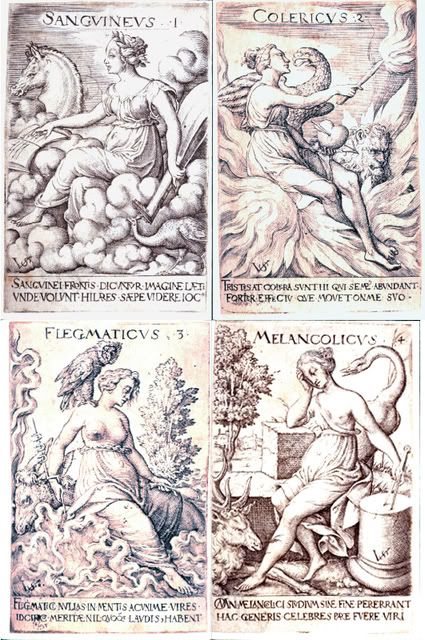
The Temperaments & the Elements- 11th September 1991

THE rules of the temperaments are the same as those which govern the characteristic tendencies peculiar to a race. The 'swabhava' or 'essential essence of characteristics' is much governed according to the conditions at birth whereupon the man has much decided upon, entering into this or that country with those attributes required for survival and adaptation. 

This is based on geographical location in respect to the poles and the climate that is to be endured, and also those 'blood' characteristics which are formed over many, many generations.

One can witness many exceptions within a rule where an individual has properties and strength of will which in time will override those commanding characteristics and replace certain others pertaining to other factors, namely:
a) Geographical switch in location of permanency.
b) Past life tendency (as a magnet) drawing forth those former tendencies.
c) Health and the nature of the physical condition responsive to those conditions.
d) Ego-identity making conscious application which redefines and redirects those channeled forces - pertaining to certain attributes and modi operandi inherent and replaced.

Many a soul may argue that racially speaking they are in the wrong place as regards former communities in former localities, which best suited. However, compensatory desires are forever dictated by the soul of the individual which specifically destines itself long before birth at that particular region of the Globe. One seeks experience which is of a different variety and not mere repetition, and although some measure of tendency to repetition of flow-on can, from life to life, propel like souls in waves upon return into re-embodiment, this is not the chief concern of any incarnating individual.
 
Print made by Albrecht Dürer, 1515 (circa)
Panofsky interpreted the print in terms of Dürer's continuing interest in the types of melancholy to affect the human condition which so preoccupied medical men of the day; with for example, the man in the centre, who apparently tears his hair, signifying choleric melancholy, the sleeping figure representing phlegmatic melancholy and the pleasure-seeking satyr representing sanguine melancholy.
However, this is not to say that the defines of a particular race and their constitution is the complete man in toto. One cannot argue though, that there are no differences between strength and agility, thinking forces and reception, cognition of concepts and so forth.

Many of the treasures of the heavens are received and brought with us on the journey back into incarnation. The re-embodying ego divines in pre-earth life that which is best suited in temperament, just as also he is depicted with those racial characteristics, time of birth and location upon which he is attracted to in either great sympathetic bonds, or conversely through former antipathetic reactions, into those conditions which are the very opposite to his former existence.


The question - when one comes to either thinking in terms of higher or lower aspects of tendencies and characteristics of man - is whether or not these conditions which are adopted for a time are so set as they are unchangeable.
One must consider the factors which make for opportunities for certain characteristics to flourish and perform- namely the starry conditions at that time, which at intervals incite more or less of those commanding characteristics into activity. For being born of those starry impulses and channeling thus thereby, one attains certain qualities which pertain directly to cosmic influences. From these movements and conditions one is inflamed in particular ways, and is either receptive to the extreme or by the very nature of the man, unreceptive to such influences.

So if one is predisposed to receptivity in a given manner and has adopted a 'blood' temperament or a personality temperament or a soul temperament, one is exposed to set patterns of determined response and interaction which befits that particular host of influences. It may be said here that the three need not correspond but are in fact usually at contrast with each other. Added to this certain changes may be effected where modification is made and certain qualities are exchanged for others within an individual.

In the case of the attributes which are so imparted in racial 'blood' temperaments, one finds that the ego at given opportunities may redress the organism and rework those physical attributes inherited at birth. Also a shift in location will have certain effect, as the organism and the personality is so altered in response to those extraordinary conditions set before it. The changes are almost immediate and will alter throughout the generations who have settled in the newer region (even though their descent is from a totally different region) displaying characteristics peculiar to the new settlement.

The fiery influences so received and distributed throughout the nature of the personality are directed in like manner, but too may be reworked. As illness is a fine opportunity for great change to be effected within the physical constitution, so too are mishaps and marked changes in outer conditions wonderful opportunities for the temperament of the personality to begin to work anew on those adopted attributes. Depending on the level of the governing consciousness, one might find however that those 'blood' characteristics dominate and determine moreover the nature of the personality - it is a battle of balance and redress between the two as to which will be the determiner.


Thirdly there is the soul-temperament which is characteristic upon the impressions which were made as summation from previous experience. This is carried through and is usually depicted from the actual time of birth. Then there are tendencies working through from the past that may dominate, again depending on the strength of the consciousness and the desired activity thereof. 

There is opportunity in the mode of the personality to qualify or balance such tendencies, explore or redress the former characteristics so impressed on the individual. But of course one must consider too the extraneous circumstances and their workings on the entire individual at any given point of time. The preferred characteristics so acquired might differ according to circumstances pertaining to the moment and certainly to the level of awareness presiding at that time.

Interestingly enough, if one is to separate the individual temperaments, namely four contrasting for the blood, four for the personality and four for the soul, when mixed with differing determinations, we come to twelve; and then so on into further multiplications.

It may be said that when one comes to consider the four elements which are manifest upon the earth as being in quality, that of the ether, that of the fire, that of the fluidic and that of the earth, one is disposed to an interpretation of those representations as being essential to the nature/characteristic of those qualities. However, in substance they are but one and the same - those physical representatives - save for the dominating principle of one or more of the commanding elemental influences. One may transcend another and one may work upon another and alter it accordingly. That the earth does swell with the water, that the water may quench the fire, that the fire may consume and translate the water to be released into the ether, that the ether may persuade and sustain the flame; that earth by its nature may contain the flame, that the ether by its nature might accommodate both particles of that which we recognize as condensation when earthbound.

The elemental qualities which work through and thus preside determinator in manifestation, are essential impulses permeating all matter, streaming in, in given avenues of design. Manifestation itself is plastic to these influences, and made characteristically quite different because of these four differing qualities. 

So too with the elemental man. Form and structure as being representative of the physical interactions also does apply cohesively to the nature of those governing qualities which affect the higher realms. As all that which comprises our natural world, we too are plastic to the influences which preside and dominate certain aspects of our being. For change is imperative to growth and reproduction, to cycles and to evolution. Without such change there should be no interplay or receptivity within the cosmic persuasions - that the cosmic wheels may continue to turn. 

When we look to the elemental impulses we are trying to decipher that which motivates and animates those essential properties in which we work in. In Cosmic terms this is true also. The hierarchies who are predominantly of the nature and characteristic of these qualities, impart to the surrounding 'stuff and fiber' of the higher and lower spheres, as representatives of that which is required by them and their respective impulses, to motivate (in permeation) that which is Creation. So the essential ingredients for manifestation are the essential four impulses of those elements, as witnessed in their workings upon the earth, received and working from yet higher properties of tendency.

Man shifts between aspects and is nourished by all modes of being. He, as incorporated within, is subject to larger patterns of received impulses, whilst is also at liberty to receive and negate, in part, certain influences respective directly to his sphere of operation. However, nothing remains the same as this is the requirement satisfied by the workings of all four influences so set in place. As such, he shall come to the properties of all four and come to decipher and govern those influences which are to be selected and correct- through grappling come to acquired mastery, understanding the appropriate times for appropriate influence. For as they are building influences throughout the earthly kingdom itself - these four qualities, these elemental values - one may harmoniously direct such qualities as pertinent, within the constitution of the organism and soul of Man.


The knowledge of such elements thus far is through individual experience of those capabilities which are permeated and expressing throughout - featuring one singly at a time, within the differing modes of consciousness and being. However, in future times when the expressions are spent and well learnt, man will have greater freedom in the creative channeling of such influences; the same creativity which the natural kingdoms have been born of.

Elemental gods have been personified, as in the Gods Shiva (and his curry-eating followers), Vishnu, and Brahma.

The virtues are to the elements as colors are to the light. The relationship between the two are of influences respective, but not of the same. For the virtues are finally 'sapped' in excretion when manifestation comes to periods of inanimate rest, and distilled as it were, from that life which was perpetuated by the influences of those elemental impulses. And they are saved and so withdrawn, for their substance is from yet higher realms, which are essential to the characteristics which are effected through the impulses so given. We may come to know and exhibit, and receive that which is a virtue by virtue of the elemental precipitator and his gift to manifestation for the workings thereof. But the cosmic substance of Divine inclination is not imparted from the source of the elemental persuasion. It is affected and made vehicle, but is not the source.

As man comes to know of the driving forces that cohesively make up the grand interplay of those strands of life which are so connected, he may come to distinguish the properties of each elemental influence and so direct the impulses according to his design. Expression within the perimeters of the particular, gives essential firsthand experience of such qualities, as exhibited as certain characteristics imbued, featured at times through phases of his consciousness and constitution.

Christ Crowned with Thorns, Bosch. The lower elemental persuasions.

Saturday, September 19, 2009

You could not possibly know…- 1991

Greetings,
You could not possibly know how just one, then two, can pivot circumstance in any position of loving employment. The gesture of assistance alone endows the work (and the word) with new birth into a cold world; and you will nurture this work until it has the strength to stand of its own and greet the world.

So do not underestimate this effort, even if we appear to make little of it and converse personally only a little; for we address time and time again the matter at hand and know that you receive and appreciate the messages brought into your little room. And from such appreciation it shall multiply, and what is experienced now shall be received and appreciated by others tenfold, twentyfold and so forth.

It is true that there are always people who might initiate and carry through tasks when the time is right and proper. However it is mistaken to suggest that any one can take the place of another. Think that for any sequence of events, if one were to remove any of the vital links, any one element, could the outcome of that particular be possible? In this much there is great importance of all in their individual contribution, as the removal of just one cell, one grain, one shower of rain, one cog in cognition! Removal of one being should alter the course of events inextricably, with a vacuum and a vortex and a void, and a sequence whereby, as with a cardhouse, those who depend also on that sequence are disbanded.
We hope that in this, when you may tire, you may feel the comfort and solace in this knowledge. It is not a matter of being 'used', but goodwill in a mutual project. There are no promises on either side, therefore no lies. There are no obligations and no disappointments, but a genuine affection, a respect for such relations, a respect for the law and goodwill to humanity; a desire to help further the cause of spiritual prosperity, with the inner illuminations of the words of truth.

One must expect that there will be many who shall make demands more often than attend to their own duties, and any experience with your children, should help you to understand and try to quieten such demands. "Be satisfied with what you are given for the time" should be your reply; and that you are sorry if there is nothing more to offer, but they may go into the world and seek there for what they require.

You may explain your limitations when they make their demands plain to you, for they are hungry for guidance and seek security desperately. You may offer sympathy in this, and certainty that they shall receive all the help that they may require, even if it is not from you directly - and certainly cannot be. You may explain that your work cannot be consumed or interfered-with by personal endeavors of any nature.

If it is contact that they ask for, then assure them it is only a prayer away, and vital that they establish through themselves such a relationship; no other can offer that for them, as mouthpiece or spokesperson. That they might reflect on their duties and welcome them; that they might look to the grit in their personalities and expel it. That they hold the keys to the spirit - you may explain that you yourself have enough problems sorting through your own keys!

We know that chastisement does not concern you; well and good. Do not fear grave interference, for you are not alone and must trust in that, for if fear of evil repercussions were to dissuade you from good and great endeavors then the evil would have won at the outset, wouldn't it?

Do not worry of becoming 'puffed up with pride' as there are many remedies for this, should it happen. Life is full of such remedies that sting, biting to the quick, answering such a need.

Each day is important, and brings us closer to that day when all men shall find value with the life that the spirit has bestowed, endowed, instilled and infilled. Your concerns are our concerns.

God bless and see you tomorrow.

Friday, September 18, 2009

Telepathy- 1991

ABSOLUTES are always fallible in the context of that which a man's mind can conceive, but absolutes within the context of reality are simply explicit and undeniably what they are.

Thoughts become 'soluble' within the thinking process, and intangible as they may seem they are as the supernova, active within the life-plasma itself - gregarious, forthcoming, vortexual, and immanent.


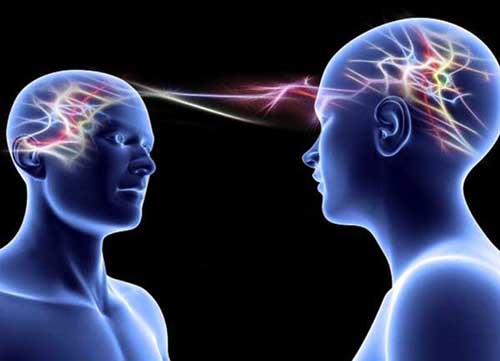
Telepathy is not so strange. The use of words to impart meanings from one to another by way of the voice, that too is preliminary. The issue is for both the meanings imparted and the meanings comprehended; the space between the two is not dissimilar. For when one talks freely with another, there is quite frequently an element of telepathic linkage which breaches the actuality of the verbal or implied message. If one is sensitive to this they can begin to perceive the unique workings of language, both spoken and unspoken or read, so disseminated.

The sole importance of communication is not in that which we receive, but that it has been delivered and answered by us in such communication- from one to another or one to many, whatever. One alone cannot know this. 

All thoughts are perpetuated and forever passed on. Men receive thoughts continually. They do not create them; they pluck them from the ethers. Telepathy is no different in matters of reception, save that the sequence of thought has a source and is so 'plucked' or received with intention as to that overall source and sequence - a 'package deal' so to speak. 

This is why the differentiation of distinguishing one's thinking from certain messages is so difficult. For whereupon one might conduct each concept measured and identified, they are choosing rather to be guided by a 'communicator' who has already undergone much of that process and passed it on at the later stage. Although actual reasoning may still be within the functioning recipient, it is unnecessary for them to slave at a sequence of reasoning factors in order to call forth certain thoughts en masse. Therefore it is within their powers to respond (unlike the trance medium's capabilities) but far quicker in the overall result - depending upon with whom they communicate.
Most folk have had an experience whereupon they are with another and exclaim, "I was just about to say that!" having received the thought with rapidity, before the words or thoughts were verbalized. It need not be simple coincidence. The individual retains the right to refute, furthermore there is no imposition because it is required that one is by choice, so spoken to. Whereas in the case of the psychic, they are actually overcome with impressions or with being, and the distinction between the two processes is important because unlike the thought being soluble, the dissolution of self is required in mediumship, that they might accommodate fluidic forces which characteristically will not be dissolved and assimilated. 

The process of telepathic inquiry and communication takes place far often than men do realize. One must make efforts to concentrate and work upon those thoughts which are desirous and worthy to hold attention upon, and like to attract to us: to discriminate at all times.

It is common for men who hold to a group to become quite like-minded; and even whilst they may disagree on particulars, their level of attention and thought-streams become shared with same focus. This is no comment upon the dangers of such, just another element of actual circumstance. Neither is it symptomatic of mutual interests and thus companionship. To a degree one must be careful of the company they keep and mindful of that which they impart. . . in silent, communicative thought.

If one feels disorientated within their thinking and amassed with overflowing concepts, then it is possible to draw such randomness to conclusion by way of imagining something alike to a sea anemone: having opened, now drawing closed, contracting inwardly, all points to the middle. Again - the fissure opened, the fissure drawing in and closing. This does assist with the concentration, also of course, in one's attempts to contain and 'make tight' the concentration and be aware of such. So it is the tricky consciousness of knowing when to be relaxed and open to inspiration, and when to be in management of reason and her divinations. At times one may be so unsettled as to be able to be neither. 

When a student begins review of his or her own thinking, it may come to pass that the thoughts dissolve with such rapidity and pass through the mind's eye without correspondence. This mental confusion leads to more of the same and interpretation is difficult indeed, as it is at these times that one must become quite active, so that the measures of thinking may be given to useful purpose and be applied. 

When we dream or we imagine, we enter into realms unfathomable to the senses, and the senses may protest, if protracted, if denied. One must satisfy the natural urge of activity within the natural world, and balance our imaginings and concept-worlds alongside this of our daily existence. In order to maintain such balance we are to be reminded of our duties and considerations to both, and give ourselves lovingly to both. For a dreamer may not deny the world indefinitely, or the worldly man deny his dreams, for in both extremes the man shall be troubled. 

Sanity holds provisions for those who wish to remain clarified - and remarkably, sanity prevails and withstands even the most broken of men. The idiot, the lunatic, the fanatic, the man who has lost his powers of containment or exactment - all of these men remain completely sane, throughout it all. Whether recognized or not, they may comprehend another's thoughts or attitude as clearly as any other. One's faculties may be amiss, but ever the individuality comprehends and retains lasting impressions of that which is of their experience.

For overall, the individuality which is the man, endures and withstands, with a 'view from the top' as it were. Whilst we move ever on to consciously observe and consciously hold view, we are not our talents, but we make of our talents what we will. 


***

"By the magic power of the will a person on this side of the ocean may make a person on the other side hear what is said on this side, and a person in the East thus converse with another person in the West. The physical man may hear and understand the voice of another man at a distance of a hundred steps, and the ethereal body of a man know what another man thinks at a distance of a hundred miles and more."

"What can be accomplished by ordinary means in a month (such as the sending of messages) can be done by this art in one day. If you have a tube a mile long, and you speak through it at one end, a person at the other end will hear what you say. If the elementary body can do this, how much easier will it be for the ethereal body, which is much more powerful (in relation to other ethereal bodies) than the former!" (Philosoph. Sag.,i. cap. 60)

-Paracelsus

My Blog List

Followers

Esoteric Christianity Archive