Translate

A CLUB OF SUPERNAL INTERESTS Christian Esotericism, Spiritual Science, Esoteric Christianity - All Authored by a Lodge of Christian Teachers (unless otherwise stated.) (All writings copyright) ©

Saturday, September 12, 2009

Under the Tree- 29th August 1991

PICTURE a tree that is bearing much fruit with no piece the same. Bulbous they are, some teardrops, some globular, of many, many colors and hues - the mythical tree - alike to a Christmas fruit tree. Beneath the tree you sit, sustained by the droppings that come to you. They are not yours to pluck; you must await their heavy drop. Thud! Another. Ouch! Another.

Now you have many baskets, each full to top. You have gathered each precious fruit, and are solemnly careful not to bruise any one. Piles and piles heaped all around you. Plenty. So many! Each unique and wonderful.

This is our heart’s desire to distribute those fruits from this tree. They are weird and wonderful and of such variety. They have such tension within, pushing out to the skin. They are very much ripe, they are ready to be had.

Some with prickle, some with silk-like bristle, some as crimson as the lychee: both with flesh and nut concealed. Some with the red of an apple, bespeckled, some with juice and pip-seed.

As we enter into the Garden of Eternal Wonderings, scores of such trees, in this our orchard of faith. Trees of sacrifice who bear, each without pattern or distinction. They are with knotty twine and twisted longings; they are very, very old indeed.

In good charity we gather, we collect what we can. We work fast for opportunities, that the ripe vitalities not be wasted. How so to distribute? None with a label or a name, but with a purpose.

And so the field workers make convoys to deliver in steady haste to those with want in need. For the weakened who await this fruit, have now no means to come into this orchard for themselves - at least, at first. They must partake of that which is especial to them, and become renewed by the offerings from those who have brought their inner nourishment. One cannot go to the wretched and say "Go look for yourselves! There is much, there is plenty, there is all you need and more!" For the wretched are so depleted and spent, and in need of nurture, with mouths once filled with grain and now with the dirt. They are heaped and fallen on roads here and there; they are frightened and tired, immobilized and cold.

What use are great imaginings or tales, given to such poor fellows in need? Just one fruit administered will make fast the necessary recovery. That they too might venture forth, with light heart and light step, once more, to the walls to the orchard. The delirium that they suffered will melt away. The soul will be gratefully pleased, that the bounties of Heaven were not just simple myth.

That the greedy who scurry for grain and trough, have spent all effort of endurance. They may hold the fruit, turning it this way and that, and come to know its properties: by their taste, by their life; infilled with great and all-consuming fiery essences. Revivified, renewed, the disheartened are softened by the kindness of their offerings given. Awakened to prospects, they leap up and recover in an instant!

For we have cultivated this tree of many varieties, watered by Truth herself, and warmed by the impassioned Host: Caretakers of the orchard, grafting throughout the ages, now this, now that, from the produce of great men.


That the red may return to the bloodless lips who have murmured, in struggle, to form words of prayerful calling. Each man, upright, with a dignity restored, with the strength of a resonant heartbeat which knows no inner discord. May those lips smile again, may the soul be infilled, may the words of the Word, be thus distributed throughout the world!

Friday, September 11, 2009

Noah's Ark- 28th August 1991

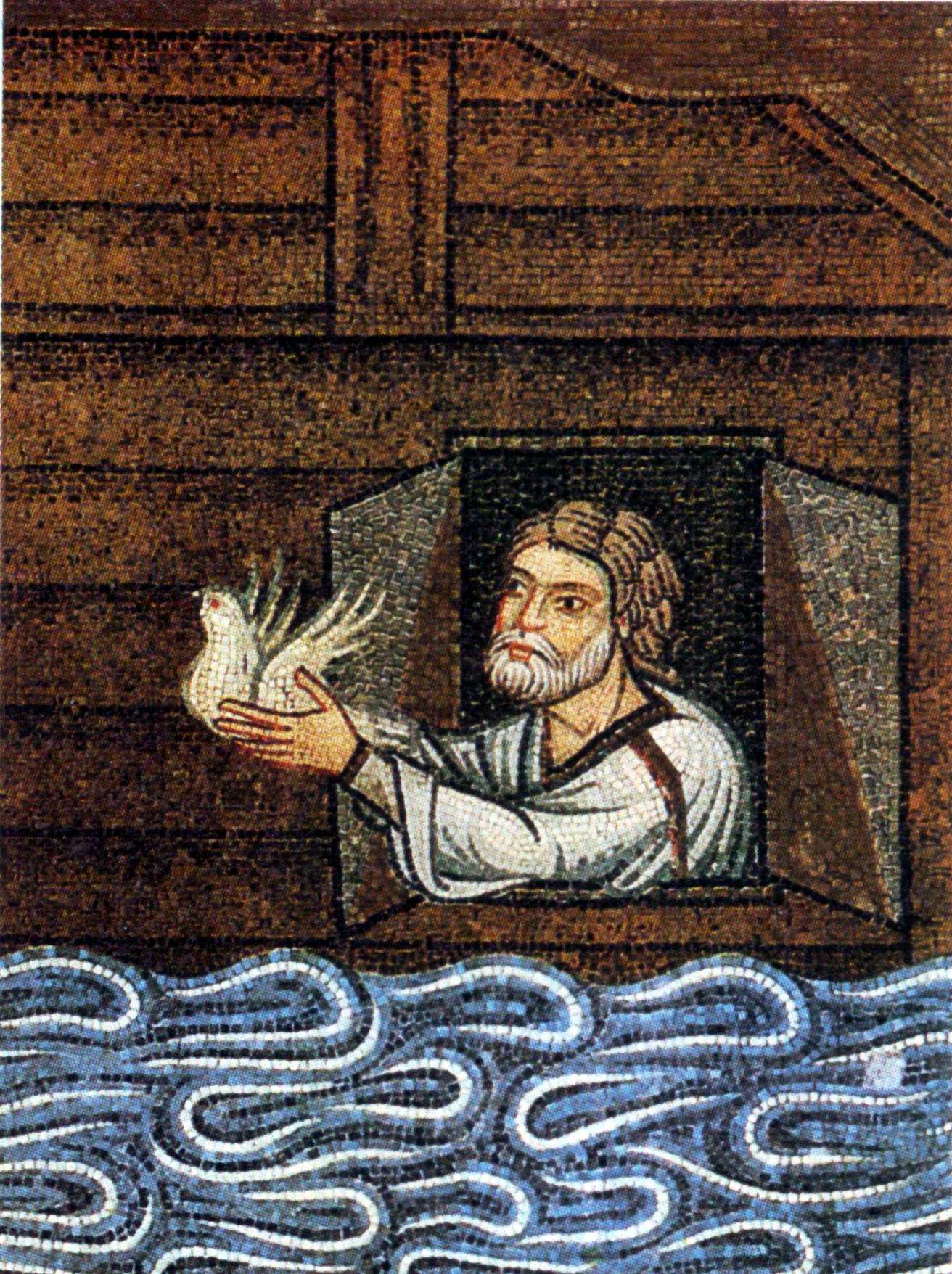
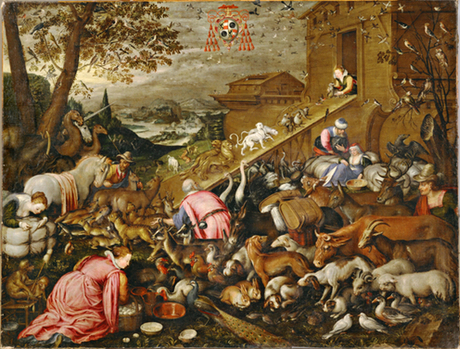
THE story of Noah's Ark gives to Man a representation of the animal souls which are so divided into species and type. A pair of each was in place; which is a true indication as to the nature of the souls attributed to a particular animal- being two, each with different and complementing aspects in and out of incarnation.

The animals so described need only the representative soul, which of itself is encompassed within the entire host of its species, outflowing and made manifest on the Earth.


Who therefore, was Noah in respect to the Animal Kingdom? The very saint, who was later known as Francis.

The souls contained in the Ark are so separated that they are afforded Earthly representation. They are bound in higher spheres with counterparts a’many who frequent the habitats suited to type and form. The Ark as pictured above the sea of existence, is still to this day protected and held. For Man has little concern, little sympathy for that of his own. He may barely know of that beast which he works and inhabits, let alone take time out to tend to the offspring of his own evolution.

There are caretakers of the gentle brothers, those who too need fostering and attending to. Noah was such a caretaker.

There was a split division made apparent in the beginning of the world. However too, there was much danger of those aspects rejoining with Man in a perilous way, in a course that would drive the higher aspects further from the consciousness, and develop artificially the now separate beast. And so seeing this, there was protective action thus taken, and the beasts became dumb with their souls so isolated from Man; withdrawn into the Ark and made separate.

They experience - and this was not taken from them. But the distinctions between Man and beast were of multifold aspect and unclear to the growing consciousness of Man. Many mixtures resulted from intimate relations between the two kingdoms, and many sought refuge in the company of those souls whose consciousness were of the beasts rather than rooted with the infant Man.

For there was envy among the lesser brothers, who were not so distant a relation as to recognise many an opportunity in time missed. And the aspects met with many a same standing, and it was not to be discounted that the similarities of the two would commune most happily. The discord and the arguments, the aggression and the dissension did come from a resentment as to who would take what place and rank upon the Earth.

There have been many epochs whereupon the individuality of a certain beast has been adored, and well respected, as a higher god of Man, rather than the soul of a particular reign. For the beasts too have their higher aspects and their flames of potentiality. 

It can be recognized in the etheric world of the plant kingdom as well, where there are exceedingly perfect expressions of harmony and consciousness rooted above the physical existence. And yet to men some would be but poison, whilst others would offer remedy. However the plant may not strangle the man, and does not aspire similarly.

The falling-out with the animal kingdom was put to great argument. One must recognize the problems which ensue, of import especially when the body of man is lent and refined, and objectively worked upon, owing much to those higher aspects called for by souls from the kingdoms below. Man became a split being and denied the animals, divorcing himself so. Fragments became Paradise - and with some left out and some left in, and some so encaged, whilst others given freedom. And still those which are bound to the confines of the Ark are reached with developed commune in the blood, bone and organ of Man.


So persuasive are these individualities and yet so distinctly separate from Man. Some endearing and some now so loathsome, it was imperative that the divisions be reinforced and distinctions be set in place. The argument was to cease, Man goes about the world expecting total obeisance from the beast, the flesh absorbed into constitution, the tendencies imbuing in the astral. Some are drawn into fields for labor and some into domestic subservience. The domination of man is defined although not entirely, for there is much aggression between the two and conflict to be resolved. They must wait their turn, and are held back from otherwise. There is much experience expedient to this, and they are dependent largely upon Man and his progression from here. Whenever there is a consciousness shift, there is division. And this was necessary for the advancement of Man.

Thursday, September 10, 2009

Extinction of Species- 28th August 1991

THE inebriated hippopotamus (related to the pig) characteristically is as blubbery around the circumference as are the folds and wrinkles of the mud beneath his gait. Little hippos are immensely cute and pleasurable to look upon, whilst their elders are simply immense; and the details of distinction separate with much bodily mass pushing features out to the periphery.

Here we have a form from the 'old world', of which the inhabitants remaining are few. His bulk is now accentuated, with pound by pound of fluidic fat; and the definitive characteristics are succumbing, in frame and in pattern, to the biological 'blowout'.

Compared to his ancestral primates he is disproportionately disadvantaged. His hefty weight inhibits full movement, his nature has slowed. He could no longer make it on the dance floor! Remembering too, that all animals bear conditions today which were not necessarily unique to the past, from which they were first adapting to and resulting from.

His teeth stand like separate posts and are seldom used. His neck has little flex. He seeks the water to assist him in bearing his weight; without which, dozing awhile, his leathery hide is stretched and cracked under the strength of the sun.

He is not what you might call a perfect example of an animal. And should any protest at this statement, one might suggest that they inquire of the hippopotamus if he is particularly satisfied with his present condition.

There are many animals today which bear characteristics which become so inflamed and developed in ways which weaken the species and detract from necessity, proving more awkward than useful, and much speculation as to how certain traits remained or did change, now to the detriment of the animal which suffers the end result. There are of course limits to deformative evolution, for were there no limits, the progressive changes would be exceedingly gross and the animal kingdom so split with forms and faces bizarre and extreme. In the context however that we speak, that being over a relatively short period indeed, we do find that within a single species there is a sequence of physical formation which is predetermined and quite definite. 

One may view the evolution of a certain species in terms of a single lifetime which has its end, and altogether withdraws into extinction eventually. There is much grief heartfelt at the loss of a particular species, and perhaps one may be consoled in the knowledge that such withdrawal from earthly manifestation is in fact predetermined and considered naturally.

Were the hippopotamus to become extinct tomorrow, he would, after a certain period of quiescence, return back into the animal kingdom to resume re-embodiment; summoning together those features which are much worked-upon and refined. This is not to say that he would resemble the features he might currently dress himself in. But having been freed from certain characteristics, he would recover those forces which totally inspired his being in the first instance, and become anew. (A new what? Maybe a bippo?)

Jokes aside, this has happened within the evolution of the animal kingdom more often than is commonly realised. Men may dig for remnants of former prehistory beasts, without the perception that understands their being amongst the flocks and herds today, walking the earth, as ever. Not much in physical existence remains the same, or for that matter, remotely similar in time to its former form and structure. There are tendencies amongst the materialists to cling to that which they are presently accustomed to, and regard all else as vile perversion. 

Yes, there is some sadness in the fact that the beauty of a certain period shall be lost to the past (if lost is the correct term, of course). There is a phrase: 'in living memory', which implies that it is in the memory of those living. We might suggest that there is such a thing as 'living memory' which stands alone, needing not to be carried by the firsthand memorizer; and that one day all men shall find records to their heart’s content, which shall speak to them of their former periods, better than a scrapbook or a museum, but through that vision of the 'living memory' they will indeed peruse at will.

Currently there are cycles of birth, life, death and rebirth, which assume characteristics of infancy, youth, middle-age and old-age, whilst in manifestation. These shifts from one to another occur throughout a species, similarly as they do apply to a race of men, and men themselves.

Sometime in the very distant future there will come a day when the physical characteristics of man and beast may perfect throughout a life, evolving for the better rather than deteriorating throughout the ages. And also the two very much go hand in hand. 

At present a man may improve his health if it begins in such a way as to be something less than what it could be. However, he cannot improve upon features and characteristics, function and longevity, which is not afforded at birth. One may not grow younger. One may not grow a third arm, but may lose an arm. We may repair and rejuvenate some of what we already have to repair and rejuvenate, but we may not 'add' throughout a lifetime, growing stronger thereby. This condition is conceivably possible for Man, and for beasts in times ahead; and the animal kingdom must await this opportunity for great change in this respect, to occur.


Meanwhile, the system of cyclic re-embodiment refers to all manifestation, and affords the opportunities for change which cannot be effected physically, without retirement into death; or in the instance of an animal species, retirement into extinction, enabling the freedom to begin again. Having said this we do no service to a species to further speedy extinction, for the timing of such is largely determined - quite rightly - by that which is the animal itself. One need not interrupt their evolution and explain it as being of no consequence. However, in the event of there being little left than a memory, one might also realize that the animals today have altered in appearance considerably to those that we used to enjoy the company of.

And too, we are all afforded great opportunities for change, change in expression, and change in acquired characteristics - and the complexities may elude us at times, and the significance may not be comprehended, but the calls of necessity are answered to all. Nature always gives provision for new opportunity: the balance of renewal and regeneration. 


Wednesday, September 9, 2009

The Ties of Men- Black Ties & Spotted- 24th August 1991

AS was the grandmother's rule: "There is a time and place for everything" - which apart from citing appropriate behavior at appropriate times, also means to say that all things have their time and place especial to them.

One maybe put at ease when one truly takes this thought into themselves and considers all desires as being thoroughly achievable. All longings committed with patience come to fruition at the correct time.

Even the wealthiest of men may not spend all of their money at once and therefore cannot realize the amount so written in their name. And would that they did, it being gone, should then amount to nothing in their name - and so goes the law of abundance and requirement.

There are two things that may stand before a man and his desires, namely: impatience and lack of hopeful perseverance. One must always fix their mind on their goals without compromising hope, and set their heart with diligent, purposeful, long-lasting perseverance. For the optimist dwells ever with possibility and enjoys the succulent products which come with ideals. The pessimist thwarts all designs from the outset and is self-fulfilling in attitude, but no more satisfied from the meager rewards.

All mistakes hold promise of rectification. There are specific remedies for all ills, as there are reasonable - quite real - answers to unanswerable questions. For all of the knowledge to be had, there is nothing out of place. One must observe thoughtfully that there are reasons for absolutely everything, even if one hundred mysteries unfold out from an answer first comprehended.

Regardless of our comprehension there is a perfect sequence of notation, with perfect reasoning and Divine wisdom accompanying every detail in daily life. One may come to be secure in this realization. Although we do not move consciously to motivate all functions of our physical constitution, it regardless does take care of us and sacrifices itself to our use, whilst we may choose or choose not to realize it.

So too will the new day arrive, and although the man of deluded ego may attribute the day to his being and not give thankfulness, the workings of Nature in her purity and innocence ignores the vanity of Man and continues the task of replenishment and manifestation.


As cells divide, multiply, graft and circulate, many a motorist and many a cyclist make their way one by one, throughout the land, traveling hither and thither. If one has ever seen those time-lapse sped up films taken with unusual time perspectives, they will have noticed the rush of individuals, who remarkably do not knock each other down in the confusing frames of frenzied specks - each going somewhere. It is this that one may feel instinctively: that the surrounding activity is somewhat overwhelming - and let it be said that in reality it can be!

It is fascinating that each individual who makes up that whole, that crowd, is almost oblivious to the tide of men that move within the city. With fixed consciousness they appear unconcerned and move about, in and out, bent on purpose regardless of the flurry and movement that they are contained in and a part of. To the agoraphobic it is all too apparent.

Similarly, we are unaware of other activities which underlie our existence and affect us so, without. For it is necessary to an individual consciousness to hold the rightful ability to be selective and function thereby. However, so saying there is much which does impinge upon us undeniably, and unless realized one may not afford the necessary changes which may be required based on an informed judgment. The necessity for Spiritual Science may well be received on this basis. The argument being that many a reason which was not formerly recognized and one lived well without, might provide in the knowledge further understandings which offer a good sense of a sound reality, upon which we may provide for changes and newly marked ways.

From the early years a young life becomes self-conscious in the sense of identity and self-conscious in the aspect of apologizing to the world for shortcomings and mishaps. Men and women are by nature suited to embarrassment, continually making comparisons which usually are valueless. However, as children we ever try to please.

Later in life, whether it be to a god, to a demon or another, we make effort to please; and are also much inhibited by self-conscious assessments, be they correctly founded or in fact irrelevant. There is difficulty in discerning which judgments are worthy and which are too harsh and irrelevant. Gratefulness and appreciation rarely counterbalances the uncomfortable man who does not have the means or the know-how to effect the possible changes, or the patience and humility to be content with those changes, which in a lifetime are impossible.

Bravado is empty-shelled. The attitude of conceit is false conceit and denotes nothing but weakness. One may not fall into conceit when truly grateful. We are incapacitated by our aspects of attitude which falsely equate the outer world with the measure of our self. One may never reconcile the two comfortably. Sympathies lead men to men, labor binds them and mutual celebration of soul enlightens them.


If one comes across a system which provokes harsh judgment and yet offers little reason or reasons, be wary. Delight and joy, inspiration and happiness, laughter and beauty, are all attributed to Divine impulses which we are endowed with, all in all. The path of pain is promulgated by many an unhappy and discontent soul, but has no bearing on actuality or truth. Fear based doctrines, conceit-orientated societies,lack the virility of the truth/humor/compassionate path. And whilst the latter can tolerate the former, the former cannot tolerate the latter. The path of pain, with all of its stern and difficult judgments makes no allowance for the humanity of man. Whilst in reality we are frail and yet born of the very greatest, our pride is the pride of all and our failings are committed to future perfection.

One may offer another a good meal, a wholesome discourse, an encouragement, share enlightenment, and make peace with the self-conscious considerations. If a society of men is chosen, it is best to keep with the company of generous souls, generous in heart and kind to all men. It is the seemingly small considerations which are of the first importance.

Any imposition on a man or woman is a disgrace. One may sternly holdfast and decide for themselves, and learn to be comfortable with all of those who would impose. Judgments are an imposition. One may reason and observe, but one may never dictate, for there is much too much of this already; so much that it continues to be habitual from man to man, century to century and god to man. Good judgments refer inwardly, only.

One need not criticize even criticism. All men and women seek betterment in one form or another and hold to criticisms because of a weakness in constancy and self-perspective. Those who are inwardly firm of a truthful opinion are carefree and not concerned with the contrasts before them. Criticism of itself is as a beginning to the formation of discernment, however opinions which are self-indulgent turn upon themselves offering little truth. Criticism pains the heart and works like a worm at the core, but as being mistaken for good discernment is adopted in attitude by even the most loving. However, it can be dispelled when the truth of any matter is made apparent. For in knowledge is true love and compassion, rather than fearful rebuke.

May we come to know ourselves truly and rejoice that we might come also to know our brother and sister, and embrace.

*****
Rudolf Steiner:
That is what you need — enthusiasm in the experience of truth. This enthusiasm is an absolute sine qua non: you cannot get on without it. For years it has been so terribly painful to me, the way the members of the anthroposophical movement stand there as if they were rooted to the spot — and the young too, almost as much as the old. But now consider what it means, That they can stand there so impassively. Look at Nietzsche! What a different sort of fellow he was — even if he did get ill from it! He made his Zarathustra become a dancer. Can't you become dancers — in the sense Nietzsche meant it? Why, you should be leading lives of joy — deep inner joy in the truth! There is nothing in the world more delightful, nothing more fascinating, than the experience of truth. There you have an esotericism that is far more genuine, far more significant than the esotericism that goes about with a long face. Before everything else — and long before you begin to talk about having a “mission” — there must be this living inner experience of truth.
-RS

My Blog List

Followers

Esoteric Christianity Archive