I communed with mine own heart, saying, Lo, I am come to great estate, and have gotten more wisdom than all they that have been before me in Jerusalem: yea, my heart had great experience of wisdom and knowledge.
And I gave my heart to know wisdom, and to know madness and folly: I perceived that this also is vexation of spirit.
For in much wisdom is much grief: and he that increaseth knowledge increaseth sorrow.
-Ecclesiastes 1:16-18
WHERE in the catchment there is surplus there becomes overspill, and equally so may a man be overwhelmed with information that he may not contain any of it long enough to begin the assimilative analysis and comprehension thereof.
For why is it that some have nil capacity toward new thought and subsequent discovery, whilst others may advance with moderate ease? Attitudes and perspective are of great account; physiology also will determine perimeters of accomplishment, however all men are capable of a certain amount of clear and concise thinking, which becomes the mainstay to any investigation and any gathering of practical thought.
The greater difficulty arresting the student is that of distraction, rather than lack of actual ability. He or she is bemused by fleeting concerns, called hither and thither and relishing the free aspect of the mind's frolic; and it is this unstable flippancy that we may learn to quiet in meditation, that all learning itself need not be as 'free-falling' by nature or in consequence.
The necessity for straight knowledge has been doubted for many centuries. And oddly enough, it has been the scholar and the adept which have most fervently argued the case against. For knowledge unlike wisdom, expires and consumes the man in the learning. There is a price, there is a forfeit, there is a giving on behalf of he who seeks to obtain that certain knowledge. You are surprised? It is not as sinister or untoward as it may first sound. Perhaps we might be best to start at the beginning.
When Men were dumb and thoughts hung in the air unattached and unused by the soul-spirits amongst them, there was an understanding, an ordinary spiritual perspective, which enabled the men to comprehend quite completely - much as we still do in various phases after death and just prior to birth also.
This innate comprehension was indelibly marked within the then new constitution. The heart/soul of a Man had immediate access into the great truths of cosmic reality, and this understanding gave the memory of eons to each every individual, who then were as one ego so combined: split and differing souls, but with unrealized egohood, all sharing the similar realities and experiences in being.
One may look at the peace surrounding the beast or even the plant in the tightly-bound acceptance of who and what they are. The stretch to know more simply is not struggled with; adaptations [in plant and beast] have arisen largely because of such compliances, not for want or willing or self-direction.
When Men came to adopt knowledge they did so forsaking their heavenly inheritance of innate wisdom. The two may not actively coincide. Therefore the great masters who, having come up through those streams of thought, did make this discovery: that the price for these acquisitions was expensive to the very soul which sought them- expensive but not valueless.
This is the point we should best like to maintain. The type and quality of the knowledge (for all knowledge is empirically different) shall be the final deciding element in the proper advancement of the studious soul.
The very aversion to clear thinking may well be a result of an intuitive alarm which may not be formalized in actual recognition by the individual, however they are fearful of becoming wrongly involved, entangled and entwined with that which is before them. It is also that they discern that there is a 'loss' within of that 'unformed wisdom' every time their effort to know is provoked.
However and conversely, it can be also that it is as death to the soul not to advance cunningly into the realm of knowledge, for as times permit, the ways of men demand such change by decree of those forerunner souls, lofty and wise, who have survived knowledge and regained their wisdoms twice over.
Knowledge is tangible; it is the glue of the entire physical world. There is more determined obstinacy in the meet and makeover of certain knowledge than in the physical fabric of mineral or organism. For each and every knowable is unchangeable.
The nature of knowledge is limitation - confined to a set definition, and is precisely what it is. It is also astrality, for it is not what it resembles, but is the likeness, the image, that we hold.
Wisdom is the gateway link, the path direct to the reality that we combine with. It is therefore a living connection and interrelation between ourselves - via the heart - and that to which the wisdom connects us to. This is why we have encouraged the student to be able to come to both comprehensions in being. If we inspire the essential wisdoms and stimulate such further wonders as do elevate the soul, then the individual may begin to seek out such material knowledge as is desirable and profitable to the soul also.
 LISTEN to the gallery of birds: their crowing, their calling, as they herald the new day. These new sounds - new because they are first in - combine the enthusiasm of cherishing angels in the expression of avid chirping. Each and every call, with bell-like emphasis, has meaning. The orchestrated chattering song harmonizes pleasingly, does it not? It does not offend the ear. It is rather, an enlivening experience to partake in the conscious appreciation of the new day's recital.
The bird during dawn expounds, almost one would say, exaggeratedly. Life animates their warbling tongue, their masterful throat, their puffed-up breast; and before the hunt for food and before flight, they are moved to accompany the choir without.
Birds are happy creatures (of the airborne variety), they are the last species which is truly of Paradise and withstanding. They are constant and may be defensive, but are never unreasonably aggressive by nature. And added to that they hold a perception which extends far past the physical reality, they 'know' the world as it is colored with flame and spark and multitudes of otherwise invisible attendants.
They are sympathizers also - they may actually know of the conditions around them. The practice of bird-keeping has long been a consolation for sorrowful men, for it is that the bird may absorb into it such vapors of unhappiness, and discharge them requited. Trees too are an example of this, as they indirectly suffer grievances of sorts. The hardening of their structures was not always so and they have memories of happier times. The new shoot and sapling are truer to the nature of the tree: flexible and supple. The crusty wood became an atmospheric fallout; and also they mourn for independence from the odorous discharges without.
The birds in this way complement their temperament with cheery encouragement. The soil-bound tree, rigid and with many rings, holds also long association with families of etheric beings. Moreover the discontent of the tree is because of the installation of impatience as is wont, from devas incorporated. There is much which displeases them, and once again it is the morning message delivered by the bird which lifts their disgruntle and gives them pure happiness in the experience. This is of course only partially true for deep forestry wherein the habitat is unrestrained. However there are few places to be found now, where the impure ethers do not saturate the tree or the atmosphere of unstable men does not permeate.
As the separation became greater (that of man and his etheric perception), so too did his indiscriminate violations of the natural world. And as regard and consideration is restored in active effort, the consciousness gradually is regaining the etheric perception again. Of course this shall happen slowly, but one may witness this and associated sensitivities in the generations who have past memory-impressions leading their blind ability today.
This is only right and proper, for it is in the etheric perception that Men may also most readily perceive our Christ. And His very Face is often caught in image on this or that flower or on the surface of water, in dewy formation upon the condensation, and in hidden places everywhere. His imprint watchfully gazes, being there but not there; and as the darkness unveils and the procession of Light returns to the land, the tiny winged friends of the Master are privy to the resplendent reality of His Passing before them, as He does do.
For there is a moment they anticipate and then rejoice where Christ in actuality sweeps through bringing an injection of greater life at the time of the sunrise. His Being inflames the day, He is not 'without' the Globe, but ever present and attending each section in part at all times, but also in far greater 'being' at this time of which the birds knowingly rejoice.
LISTEN to the gallery of birds: their crowing, their calling, as they herald the new day. These new sounds - new because they are first in - combine the enthusiasm of cherishing angels in the expression of avid chirping. Each and every call, with bell-like emphasis, has meaning. The orchestrated chattering song harmonizes pleasingly, does it not? It does not offend the ear. It is rather, an enlivening experience to partake in the conscious appreciation of the new day's recital.
The bird during dawn expounds, almost one would say, exaggeratedly. Life animates their warbling tongue, their masterful throat, their puffed-up breast; and before the hunt for food and before flight, they are moved to accompany the choir without.
Birds are happy creatures (of the airborne variety), they are the last species which is truly of Paradise and withstanding. They are constant and may be defensive, but are never unreasonably aggressive by nature. And added to that they hold a perception which extends far past the physical reality, they 'know' the world as it is colored with flame and spark and multitudes of otherwise invisible attendants.
They are sympathizers also - they may actually know of the conditions around them. The practice of bird-keeping has long been a consolation for sorrowful men, for it is that the bird may absorb into it such vapors of unhappiness, and discharge them requited. Trees too are an example of this, as they indirectly suffer grievances of sorts. The hardening of their structures was not always so and they have memories of happier times. The new shoot and sapling are truer to the nature of the tree: flexible and supple. The crusty wood became an atmospheric fallout; and also they mourn for independence from the odorous discharges without.
The birds in this way complement their temperament with cheery encouragement. The soil-bound tree, rigid and with many rings, holds also long association with families of etheric beings. Moreover the discontent of the tree is because of the installation of impatience as is wont, from devas incorporated. There is much which displeases them, and once again it is the morning message delivered by the bird which lifts their disgruntle and gives them pure happiness in the experience. This is of course only partially true for deep forestry wherein the habitat is unrestrained. However there are few places to be found now, where the impure ethers do not saturate the tree or the atmosphere of unstable men does not permeate.
As the separation became greater (that of man and his etheric perception), so too did his indiscriminate violations of the natural world. And as regard and consideration is restored in active effort, the consciousness gradually is regaining the etheric perception again. Of course this shall happen slowly, but one may witness this and associated sensitivities in the generations who have past memory-impressions leading their blind ability today.
This is only right and proper, for it is in the etheric perception that Men may also most readily perceive our Christ. And His very Face is often caught in image on this or that flower or on the surface of water, in dewy formation upon the condensation, and in hidden places everywhere. His imprint watchfully gazes, being there but not there; and as the darkness unveils and the procession of Light returns to the land, the tiny winged friends of the Master are privy to the resplendent reality of His Passing before them, as He does do.
For there is a moment they anticipate and then rejoice where Christ in actuality sweeps through bringing an injection of greater life at the time of the sunrise. His Being inflames the day, He is not 'without' the Globe, but ever present and attending each section in part at all times, but also in far greater 'being' at this time of which the birds knowingly rejoice.
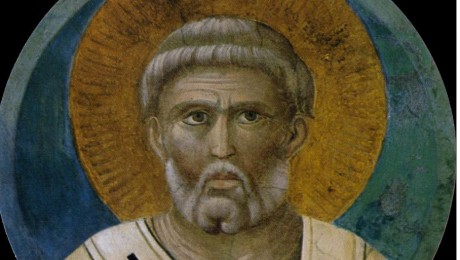
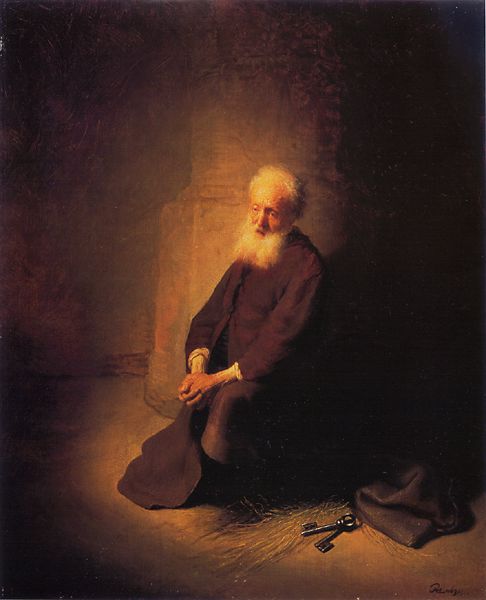 THE Apostle Peter gathered tenets and testimony, and pledged to incorporate all in the one body, lest otherwise it corrupt and let go of this world. He went to this one and that, and as a magician spellbinds or a spider sews, he caught the overflow from these now liberated men and collected the sediment from which his beloved Temple stood firm. And it was and was not, all that was hoped for: the ministries, some persimmon, some olive-green and some as pale nectar, delicate and palatable.
There was fury abounding in the wars of the righteous. There were great commissions and assignments from noble saints and martyrs; most of whom went unnoted.
The 'shaking out' of demons from the Globe moved them into untracked hemispheres and into neighboring planes, beneath rock and into primitive domain. The squealing from their condemnation could be heard by each purified man.
The wretched, the dismembered, became as new; for hitherto they had been left to rot though still alive. The inner man was dejected, suffering a poverty of soul in a wasteland of a loveless Humanity. Now by His Pure Example the 'worthless' became sovereigns of that beauteous place promised to the goodly and the confessor, and to the blameless little children that too often were taken unto death.

The Charities, of which there were a perfect dozen, took on employment in purpose by these active men. Arguments profusely stormed, as scholars dictated the text in context and then out again. The moralists, the purists and the archivists, all cleaved to what certainty they could maintain. That the Church be a vestibule for our Father, yes, and likewise the Palace of our Christ, that too, and the holy space wherein Man could broach the Divine - and added to these there were inclinations of anxiety and protectiveness which echoed the original characterization borne by Peter himself. That it was the exact preservation of this, the representation to carry over the centuries from Christ's Ministry to now, that the living Spirit be caught and contained in this manifestation of faith made concrete.
And this was and was not - the preserves held the air of a stale tomb and invited the living men and women to objectify the remnants of their deity.
But that was not all it stood for - as stand it did in a world which trembled and labored with new knowledge. As the shafts of fresh wisdom encompassed the ancient terrains, it was the Church herself which protected the reborn and nurtured the novitiate of character and determination.
Peter believed in the marriage between truth and perpetual reasoning, that the Mission of Christ should be a never-to-end saga invoking His Purpose, by account of His Propriety from the beginning of time (being the notation A.D.).
Peter lost his fingers, the digits one by one were removed due to illness, and these he kept and later gave to separate offices of the extending ministry.
'Heaven on Earth' is not a call to materialize Heaven or even to enslave her in an unholy coupling. May we be as Heaven-like as to call her majesty to us; and be perfect enough to contain her furious Love.
DEAR Life is impassioned; it does not run anything like the Public Service or the clerk's budget! We are furthered by change and empowered to direct our course when met with such change, and no day is ever really predictable. That they may become synonymous with the calendar year before, is due to lack of observation rather than detail.
Foreknowledge actually inhibits possibility. Some wonderful decisions have been negotiated by those commanders who had not the prior knowledge of their logistical difficulties and overcame them with a projection that they themselves gave out into future providence. They stipulated the outcome and the future with a foresight peculiar to their own vision alone. If we are given foreknowledge we are immediately altered in relation to it, we begin to oblige and fulfill its determination. So the overall question must be (within): Is the foreknowledge presenting to us, desirable, good and worthy of us becoming a part of?

It becomes possible too, that a man carries a multitude of prospects unordered in time and in relation to one another, conflicting in time also. For he may project much of his future belonging in the countryside, whilst also in proximity to his relatives; further on he perceives the possibility of Paradise. All the while he is ill-content unless he can satisfy all three, which perhaps he may or perhaps he may not achieve, concurrently.
There is a school of thought which suggests that we limit our expectations to such a degree that we may become peaceable within ourselves and thus satisfied. If we appeal to Christ for recommendation in this, we find that He has not chosen to limit His Expectations, and He is content to be ill-satisfied until the new order of the new day is realized completely. Therefore in the tradition of our beloved Master may we all be idealists and satisfied with no less - never to suffer the limitations of self, spawned by deflating, spurious, debilitating condemnations.
If a man has doom overshadowing him as his reality, then we may pray for his release and redemption from this tyrant of the future. Should he attempt to mask our efforts with equal morbidity, know that he experiences his own forecasts not ours, of which he offers opinion.
We are ever reminded to fix our attention wisely. Our days are comprised of incremented forecasting - i.e. all thoughts entertained may invoke a certain future. We invite all manner of involvements to us in work, in frivolity, in moments lost, by progress known, in all that we seek to combine with. In all we enter into we make the future, and there are many, many, possibilities afforded us for the times ahead.
How often one should like to ask "Why not?" when attempting an innovative initiative. Those who oppose new suggestions argue that initiative is dangerous, simply because it ventures into the unknown: the realm of new possibility! However this is as so for every living minute - certainty is illusive in reality, for forecasting. Orthodoxy must withstand the change that renewal implies or let go and die.

The seasons perpetuate as this is the law, however the rotund of cyclic initiation, as one inspires the next, is not given to dictate the exact quality of each and every day. Every summer is quite different from the last, just as from differing points of the Globe the nature of the day is different - magnetic influx or the romance of a sun-drenched day. If I am in a valley or if I perch upon a cliff, my senses tell me of very differing characteristics the day brings. When I move about I may experience this the variations: sudden drop in temperature, a rapid rise in humidity, the freshness of a wind that has turned and the sweetness of a mild, warm flow; the early morning 'feeling' to that of the oncoming evening, the descending mantle of night, half-lit by a new moon lamp; or that of the broadway illumined and sparkling. Every point stood upon, encompassed, lends itself to a differing comprehension. The overall feeling inspired by the conditions within the ordinance of the revolving season is quite individual and pertinent to position and man.

The spirits of the air respond and gather in active congregations. The Angels belonging to mist and to dew, will amass in special convening, responding to the men of the area. When we are excited for no apparent reason other than we have sensed the vibrant activity within the wind and are exhilarated by its issue, we are sensitive also to the movement in the ether, transpiring, drawing the plant up and from the earth, summoning growth as the airy souls move in amongst them.
So what we are saying is that the laws provide us with a measure of dependability within which, there are scores of variable experience dependent upon self and positioning of self.
When the air has mingled with the sea and it comes to us from far away, we can experience the orchestrated passion of the percussion of waves, wind and volatile sparring. When the heat calls the scent forth to migrate out from its native bloom, it urges the extraction and the parting in the distillation of a summer's perfume until it can give no more. When the rainwater glances the soil, and trickles find their way rootward, we can feel the gentle perfection of a need being answered deep in the ground. The variables are as considerable as the numbers of leaves upon the trees and veins upon the leaves and shaft upon the vein.

The more men may advance the more astute they shall become to detail. Although it may be difficult to comprehend at present, it will become very possible in the consciousness to be developed, that a man will perceive those intricacies which comprise ongoing reality, and above all, shall not be overwhelmed by this perception which also will enable him to 'narrow down' into particulars at will. Overall, the understanding of the trees, leaves, veins and shafts, shall be encompassed within the comprehension. Whilst also he will be able within the power of mind alone, to go to any given leaf and examine it to the exclusion of the tree, that all of the overall characteristics will be factored in and decipherable at will for individual scrutiny and investigation.
This perception may be initially brought into development by those multi-considerations which provide for understandings which seek to lead into complexities rather than shy away from them. To focus is to hold the ability to 'narrow down' on specifics and to adjust the lenses in order to incorporate the bigger picture. It is a continual widening of perspective and concentrating of intent and will, fixing a particular.
Therefore we seek to always learn more, incorporate more and enhance our skills of perception and comprehension, that we are not satisfied with simple judgments. Immediate impressions are wonderfully useful and they serve to indicate the essential character of those conditions before us, however we are empowered to move further into those areas which are not immediately apparent and enlighten them further before passing judgment.
My Blog List
-
Differences Between Boys & Girls - Rudolf Steiner
-
We can then see, beginning at puberty, in the outer behavior of both girls
and boys, something that often baffles their parents and teachers,
something t...
-
Wagner & Buddhism
-
There is an amalgamation of Buddhism and Christianity in *"Parsifal".*
This, as we know, is also one of the hallmarks of Manichaeism.
Richard Wagner was...
-
Chapter 14- Reaching for the Stars, Exercise 1
-
*Exercise 1*
*Tools required:*
- *A Questionnaire*
- *A conversational partner*
Concluding a conversation, ask the person you have been in ...
-
Augustine Asks the Big Questions
-
Augustine in his Confessions 6:9 asks: tell me, O merciful One, in pity
tell a pitiful creature whether my infancy followed yet an earlier age of
my life t...
Esoteric Christianity Archive