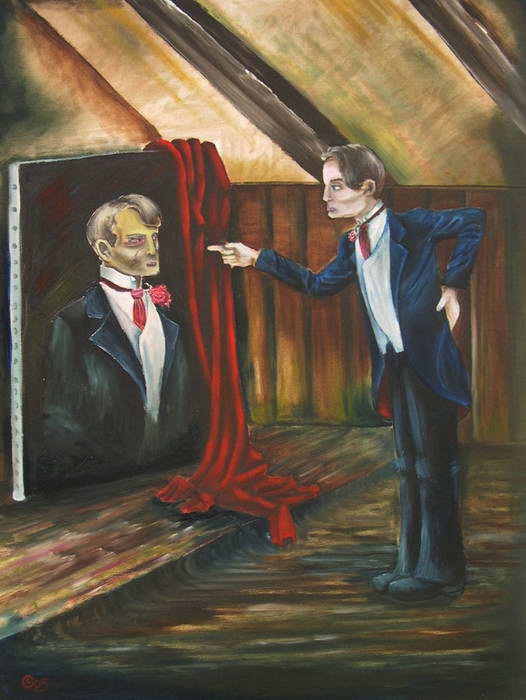
IT need not be a compromise to the gentle approach for one to be prompt and poignant amidst the sea of static indecision. One may be composed, and therefore restrained to a point where they are neither wasteful nor embarguous [from 'embargo' -Ed.], whilst also so composed, that they may direct all attentions accurately, focus intently, adhere to activity purposefully and acknowledge a recommended path to follow.
We may leave much to Heaven to decide for ourselves - verily and indeed, we are obliged to do just that without remission. Also we are periodically entrusted with our own fate to create and to affect such destinies for others also; whether carelessly or with absolute effort.
When the time requires assertive and powerful action, it is a response to an opportunity presented before one which may be of their choosing to grasp and maintain, or let slide into nothingness, absolution and resolution. All of our training, all of our praying, all of our contemplating, all of our deliberating, all of our testing and all of our weighing, shall contribute to that moment of mighty decision when a choice is put before us.
A 'heart' evaluation does not always come to a man easily. Today we shall review why this is the case, for most certainly it is relevant. It portends to the first question of Man's greatest upset, that he does not know himself well enough to be the lofty soul in actuality. Were that all men lived, loved and worked heart first, then there would be no disagreement of perspective or goal in the larger and lesser communities.
When we confer with ourselves we are often persuaded by recollections of associative situations - as well we might, as useful a gauge these recollections are, however we cannot completely draw from our experience of the past to fully make measure of a present situation.
As we stand to greet the events which demand of us, we are to appreciate they are fresh and new, and it is best not to view them with a mentality of sameness. Droll thinking expires life - it can actually disfigure and corrupt the vibrant thought-activity which abounds our immediate locality. An inept man who half-heartedly meets the day, brings certain desolation to himself and those around him.
IT need not be a compromise to the gentle approach for one to be prompt and poignant amidst the sea of static indecision. One may be composed, and therefore restrained to a point where they are neither wasteful nor embarguous [from 'embargo' -Ed.], whilst also so composed, that they may direct all attentions accurately, focus intently, adhere to activity purposefully and acknowledge a recommended path to follow.
We may leave much to Heaven to decide for ourselves - verily and indeed, we are obliged to do just that without remission. Also we are periodically entrusted with our own fate to create and to affect such destinies for others also; whether carelessly or with absolute effort.
When the time requires assertive and powerful action, it is a response to an opportunity presented before one which may be of their choosing to grasp and maintain, or let slide into nothingness, absolution and resolution. All of our training, all of our praying, all of our contemplating, all of our deliberating, all of our testing and all of our weighing, shall contribute to that moment of mighty decision when a choice is put before us.
A 'heart' evaluation does not always come to a man easily. Today we shall review why this is the case, for most certainly it is relevant. It portends to the first question of Man's greatest upset, that he does not know himself well enough to be the lofty soul in actuality. Were that all men lived, loved and worked heart first, then there would be no disagreement of perspective or goal in the larger and lesser communities.
When we confer with ourselves we are often persuaded by recollections of associative situations - as well we might, as useful a gauge these recollections are, however we cannot completely draw from our experience of the past to fully make measure of a present situation.
As we stand to greet the events which demand of us, we are to appreciate they are fresh and new, and it is best not to view them with a mentality of sameness. Droll thinking expires life - it can actually disfigure and corrupt the vibrant thought-activity which abounds our immediate locality. An inept man who half-heartedly meets the day, brings certain desolation to himself and those around him.
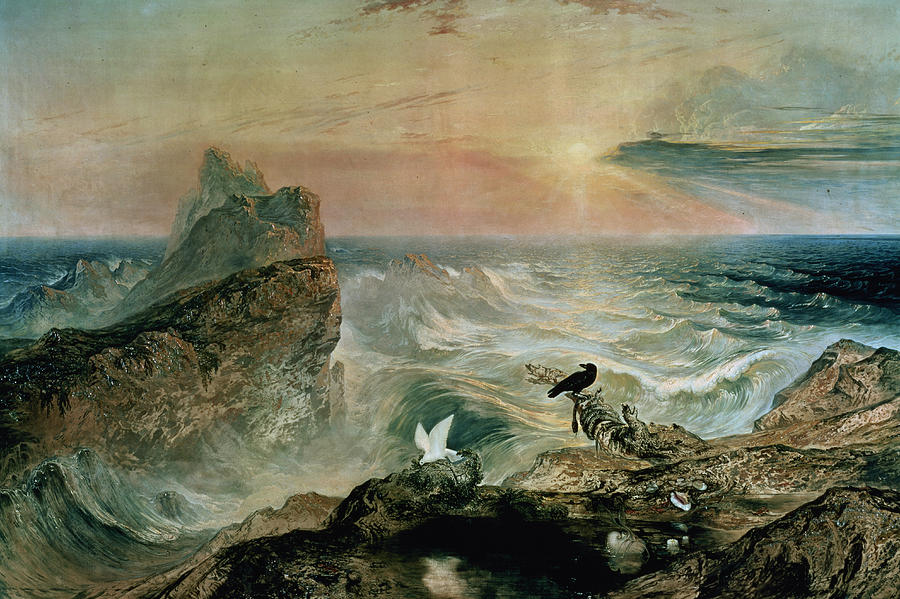
Consider, contrary to this, the disposition of the imbecile who is overcome with joy anew for every single happiness, every wonderment. He has not the contempt of familiarity, he does not hold the presumptions which disappoint, he is taken with as much happiness where possible and gives to the world from this very jubilation. His soul has actually more of a connection, than a man who maintains the properties of intellect and rationalization. However the imbecile has relinquished much by way of self-determining his fate. For the lifetime in which he rests there can be little or no dynamic interaction and his gateway of experience shall be of a harvest more equivalent to that of a child's.
When a child enters into Heaven they do so with extreme peace and happiness. The review of actions passed and to be accounted for, the appeasing of personal demons and ghosts, the follies and the insolentries, the sorrows and the hatreds - these are not applicable to a child whose term is incomplete. He comes to Heaven much as he left it, returning with only happy reminiscences of all the wonders which comprise a life. If there has been grievous or painful occurrence, and their little history has been marred with unhappinesses, they shall not take them with them after death, as such trials at an early age are not incorporated into the being which is abjectly reliant on care.

This leads in to an interesting arena of thought where there is much debate. Many grown men and women have 'drawn out' into their consciousness grievances relating to their childhood (prior to the age of 7-10) and experienced such sorrows as an adult because of the grief exhumed. Now because it is that the recollection - which may or may not be accurate in the clairvoyant recall - has been summoned, it comes not to the child, who is separate and innocent to its qualities, but rather now to the adult who is responsive and interactive in a fully conscious participation. This brings the 'problem' as it were, into the immediate present - when we suggest, there was not a problem to be had before. The practice therefore, of inciting traumas and griefs from an adult who would not otherwise acknowledge them, is questionable. However, memories which relate to a child who is passed the age of seven (or ten, depending) may carry with them implications in future behavior.
So we are led to ask, how marked are we by our experiences of the past? And furthermore, to what good purpose?
Decidedly, we draw upon experience and incorporate it in our being for better or for worse. It is, as they say, all we have. It is not enough to borrow said recollections. We cannot incorporate another's knowledge or wisdom into our own being as it is with their signature alone. We are obliged to earn every speck as though it be a granule of gold. Equally we may not impart our wisdom lastingly upon another, unless they receive it willingly and experience it for their own; whilst also there shall be a little of our own being marking that very insight or teaching thus shared. It is the way. This makes for a very personal exchange comprising the integrated sphere of larger comprehension.
We are fixed in location in relation to our shared understandings. We are levied and proportioned according to our net value in being. We are further committed and expanded by inner development which pushes us as from the inside out. Our merit, our worth, is dependent upon the richness of soul-activity claimed knowingly. If we are impartial to the world or to a thought, it is impartial to us.
If we evoke certain memories to coincide with present-day occurrences or projections, it is preferable to realize where we can, that the past does not mean to mislead us - it is true to its own. However we must necessarily distinguish and discern those differing aspects which do separate that which was from that which is, or that which may be.
Here is the tool for a fuller consideration: active comparison. It means that we are not content to simply make a primary association, that we are prepared to extend the review thoroughly by advancing our recollection in comparison with the presenting facts before us, and finding the points, fine though they be, that do not match. Then when account is made as best can, we may refer firstly to our immediate motivating sympathy.
The heart is always cautious to judge and quick to embrace. Men seek rapport naturally, and flinch from dissension instinctively. The fact that we are quick to fear or even quicker to retaliate is usually because of a mismatched association which lends itself to said experience.
 IF one should come to the equatorial bracelet and so measure those locations, they could arrive at the conclusion that a greater conductivity mobilizes there, a band of greater activity involving the instreaming possibilities for change. Should you spill a dye in the center of a spinning disk it will work its way to the circumference, making greater effect the further out it reaches. The propensity for change in relation to a warmer climate, is heralded through magnetic pathways in thunderous activity - the snap and sparkle of an electrical storm, the arena for the beginning battle which only 'change' does bring.
'Newness', abstract newness, is very much taken for granted as always having been as an allowance, as a right, as a prevailing condition. This in itself is not so, because there are in fact episodes within the ages of Man where there are no possibilities afforded for change whatsoever - it is as the planet has paused with a momentary sigh and closed herself off from any further intake.
'Newness' brings stresses and strains to all who front the unknown dragon, who is to be regarded as both infinitely wise and infinitely unpredictable - of course. That such an element is housed and made provision for, is quite remarkable. Newness may only be effected where change has entered in and preceded it. Without the two, men and for that matter all previous cycles, all kingdoms etc., would be confined to those planes of activity as entered upon, without release.
IF one should come to the equatorial bracelet and so measure those locations, they could arrive at the conclusion that a greater conductivity mobilizes there, a band of greater activity involving the instreaming possibilities for change. Should you spill a dye in the center of a spinning disk it will work its way to the circumference, making greater effect the further out it reaches. The propensity for change in relation to a warmer climate, is heralded through magnetic pathways in thunderous activity - the snap and sparkle of an electrical storm, the arena for the beginning battle which only 'change' does bring.
'Newness', abstract newness, is very much taken for granted as always having been as an allowance, as a right, as a prevailing condition. This in itself is not so, because there are in fact episodes within the ages of Man where there are no possibilities afforded for change whatsoever - it is as the planet has paused with a momentary sigh and closed herself off from any further intake.
'Newness' brings stresses and strains to all who front the unknown dragon, who is to be regarded as both infinitely wise and infinitely unpredictable - of course. That such an element is housed and made provision for, is quite remarkable. Newness may only be effected where change has entered in and preceded it. Without the two, men and for that matter all previous cycles, all kingdoms etc., would be confined to those planes of activity as entered upon, without release.
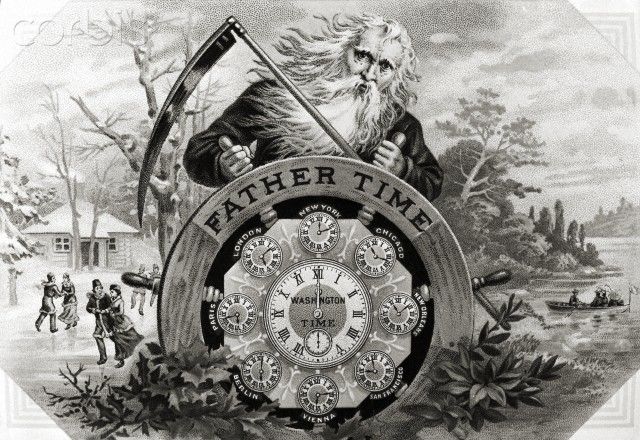
Old Man Time has crept through and stalked the imagery in men's imaginations e’er since self-conscious recollection (this may sound as an obvious statement, but not so). Old Man Time does not present as but a ghost of the past, but moreover as the living past calling to men to acknowledge all that he is and has encompassed. Picture if you will, the keeper of the cycles, the cyclic law balanced and perfect, the treasures of ingenuity struck, and the solemn sacred wisdoms as found only by Man and his manly interpretation thereof. He is not only as a compounded spirit - i.e. the pneumata of Humanity - he is living time embodied, but from our past. Upon his girdle do hang the keys of great learning, bringing with him the sum total of Man's former expression. He is a grand soul and may actually be met with - yes, actually.
He does not, as one might imagine, embattle himself with change or its outfall. This is not the domain of 'time past' who stands aloft from the ongoing actualities. The world beats one beat faster than his involvement; Old Time stands out of time with the current time and all it is.
Here is something of a hint as to the glimpses of precognition, whereupon the future is advanced as one beat ahead to the present. However precognition offers the vision of spiritual design awaiting - not yet born into being - therefore not as representative of what has to befall, only living in semi-tangible realms of impending likelihood, if that. Those who witness such dreams and fancies as do spiral the atmosphere are often irreparably alarmed. The measure of 'change' as is the theme to such floating possibilities is over-clear, and to men's perception, equal to disaster.
That which breaks into or away, tears apart, dissolves, destroys, contaminates, condemns in order to make for new order, is when experienced, unsettling to say the least. This 'Kali' influence is both welcomed and shunned by an ever fumbling Humanity, who in some sense stands upon the wave-washed rocks, slippery as they are, balancing afore the next wall of water rises to greet them. No one need be told though, of how the grace of change may also bring release and such sweet offerings to men who would otherwise be imprisoned without freedom.
So these impulses work and weave their way throughout the globe, being ever more predominant in some aspects and expressions where they may make entrance - more so than others. Each man too, is as a miniature globe and has a field to which he may enforce, that may for a time repel change. There was a tale given of a portrait, a self-portrait, that aged and changed whilst the painter remained untouched by time, and at the end it caught up with him all at once, and he could not forestall the changes which time would bring, any longer. [Dorian Grey]
We are answerable to laws which may be propositioned briefly, however all of us must necessarily conform to equal requirements. It is always for the good of ourselves that this be so, for the higher wisdom delegates such impulses and eventualities with supreme foreknowledge which complements the infant Man. Overall there is not one way chaos and subsequent change may intervene where uninvited. It simply is not so.
As stipulated before, there are actual periods whereupon the planet takes rest and runs, as it were, on 'automatic pilot'. It is a recovery time which fortifies the fields and 'reforms' the general substrata ecology. Historically these times present as being completely uneventful, and there are miniature periods of these also. The outstanding souls who ordinarily are drawn into the world for the times of great change are deferred and the gross population is allowed a little 'catch up' time; usually with a very peaceful incarnation equally as uneventful, but completely restorative.
This is to good purpose also, because there becomes a re-association with the globe, of happy times, in such times of peace. When men picture paradise or heaven on Earth, it is often with the richly imbued recollections of these periods they have known as fondest reincarnations, overall.
Yes you are correct, the old world does perpetuate and remain - the stamping ground of Old Man Time - sheltered and innocent to change- faerieland being the etheric world which cohabits within the physical realm, held back one beat behind the challenges of an evolving evolution, two beats behind what might have been chaos and subsequent change.
There are many beings who await at the gates in blissful ignorance of how the precious token of frozen time will dissolve away one day, releasing them yes, to advance and to become, at the expenditure of that dream which at present perpetuates in mysterious surprise.
Thus will then be also, the death of Old Man Time, when even he shall be overburdened by age... such old age that revivifies only with change and rebirth.
QUITE often the quality of soul-life and soul-expression may blaze intensely in those men who have predetermined an early departure. In some cultures, death to the very young or very pure is an indication that God is so satisfied they need not remain, but rather become as picture-perfect, loved and embraced by Heaven; even though those who remain do mourn their departure bitterly.
After death the sufferance of men differs by degrees extraordinarily. All souls shall come to paradise and sweet respite, all men will glean from their soul's experience and know of its delight whilst called into earthly interaction; and the manner of which the earthly link was severed will determine much for their future, as well as their immediate experience.
Firstly one must acknowledge that we have all 'passed through the portals' very speedily at one time or another, at various durations of age, and there is probably not one form of decapitation or tragedy that we haven't personally encountered. It is or has been, a fact of earthly life - particularly in those times whereupon the consciousness of man perceived the spiritual worlds through but a very thin veil, and knew no mortal fear.
However our natural abhorrence to violent insult goes further than good instinct for self-preservation, it does indeed reach deeply into our promise of continuance, and that Will - both ours and the Divine Will - which drives us into the world in the gathering of earthly re-embodiment.
Suicide, above all other forms of death, has to be the most horrendous. For it is the sacrifice and defeat, whereupon the soul has conflict with the immobilized self-consciousness, and the man in hatefulness to the world and to his higher-being seeks annihilation to such argument. There are beings which feed on and encourage such events; veritable demons who would separate a man from his soul and endeavor to devour both. If there is any doubt as to men becoming truly pitiable at times, view a would-be suicide where life itself is rebuked and spat upon, and the wretchedness of a belittled man has overcome his dignity.
Returning to the question at hand: it has often been found that if one were to view the remains of the deceased of one who had died as a result of an accident, and was known to be an individual of great merit, quite often such remains prove to hold physical organs of which, there is a marked dysfunction. Not always does this occur, but as a point of interest it can even be said that the man in question appeared healthy and strong of constitution, however may well have been so afflicted that fatality was imminent. We mention this for one of two reasons:
There can be many episodes and opportunities presented to us during the course of our life where we may desist from living, should we choose to do so. Whilst we continue on, we have by the Grace of God and His loving troop of caretakers, averted much malady, defied death constantly. We defy death by living; also too and more obviously, we are placed within fractions - the whole world is held in place that we continue day to day. Many, many accidents are quite possible but avoided, vanquished by the timing, foresight and promptings of beings who act to counter-force the distresses of chaos and violence.
As specified before, the nature of our death is of importance to the gathered experience distilled by the soul after the fact. Should a man die with his body intact and be permitted to loosen himself, dissolving the bonds in time necessary, then as with an uncomplicated birth he may work his way through the various procedures, before becoming free to go on.
Should he however, be so separated from his physical body and the body become corrupted all of a sudden, he is greatly hindered in the gleaning. In the case of lingering illness the absorption is taking place whilst alive, i.e. the merits of the developed depositories are becoming as intake all the while, as the slow departure requires.
For what is in the body you might ask. One cannot distinguish that which is of a man, so belonged by him and intimately used by him, and then separate it as though the two (in this case the physical body and the soul) cease relevance or connection. In death one withdraws, but during the process the individual seeks to depart with all that is his, so to speak, leaving no remnants behind. The physical body is saturated by such impressions of individuality as borne within by the man himself.
Also, the subtle counterparts require their distillation too: every single portion of our body/bodies holds gathered expression and experience which is of us, ourselves, and after death we endeavor to translate such stored experience and expression and absorb it into the very fabric of our being.
It can be that there are parts of a man's constitution which are uncompliant to his individual markings. For example: the kidneys do not serve him; they do not hold a complete sympathy to him. Whilst there can be many reasons for this, the result is that (in the case of a 'good man') the fact that he cannot dissolve certain parts of his body accurately - for reasons of an accident - may prove that he should not have been able to do so at any rate, nor should he choose to, and thus the accident. For the body would not receive his intimations and became separate in function.
In the instance of transplant, this too will occur, especially because of the signature pre-existing, with a separate individuality blocking/resisting the subtle interaction of another. Whilst the two are alive the organ will continue to receive from the temperament and expression of its owner and cohabit aggressively in the community which it has been placed for a time.
In the instance of the donor being deceased, then there shall be persuasions for dissolution becoming provoked, as the rightful owner is constantly drawn to his organ which is still vitality-infused. Therefore the recipient is somewhat responsible for the soul, being as earthbound awaiting to depart with certain characteristics he has deposited within the physicality and astral bounds.
In the case of semen as distributed from one to another, one may gauge that the substance is not only vitality imbued, but also in emanation extremely linked to association of its owner - a subject we may expound upon at a further date.
However, the point of the physically violent death can and does imply that a man is inhibited from completely enveloping that which was his, as physically and astrally impressed. It does not mean that the life amounted to naught, nor is he severed from recollections of actualities and soul-impressions. It does mean that there is a shock which may or may not cause grief to the man so rapidly flung and divorced from his body.
In the instance of a malevolent man who is grossly connected to the desires which provoke catastrophe, he is to endure quite rapidly much of what he gave out into the ethers. Having lived so divorced from intimations of heart and soul, he, as an ego-consciousness, may well grieve heavily for that body and the world which hid him well. There is something of a blessing perhaps that he does not have to manage all of his vileness - it is as unfurled into the world unfortunately. Yet commensurate development is also therefore denied to him, and in subsequent lifetimes he will be presented with exactly the same circumstances that he may pick up from where he left off and re-gather the experience he requires. There is more than likely to be a lesser period between re-embodiment also.
For the soul who has suffered a violent death because of evil intent and act, there is a great impact of suffering, most sadly for them and for the world. They are, after the event, provided for and so sustained, that the memory is all but gone and the assault and the maliciousness spent at the time of the death is so understood that it can be forgiven. No death which is maliciously contrived and executed is preordained by fate or karma.
In the case of death by accident we find that the soul/consciousness slips out from the cadaver, usually in innocent happiness and curiosity. Many times there have been indicating preparations on behalf of these individuals aforehand, and it must be understood that it is not that they choose death before life and all that they love in life, but that they are nonetheless peaceful as regards the 'stepping out' eventuating.
Remember too, that the soul knows of continuity and does not view death with finality as regards relationships and strivings. All that we hold dear to us goes on, continues on, and survives the physical death, literally! In time we resume, and should we feel that we miss something or someone, then by the power of the desire, we are returned and so united. We may be fearful that such desires will dissolve and memories be lost out of time, and it is true that we may savor a little differently, and the accent of importance may change, but the memories of what has been are vivid and fresh to the soul and are a great gift of life indeed. Old friends constantly reunite. Distance and space, even region, do count for nothing when there is mutual empathy.
How can one measure a lifetime? For those of us who remain, it is from heartbeat to heartbeat. The why/wherefores of an early death depend on deep knowledge of that soul who has thus determined. We must not despise him for it. He himself may have planned many great enterprises and be well disappointed that he could not execute such vision. All good men die too young. The world needs them all, and unobligingly submits them to the Heaven they deserve.
We may be sure, that for a man who has lived well and perceived the world with the strength and guidance of his heart, he is very, very much at home after death. For such a soul, they may be required a hastened return (such as in two hundred years perhaps) and yet, nonetheless shall at times be intent on all that concerned them whilst alive. For whilst that which held their love, still bearing their love, remains on the Earth, they shall be so bound and present, consciously interacting - particularly when called upon.
The soul's reasoning is good reasoning. The soul's preference may not adhere to the wants or logic that we hold, however, it knowing patience, faith and of spiritual cause, dictates its needs accordingly. For the soul holds patience knowing that all desires shall be returned, fulfilled. For the soul has faith that the promise of continual and everlasting life is possible. The soul perceives spiritual causality, loving the world for what it is and redeeming the world by spirit.
No greater friend has he that will remember him,
and pray for him from the shores of this world to the afterlife.
And he shall know it - he who has gone - and shall be glad.
IF we come to the needy bringing some alms, if we seek for a healing or a sharing of a confidence, if we hold forth our offerings of beloved and gathered wisdoms, if we challenge their demons on behalf of the strangled soul, if we sing to them, say to them, lay our hands in fiery touch, if we venture to support, uphold, convene, make contact. . . we do so, gently.
Therefore we suggest likewise: go hither, go forth, always with a gentle approach. Power does not by itself alone, find its target. Whatever our wishes would predestine is determined by accurate delivery. Too little or too much empowerment will overshoot the range.
We qualify our ideals by our behavior. We may envisage a core of eventuality, but not have the means we know of to reach it. All the time we do work towards our heart's desire, knowingly or not - we would certainly die should we cease the inner direction.
A gentle-man need not be weak. A gentle-man has the composure to contain his strength. Every misspent measure of force is as power departed, and the man is debilitated therein. Just as the ruthless and evil intention poisons its owner, so too are we marked by our misdirected exertions and crippled by our sins.
There is not one man who stands so far above sin as to not hear its calling. As the Sirens to Ulysses, may we block our ears and blind our eyes to sin? It may work well should we forfeit commensurate life! Even Ulysses could not be strung up to a masthead and bound indefinitely!
Do we fall to the calling of the sin of conceit in believing we are pure and impervious to fault? Do we sin against our soul with denial of such reckonings that need redefine our true triumphs from our failings? Equally so, are we quick to condemn and damn, and invite the sin of hatefulness, of scorn and injustice, upon ourselves and our brother?
Should we go carefully - stealthily, but cautiously - we will err less often. Even enemies are best approached quietly and gently, that they need not know you make your way towards their camp.
It is important that we may be cheerful about our impending battles. Too often men should 'trade out' their challenges for some notion of 'peace' and for nonexistence, for cessation. More important it is that we may revive our reserves of internal strength that we may once again know of our unshakeable resolve.
'Spirituality' may hearken us to yearn for the highest, the grandest, the purest and most beautiful, and sorely contrast our lives and ourselves by intangible definition. The student is naturally perplexed forthwith, because the paradise experienced is but a token prize and something of a constant disappointment.
Also there is this consideration: When our soul is overfilled with a rapturous experience (in waking life), we do not necessarily translate the full happiness into our conscious recognition. After death it becomes another matter, whereby the bliss is multiplied and known. Yet if we are consumed with a delight that literally shoots up and down and through the soul in great rapport and love for that which it is connecting with, we can often be as vacant to the experience and unaware in our self-consciousness. All we may know is that the moment - unfilled with thoughts - was pleasurable or happy or fulfilling, or 'in tune', etc.
However, such episodes have lasting effect, and the uptake of higher emotion does eventually (and slowly) release itself back into the self-consciousness of the man. Now for this to happen there need not be a realization of the afore connecting experience, rather it shall be an overall comprehension of happiness and wellbeing. Once again, as said before, after death it is quite another matter and the vistas of the soul become the summits of known experience.
Now added to this we find also that there is an equal situation when we displease our soul. Our individuality holds natural aversions to all things which are injurious to the soul, the heart and the future. If we partake in that which is disdainful to our inner, higher selves, then we suffer the conflict it brings, as the soul alarms the self-consciousness with irritable intimations. Quite often it may manifest by such unsettledness that will necessarily prompt the man to review his life's progress.
Also added to that, we suffer the contest of a 'Jiminy Cricket' conscience, opposed to the pure directives of the heart and true conscience. By this we mean thus: it is possible to be both 'right' and 'wrong' in what we do or wish to do, at the same time concurrently. And by measure of a social/worldly conscience, or by measure of the heart and its voice, we may be ethically wrenched either way.
One may be right or correct in two dissimilar choosings; and of course, wrong in both. When one is undecided and quite distraught by the concerns of which an ethical question implicates, there is not the need to judge the predicament prompting the question, so harshly. All dilemmas are fruitful. All matters of heart are worthy of long and arduous scrutiny. We are not impelled to rash action either - remember, of course: approach gently.
We may not come to great happenings hurriedly. For one reason, there is no need, for another, it is not the way in. For the frantic explosion of an overeager man expires the joy he might have known, before he does reach the horizon.
My Blog List
-
Differences Between Boys & Girls - Rudolf Steiner
-
We can then see, beginning at puberty, in the outer behavior of both girls
and boys, something that often baffles their parents and teachers,
something t...
-
Wagner & Buddhism
-
There is an amalgamation of Buddhism and Christianity in *"Parsifal".*
This, as we know, is also one of the hallmarks of Manichaeism.
Richard Wagner was...
-
Chapter 14- Reaching for the Stars, Exercise 1
-
*Exercise 1*
*Tools required:*
- *A Questionnaire*
- *A conversational partner*
Concluding a conversation, ask the person you have been in ...
-
Augustine Asks the Big Questions
-
Augustine in his Confessions 6:9 asks: tell me, O merciful One, in pity
tell a pitiful creature whether my infancy followed yet an earlier age of
my life t...
Esoteric Christianity Archive