Translate

A CLUB OF SUPERNAL INTERESTS Christian Esotericism, Spiritual Science, Esoteric Christianity - All Authored by a Lodge of Christian Teachers (unless otherwise stated.) (All writings copyright) ©

Sunday, April 18, 2010

Early Death- 23rd July 1993

QUITE often the quality of soul-life and soul-expression may blaze intensely in those men who have predetermined an early departure. In some cultures, death to the very young or very pure is an indication that God is so satisfied they need not remain, but rather become as picture-perfect, loved and embraced by Heaven; even though those who remain do mourn their departure bitterly.


After death the sufferance of men differs by degrees extraordinarily. All souls shall come to paradise and sweet respite, all men will glean from their soul's experience and know of its delight whilst called into earthly interaction; and the manner of which the earthly link was severed will determine much for their future, as well as their immediate experience.

Firstly one must acknowledge that we have all 'passed through the portals' very speedily at one time or another, at various durations of age, and there is probably not one form of decapitation or tragedy that we haven't personally encountered. It is or has been, a fact of earthly life - particularly in those times whereupon the consciousness of man perceived the spiritual worlds through but a very thin veil, and knew no mortal fear.

However our natural abhorrence to violent insult goes further than good instinct for self-preservation, it does indeed reach deeply into our promise of continuance, and that Will - both ours and the Divine Will - which drives us into the world in the gathering of earthly re-embodiment.


Suicide, above all other forms of death, has to be the most horrendous. For it is the sacrifice and defeat, whereupon the soul has conflict with the immobilized self-consciousness, and the man in hatefulness to the world and to his higher-being seeks annihilation to such argument. There are beings which feed on and encourage such events; veritable demons who would separate a man from his soul and endeavor to devour both. If there is any doubt as to men becoming truly pitiable at times, view a would-be suicide where life itself is rebuked and spat upon, and the wretchedness of a belittled man has overcome his dignity.

Returning to the question at hand: it has often been found that if one were to view the remains of the deceased of one who had died as a result of an accident, and was known to be an individual of great merit, quite often such remains prove to hold physical organs of which, there is a marked dysfunction. Not always does this occur, but as a point of interest it can even be said that the man in question appeared healthy and strong of constitution, however may well have been so afflicted that fatality was imminent. We mention this for one of two reasons:

There can be many episodes and opportunities presented to us during the course of our life where we may desist from living, should we choose to do so. Whilst we continue on, we have by the Grace of God and His loving troop of caretakers, averted much malady, defied death constantly. We defy death by living; also too and more obviously, we are placed within fractions - the whole world is held in place that we continue day to day. Many, many accidents are quite possible but avoided, vanquished by the timing, foresight and promptings of beings who act to counter-force the distresses of chaos and violence.


As specified before, the nature of our death is of importance to the gathered experience distilled by the soul after the fact. Should a man die with his body intact and be permitted to loosen himself, dissolving the bonds in time necessary, then as with an uncomplicated birth he may work his way through the various procedures, before becoming free to go on.

Should he however, be so separated from his physical body and the body become corrupted all of a sudden, he is greatly hindered in the gleaning. In the case of lingering illness the absorption is taking place whilst alive, i.e. the merits of the developed depositories are becoming as intake all the while, as the slow departure requires.

For what is in the body you might ask. One cannot distinguish that which is of a man, so belonged by him and intimately used by him, and then separate it as though the two (in this case the physical body and the soul) cease relevance or connection. In death one withdraws, but during the process the individual seeks to depart with all that is his, so to speak, leaving no remnants behind. The physical body is saturated by such impressions of individuality as borne within by the man himself.

Also, the subtle counterparts require their distillation too: every single portion of our body/bodies holds gathered expression and experience which is of us, ourselves, and after death we endeavor to translate such stored experience and expression and absorb it into the very fabric of our being.


It can be that there are parts of a man's constitution which are uncompliant to his individual markings. For example: the kidneys do not serve him; they do not hold a complete sympathy to him. Whilst there can be many reasons for this, the result is that (in the case of a 'good man') the fact that he cannot dissolve certain parts of his body accurately - for reasons of an accident - may prove that he should not have been able to do so at any rate, nor should he choose to, and thus the accident. For the body would not receive his intimations and became separate in function.

In the instance of transplant, this too will occur, especially because of the signature pre-existing, with a separate individuality blocking/resisting the subtle interaction of another. Whilst the two are alive the organ will continue to receive from the temperament and expression of its owner and cohabit aggressively in the community which it has been placed for a time.

In the instance of the donor being deceased, then there shall be persuasions for dissolution becoming provoked, as the rightful owner is constantly drawn to his organ which is still vitality-infused. Therefore the recipient is somewhat responsible for the soul, being as earthbound awaiting to depart with certain characteristics he has deposited within the physicality and astral bounds.

In the case of semen as distributed from one to another, one may gauge that the substance is not only vitality imbued, but also in emanation extremely linked to association of its owner - a subject we may expound upon at a further date.

However, the point of the physically violent death can and does imply that a man is inhibited from completely enveloping that which was his, as physically and astrally impressed. It does not mean that the life amounted to naught, nor is he severed from recollections of actualities and soul-impressions. It does mean that there is a shock which may or may not cause grief to the man so rapidly flung and divorced from his body.

In the instance of a malevolent man who is grossly connected to the desires which provoke catastrophe, he is to endure quite rapidly much of what he gave out into the ethers. Having lived so divorced from intimations of heart and soul, he, as an ego-consciousness, may well grieve heavily for that body and the world which hid him well. There is something of a blessing perhaps that he does not have to manage all of his vileness - it is as unfurled into the world unfortunately. Yet commensurate development is also therefore denied to him, and in subsequent lifetimes he will be presented with exactly the same circumstances that he may pick up from where he left off and re-gather the experience he requires. There is more than likely to be a lesser period between re-embodiment also.

For the soul who has suffered a violent death because of evil intent and act, there is a great impact of suffering, most sadly for them and for the world. They are, after the event, provided for and so sustained, that the memory is all but gone and the assault and the maliciousness spent at the time of the death is so understood that it can be forgiven. No death which is maliciously contrived and executed is preordained by fate or karma.

In the case of death by accident we find that the soul/consciousness slips out from the cadaver, usually in innocent happiness and curiosity. Many times there have been indicating preparations on behalf of these individuals aforehand, and it must be understood that it is not that they choose death before life and all that they love in life, but that they are nonetheless peaceful as regards the 'stepping out' eventuating.

Remember too, that the soul knows of continuity and does not view death with finality as regards relationships and strivings. All that we hold dear to us goes on, continues on, and survives the physical death, literally! In time we resume, and should we feel that we miss something or someone, then by the power of the desire, we are returned and so united. We may be fearful that such desires will dissolve and memories be lost out of time, and it is true that we may savor a little differently, and the accent of importance may change, but the memories of what has been are vivid and fresh to the soul and are a great gift of life indeed. Old friends constantly reunite. Distance and space, even region, do count for nothing when there is mutual empathy.

How can one measure a lifetime? For those of us who remain, it is from heartbeat to heartbeat. The why/wherefores of an early death depend on deep knowledge of that soul who has thus determined. We must not despise him for it. He himself may have planned many great enterprises and be well disappointed that he could not execute such vision. All good men die too young. The world needs them all, and unobligingly submits them to the Heaven they deserve.

We may be sure, that for a man who has lived well and perceived the world with the strength and guidance of his heart, he is very, very much at home after death. For such a soul, they may be required a hastened return (such as in two hundred years perhaps) and yet, nonetheless shall at times be intent on all that concerned them whilst alive. For whilst that which held their love, still bearing their love, remains on the Earth, they shall be so bound and present, consciously interacting - particularly when called upon.

The soul's reasoning is good reasoning. The soul's preference may not adhere to the wants or logic that we hold, however, it knowing patience, faith and of spiritual cause, dictates its needs accordingly. For the soul holds patience knowing that all desires shall be returned, fulfilled. For the soul has faith that the promise of continual and everlasting life is possible. The soul perceives spiritual causality, loving the world for what it is and redeeming the world by spirit.


No greater friend has he that will remember him,
and pray for him from the shores of this world to the afterlife.
And he shall know it - he who has gone - and shall be glad.

Saturday, April 17, 2010

We Approach Gently- 18th July 1993


IF we come to the needy bringing some alms, if we seek for a healing or a sharing of a confidence, if we hold forth our offerings of beloved and gathered wisdoms, if we challenge their demons on behalf of the strangled soul, if we sing to them, say to them, lay our hands in fiery touch, if we venture to support, uphold, convene, make contact. . . we do so, gently.

Therefore we suggest likewise: go hither, go forth, always with a gentle approach. Power does not by itself alone, find its target. Whatever our wishes would predestine is determined by accurate delivery. Too little or too much empowerment will overshoot the range.

We qualify our ideals by our behavior. We may envisage a core of eventuality, but not have the means we know of to reach it. All the time we do work towards our heart's desire, knowingly or not - we would certainly die should we cease the inner direction.

A gentle-man need not be weak. A gentle-man has the composure to contain his strength. Every misspent measure of force is as power departed, and the man is debilitated therein. Just as the ruthless and evil intention poisons its owner, so too are we marked by our misdirected exertions and crippled by our sins.


There is not one man who stands so far above sin as to not hear its calling. As the Sirens to Ulysses, may we block our ears and blind our eyes to sin? It may work well should we forfeit commensurate life! Even Ulysses could not be strung up to a masthead and bound indefinitely!

Do we fall to the calling of the sin of conceit in believing we are pure and impervious to fault? Do we sin against our soul with denial of such reckonings that need redefine our true triumphs from our failings? Equally so, are we quick to condemn and damn, and invite the sin of hatefulness, of scorn and injustice, upon ourselves and our brother?

Should we go carefully - stealthily, but cautiously - we will err less often. Even enemies are best approached quietly and gently, that they need not know you make your way towards their camp.

It is important that we may be cheerful about our impending battles. Too often men should 'trade out' their challenges for some notion of 'peace' and for nonexistence, for cessation. More important it is that we may revive our reserves of internal strength that we may once again know of our unshakeable resolve.

'Spirituality' may hearken us to yearn for the highest, the grandest, the purest and most beautiful, and sorely contrast our lives and ourselves by intangible definition. The student is naturally perplexed forthwith, because the paradise experienced is but a token prize and something of a constant disappointment. 

Also there is this consideration: When our soul is overfilled with a rapturous experience (in waking life), we do not necessarily translate the full happiness into our conscious recognition. After death it becomes another matter, whereby the bliss is multiplied and known. Yet if we are consumed with a delight that literally shoots up and down and through the soul in great rapport and love for that which it is connecting with, we can often be as vacant to the experience and unaware in our self-consciousness. All we may know is that the moment - unfilled with thoughts - was pleasurable or happy or fulfilling, or 'in tune', etc.

However, such episodes have lasting effect, and the uptake of higher emotion does eventually (and slowly) release itself back into the self-consciousness of the man. Now for this to happen there need not be a realization of the afore connecting experience, rather it shall be an overall comprehension of happiness and wellbeing. Once again, as said before, after death it is quite another matter and the vistas of the soul become the summits of known experience.

Now added to this we find also that there is an equal situation when we displease our soul. Our individuality holds natural aversions to all things which are injurious to the soul, the heart and the future. If we partake in that which is disdainful to our inner, higher selves, then we suffer the conflict it brings, as the soul alarms the self-consciousness with irritable intimations. Quite often it may manifest by such unsettledness that will necessarily prompt the man to review his life's progress.

Also added to that, we suffer the contest of a 'Jiminy Cricket' conscience, opposed to the pure directives of the heart and true conscience. By this we mean thus: it is possible to be both 'right' and 'wrong' in what we do or wish to do, at the same time concurrently. And by measure of a social/worldly conscience, or by measure of the heart and its voice, we may be ethically wrenched either way.

One may be right or correct in two dissimilar choosings; and of course, wrong in both. When one is undecided and quite distraught by the concerns of which an ethical question implicates, there is not the need to judge the predicament prompting the question, so harshly. All dilemmas are fruitful. All matters of heart are worthy of long and arduous scrutiny. We are not impelled to rash action either - remember, of course: approach gently.

We may not come to great happenings hurriedly. For one reason, there is no need, for another, it is not the way in. For the frantic explosion of an overeager man expires the joy he might have known, before he does reach the horizon.


Friday, April 16, 2010

The Starry Frontier- 11th July 1993

AT present we can perceive preliminary luminaries only. The phosphorescent lamps, as we know them, present by clusters, juxtaposing several known realities - whilst also are as mere fuses, for many more besides.

As perception will alter (and it will alter) the orbs and their levels of radiances shall reveal such gamma lights as are creatively imbued. That is to say, shafts of discharging, diffused radiance, shall reveal such images as do live in that light, to the viewer - much like a movie projection on the beam.

These images play out events caught within the memory of the sphere at hand, which whatever its status, has memories peculiar to various expressions of life it knows. These emanations of memory are but play-offs, drawn out from the entity that is intermingling with the effects of the greater Sun and his influence upon it.

The cosmic fields are full - verily Heaven is unique in having so many chambers and pastures to encounter. We may scoff as we project our thought into a seemingly vacant sky; we may even be offended to believe that we have been cheated of self-recognition in other worlds. However, the imagination is kind, for it shall provide enough measure of insight should we truly desire exploration, whilst protecting us also from the entrapments of straight perception.


Remember the spirit adage:
Where I perceive, I am,
Where my heart leads me, I am;
Where my desire takes me, I am;
In reminiscence or in this present, I am.


So it is afforded by the divine faculty of imagination that we may sense such other realities by half-measure. That we are not overwhelmed nor clearly composed, is because we are not actually interacting with the other reality, as we might do should we be totally taken by the experience. On the other hand, certain frontiers will be entered upon at a later date purely by the use of a willful and designing power of imaginative cohesion. So the actual creative practice does eventually lead one into further realities.


Remember also that when one suggests such words as 'creative' and 'imagination' it is not to say that they are nil-founded, fanciful objects of subjective design alone. This cannot be so. Man at present is not equipped, empowered or ingenious enough to hold individual recipes for purely creative thought. This department is truly the substance-realm of the gods; of which there is effort and ability required. At best we make interpretation alongside our perceptions. We do not however, create from the beginning or originate the imaginations that we may draw unto ourselves or extend our perception to.

A pious man may experience a certain flow of imaginations; particularly during his devotional episodes. These may be wonderful or hideous, or beheld to be both even at the same time, by the claimant. It is possible for confusion to arise from the effects of this 'full-flowing' imagination.

Also too, one may begin to willfully direct this flow and cognize certain future projections cast as one would have it. This is a questionable practice wherein it must be cautioned before proceeding. Cautioned, because such willful directives do make a difference upon whom or what they are imposed upon, whilst not necessarily being good for anyone or anything concerned.

The student must endeavor to consult the higher authorities firstly as to the wisdom of directing life and reordering outcome. By this, we suggest a prayer in order to seal the imaginings and direct purposefully, constructively, where permitted, conducive to all.


There can be many revelations given to a man directly from the stars. The paths of connection are there and the celestial bodies do communicate constantly. By music, by verse, by wisdoms, by visions, the starry muses are there and there to be implored. Before conductivity we may 'empty out' - not of our ego, nor even our blessed personality, but rather our immediate, present concerns.

There are points within our constitution that need not become too inflamed or overly excited, however share an affinity with more than one grid-gradient; depending upon the direction we stand in at the time. This may sound obtuse, but there is a reality nonetheless, which is indisputable. A man may be measured magnetically in relation to how he stands, what he faces etc. Furthermore, the starry influences shall impress him accordingly and work through him in differing ways, through shared and corresponding points. Possibly, if one was to look for reasoning in this, it may be that such versatility is more compact and effective, but such polarization is to the equation of four - from four directives - and has more to do with the common law of 'fixing' oneself within the boundaries of binding magnetisms.

This becomes a complex area. One can say that there are locations for everyone which shall always be as theirs - permanent places of residence, so to speak. It is out from such residencies that we may venture, only because there is a 'place', a statement, a spot that is ours: our allotment.


When an adept transmigrates and advances from his physical body, it is upon such a principle as described. He could not enjoy the freedom of projecting himself away from his physical cadaver, if it were not for the very real connection to a living body awaiting his return.

Similarly, we all have our home-stars from which we venture, and only because of their stationary status are we afforded explorations of expression, etc. There is ever a thread back home, and a star, amongst many, smiled upon by a fiercer radiance . . . shining back in a happy luminosity.


Thursday, April 15, 2010

Christ : In & Out of Time- 4th July 1993


IMAGINE that you have been taken to a very special and sacred lake wherein men go ethereally; and there, if one desires, they may dare to make witness of the vision which will obligingly surface, right there before them. On trembling knees, with heightened expectation, you have gone to view the mystery of the soul, not just any soul, but rather, your soul.

This is not the bath of redemption wherein a candid glance measures the value of sin, the scores of sin and the ignoble triumph. This is not the pool of Humanity's sorrows, that perchance one casual viewing would induce either dedication or despair, forever after.

This is not the crystalline dream: that which provokes the many-colored visions which entice a man most happily, so much so that he might trade reality for this seventh sense. This is not the mirror-pool of the memory, nor is it of forecast, nor changeable, impressionable, translatable or cunning.

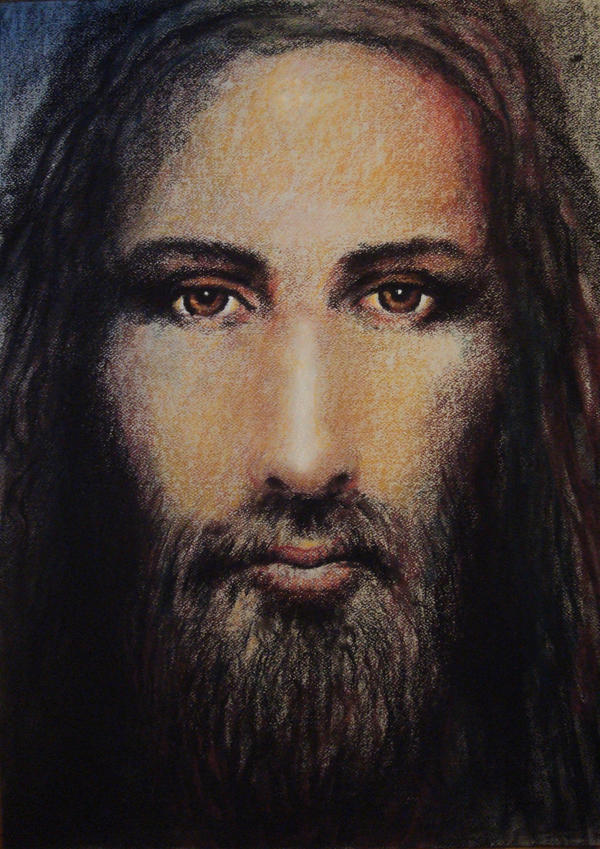
Imagine that you have asked for an audience face to face with Christ Himself, and the only window to where the worlds meet is before you in this sacred lake.

Why are deficits more credible than inborn talents? Why are we critics of God, when we condemn His Perfection in us? Why is the candid man so awkward about his glory? The beauty, the ability, the depth of expression, is immeasurable.

There is no pain in Christ. No, there is no pain. There before you, you may find His Face and make sense of His Being, almost as it were, in replace of your own image; and yet too, it is in truth, yours truly.


In Christ we are brought to realize grand perfection. May we be bold in our approach? The Master would comfort you, He would not admonish you - He is, as they say, right behind you all the way. There is no tyranny, no stern reproach, no anger, no outcast, no suspicion, no segregation, no battle, no disagreement, no argument to be had. Men are startled by their own divine countenance, moved to abandon such judgments as did defile their brother and themselves.

Twice we may be given this intimate exposure, and many times are we given to full review of the sensation of soul in accepting this renewal. What a surprise it is to many, that they may abandon their shell of superfluous tragedy and find the man they see!

In Christ we find singular intent. He knows from within a man how he is faring. If we are open to His persuasion, then He knows this also.

How may it be that there becomes Christ in the sky, Christ in all men, and so forth? That His Face is imprinted within each and every peck and pit? It is because the World is His firstly and Creation is signatory to His Being in its entirety. And He can afford great happiness in this.


Quite often we shall make a distinction between that which is in time (of time) and that which is out of time. In Christ such variables are specific and of contrast too. For Christ - our Christ out of time - there is as specified, no pain. However - for example - contrariwise: for that part of Christ thus descended into actuality by choice, so given to the bondages and ramifications of Time, there is constant agony. (Ed. note: Agony: Greek agonia struggle, Latin agon contest.) The word is a difficult one - so difficult to contemplate, let alone suffer.

The perils of manifestation are bravely borne, the anti-conductive forces are met, the instabilities withstood, the extraterrestrial interfering critics are bandied, the indifferences of men are suffered and subdued, the arguments between helping hosts are made peaceable, the weight of the axis is met according to the propensity of push and pull, the defiance of men is forgivingly endured, and the impatience of local and related Kingdoms is becalmed and equivocated. Answers must be supplied; huge reservoirs of optimism need be constantly drawn in; encouragements continuously granted; whilst explanations 'explaining the case' are made on high. This and more, falls nothing short of agony. However and obviously, it is not an unendurable agony, for it would not be withstood.


In order that every imperfection be met and answered, Christ Himself allowed such an adoption that would synthetically ensemble each difficulty and possibility of difficulty, within His Being. Such difficulties were thus overcome and worked out - much like the heavenly efforts 'battled out' in overcoming specific diseases in Man.

Corruption is the death-process of the pure, whereby contamination interferes with its original spirit, i.e. the purity as was. Death was never given to be part of the plan - not as we know it and certainly not in the spiritual sense. It is as the wish of the twelfth and evil fairy - the outcast. Death is a certain chaos which interrupts the grace of perceived and given continuity.

How frail a man becomes when faced with the great uncertainty! It is not as it could have been, would that his immortality was empirically obvious. The blatant truths of our impending spirituality are as completely made invisible, whereas the retarded comprehension, bound to extraordinary limitations, is subservient to the animal-man and barely repressible. This topsy-turvy grappling with Man is again resolved, in our Worldly Christ.

Christ (the Larger, if you like), who dwells out of time, is the Face as is offered in the mysterious lake. No man would dare to ignore these attributes relayed to him - if we think hard about this experience, we may sense for ourselves what is meant by it. Not even to be deemed a vision, but rather a reality of the first order.


Each infant is happy, naturally self-assured, they know this Face of Christ, and of their true selves. Say to an infant, "You are indeed wonderful!" and they, if they could answer, would say, "Yes, I know." We may celebrate Christ when we feel wonderful. And yes, there are many experiences of this, with associated ecstasies. He would not have it otherwise: that you be indeed truly wonderful.

My Blog List

Followers

Esoteric Christianity Archive