Translate

A CLUB OF SUPERNAL INTERESTS Christian Esotericism, Spiritual Science, Esoteric Christianity - All Authored by a Lodge of Christian Teachers (unless otherwise stated.) (All writings copyright) ©

Tuesday, January 19, 2010

Wishes- 1st August 1992

CIRCUMSTANCES may well leave one to ponder regrets when reflecting upon those courses which were taken by us, or for that matter, denied. Regrets when experienced are bittersweet. They invoke imaginations such as suggest more suitable endings or happier outcomes. Regrets are of themselves an invigorating panacea to a present complaint.
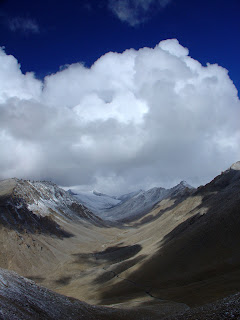
One can identify the measure of a current concern by the attitude of regret, which clings as a cloud-shadow hovers over a hillside. How often - more commonly however - it is, that one does not wish to change much of the past that has gone before, but that dual efforts, multiple lives, could have been 'tried out' and perfected, that knowing what one knows now, is perhaps a little over-late. It is not that time has been wasted, to the contrary, but that one would dearly have more time, much more time and opportunity.

And there is not one man who has not wished this for himself; many a good man too, who makes wish of this for others as well. We watch the innocent babies born, the struggles of youth, the demands that ensue. . . and there is cause to ponder the good sense in a life which may be so easily used before properly valued.

However, the resolve which is distilled from such regretful melancholy, with unfulfilled desires, with manuscripts unwritten - this resolve and inclination makes for a worthier existence held especially within the future. It is not lost or discarded by a man. It is forever valuable to him. The suffering as is known by all unfulfilment is quenched by the answer of future involvements, future presentations, of those very longings.


Explicitly one may also state here, that it is usually the case as regards longings. As one can well imagine, this is a difficult point if one hearkens after something detrimental but mistakenly delightful. The reason as illustrated by this is, that it is to great purpose that a man be given what he desires; even though disdain will inevitably ensue. For without the experience and firsthand knowledge of the nature of that which he has attracted to himself by such longings, he should be forever returning to such desires until answered. So in this respect our Father in His Wisdom did decree that all men be answered according to their wishes, and receive exactly what they ask for.

This point has been entirely overlooked by those fanatical fringe-groups of positive thinkers who make a point of decreeing for all that they should wish for. Yes, it is in accordance with the way of men that this should be so, but they omit to inform their demanding fellows in respect to the 'undesirous' being desired and received. 


The fact that in the short-term these desires may be in part fulfilled (hurriedly) is a little surprising, for one can add here that usually one does have to wait for one's wish to be fulfilled; particularly a good strong wish! Furthermore, there are two distinct types of wishes - those which are inherently good, and those which are inherently disastrous. And there are two types of wishing: those who would wish for themselves, and more potently, those who would make wishes for others. 


A gambler most fully believes that the fates are on side with him at the time of his winning: that he is answered, that he has made a wish which was granted. He is impatient to test and try this law. He does not know that this law holds good for many wishes: former wishes, soul wishes, and even illusive wishes. He is insecure in this knowledge, and in seeking constant reaffirmation of his status within the universe - which would otherwise overwhelm his sensibilities - he is verily 'at odds' with himself.

Know that we would never be denied, and that contrary to the opinion of those high and exalted souls who are qualified in many regions of grand wisdom - contrary, because they would assess that Man has much too much license over his affairs - we have abilities undreamed of. And as they are dreamt of, so they become.

The point being therefore, that it is necessarily of the greatest importance to know where one is coming from, and to what destination one should like to maintain. That we must focus upon the worthwhile and fruitful, industrious, illumined, and above all with the grace of pure love, an intent from the heart that commits all action by us and to us to be of God. If one may hold this before them and measure all regrets and inclinations by their sanctity, then the worthier future will also present.

All of our innermost longings which are dear to us, actually live upon our person and slumber until awakened into actuality. No hope or longing is ever wasted. No love is ever unrequited. If this were not the case we would surely be so distressed by the ills of the world as to be thrown into perilous despair. To all appearances, many dark and contaminated woes inflict most men; many of whom have not the capacity to see their way out from their troublesome plight.

We may well be frustrated at ourselves and at others. But if this frustration is not of itself violent by nature, or with vehemence, then it too, may hold purpose as an imprint within one's resolve. If one may encourage and inspire men to hope for more, and then be content to leave the future to fulfil itself in its proper time - not to be impatient for immediate results, but rather to be content to lay the groundwork for such greater desires - then most properly, the stimulation will cause rise to a more awakened man with a defined future.

It is precisely that men do not know where to look, or how high to reach, that anticipation is quashed because of the falsehood of discouraging outcome. Men believe that they need to know now or not at all, and that they shall be the same throughout eternity. Even sainthood is undesirous, because it appears unattainable; and it shall be unattainable if unsought and unhoped-for.

It is a matter of focus, of longing and of desire.

• To perfect our desires and not abandon them.
• To not be afraid of regrets or upset at our longings because they are at present not forthcoming.
• To be generous with ourselves in the true and proper sense, and then equally generous with all men, for such wishes afflict each and every brother, even before actuality.
This is why a body of men who have grouped together with a purpose defined, become an awesome strength within the world. It is that they do mutually desire and wish for a settlement envisaged - and the outcome will advance. And today there are legacies from such groups of men as did pass away many hundreds, nay even thousands of years before; but they were so strong in unity and intent that their wishes remained until that day of fulfillment - and that they knew this, so much the stronger!

The best proviso in the world was 'Thy Will be done'! Only in this attitude of soul may we step safely into the world and into activity. Without this soul-attitude, we are before perils which of themselves, may take an eternity to intimately come to know the proper dangers and deceit therefrom. So we humbly come to our circumstance praying to be sustained throughout the dangers, carried across the waters; and that we may only wish as our Father would wish - that our choices be good. It is surely foolhardy to wish otherwise.

Monday, January 18, 2010

The Body Astrea - 26th July 1992

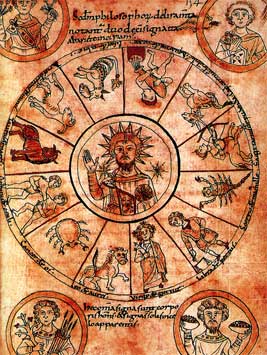
THAT which comprises the influences of zodiacal reference are of the four elements, namely: the fiery, the phlegma, the earth and the airy. These four elements are as divided into three; and for the record, are also divided once again in respect to corresponding relations upon each other. They are divided into three, as in old, current, and changing: eg., old fire, current fire, and that which is upon the verge of transforming fire. (By 'old', is meant that the influence born under that starry constellation condition, is one of a stream which is alike to the ancient fiery impulse as was known.)

We are speaking in relation to men specifically, and the signs which predominate in aspects to them. Therefore, the cycle of birth/life/death is somewhat reversed, but applicable - instead of cessation there is change; and instead of birth, at the forefront it becomes that change - whereas the beginning impulsions stream from ancient/olden tides rather than fresh impulses, which complete the congregate. One must have 'carry over' impulses alongside the more stable- living, fluxed impulses alongside: those which are 'on the turn'- the past, present and future as represented in astrological doorways.

• FIRE
The fiery elements are as the 'quick' within the heart of motivated life; they do not of themselves expel and express, but by their action they do drive manifestation into being. The fires denote activity without cessation. When called forth, they are obedient to the confines which make their limits - however, they are of course, without boundary.
• WATER
Water, precious water, provides the tears, which are universal. It is the all-encompassing element which permeates. The aspect of water is its divine complex nature, which correctly, gives over to the fluidic motions and processes above and beyond. The principle of water is true, and to be found throughout every scheme and 'harbor' within all of the heavens. The formless but most significant: the fluidic aspect.
• ETHER/AIR
The ethers: vapors rise on airy beds - the subtle, unseen ethers. Here is the element which brings rise to perpetual space and the provisions thereof. Without which, there should be no divisions perceived between objects. This is the element of beatitude. That there is a fluttering of heart or wing, is because of the ethers either side of the beating. It is truly in aspect, possibility - for without, there would not be the activity of fire and movement, and combustion.
• EARTH
The elements of earth are those which are, for the present, alongside physical manifestation; and concurrently, the etheric realms which most properly are designated to the organism, which organically, comprises the Earth. Remember that those minerals which are accommodated throughout, are all 'outer' inhabitants; many of whom belong to planets within the divisions of the Zodiac. But those properties known as earth are not of mineral constituent, for the Globe is organic by nature, and the etheric globe best represents Mother 'Earth'.
To be 'earthbound' is another matter - which of course, for the time being we all are. However one can perceive a glimpse about the aspects of the element Earth from this perspective: exactly those differences between the ways of the old Earth, the current Earth, and the changing Earth impulses to come.
The current Earth, being as it is known with inclinations as experienced today, will differ extraordinarily from that in the future. Similarly, the contrasts which lie - as a great yawning crevice - between the variations of old/current/changing Fire, Water and Ether/Air, shall be as great - if not greater.

The Apostles were necessarily as representatives of the 'twelve tribes' of the Zodiac; and for what reason - whether it was decided by them or by circumstance - their movements were precisely fixed in accordance with the living aspects at that time.

It has been said that all of the zodiacal aspects make up the body of our dear Christ: that this is but one of His bodies, and that the influences are drawn together through Him and by Him. But know also, that the 'coming together' of all of such influences - as starry points upon a grid-map - are also so formed within each body (astrea) of Man himself. You also, reflect the immediate planetary influences, all of them. The fact that certain aspects will predominate within your nature or personality, or definition past, is only because all aspects have come together in the makeover qualities which comprise your being.

The 'outer' man is those channels, those points of conjuncture and of certain influences, so drawn together and irradiating as one whole being. That we share the enlarged form is no paradox, for as Man is a synthesis of star qualities, the stars are verily the being of Man. It is difficult when presented with such complements of 'large' and 'larger still', for in many respects these concepts are not entirely relevant to spiritual interactions. Largeness is not the considered factor. (Here is an example: the potency of musk!)


The Body Astrea is the Body Astrea of Christ; and concurrently, as little replications within, all men have such bodies which do also correspond with the greater zodiacal complex, and are affected accordingly. As alike to the skeletal frame which does support the flesh, here the greater body - in fixed positions - supports our movements within and without. The physiology of our starry constitution!

So when it comes to pass that there are those who do study the human body in relation to the planetary specifics, it is correctly noted for the main part - but not because there is a correspondence only, but rather because intimately, one is the other - one of the same. That the physical body is largely determined by its body-astrea, and that the body-astrea is determined largely by the impacts of influences aligning, configuring and paralleling with greater influences, or crossing.

There is as a magnetic sheath which encircles each globe, and does take impression from one to another; albeit invisibly to us. It is the sheaths themselves which expand and resist; or expand and breathe in various qualities from partner, neighbor or greater influences. For each and every planet is not only a keynote of that which it is and was, and is to become, but also is resonantly connected with movements to which is it is sympathetic, and that which is presented, harmoniously or otherwise. And conditions alter considerably. It is as a dance with many partners in rotation. The sequence must be played out, so that all may have experienced each and every dancer; and the combinations of such are many and complex.

It was at that point when the 'Sun went black' (Luke 23:45), that one may discover the extraordinary positioning and injury, as invoked upon the greater regions. To set the scene, this was no simple eclipse or cloud, or any other bland explanation - the Sun was not visible. And when the sky is darkened, because the Sun has been extinguished, the stars too, cease to shine. The men did tremble with great fear, because it was a black void, sparkless, with no cheer. In this way, men may tell the difference.

It was this event in which the Body Astrea was afflicted and momentarily withdrew, that the heavens were seized by sore and tumultuous insult. It is unimaginable that such an injury occur to our naked and exposed God - who was especially vulnerable, as any man, but not alike to any man. That Man would kill Man!

Here is the pity of it. Perhaps one would say cynically, "Have your way, better sooner than later, if that be the way of men!" But not of all men, for Christ did look into the eyes of some of those men who did walk with Him and knew Him, and through to their hearts and their innermost desires. This not only pleased Him with cheer, but inspired Him not to recant His original plan. For His coming was one of a seeking for the truth also - and He found the reasons for His trials and woes. Sometimes the unbearable can be sufferable, because of sweet reasons.

Each age does bear its representative of that time. Similarly, each segment of that which we term the Zodiac also too, has its correspondence. Certainly at all times, there are living representatives who walk the Globe, who most properly are example of that pure part of influences.


The disciples of Christ were gathered to Him because of their personal resonance, as so purely corresponding to those parts which were expressed in the influence of Christ Himself. As magnets they were compelled to His side; although this was of former design, which was accounted for the in the ways in which the gravitation ensued. Their qualifications for becoming the circle, so to speak, were that they best emanated in subtle body as members of that group. The word “member” of course, is often associated with arms and legs: as in “members of a body” - which is precisely the inference to be had, only in this instance there were twelve members, instead of four.

However, the disciples can be best grouped in three, as per discussion above of elemental influences. When viewed in this light, there can be little doubt as to which category would best suit each man. The question then is: who of the old ways, the former worlds - which four? Who of that era - best representative - which four? And who of those impulses streaming in, which provide for change - which four?

Before these may be held for scrutiny, one must establish the various signs of the Zodiac attributed to the nature of the elements.

FIRE SIGNS:
• Aries, Leo & Sagittarius
WATER SIGNS:
• Cancer, Scorpio & Pisces
EARTH SIGNS:
• Taurus, Virgo & Capricorn
AIR SIGNS:
• Gemini, Libra & Aquarius

Sunday, January 17, 2010

Calvary & Sorrow- 15th July 1992


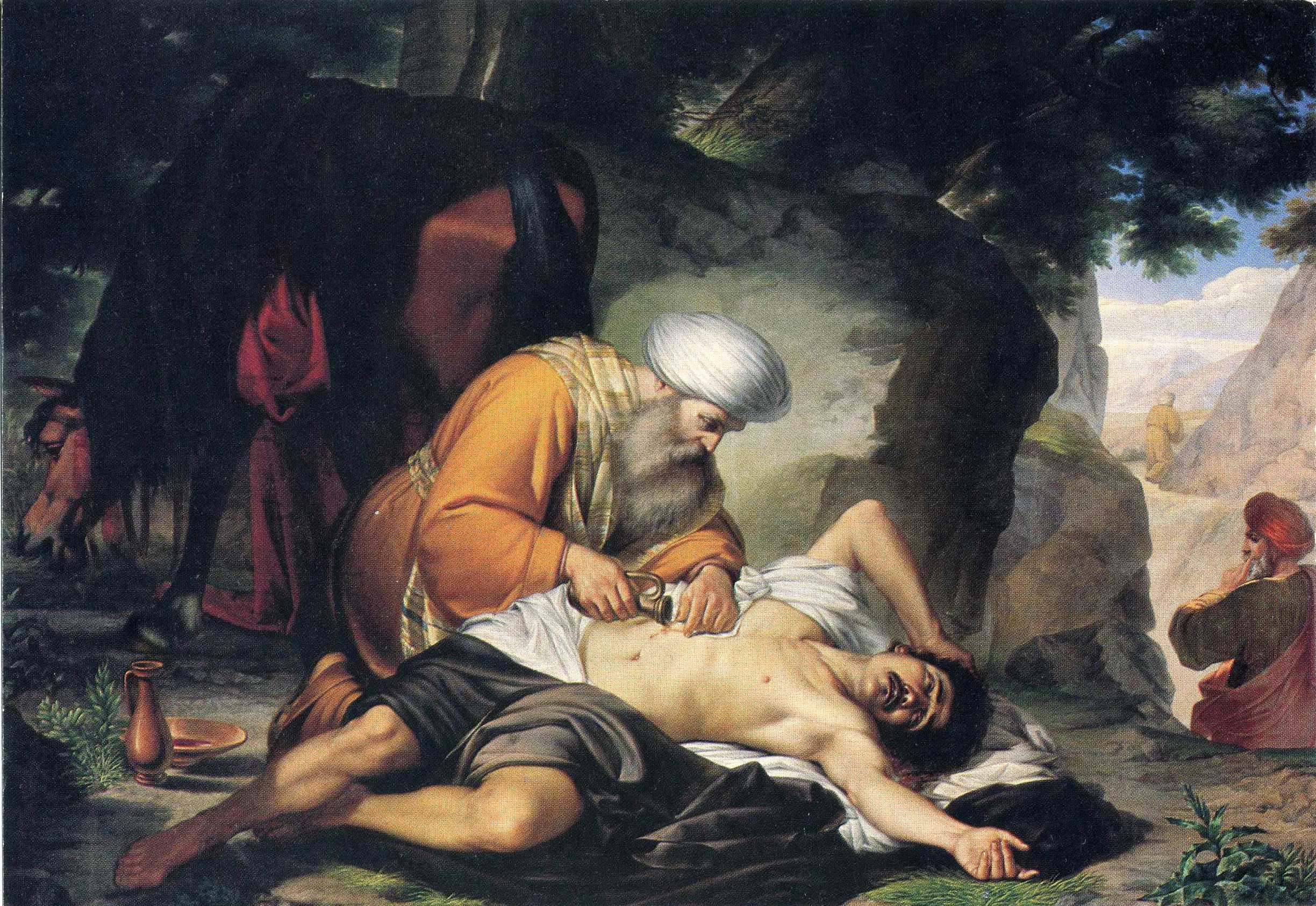
IF we are insensitive to another man's great grief, if he endures injury or suffers anguish caused by our ignorance, then we should regret and repent such sorrow, such loss, such defamation. 

Too often men await the guilt, afore addressing those sins which press inwards. It may be that they are forgetful and heed their conscience not. It may be that the trappings of the sensory world expel all thought, and strangle their divinity - yes! suppress and suffocate the divinity which suggests that the uncomfortable price of luxury and indolence comes from the pain of those duties not attended to. If sympathy distresses us, perhaps it is better to rebuke and forget those, who with forlorn and crazy circumstance, tug at our garments and cry for remembrance?

When we work, we not only work for the needy today and the needy tomorrow, but we labor on behalf of those souls who are unrelinquished, who have come but half the way: those who suffered and labored to 'make good' of the world and as yet are not satisfied. There is a body of such individuals, whose ghosts do linger and call to the world of men who err. Moreso, there are those who, departed and downcast, flummage through their own mess, flay within the folly now spent; and who having tried and proven the ways of such sins, call out to the living to amend!

Shall we abide those torturous inflictions? Shall we be so consoling to our brothers that we consort with the sicknesses themselves? If we are determined that we shall not offend, then we shall remain silent. How then does one speak out about the hapless waste of human spirit? It is cruelty which man does inflict upon himself, and injustice whereby he contaminates another with the cruelty which scorns all souls. Ponder how remiss, is this balance of injustice.

Slavery - by any name it takes - has to be one of the greatest of such injustices known to man, that one may dictate to another, and freedom lost to one, makes for freedom for he the tyrant. How careless, how unsympathetic! Treason to men. 

Men may draw their own veils, that they do not suffer such sorrow of knowing of conscience-speak. These veils are called the insolentries, for there are for every virtue so known, equals in opposite. When a man becomes to the power of the negative, insomuch as he abandons those inclinations of virtue which would otherwise be breathed by him, then he does separate himself from such, with veils which are self-drawn.

The insolentries require a consensus comprising of consciousness, self-doubt and sympathetic nerve. When one 'does wrong' and does not hearken to the conscience, and concurrently has sympathetic recall sufficient to know that one does err, then it must be an actual 'stifling' of the sympathetic nerve (which would otherwise twitch and writhe), so that the man may continue on in the deliberate fashion he intends. This is characteristic of the insolentries. However there are different species of such, and they are varied in application also.

Without the insolentries a man who erred would be a man in constant agony of agonies caused by himself. In truth, there is a reality whereby he does hold a sympathetic nerve as a mirror to his world of activity. All that he imposes is discovered, without the panacea of the insolentries, shortly after death when his recall is profoundly accurate and undetermined by a willing consciousness. We may make comparisons after death, as to accurate judgments of our 'correctness' of behavior.

When we may undermine the wishes of another,
when we cause grief because we ignored rather than addressed an injustice,
when we chose to take sides but picked the side which was mistaken;
when we lavished ourselves whilst our neighbor or our family hungered;
when we spoke of love but in secret bethought them to be fortunate to have that love;
when we hid within a body of men who spat upon the losing team;
when we steal or deceive, or make trick,
or disapprove of that which we do, but in others only

- these and more, give rise to the veils of insolentry.


Why then, insolentries? The angels do not have this vehicle for the doing of evil, that cannot quash or redetermine the pain which springs instantly from wrongdoing. They are at the mercy of a heart which cries loudest and unashamedly. Yet too, our karma is delayed. We are saved from the immediate pains of our worst contributions, and saved also from immediate repercussions of such. Some might believe these two factors to be contributory to account for sins. And they are, and they are not.

How often it is said that one's best teacher is one's mistakes. To a degree we consciously err: we suffocate our conscience, we draw the veil of that insolentry which is sufficient that we may accommodate the sin within. But come the day when this is revoked, that we no longer take of that particular insolentry, and expose ourselves by choice to the honest aspects of our own permeations, then wondrously, the enfoldment of a powerful humanity begins to radiate as never before. For it is the conscious effort which enlivens the soul-activity and is the difference between the bud and the blossom.

Quite assuredly, the elements of sin are mistakenly attractive. They are the mistress who presents as seductress, but is verily a snake, or whatever the nature of the poison within; an enchantress who binds you to her, but would enslave; but is not cohesive to the free spirit and defying will of man. For man by nature, will not be 'caught' indefinitely- as elusive as quicksilver, he ducks the arrow, he jumps the sword!


In wooded crest, on dappled breast,
The name is borne, upon the chest;
Our hearts made bare, with no contrition,
Seams rent, intent is the greatest volition!


The young have not, what it is they seek,
That they seek against their youth;
And the bud which has expired, spent,
Has now the proof all youth has lent.


Beneath the deeds, the deeds of men,
Good heart! it does procure and propound
And issues all, with pulse and sound.


Make strong the heart, with vital love,
For within the mask, afore the arrow,
The heart leads all, be it man or sparrow!

Saturday, January 16, 2010

Repressive Memories- 14th July 1992


Of all the things that I could be,
I could not be what I am not,
And of all the things that I could see,
I could not see that which is me,
And try as I might, to catch a phrase
or turn a word,
They're never heard,
These unmuttered words ...
I am a key, I am a lock,
I am the memories, you have forgot.

WE write everything out in triplicate, we inscribe it in the public records of the akashic memory. We incise such experiences as are, and as are invoked within our own memory, and we indelibly impress that repository of recall with all of the company we share.

To be seen through another's eyes may not distinctly run concurrent with the actuality of events and of lasting impressions. However with all folk, and for that matter all beings and all matter, we leave impressions of ourselves: our conduct, our vitalities, our desires and subsequent emanations - and not even so much in the karmic sense of such impressions rendered. We leave a 'scent' such is ours which indefinitely lingers.

The impact which we create with our relationship to all within the world is vital to our future associations. The reason for this is plain: if I am to rehearse something, I shall become ‘good’ at that something because practice is the art of incising memory impressions, which shall be locked into when confronted again by that which drew the original experience together. I may certainly become 'good' at something because of repetition, but moreover the reason for this is because I have laid down the memory, of which I may excel and improve upon. To repeat does not mean to further, however impressions within tangible records make this possible.

One can say too, that the ideas which may surround another man which directly concern you - as far as his impression and his personal recall - dictate another form of repetitive replay, which may hold effect upon certain parts of one's constitutional personality. It is unwise to keep company with those who misjudge you (unless of course they misjudge you for the better). Often a juvenile is corrupted to a greater degree by the actual suppositions and impressions of him, by those elders who regard him a criminal as from the first.

The powers of envisualizing do have effect upon what is to be 'brought out' in characteristics of others. Fear unfortunately, with certain images cast, shall attract to that man those attributes which are envisaged - if there is a level of weakness within the individual to begin with, which usually there is.

The question is for us: how often do we remember aright. Are we just and without criticism when we recall another? Or are they restrained to an embitterment or downcast by our demising dismissals?

We err and we damage the subtle bodies with subtle attitudes. And yes, mere 'thinking', or more correctly, our envisualizations as stimulated concurrently with episodes of memory, are potent and potentially destructive - particularly when there is a grievance, for such will be perpetuated by active recall; and the likelihood of the fellow partner causing more disturbance is incited by the repetition of his character-formation as cast by such memories.


If we were to consciously meet with every memory which does arise, and try to correct those elements within those individuals whose circumstances have brought pain within, and make of them what we should wish of for ourselves, then the pain would be eased in more than two ways. We may release our brothers to perfection, and for the sake of future worlds, it is imperative that we begin to do so.

How often one exclaims "Why, he is exactly as I thought he would be!". The memory impressions have begun with assumptions as placed upon the man in the first instance. How often there is a public man who is confused with an extraordinarily low sense of self, who unwittingly falls to near death or complete exit - impeded and imposed upon by dire public pressure of opinion.

We are not however, so distracted by those impressions as others hold, as to be overcome. For the main part we do remain our own person, with seasonal and cyclical fluctuations presenting opportunities in many levels of being and expression. But it is sufficiently important that one is mindful of the consequences and reactions stimulated from one to another. It is natural to try to please, and one can see from this explanation the psyche of the 'peer group', as is dictated throughout with expectation.

We are to be reminded that we never view the whole man when we relate to one of our brothers. Circumstances have but enlightened us to one or at best a few of his attributes, and we are not privy to see beyond that moment in time. We recognize that all men are capable of more - of giving more, of being more - and one can make it a constant practice to envisualize it so, when in company (and when out of company, for that matter).

Some may view this as an active lie or untruth, that the positive thinker is in some sense delusionary. However it must be reiterated, that the only truth about a man, is that he will always be more holy and inspired than we shall come to consciously recognize. All men may be troubled at times - conflicts are inherited that we might actually prosper from such - and we are all loved equally.

Our view of our fellow man is not as disposable as we would like to believe. Our active thinking, our impressions as given to the soul from such attitudes, remain with us and live within us - and not only do they hold attraction to the person with whom we share such memories, but they do also in the long run, make effect upon our own personalities. As we explore those elements which make for the greatest impressions: the outstanding, the vitally imbued - be them for good, or for disapproval - we begin to turn inwardly and explore those characteristics.


No wonder it was that the old monks went into retreat, far from society! (No wonder we do either! A joke.)

Test and be tested. If not today, then tomorrow! Our brotherly ties are of extraordinary importance, whereupon our most difficult, demanding and fulfilling obligation, is to come to understand and make peace with all men. Alike to the most complicated jigsaw puzzle imaginable, it is to accommodate soul with soul with soul. For this is active creation; the spill-off from those beginnings in which we were envisualised and impressed with the makings of a man. Our definitions are largely determined by us. Our projections return 360 degrees.

But what of oppressive thoughts, and oppressive people? Oppressive people usually demand that they be memorable - that they are not content to be regarded slightly. One has difficulty with such company because one may not necessarily wish to gravitate to their field of influence, as is asked. Furthermore, if one is trying to establish a healthy approach to this person, rather than fall prey to irritation, then there is a double task at hand :

1) Effort to distance oneself.
2) See beyond a tiresome personality to higher man.


Some folk actually feed from the attention of others. Remember back to the memory impressions activated within associates. In the case of the oppressive personality they actually strive to impress you as they would see themselves, and draw from such.

It is an interesting point because this can and cannot be done. It depends on the qualifications of will and conspiration of the individual concerned. Some do have a remarkable ability to impress upon another man exactly the image that they would wish to project - in the sense of that which is consciously drawn from. It becomes a twofold memory impression insofar as the soul draws its own conclusions and they remain, but are not actively recalled because overriding the true image is that picture as imposed upon the man.

Now usually, it may be said, the memory impressions are tinged (as before stated) with all sorts of personal presumptions which stray from the complete and comprehensive reality. Such examinations are given over to the soul but are individually characterized. In the case of the oppressive personality, this is also so: that the projections impressed willfully negate the opportunity for the individual to make of his own impressions, and rather does receive those as given to him. This scenario may be built upon in future repartee.

How suggestible are we? And how do we recognize our own misadventures in memory assumptions, whilst also those unwelcome impressions dictated to us? The greatest fortress of light is that of the truth. As simple as it may sound, a man of good character who ekes towards the humble and positive truths - concerning other men, concerning the world at large - will find that discrimination becomes an easier task and more refined, as more he refines. 


Men can be suggestible as regards all manner of quirks and phases of being. So much of the day itself may be without motivation: self-motivation, active motivation. One wonders that if this is the case and the conscious activity is so quietened, then the individual in part, must give over to suggestions as offered elsewhere.

However men are stubborn too, which correctly says "I shall only be pushed so far!"; and will only abide an oppressive personality for so long. For although we may be in part impressionable as others would have it, we do know within when those impressions do not match: theirs with ours; that all is not right. And it is the submissive, who for many reasons, have to receive past that feeling, ignoring that knowledge, suppressing inner expression. Obvious to say, this is unhealthy.

If we can concentrate on the better man, even in the case of the suppressive personality, we shall find that the response from our partner is wonderful to behold. The encouragement we give, is the encouragement we shall receive. That not only for this reason alone, but nonetheless with it in mind, we are cautious and tardy as to hurtful recollections. We may re-impose within our own history notes those aspects which were formerly overlooked, that with maturity we may overlook the troublesome man and amend the past with the comprehension as to why it may have occurred.

My Blog List

Followers

Esoteric Christianity Archive