Translate

A CLUB OF SUPERNAL INTERESTS Christian Esotericism, Spiritual Science, Esoteric Christianity - All Authored by a Lodge of Christian Teachers (unless otherwise stated.) (All writings copyright) ©

Sunday, September 27, 2009

Four Moral Tales- 24th September 1991

The Obliging Servant
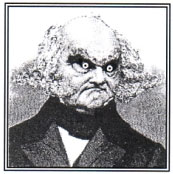
"I ASKED you to send me more life, and you return with a mere youth who will not now give over the elixir!" he bellowed in rage.

"It is because it would be death for him to hand it over" explained the servant.

"Then take it from him!" came the desperate cry.

"I cannot Sir," replied the servant, "for it is not mine to take".

"Then I shall have to do it myself", thus saying, he swiftly snatched the vial from the young man's hand.

The youth did wither before their eyes, the flesh shrivelled back from the bone, the eyes from the sockets, and he collapsed in unspeakable mess of remains.

And as the devil-tyrant took tonic to lips, he enquired, "And what did you promise this time to this youth, that he might journey with you?"

The servant with eyes cast down upon the formless form, replied, "I promised that he should see one who is far greater than he. That he might be amazed at the power and grace of my Master, and he was eager to be received".

"Then you have fulfilled your promise" came the haughty reply, "you have done well by me. You may take rest for the moment, for come tomorrow I shall need you once again. Only this time, bring me more, for I am still not quite refreshed.”

Such it is with the devil of Conceit and his manservant False Pride, who with false promise does come to men to cajole the very life from them, if they but follow and give over their precious life to these two rogues.


Sweet and Sinister

IN the market there was a candy-seller, a woman of large and cumbersome proportions. She beamed with every trade encountered; she had such a sickly-sweet smile. Old and young would come and eye over her table, where there laid out was a rich display. So colorful, so sweet, so enticing were these pieces crafted and fashioned in so many shapes. There were animals delicately sculptured from the sugar, there were miniature houses spun with fretwork laced with crystalline fruits and ginger hue, there were carts that had wheels made of fancy chocolate that moved, and held within small trifling of peppermint and rose bon bons.

Many admired her trolley, and had to part with their money for this extravagance. You might have heard of this woman before in the latter part of her life for which she is notorious. However, she had found the one weakness of men which made for great barter, and was forever successful in that market. 


Oddly enough the woman cared not for the sweets herself. It was with much distaste that she watched the eager hand reach and choose from her colorful array. For her passion in extravagance was particular to human flesh - instead of bearing children, as most women are wont to do, she would consume them. But no one guessed this secret; they were so unsuspecting of this "sweet lady" of the market place.

The orphans who did approach the stall, were invited home to survey her goods. They would wait all day until she had sold all pieces, and would ride the trolley back, never to return to that market again. It was odd that she was thought of as kindly and as such a Good Samaritan. But then, not always are things as they seem.

How often we surrender to the witch of lascivious gratification. We pay quite happily without care for the orphans of the world. Were that those monies imparted had gone to good purpose - and if in excess, to be given over for a real meal for one who has not. We are persuaded all too easily by that which appears delightfully enchanting but has little or no nourishment to sustain the body or mind. This witch deceived the innocents, and also those who cared not to know, for she was the rogue of Lust's Submission.


The Unknown Passage

THERE was an old man who was loathsome to behold. For his teeth had moved in the jaw and did not fit properly; his hair was unkempt, his eyes with milk-blindness; his features were sunken and gave no hint whatsoever of his former portrait in youth.

One day there came by him a distraught soldier who was on his way to his first commission. The young man had been weeping and the old crow of a man went to his assistance.

"Come, come, my young fellow", he croaked, "Why do you cry so mournfully?"

"What would you know, old man?" The young soldier protested. "You have been given more than your fill of life, and I, at such an early age will be deprived of mine!"

"Then perhaps I should go in place of you, and in return you may live that life which I have endured? Would this be your will?"

The bewildered young man was confused with fear, and now with such uncommon speculation. He bethought this to be a mocking jest, and answered so: "Oh yes, old man, I shall trade you my destiny which is doomed, for a piece of those years and your destiny's past."

"So be it." The elderly one sighed, and instantly the two were transfigured.

During the next sixty years or so the youth became as old, and with many a struggle and a battle of kind, he had come to the end of his days to find experience was behind him and poverty a’front. His limbs were beginning to fail; he was still much tormented by those dreams that were as yet unfulfilled.

He now spent his days at the roadside watching the traffic go to and fro. He had felt cheated when thought that his life lived was not of his own - that he should never come to know, what might have been were it under his directive and not just the mere reproduction of another's.

He had pondered as to what had become of his perpetual partner, until one day when a young soldier came by. He recognized his face all at once, for this was his face, his very own he had long ago worn!

"Do you not know me?" he croaked, to the youth there before him.

"No old man, I do not know you. Should I?" replied the soldier, as he flung a few copper coins at his feet.

"I am Fate.,” the old man murmured as he gazed with great intent.

"Pleased to meet you, and fare you well! For I am the Conscious Will and must now go my way", and so saying departed with a laugh and a wave, cheerio.

We may all assume the life of destiny, or live the life of one with free will. There is a marriage of both in a man, who throughout the course of life is offered both limitations and possibilities, concurrently. We are wise to discern which is which and one from another, and be content with both, for they are brothers… brothers out of time.


The Needy and the Worthy

A YOUNG monk went to the coffers of his monastery and stole away all that was there to be had. He had a conscience which provoked him and spoke to him that the wealth might be served better - and so departed the in holy calling, taking from the community all of their treasured savings.

No sooner had he left the confines of the monastery was he beset by a group of thieves, who asked of him to display that which he bore, straddled in bags, a weight on his horse.

Honesty was most valued in righteousness, and therefore the monk did speak truthfully when replying, "I have a parcel of much treasure, which I intend to distribute to the needy".

The thieves were suspicious of this, but took the monk to be a fool - "Well my friend, you have come to find the most needy! We are they, hand it over!"

"I believe you to be in need of counselling" the monk replied, "but how am I to know if you are in need of finance. You appear to have much fat around the girth, and much vigour in your step. I had not you in mind, when I did rob and plunder that from my brother monks."

"From one robber to another, let us eat together and discuss this a little further?" They asked. And so the monk was shuffled amongst them and made to take food, on this, his day of fast.

The twilight came and many a speech was bandied, until the black of night could mask their treacherous intent. The thieves fell upon the monk all at once and stifled him to his death. They then grabbed upon his bags and tore them to pieces to empty the contents- scythes and tongs, wheat-seed and millet, axe heads and nails, and texts about the mysteries of good farming.

They disgustedly hurled the monk's 'treasure' to the ground, stripping the baggage to pieces in vain attempt to uncover some jewels or some gold.

"Useless!" they cried, as they kicked the corpse; and then departed.

Oft times charity is so rebuked, even when it is offering that which is most needed. One must discern wisely, no matter how good the intent, as to who is best fitted to receive those treasures and make good use of them. The monk met with dishonesty unto himself and then with the thieves - the men who would not choose an honest living, and required of him so much more than he could offer. Even honesty may be turned corrupt, when so taken to be the very opposite. It is better to give of oneself, in word or in deed, sparingly, and withhold much initially, lest it be all lost to those who are unworthy, and shall by their evil, defeat the good intention that it may not find its way to those who would gracefully and gratefully receive it.

Saturday, September 26, 2009

Book Amoebae-23rd September 1991


Archives and Archivists
WITHIN little pools of water the microbial world is more readily perceivable. Such activity of slight micro-organisms is quick to hasten to that location which might harbour them as home. They, alike to the mossy outcrops and finer twines and grasses, spring into being where the vitality of the water mingled with oxygen, draws them in large numbers.


If one can imagine these small, shallow pools of water - as say collected in deposits shortly after rainfall, trapped in rock or hollow - being transformed from the point of collection; and now picture a book here and a book there, upon a shelf, upon a desk, new with fresh ink or perhaps many years old; and also with a multitude of tiny beings swarming to and fro, collected around the text in great activity.

It is perhaps harder to imagine this and yet not always is the water-life apparent either. Of course it does require much magnification to begin to make visible the host within the pool. But as we hold a glass of enlargement and enter the invisible realms connected with a book, just as surely we find certain activity with particular and peculiar entities who have found a means of expression.

Where do they come from, these “book amoebae”? And what inclines them so to something one might presume as dead matter, which may not of itself contain life but rather a representation?

The power of the written word is not only in the value of it being interpreted at a particular time. The intent from which that set formula of letters and phrases does initially 'lock in' as it were, and impart a life-infilled character which is essential to the coherent, thought-out text - this is quite different to, let us say for example, an instance whereby a meaningless or interpretless jumble was recorded down on paper. Rather, there has been a very definite action at one time, to begin with, that has placed the key symbols of language into a discernible format and represented a captured thought in the process.


The very object of the process of writing is in itself, one whereby the writer intends from the outset to capture the thought and reproduce the word in record of such writing. This is achieved not only in symbol, but in reality which extends through to a subtler graduation connected to that very format.

The scientist these days tries to determine his interpretation of certain aspects of life by defining that which he perceives and that which he conjectures, by way of formula. The alchemist of the past, the mathematician, and the primitive before them, knew the power of formula, and that life could in fact stream from it, proceeding the other way around. That given a set formula, be it in symbol, number or alphabet (alpha beta), they could conjure that which was represented and essential to that key configuration. This could also be attained with the physical use of geometrical forms and objects in jigsaw fashion, or rather in set layout, relate to the formula which was depicted in the ritualistic movement of such objects.

In point of fact, pure language was once the art of being able to actually pronounce and replicate that which actually is. Although this is not a precise art anymore, and nor are the effects of language as visibly discernible, they are nonetheless quite meaningful in respect to the invisible impressions and life-activity which swarms and congregates around such formula.


Vocalization has a power of its own and would take much explanation for one to enter into the many phases which vocalization does make certain impact upon the world and its ethers. But today we examine the humble book or for that matter any written work, and ask if it is only paper with dead word (until read), or has a book a greater quality to be understood? For it is a very real concern as to what one surrounds oneself with in regards to reading material- the nature of the work, the essential messages, the intent from which it was inspired from; not only the subject (which of itself must be regarded also), but also the concepts which go to add to the collated impression. 


A library is a wondrous place indeed, and one knows the awe, almost apprehension one instantly feels, when they enter into that room which has the air thick with the musty perfumery of many books contained. In measure, most of these works represent many a life and inspiration. Yet one cannot help but also feel a grave awakening that it is almost alike to a cemetery, this testimony which speaks of much long past. One should not live comfortably with this great collection, but rather be content to visit and pay respect to the authors singly than take them all home!

It is interesting to note that there are many who hold particular designs for the world who would happily put to fire those books which represent that which they dread. The physical removal is important to them. Furthermore, in the case of a book which is based upon corruption of the soul-condition, which demoralises man in any way whatsoever, be it even in humble historical format, one might well destroy such works, as their contribution is never of any value. Simply put, an evil book is most definitely actively quite evil in its actuality - if evil in content, it is evil in continual output whether it is read or not.


A work may also offer counterpoints for the answerment of certain evils, which it does itself conjure up. An example of this is the 'Good Book' itself. There is much potent material in the design of a work which sets firstly the ways of error, and then fashions a spell which does negate the error with doctrine set to transform and make pure the original horror. 

When reading the Bible one might analyze the content so: ninety parts error of men to ten superb parts remedy for such error. So we find within one work a counter for the evil, a recipe for remedy in the fact that the evils have been brought forth and actually put to flight within the text. They have had demanded of them, that firstly they be seen and drawn out of the conceptual world, but that they are seized and worked upon by thought which they cannot withstand. There is quite a battle within that work, and a battle which is constantly one of overcoming those qualities which are not desirable in man or his history; and answered continually, day in and day out.

So if one has to cite and record something which is quite dreaded or disastrous, to good purpose - whether in the light of illness, immorality or historical comment - there is much need to also provide within that very text, something of a counter to offset the very dangerous reproduction of sin as represented.

Whilst one may not readily perceive that which surrounds a work before them, granted the language is understood they may look to the content and thus decide whether or not this material is in fact desirable to continue on its way, offering to the world of thought that which by its very formula and being, it summons continually.


Friday, September 25, 2009

The Sea of Existence- 22nd September 1991

‘Where is the stream?'
Cried he, with tears.
'Seest thou not its blue waves above us?'
He looked up, and lo!
The blue stream was flowing
Gently over their heads.

-Novalis, Heinrich von Ofterdingen

COMPASSION may be viewed as a complete passion that is fulfilled from onset. To experience a passion is to fervently call out from either a lower or higher aspect, and grasp with the whole consciousness for a time that particular passion one is driven to. Compassion however, may appear overwhelming in like manner, but does not wash over the being as an unspeakably powerful tide where one is taken up in this or that direction, but becalms the waters of the soul through which one may look up through - through to the light of spirit, with clarity and even magnification.

Novalis pictured Man as though he dwelt beneath a great sea ever tumultuous. It was to this concept many writers refer whereby the spirit is somewhat rocked, swaying this way and that, following currents although free and weightless with the consciousness an anchor and the vessel travailing the seas of the Heavens.

The dream-world of men is often searched through for the answers to their conscious condition. Were that men could consciously rise upward the anchor, so to speak, lifted upward, then they should perceive with clarity that which lies above today's existence. However this of course would mean departure from such an existence, and whilst feet are on earth this wakefulness on earth is not possible to the undeveloped individual. The dreams therefore offer a murky representation at best of the pictures and realms in which the soul-consciousness dwells, and although interpretations can be extremely helpful it takes much careful discernment of such hazy recollections.

It is interesting that one hears references to a fellow being 'shallow' or conversely in 'deep thought' - these statements could and should be transfixed. When one is 'shallow' they dwell very much at the floor level of this ocean of existence. When one is 'deep' they are traveling through aspiration and inquiry upwards through such waters.

In order to clarify one's perception of the world: the sphere of existence, it is essential to becalm, bestill the waters. It was this sea that Moses parted that his people might pass through from the former ways of consciousness to follow on to another way of existence.

Christ walked upon the waters and of course still does. If one is to hold him in vision then one must becalm, bestill the waters that surround, that with the clearer window one may gaze upward and penetrate through to the worlds above, as He walks them in our name.


Novalis

Thursday, September 24, 2009

Ideals & the Birth of Actuality- 21st September 1991


EGG shells with their brittle calcium structure, begin fibrous in the developing and then bereft of the moisture content, discontinue flexing. Whilst passing through the bird however, they still may hold some measure of malleability and the conical sphere may distort slightly.

It is the tension and the ability to flex which will determine the timing of the breaking of the shell. Tension within and tension without. One can imagine the excessive force required in the breaking through from interior to exterior, required by the plant life within a seed or a chick within an egg. Would that mammals had to summon the requisite force to enable them commensurately to spring forth into life with a burst.

It is helpful to consider this impact when the environments meet in such a way at that time of birth, for a plant does have many stages of birth into this world, whereupon he greets the physical world, the same physical world, in different ways; so too with the embryonic bird and also too dissimilarly, the mammal.

With all of the force of a rocketship, the embryo plant bursts the encasing of the seed to then move forcefully out and upwards through soil to the land above. Then again the urge to spring shoots and later bud, which in turn will also ejaculate forth with enormous propulsion, expansion and expression.

Life is consistent in this respect. That which occurs streaming in through the form and the idea which lives within the higher realms to become manifest and realize actuality, does so with great movement and exaggerated expression at the outset when the proper time is set and conditions conducive employed.

Therefore we are not to be surprised when change greets us in our life with great impact, springing almost as if from nowhere; and does impact upon our circumstance with great speed and breathtaking propulsion. Even though we may make many a plan and design to effect such change ourselves, even when the long searched and long awaited conspires to come to fruition, we may still find that the consequences come with an all too rapid approach. Of course the time when one needs to have the force centered most and summoned together in great magnitude, is at the outset rather than at the end.

There is an expression which concedes that rolling objects may gather much momentum; however the momentum will never exceed (in vitality) that initial force that inspired the roll. One is predetermined at the outset and if there is no effectual beginning in any phase of life, there will be a sombre, if anything at all, expression continuing therefrom.

Patience does speak to us of time afforded to proper preparation; the law also which dictates that there are outer requirements which must always be heeded, circumstances which must be worked with and worked through with cooperation. We must heed that which is, in cycles, in limitation, and know of that which will spring through both if the strength that sustains the life within is kept pure and unhindered.

If we have an ideal which is most precious to us, it is of the first importance that we guard it and keep it safe. Too many corrupt their ideals by forcing an early birth without the patient understanding of timing and of proper circumstance. Also the ideal of itself has not matured sufficiently or gathered enough vitality to express itself well enough, to make the initial propulsion into expression. Therefore we must keep our ideals warm with care and nurturing and protect them until their time of birth.

So many expend the vitality of their thought, of their contemplations, which would ordinarily give over to their beloved ideals, and in thus doing so they dissipate, dissolve much which has already grown so far. Idle chatter may be injurious to our growing ideals, also too, incoherent speculation which changes this way and that, deprives the original intention. For man may well learn with great creativity, to begin to effect many wonderful changes wrought in soil of circumstance (well and truly manured at present), if he could but learn the ways of intention and of keeping a fix on such intentions.

This is not only a case of desire, design and will that is required. It is also determined upon whether or not the original ideal is in fact capable of sustaining much life at all. For there are some thoughts we hold which are not creative in nature at all. To life they offer nothing, save perhaps some answer to one's personal whims and wants at the time. Therefore we must review continually that which we fix our attention upon and desire to be, in order to know the true value and be mindful of this.

Usually however, the man has come to limit his spectrum of ideals and of that which stirs within the heart of longings, and inhibits such creativity in all domains. It is as though there has been some measure of failure in the past and this now deters him from trying further. Also too, a man may have misread the signs and not acknowledged those times which were specially designed and put in place by his creation. Through this 'blindness' to the correlation, which is split somewhat by time, he cannot readily perceive the circumstances surrounding him to have come from that of his own making. So he ceases to work for those periods in which his ideals may ejaculate into his world and become manifest. He becomes complacent and rather determined to survive those conditions as given to him by another and another, and he settles down into a life of quasi-participation.

So many options! So many choices! It is fine to have the potential capability to extract just about any reality one might choose and inquire there further, but it is also a matter of capability and adjustment, and an acquired skill coupled with a cohesive constitution which knows that which it seeks and why.The child demands what it wants at the time of the very wanting and cannot understand why this cannot be so. This is because in the spiritual realms there is not the hesitation, the gap as such between the desire and the actuality. If the desire is on target, so to speak, the actuality is immediately apparent and presents itself. This may at first appear attractive to some, however it can also be an extremely complicated medium to work in, especially when one considers our personal lack of refinement and judgment in depicting matters and drawing circumstances to us.
We may attract to ourselves that which we call for and be answered immediately. The Heavens are a' buzzing with activity and some designs are wonderful, whilst some are sporadic and governed by the young. Fortunately there must also be the inner capability of not only summoning, but controlling and transmuting those vitalities with forceful impact required. And so those who do create triflings have only triflings of vitality expended through them, and they do not interfere with the general scheme at all.

If we have a vision and that vision is particularly especial to us, we must afford it time to come into being, granting that it is truly worthwhile of our patience and of our loving design. For outcomes are only as good as their true beginnings, and we must hold to the faith that all intended outcomes are eventually realized. Therefore we must not be deterred by the wait, for if we lose hold of the vision altogether through such impatience, we have but a forgone conclusion of failure.

It is so with our hopes and our vision for a better humanity, that men and women may learn and continue to learn. We must not inhibit that which is afoot, already in the making. We must not ever predetermine failure by a disenchanted or discouraged outlook, but always hold to the grandest of ideals. And for us, we have been given that grand ideal by One who is best qualified, for it is through His vision that the world sprang from, and by His insights we shall come to know truly a maturity of soul.

My Blog List

Followers

Esoteric Christianity Archive