Translate

A CLUB OF SUPERNAL INTERESTS Christian Esotericism, Spiritual Science, Esoteric Christianity - All Authored by a Lodge of Christian Teachers (unless otherwise stated.) (All writings copyright) ©

Sunday, September 13, 2009

The Articles of Association- 31st August 1991

DYNASTIES have long been clung to by those who are in place: being central to the power, the stranglehold of an empire. An empire may be sovereignty in respect to geographical regions, or more precisely assumed lordship over a group of people. 

There are many who have been positioned as leaders, who from past experience carry on as such trying to re-establish more of the same pecking order with them as chief pecker. If it cannot be achieved through the more simple forms of power endorsed - respectfully money - other means will be found in order to cajole a community to subservience.

It is novel to find that there are folk who seek authority and come to such unquestioningly when won over. Often there are mutual ideals bandied about here and there: some pleasing enticements, some promise of personal gain.
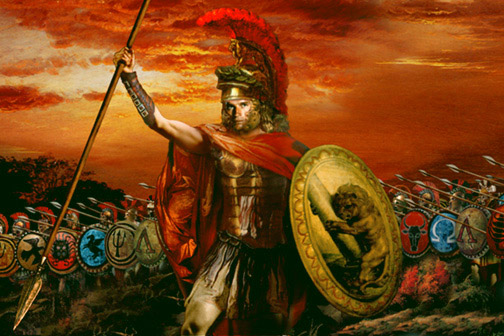

Usually the leader of such a group, whether it be local council or local church, submits them to the whims of their beloved, even if degradation is part of the privy to become members. It is uncomfortable to cite these distinctions, but necessary in the consideration of equality, equality in its true perspective. 

Whilst some individuals are certainly capable of bearing far more than others and by heading-up a particular group do serve that group with talents and expertise required, it is also a temptation for them to misinterpret their status and their standing, and also that the others may do the same.

Granted, there is always a Queen bee, and that Queen bee is distinguishably separate and different. But the Queen bee does not need to fall upon artificial means for establishing her role, and presume what she is not. She is what she is because of what she does and this is apparent.

In the case of men who assume the roles of leadership, many are appointed and continually overstate their position with irrelevant acts that pertain more to their standing, than their actual work effort. Badges and uniforms may have practical usage, but moreover are statements and license for a certain superiority assumed. It is quite a bizarre quirk that men in these times still feel the need for ego-identification in this way.

It is necessary for men to be able to be comfortable in almost any attire and greet others in like manner. There are stories which tell of this: stories of beggar-like men, or old wise women, who at the roadside are met by an unsuspecting soldier. Stories of the 'Frog Prince' and also 'Cinderella' - all which speak to us of first impressions and soul impressions, pertaining to judgments which are more relevant.


Costumes are insidious - they represent very little indeed. It is understandable, commendable for that matter, that one should assume a neat and tidy appearance or even embellish one's self with a flair of individuality. To wish to appear to 'look good' is either one step towards self-betterment or two steps towards the deceit of conceit. However, that which is worn not for the sake of the individual and their harmony, but rather as a statement of pomposity and stature, is at best silly.

Replication within a group is viewed as respect to that group and symbolic of the tenuous fibers which cross-link each member throughout; followed by certain customs ordained and patterns of behavior acceptable to the leader and the people in the group.


To any outsider who may happen upon such a group (be it Bowling Club or Masonic Lodge) one immediately finds uncomfortable the social statutes that pertain to participation. It is not the theme or the spirit of the group which is so off-putting, but rather all the accessories that accompany the purpose. If one views any club or group of people who have gathered with mutual interest in a particular domain, one will find that usually the organizational demands and the periphery conduct has consumed most of the time given to that group with uneven proportions.
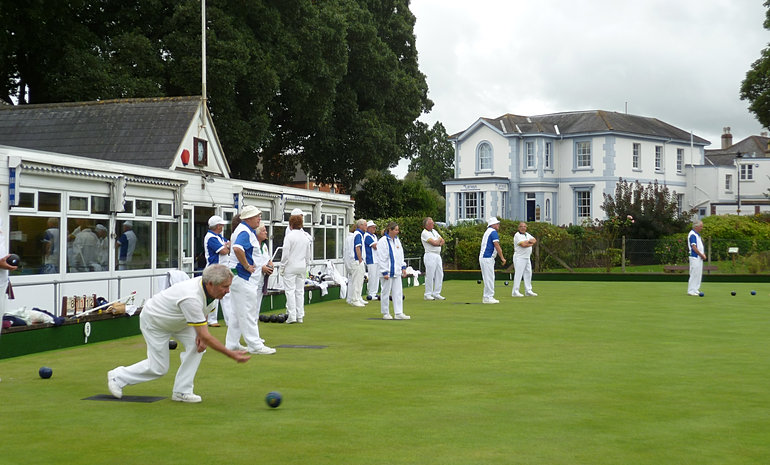

For example: The Bowling Club -
Many folk gather (or so they say) for the love of the game, in this instance bowling. They love also the uniforms, the badges and the trophies, the speeches and the afternoon tea, along with the afternoon gossip. Then there are meetings of designating positions, for there are those required to organize and those who must organize the organizers, and secretaries to the organizers of the organizers, and badges to be bought by someone for the echelon, arguments as to presidencies, Christmas parties and tournaments. None of which relate to the actual playing of the game; and in reality the participants of which, have a great interest in social politics with a little bowling recreation on the side. And so most suitably, one could call the group (of a particular suburb or town), 'The White Faction of Social Discourse and Discovery' or perhaps, 'The Lonely Hearts Club'.
When viewing a club one may call a spade a spade. Look to the heart of the club and find the diamond within. And then decide.

One does not suggest the abandonment of societies, but merely that an overview is essential, especially when conduct is claimed to be of first priority to that particular group. So many who might enjoy the game of bowling might be rebuked by the nature of those periphery activities that the club is so immersed in. They are simply turned away - especially if their desire was to simply play bowls.

Groups are open to misrepresentation. Clubs which are spiritually inclined, with a mix of serious and no-so-serious members, can unfortunately become entangled within limitations that should perhaps more correctly fall under a totally different name. No organization is beyond constant review.

One might ask, "If the people are happy, who cares? Who cares if the name and the activities do not correspond?" Or, "Who are we to judge?" And it is true to say that within the system which best supports an army, no soldier may question the authority of his officer. There is no provision for individuality or conscience and it is deemed acceptable to place infinite trust and responsibility with he whom we might call the 'General'. But is the way of conformity and denial of questioning the way of the Christian soldier? Too often men confuse the superiority of men with the authority of the One who truly gives back all respect paid. The dangers of conformity are the dangers of 'backing the wrong horse', so to speak.

Complacency is comfortable: it is an act of denying the conscience. But men must afford time to review all matters for themselves, and weigh them within their own judgment. Without self-questioning and the habit to cast further inquiries, they shall elevate on false premise only those attributes which in the end are meritless because they are unworked for.

This is not criticism for criticism's sake. It is asking for careful and cautious inquiry, when one meets with an awesome body of men that for whatever reason have gathered under one name. For all groups of men who give over their individualities and presume a particular identity, submit to some other in the association of those conformities. It is to great (as in large) consequence, when this is put to activity. 

Therefore, it is reasonable to ask the true nature of the operation and to be clear with honesty from the outset, and be vigilant that it remains true to its purpose or else restated for what it is.

There is a serious aspect to every activity of Man. Jokes aside, most problems occur because of the deficit of self-consciousness and awareness with honest review, that one may be better equipped with discernment before engaging in any conduct.

Conformity requires that men sleep, that their awareness is negated through habit, through ritual, through the similarities that if they place themselves beneath another, another may do their thinking for them. Although we are equally responsible, one may begin to perceive the dangerousness of compliance.

So many times we do bear from others and give over to their demands - slightly or greatly, we comply and conform. It is one thing to heed one's conscience, and perhaps reluctantly comply; it is better to love one's conscience and love one's duty, and give with complete love. But it is painful to be motivated against one's inner reckoning and force the individuality out from ourselves - and there are so many temptations to man to coerce him to do just that.


To lose one's individuality, to lose what consciousness we have- one can perceive this submission in so many modes of conduct. That we might be more perfect is to realize consciously that perfection. What is the point of perfection if we are to sleep through it? Or if another pre-attains it, on our behalf? Association is not enough. We cannot look to another man and truly expect a little of the glamour to rub off, that he may artificially do our work for us! 

Politeness does not need to go out the window. For in regards to the conscience, we regard its endeavors to meet with people kindly. The conscience will dictate much more about politeness, than conforming to table manners deemed acceptable. So true individuality does not mean to say that we ignore our brothers, and do as we please. True individuality means that we consult our conscience accordingly, rather than conform to another's. That we seek to err on the side of God, than the side of another man.

We try so hard to please others, but there are times when this causes pain to both ourselves and to them. We may do injury to someone by placing more burden of adulation on their shoulders, by asking them to be responsible, when in fact they do what they can, in the way they know how - no more and no less.

Who we choose to associate with and encourage with the submission of silence or with encouragement which is deceitful, that too may be injurious. One must learn to find the ways (tactfully) which severely assess and discriminate that which says it is from that which it really is.

This is what was meant by our alluding to a society which defined 'tea and biscuits' in its articles of association, that all men may partake as 'plate-bearers' and take their turn in the boiling of the water.

Saturday, September 12, 2009

Under the Tree- 29th August 1991

PICTURE a tree that is bearing much fruit with no piece the same. Bulbous they are, some teardrops, some globular, of many, many colors and hues - the mythical tree - alike to a Christmas fruit tree. Beneath the tree you sit, sustained by the droppings that come to you. They are not yours to pluck; you must await their heavy drop. Thud! Another. Ouch! Another.

Now you have many baskets, each full to top. You have gathered each precious fruit, and are solemnly careful not to bruise any one. Piles and piles heaped all around you. Plenty. So many! Each unique and wonderful.

This is our heart’s desire to distribute those fruits from this tree. They are weird and wonderful and of such variety. They have such tension within, pushing out to the skin. They are very much ripe, they are ready to be had.

Some with prickle, some with silk-like bristle, some as crimson as the lychee: both with flesh and nut concealed. Some with the red of an apple, bespeckled, some with juice and pip-seed.

As we enter into the Garden of Eternal Wonderings, scores of such trees, in this our orchard of faith. Trees of sacrifice who bear, each without pattern or distinction. They are with knotty twine and twisted longings; they are very, very old indeed.

In good charity we gather, we collect what we can. We work fast for opportunities, that the ripe vitalities not be wasted. How so to distribute? None with a label or a name, but with a purpose.

And so the field workers make convoys to deliver in steady haste to those with want in need. For the weakened who await this fruit, have now no means to come into this orchard for themselves - at least, at first. They must partake of that which is especial to them, and become renewed by the offerings from those who have brought their inner nourishment. One cannot go to the wretched and say "Go look for yourselves! There is much, there is plenty, there is all you need and more!" For the wretched are so depleted and spent, and in need of nurture, with mouths once filled with grain and now with the dirt. They are heaped and fallen on roads here and there; they are frightened and tired, immobilized and cold.

What use are great imaginings or tales, given to such poor fellows in need? Just one fruit administered will make fast the necessary recovery. That they too might venture forth, with light heart and light step, once more, to the walls to the orchard. The delirium that they suffered will melt away. The soul will be gratefully pleased, that the bounties of Heaven were not just simple myth.

That the greedy who scurry for grain and trough, have spent all effort of endurance. They may hold the fruit, turning it this way and that, and come to know its properties: by their taste, by their life; infilled with great and all-consuming fiery essences. Revivified, renewed, the disheartened are softened by the kindness of their offerings given. Awakened to prospects, they leap up and recover in an instant!

For we have cultivated this tree of many varieties, watered by Truth herself, and warmed by the impassioned Host: Caretakers of the orchard, grafting throughout the ages, now this, now that, from the produce of great men.


That the red may return to the bloodless lips who have murmured, in struggle, to form words of prayerful calling. Each man, upright, with a dignity restored, with the strength of a resonant heartbeat which knows no inner discord. May those lips smile again, may the soul be infilled, may the words of the Word, be thus distributed throughout the world!

Friday, September 11, 2009

Noah's Ark- 28th August 1991

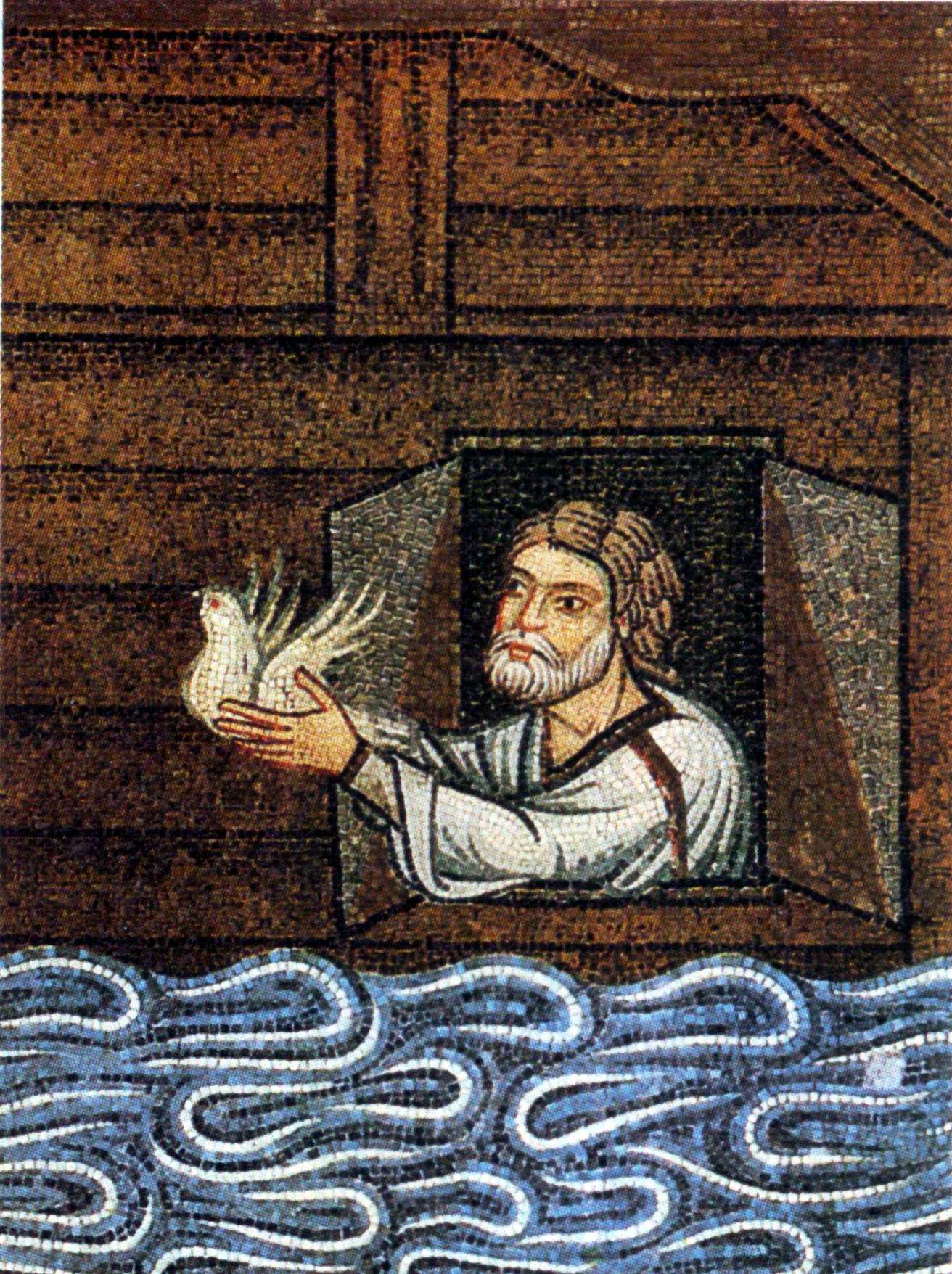
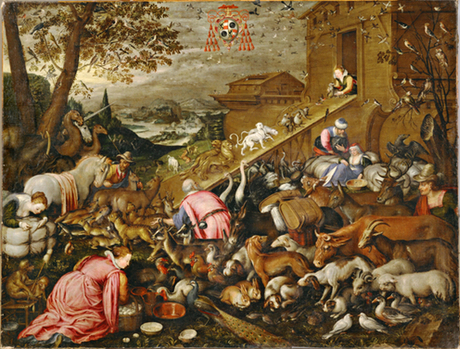
THE story of Noah's Ark gives to Man a representation of the animal souls which are so divided into species and type. A pair of each was in place; which is a true indication as to the nature of the souls attributed to a particular animal- being two, each with different and complementing aspects in and out of incarnation.

The animals so described need only the representative soul, which of itself is encompassed within the entire host of its species, outflowing and made manifest on the Earth.


Who therefore, was Noah in respect to the Animal Kingdom? The very saint, who was later known as Francis.

The souls contained in the Ark are so separated that they are afforded Earthly representation. They are bound in higher spheres with counterparts a’many who frequent the habitats suited to type and form. The Ark as pictured above the sea of existence, is still to this day protected and held. For Man has little concern, little sympathy for that of his own. He may barely know of that beast which he works and inhabits, let alone take time out to tend to the offspring of his own evolution.

There are caretakers of the gentle brothers, those who too need fostering and attending to. Noah was such a caretaker.

There was a split division made apparent in the beginning of the world. However too, there was much danger of those aspects rejoining with Man in a perilous way, in a course that would drive the higher aspects further from the consciousness, and develop artificially the now separate beast. And so seeing this, there was protective action thus taken, and the beasts became dumb with their souls so isolated from Man; withdrawn into the Ark and made separate.

They experience - and this was not taken from them. But the distinctions between Man and beast were of multifold aspect and unclear to the growing consciousness of Man. Many mixtures resulted from intimate relations between the two kingdoms, and many sought refuge in the company of those souls whose consciousness were of the beasts rather than rooted with the infant Man.

For there was envy among the lesser brothers, who were not so distant a relation as to recognise many an opportunity in time missed. And the aspects met with many a same standing, and it was not to be discounted that the similarities of the two would commune most happily. The discord and the arguments, the aggression and the dissension did come from a resentment as to who would take what place and rank upon the Earth.

There have been many epochs whereupon the individuality of a certain beast has been adored, and well respected, as a higher god of Man, rather than the soul of a particular reign. For the beasts too have their higher aspects and their flames of potentiality. 

It can be recognized in the etheric world of the plant kingdom as well, where there are exceedingly perfect expressions of harmony and consciousness rooted above the physical existence. And yet to men some would be but poison, whilst others would offer remedy. However the plant may not strangle the man, and does not aspire similarly.

The falling-out with the animal kingdom was put to great argument. One must recognize the problems which ensue, of import especially when the body of man is lent and refined, and objectively worked upon, owing much to those higher aspects called for by souls from the kingdoms below. Man became a split being and denied the animals, divorcing himself so. Fragments became Paradise - and with some left out and some left in, and some so encaged, whilst others given freedom. And still those which are bound to the confines of the Ark are reached with developed commune in the blood, bone and organ of Man.


So persuasive are these individualities and yet so distinctly separate from Man. Some endearing and some now so loathsome, it was imperative that the divisions be reinforced and distinctions be set in place. The argument was to cease, Man goes about the world expecting total obeisance from the beast, the flesh absorbed into constitution, the tendencies imbuing in the astral. Some are drawn into fields for labor and some into domestic subservience. The domination of man is defined although not entirely, for there is much aggression between the two and conflict to be resolved. They must wait their turn, and are held back from otherwise. There is much experience expedient to this, and they are dependent largely upon Man and his progression from here. Whenever there is a consciousness shift, there is division. And this was necessary for the advancement of Man.

Thursday, September 10, 2009

Extinction of Species- 28th August 1991

THE inebriated hippopotamus (related to the pig) characteristically is as blubbery around the circumference as are the folds and wrinkles of the mud beneath his gait. Little hippos are immensely cute and pleasurable to look upon, whilst their elders are simply immense; and the details of distinction separate with much bodily mass pushing features out to the periphery.

Here we have a form from the 'old world', of which the inhabitants remaining are few. His bulk is now accentuated, with pound by pound of fluidic fat; and the definitive characteristics are succumbing, in frame and in pattern, to the biological 'blowout'.

Compared to his ancestral primates he is disproportionately disadvantaged. His hefty weight inhibits full movement, his nature has slowed. He could no longer make it on the dance floor! Remembering too, that all animals bear conditions today which were not necessarily unique to the past, from which they were first adapting to and resulting from.

His teeth stand like separate posts and are seldom used. His neck has little flex. He seeks the water to assist him in bearing his weight; without which, dozing awhile, his leathery hide is stretched and cracked under the strength of the sun.

He is not what you might call a perfect example of an animal. And should any protest at this statement, one might suggest that they inquire of the hippopotamus if he is particularly satisfied with his present condition.

There are many animals today which bear characteristics which become so inflamed and developed in ways which weaken the species and detract from necessity, proving more awkward than useful, and much speculation as to how certain traits remained or did change, now to the detriment of the animal which suffers the end result. There are of course limits to deformative evolution, for were there no limits, the progressive changes would be exceedingly gross and the animal kingdom so split with forms and faces bizarre and extreme. In the context however that we speak, that being over a relatively short period indeed, we do find that within a single species there is a sequence of physical formation which is predetermined and quite definite. 

One may view the evolution of a certain species in terms of a single lifetime which has its end, and altogether withdraws into extinction eventually. There is much grief heartfelt at the loss of a particular species, and perhaps one may be consoled in the knowledge that such withdrawal from earthly manifestation is in fact predetermined and considered naturally.

Were the hippopotamus to become extinct tomorrow, he would, after a certain period of quiescence, return back into the animal kingdom to resume re-embodiment; summoning together those features which are much worked-upon and refined. This is not to say that he would resemble the features he might currently dress himself in. But having been freed from certain characteristics, he would recover those forces which totally inspired his being in the first instance, and become anew. (A new what? Maybe a bippo?)

Jokes aside, this has happened within the evolution of the animal kingdom more often than is commonly realised. Men may dig for remnants of former prehistory beasts, without the perception that understands their being amongst the flocks and herds today, walking the earth, as ever. Not much in physical existence remains the same, or for that matter, remotely similar in time to its former form and structure. There are tendencies amongst the materialists to cling to that which they are presently accustomed to, and regard all else as vile perversion. 

Yes, there is some sadness in the fact that the beauty of a certain period shall be lost to the past (if lost is the correct term, of course). There is a phrase: 'in living memory', which implies that it is in the memory of those living. We might suggest that there is such a thing as 'living memory' which stands alone, needing not to be carried by the firsthand memorizer; and that one day all men shall find records to their heart’s content, which shall speak to them of their former periods, better than a scrapbook or a museum, but through that vision of the 'living memory' they will indeed peruse at will.

Currently there are cycles of birth, life, death and rebirth, which assume characteristics of infancy, youth, middle-age and old-age, whilst in manifestation. These shifts from one to another occur throughout a species, similarly as they do apply to a race of men, and men themselves.

Sometime in the very distant future there will come a day when the physical characteristics of man and beast may perfect throughout a life, evolving for the better rather than deteriorating throughout the ages. And also the two very much go hand in hand. 

At present a man may improve his health if it begins in such a way as to be something less than what it could be. However, he cannot improve upon features and characteristics, function and longevity, which is not afforded at birth. One may not grow younger. One may not grow a third arm, but may lose an arm. We may repair and rejuvenate some of what we already have to repair and rejuvenate, but we may not 'add' throughout a lifetime, growing stronger thereby. This condition is conceivably possible for Man, and for beasts in times ahead; and the animal kingdom must await this opportunity for great change in this respect, to occur.


Meanwhile, the system of cyclic re-embodiment refers to all manifestation, and affords the opportunities for change which cannot be effected physically, without retirement into death; or in the instance of an animal species, retirement into extinction, enabling the freedom to begin again. Having said this we do no service to a species to further speedy extinction, for the timing of such is largely determined - quite rightly - by that which is the animal itself. One need not interrupt their evolution and explain it as being of no consequence. However, in the event of there being little left than a memory, one might also realize that the animals today have altered in appearance considerably to those that we used to enjoy the company of.

And too, we are all afforded great opportunities for change, change in expression, and change in acquired characteristics - and the complexities may elude us at times, and the significance may not be comprehended, but the calls of necessity are answered to all. Nature always gives provision for new opportunity: the balance of renewal and regeneration. 


My Blog List

Followers

Esoteric Christianity Archive