Problem h: Enthusiasm & Joy in relation to Arterial Self-deciding
A man has two balloons. One balloon is inside the other. If he inflates the interior bladder it enlarges the outer also. If he were to inflate the outer balloon first, he could then expand the inner balloon to a smaller dimension, resulting in a space existing between the two walls of the two spheres.
Commentary:
When a man feels happy he expands. With a joy experienced or with a laugh rising up and out of him, an inner truth just realized, an ecstatic recall, or in a jovial interlude to an otherwise soberside day ... he experiences within his many bodies of being, an expansion.
One could even come to view the ballooning universe as a similar joy which pervades the cosmic ethers in this period - the same with the opening a flower as it enlarges the bud and increases its swelling. This happiness pushes the outer boundaries and works the spaces…those spaces which are as the deciding pause through which the happiness may increase and expand out further.
The physics of happiness and joy in relation to arterial deciding is different to that happiness which is obtained without self-effort. By this it is meant that we can distinguish the experience differently from the natural joys abounding which we ourselves have had little or no conscious working upon.
Arterial deciding means that we have involved our ego along with our personal signature, and that our relationship with whatever has produced the happiness now made unique by this our involvement. It also implies that we are consciously far more aware of the properties and qualities and so forth. If my soul appreciates the artistry of nature and the ego is enveloped in a beauty, then there becomes a very small requirement in my active participation, for the experience itself largely rests upon the impression and the receiving, not the deciding and the doing.
The 'pursuit of happiness' as a God-given right is suggesting from the outset that the happiness requires an effort to be striven for - a 'pursuit', rather than it merely happening upon us and teeming around most naturally.
So it is to the arterial experience we look further to, returning to the question as to why it is that our happiest responses may become blocked or unfelt when we release ourselves to those choices which correspond best to its desire and deciding.
If I place a balloon within a balloon, and the inner bladder is expanded so far as to meet with the wall of the outer (which has already been advanced) then it shall be where those edges meet that there is an acknowledgment occurring. If they do not touch, one does not meet with the other, even though it is that one does contain the other and do both share same stem regardless. Thus with the swelling it is the inner skin which advances up to that of the outer, and once reaching the extremity it pushes the outer skin yet further. If there were no inner skin strength there would be nothing to take up the outer layer beyond itself. This example is crude in concept, but suffices in the explanation of this process. It is at the point of their first touching that the experience of awareness would take place. If, on the other hand the inner balloon expanded the outer from the beginning, the two membranes together would move as one without the distinction that was in the experience.

Within the many substances of a man there are these ballooning peripheries. Our astral experiences which unite our bodies here in the physical world, as too our etheric forces which combine and circulate around the physical also, do so with this balloon within balloon (within balloon) conjunctures. Periphery touches periphery. Men shrink and men expand. Above all there are times in the expansion when momentum carries them outward, but there cannot be an experience of this until it has gone to where it can go no further; and contacting, literally contacting, it then it is felt. If you stop to consider something which invokes a sensation of happiness rising within you, you will know of this description then, feeling the expansion and meeting in gentle experience.
Now to add to this just a little bit further: when a man concentrates his activity and attention upon an explicit deciding (a refusal is usually more exacting than an affirmative) he goes through the action of contraction by the very concerting involved. He temporarily narrows down to whatever it is requires his full consciousness; whilst also the consciousness itself involves something of a contractive effort as well. For this it might be said therefore, that the opposite to happiness is consciousness, implying then that consciousness is unhappiness. However, this is not an instance of an either/or. It takes one to know the other, just as simply as it also takes one membranous wall to meet with another and forge through the spaces between before there can be validity and experience given to either.
The nature of the arterial decision so told, is one that is deliberate and true to the constants of that individual. If we are told that our own fleece is to be removed from our backs (skin and all) we are not necessarily going to experience a great happiness because it no longer will happen. This is not a causal factor to an arterial happiness. If someone wishes to take from you what is yours to begin with, it is more of a relief to refuse this happening than a joy.
The question then goes on to ask, if it should be that we may so entirely partake in what we have chosen to do, may we then also rejoice and fully enter into it. With time, this is most perfectly effected, because of the concentrated deliberation which has taken place originally within the arterial nature. For the man who invests himself in deliberateness - prudent or passionate - there is a concentration of mindful reflection before the will is exacted, and he shall contract and expand with a far greater action and periphery than the individual who has not the conscious working or contrast afforded him.
Intention becomes in-tension. The contraction back from the world and all of its influences drives us down the arterial highway to our Father, that we may return with the determinative velocity of further happiness once the decision has been released and then executed.

Problem g: Refusal to Others & Guilt
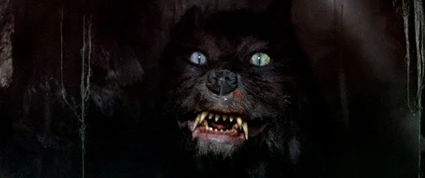
A conglomerate of sheep stood huddled atop a windswept hillside, when one moonlit night they were happened upon by a group of mangy wolves. The wolves slinked and sidled up to each one offering to purchase their fleece. Each sheep was asked and each sheep said no, because their coats weren't yet full grown and besides which they did belong to the farmer.
"Bah!" said the wolves in disgust.
"Baah!" trembled the sheep.
Then the wolves persisted. "What use have you for all that wool?" they asked, “When we, flea bit and scruffy, could do with some of that warmth? Do we not feel the cold too? Do we not need some of that wool?" they pleaded with a sour note of innuendo.
The wolves persisted, "Let us have your fleece and we will promise that you shall never feel the cold again." Their eyes glinted red with desire.
The wolves persisted still further. "If you do not comply we shall return and take your young and then raise them for our own. If it is not to be your coats it will be theirs!"
To this the sheep murmured fearfully.
Triumphantly the wolves urged once more, "Just follow us down to our cave by the valley. It won't take long we assure you. It will be all done before you know it."
All but one followed them down.
The one who remained felt the dread of the lone decision he'd made. He circled the top of that hill until the sun rose high, and all the while regretted that he too had not gone along with his friends. The promises and the threat was still fresh in his mind. Perhaps, since it was that they had not yet returned, he still had time to do as they have done, and so he decided anew to follow on down.
He came to the bottom of that now loneliest of hills and he found the cave as they had described; but not his friends, just piles of bloodied bones strewn all over, lying haphazard in the grass.
Within a day or so our little sheep had found a flock to relocate to. He was accepted well enough, and though they were not of his family there was comfort in his kind. Now and then he would journey back out to the hilltop in hope of their return, but every time he would venture back with a heavy heart and disappointment.
One night when the moon was full-swollen but hid behind a mass of silver-lit cloud, our little sheep was surprised to see a flock in the distance coming up over the next paddock to greet them. This was unusual for sheep, to find them traveling at night, but oh! his heart jumped at the thought that it might well be his family out searching for him. As they drew closer he looked hard and thought to himself that he did actually recognize the fleece of one to be that of his dear cousin! Oh joy!
But alas it was not, it was instead a group of wolves, same wolves, in sheep disguise. All at once our maverick sheep felt the dreaded truth about this and that night. He called out to his newly found friends, "Save yourselves and do not trust these wolves!"
But the sheep blinked sleepily and ignored what they thought was his silliness. Our little sheep was all in a tremble and sick with upset. He turned and fled the paddock leaving the field just as the band of deceiving dogs tore upon them.
From his hillside home he could hear their cries and he wept feeling his helplessness and the shame of having left them. Once more he was alone and more alone he felt than ever, this time with an immeasurable loneliness, a condemning, unreasoning sense of self-darkness. He cried at the cold moon and the shadows that it cast.
Just then there came out from the darkness a luminescent glow that grew as brilliant as sunshine itself. With the Moon still high this could not be so, quizzed the sheep to himself, and forgetting his upset he began towards the light.
A figure stepped out from this brilliance and came towards him. Extending His hand he beckoned for the sheep to advance. This gracious Shepherd drove the very fear of the night away by His presence; and behind him our sheep could see with ethereal splendor his own family, all huddled together amongst the glow.
The Shepherd then led our little sheep through further fields until he arrived at a paddock which was fenced quite high and right beside a sturdy, well kept farmhouse, with many sheep there besides.
"You will be safe here" He said, "and" he then added, "if you are ever lost or in trouble again I shall be there to save you".
He then disappeared and the ethereal flock vanished away with Him also, and our sheep remembered His parting words ever on, and was happy.
Commentary:
Beast fables have long provided us with some certain knowledge concerning distinct attributes given to a man, whether these attributes be within the outer world or in latent virtue or simply perhaps in kindred quality pertaining to cosmic forces which are common to both.
There is nothing which is known to Man that is not of Man in some part, some measure, therefore the enterprise of any soul-picture story is that it will work upon an individual with an explanation that is inherently known as a truth in the way that it is given. The beasts to this extent may not only allegorically provide an imaginary key into the esoteric reality involved, but also in the contemplation simply of their form itself, bring about an understanding of the nature that they have come to stand for as well.
Children decipher these forms with delight. Not only with animals do young people grasp the 'nature' of the nature that is contained in them. They are intuitively happier to wear the image of the Sun for example, instead of the abstract symbol of the Cross - which in later years shall come to hold more significance (consciously and unconsciously); which is a direct change from youth into maturity.
Pictures translate into symbols, words into the alphabet. The inner-sight draws from form to create the words, as the soft round lines of a child are later given to the more angular protuberances of the defined man.
The question which begins to set upon the guidance and advice from other beings or people, states that there is a risk of the Arterial Self becoming inflicted sorely by those who should wish a control over us. Firstly we may say that the two do not imply each other, i.e. the giving of good guidance and advice does not imply the wish of one to control another, in point of fact that would be then to dual purpose. Good guiding advice is enstrengthening and liberating (through being informative) and a service to those to whom it is offered to.
However the issue is that of those who have overplayed their roles and so confused identity as to will or want a man to become as they; and this occurs so frequently in manifest attitude and behavior that all men are quite used to this subtle oppression.
In addition to this, there does become the difficulty in forever pushing back from ourselves these recommendations and askings which have cause to contrast our own desires. Another man can never be truly qualified to interpret the needs of his brother over the reasonings of that brother, and nor can he reasonably ask for anything which is hesitantly given.
This comes of the law once again, which has to protect the distinctions of each and every individual, and there can be no two ways about this in the principle, because it is by such divisioning we may endure with our continental (separate) selves.
Were that men and women were the same, there would be no defining contrast to know and love them by. The price of sameness would be death to that which was imitated. That is why in true redemption we do actually maintain our composites, only to requisition them with a work-perfected detail.
We began the issue of the refusal of others, with a story so old you have probably heard it many lifetimes before. Certainly you would have known of the properties of the oily wool, perhaps woven the thread or pounded the felt - regardless, we have all, in one way or another sequestered the fleece from the sheep for our own garb.
The unity of the sheep was broken by the one who did not choose to give in to the promptings which came from the evil-natured dogs of the Moon. The wolves represent remarkably, the carryover from the past, the olden times, which should have been laid to rest but rather comes over to steal from the future.
In a manner alike to all standover persuasionings, the wolfish dialogue offers firstly a ploy, a pleasing, a promise and then a threat. We can note, that when men go to the length of finishing up their requests of us in threats, veiled or maintained, we may be apt to realize that this is indicative of past forces which are pushing to relive beyond their given time.
The action of forceful negotiation proves that the powers are weakening, so that they need draw from unlawful means for their prolongment. Here is where our dear donkey becomes a wolf - when the habitual patterns as ghostly remains, continue on with a persistence to survive, outlasting their usefulness and then turning evil when continuing on, out of the context of their value.
This problem occurs throughout the Cosmic wars. We find patterns also of this in bacterial onslaught, when that which was once rightfully useful in its role, demands a continuance which is not relevant or needed, and thus becomes threateningly dangerous to the new birth begun.
Even moments age. Our Arterial Self must determine exactly what is relevant in time, to our time and our being. The refusal to others who would have us do otherwise brings about the same depressive shame our sheep did feel in leaving his party behind.
If you are to go forward you may well have to leave some things behind you. As we progressively move into further thinking and to higher reaches of aspiration beyond the commonplace thought, it is with the sufferance of all pioneers who know the sadness in leaving behind the familiar home from which they've grown. Yet there is small comfort in this home as it has become, for it too has changed has it not? Our memories can savor the innocent and uncomplicated, the golden age, the uncorrupted; but in truth even the familiar can turn foreign to us in time. What brought nurture to the soul has found its place elsewhere to go and what remains in time is seeming only.
However, Christ is always waiting in the Future there for Man, for all men. Whatever the ways that wend towards the future, He holds the outcome as the only security we'll want for. He maintains our futures, so that the wolves of past ways can never come to claim our days to come.
Problem f: Self Refusal & Guilt
"You have never complained before about it."
"No, I know that… it's just that I don't want to continue on.”
"But I need you, we need you - everything depends on you" he sighed.
Commentary:
This passage alone incites a heaviness of heart we have all encountered, a reticence, a crossroad when our own wishes are specifically put aside in preference for another.
The Arterial Self can decide upon a sufferance and joyfully reinterpret the meanings of its own importance to projects and people. However if a man denies his true inclinations of heart, and of the choosing of the man within constantly, he will be brought back to the same experience repeatedly until he heeds his own soul requirements. In other words he will be called upon time and time again to forfeit himself in same or similar manner, until he recognizes that this is not to be so.
Men repeatedly sacrifice themselves to a substance or a god of that substance, to an elemental which has further license over the usefulness of their habitual behavior than they have. They lend themselves to material and worldly desires; so ambitious that their spirituality is wrung out in the clamor to gather. They spend themselves with much 'wrong change', as in the example of the shop assistant where he (the Arterial Self) stands in judgment amongst the woman (his soul); the righteous man (his 'Higher Self' determining); the thief (the elemental nature which accompanies him); and the manager (his Higher Ego/self-reflection).
So if he continues on denying his Arterial Self's choosing, there shall come the time when what is asked of him becomes disproportionately horrific to his mind and fills him with a trepidation; and it can be, quite sadly, that breakdowns occur in consequence during the simplest of tasks which were proceeding with those requirements which he reluctantly fulfilled.
This resistance set about within his Arterial Self will manifest through illness or anxiety eventually; and simply put, with either death or gibberish, he shall make his final escape away.
We can appreciate demands in the context that most men inherently desire to serve and fulfill a service. It is natural for Man to wish to please those about him, and instinctual for him to be protective, endearing and beneficent. This does not, on the other hand, mean to say that he be required to be any one of these things by another - unless it be a child that does ask this regarding an immediate need.
Our artery to God affords us any noble enterprise as a natural desire, and when it comes to pass that the man, through necessity, needs to decide also to care for himself, this too is most realistic and necessary. If he does not know the virtue of serving his true self and being obedient to his needs as well as those of others, then he shall not have the composite to understand. If we ask a man to comply with something which runs contrary to his inner deciding, then we are corrupting him for future usefulness in this particular way.
In other words if he goes against his self to live as yet another one would, he will nonetheless go against them also eventually, as this is the 'skill' he has adapted in the sin against himself. If he learns to ignore his inner callings he learns also to ignore the calls of others; and so it is beyond reason that we should believe this form of sacrifice to have a healthy outcome. Often it is also, that the man who cares not for the world comes to expect as a consequence, the same veneerial [as in 'veneer'] lifestyle from others. Unless we acknowledge that there are decisions to be worked upon from time to time, our wills will become flaccid and anemic in their action.

The wills of men are as essential to the Holy Spirit as it is to they. It requires a great confidence of self and in self, in order that we may execute our wills rejoicingly. There is a distinction to be made within the Arterial Self as to the difference between vain and empty indulgences as opposed to the higher action of will committing with perfect action.
We have regularly maintained that there are always the two basic choices to go by: that which is of life and that which is of death. All decisions and subsequent motivations may be simply weighed in these terms - choosing behalf of life (within me or without me), or whether or not it leads to death.
Some activities are worse than fruitless and a hindrance to the man who might spend a lifetime endorsing them. If he has engaged in subjecting his consciousness to a death (intoxication); if he has learnt to 'waste' time for the very purpose of it; if he has deliberately derided another and worked for their downfall; if he has given himself to gambling and the subsequent recklessness it requires; if he 'martyrs' himself to a cause that he does not believe in for a secondary concern (monetary gain for example), then these and the many other concessions, will cost him his overall enthusiasm to life; for death soon dissolves our great enthusiasm.
Having said that there is also a measure of consternation experienced by those who proceed to do what they have weighed within themselves to be right to execute. For some there is a self-doubt or a guilt which may carry over, spilling into even the happiest or pronounced of decisions.
If the self-doubt provides no good purpose after the arterial deciding has been done, what then, we may ask, is the reason and the remedy for it?

Problem e: Others' Impressions of Us
There is a man serving behind the counter of a shop. Three people stand waiting as he is talking to the customer he is giving change to. As it turns out he mistakenly gives back the wrong money, and the customer then tells this to him.
The person beside him is a 'good living' man who is quick to mentally check all others' incongruities. He immediately assumes that the shop assistant meant to pocket the money if not caught.
The young chap beside him waiting, is an unashamed thief who enjoys the drama and excitement of suspicion. His estimation of the shop assistant grew in that one moment, surmising that even though the fellow was 'caught', he handled himself marvelously anyhow.
The third was a little further away from the happening and did not see the transaction at all. This was the manager, the overseer, who would reserve just a little doubt about him ever after.
The person to whom the wrong money was passed had not thought ill of the shop assistant at all, but took it to be just a genuine mistake, largely because she was enjoying the conversation so much with him, flattered by his attention. He had not been flirting as she had interpreted it, but had rather been nervous for it was his very first day, and he was after all, trying to create a good impression.
Commentary:
From this example we can get a very clear understanding of the unreliability these subjective impressionings can offer. Often as not it is the unusual which stands out as a noteworthy recollection and is so imparted to the man himself, rather than that which he may truly be known by.
The man behind the counter in the shop assistant’s uniform may be a man of any vocational caliber. His personality, open and good humored, he may be any man who could fumble the currency, but in the minds of the onlookers he is tinged with the dispute of his very worthiness.
Intuitively, men know just how far wrong these judgments are apt to be. They personally indulge in such assessments daily; and for good reason also, as it becomes a means to future discrimination as to their own behavior and needs of refinement. So it is, as they say, unavoidable.
We are showered with opinion and rarely is it of the strengthening variety. However, if indeed it is, and has come from such a person who perceives you to hold the most wonderful and admirable attributes, then it becomes an etheric enhancement which then brings about a vitality into the immediate aura of the man, assisting him with his further applications of true selfhood.
In contrast to this we find that the more negative the conjecture (whether it be true or false in its surmise) brings about the general feeling within the sufferer that everybody and everything is accusing him - just as baby Orpheus understood the Moon to condemn him, and the argument with the Wind and the Grass. The result is that there are many ill-tempered souls who are viewing each other suspiciously, feeling each other's unrest.
The Arterial Self is painfully aware of these mismatched affections and kinships. Fortunately a true love, a true knowing between one and another may arterially link both souls and they to God.
My Blog List
-
Differences Between Boys & Girls - Rudolf Steiner
-
We can then see, beginning at puberty, in the outer behavior of both girls
and boys, something that often baffles their parents and teachers,
something t...
-
Wagner & Buddhism
-
There is an amalgamation of Buddhism and Christianity in *"Parsifal".*
This, as we know, is also one of the hallmarks of Manichaeism.
Richard Wagner was...
-
Chapter 14- Reaching for the Stars, Exercise 1
-
*Exercise 1*
*Tools required:*
- *A Questionnaire*
- *A conversational partner*
Concluding a conversation, ask the person you have been in ...
-
Augustine Asks the Big Questions
-
Augustine in his Confessions 6:9 asks: tell me, O merciful One, in pity
tell a pitiful creature whether my infancy followed yet an earlier age of
my life t...
Esoteric Christianity Archive