Translate

A CLUB OF SUPERNAL INTERESTS Christian Esotericism, Spiritual Science, Esoteric Christianity - All Authored by a Lodge of Christian Teachers (unless otherwise stated.) (All writings copyright) ©

Thursday, January 7, 2010

Sound in the Ether- 27th June 1992

TELEPORTATIONS, precipitations and rappings, used in the past to be a common occurrence. The ethers, audibly, tangibly, could carry those sounds as given out; whilst also as steady and as coherent as to allow transportation of far flung objects. Neither of the two phenomena occurs today; certainly nothing so significant. However these occurrences were usually blamed upon the nixies or the dead; depending upon it being a 'knock on wood' or a saucepan flung at the head!


The sub-physical properties of the ethers, and also concurrently, those within immediate range thereof, do vary from location to location, dependent upon: hemisphere, climate, proximity to sea, altitude and interference (from a number of influences). Much the same as the quality of the air may be measured, so too may the finer attributes of uncontaminated atmospheres, impressionable or fully impressioned, be actually, measurably significant. Just as visibility through crystal is superior to transparencies otherwise, so too the properties utilized within the ethers translate impressions back to men with defined resonance and clarity, marginally affected.

It is interesting is it not, that people often speak of 'clearing the air'. Of course this usually refers to honesty, but is as good a colloquialism to cite as any. In this instance 'clearing the air' shall refer to the attempt to actually improve those conditions of surrounding and immediate ethers, that they might be in accordance with those aspects most suitable to wholesome, healthy, enlightening discourse, meditation or prayer - that the atmosphere be relieved, be unencumbered. Of course this should be a tall order particularly if one were to approach this task as a fanatic; but we talk in terms of improving conditions rather than seeking complete purification. 


Of the favored practices today, we find that folk do often sprinkle the water, light the candle and incense, ring the bells, the gongs or whatever, chant, incant, cut the air in imaginative motion, sit in circles, etc. etc., and or pray.

Now the practice of the above list is fine and quite helpful, and certainly does make a difference (which we shall outline in a moment). However it is the last consideration which is of the greatest difference; and as one may often start with an opening prayer, it is advisable to include in this conferment, the wish and the need for a 'clearing of the ethers'. Because the very sobriety of prayer does indeed clear the room of unsavory influences to begin with - those which cannot tolerate prayer evacuate readily - one is halfway there to the whole job done. Furthermore, conditions surrounding one may be altered and attuned; but only if asked for, envisualized and concentrated upon. For not all have the good fortune to sit acrest a mountain top or bathe in the crystalline air of the sacred. One is impinged upon by influence upon influence; nothing which would particularly upset or hinder a man of itself, but does not make for a good response time, set in the spaces between a man and his thought. 

The singer will know this. That as the words issue melodically, there is a marked difference in perception on behalf of the singer, and for that matter any others who may be in proximity.
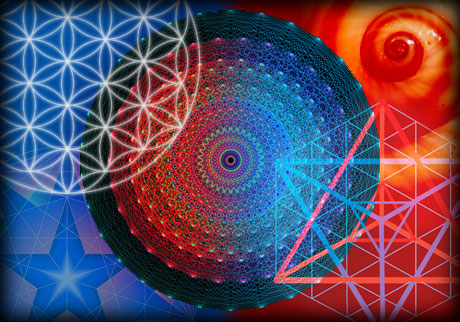

The spoken word is melodic in part, but with a predetermined meter and such inflections that are designed to be impressioned by the man speaking them, but also to be received cordially. One may usually sense the boundaries of such, although some have a problem with this. We may look at the differences and implications of each. There is a range of projection, not so much as from loudness to silence (although this of course does make similar exchange), but from melodic to monotone. The difference of delivery style and its subsequent understanding from those who receive is not only because of their perception in relation to melody or drone, but also how exactly the veritable ethers are subjected by such an issue.

Melody quickens, melody weaves in and out with each note enlivening and enlightening (like highlighting) those aspects of the ethers which are responsive to those particular notes - thus making for ready impression for those within proximity to experience it. A drone, on the other hand, stimulates only a small and concentrated portion with little impact, very little attractive impact, and the men concerned do not respond, because the droning has not stimulated those etheric notes which are to men inspiring. One may be able to gauge from this that the practice of clearing the ethers does also enable one to impress and receive a more accurate and clear response to that sympathetic resonance as described.

It is not that the music permeates all of the ethers, but that they are enlivened and stimulated, sympathetically throughout. Conversely, particular notes within particular ranges do belong to particular ethers, so that the family are held within the multiphased vitality-fluids which circulate within specific ranges.

The studies made of actual sound expressions phonetically would be enriched if one understood also the equations of tone/note/sound expression. Sounds have parent notes, but also of course are coupled with the complete range of notes. The example of 'g': guh, the 'g' sound does infer differing meanings, differing expressions, embodied by different notes. For the 'g' sound, as with all other sounds, is the delivery of a note, not a note of itself. It is precisely the form of the delivery which certainly makes up the nature of that given note. However, the note itself will determine the character of the sound.

Now in the case of your friend's therapies*, quite often the men and women concerned would feel their own way into the notes that they were to produce, because it is coming from themselves in order that subsequent remedies for themselves be made way for: Coffee just as you like it!
However, in the case of affecting others than yourself - with a particular point in mind - the relationship of such sound to notes is as important as paint-pigment is to water, is to painting; and too, from where the notes do issue forth. 


One can say that there is always an intrinsic difference between that which is imparted, issued by way of a living, live, emanating being, as opposed to that which is imparted through mechanical or lifeless delivery. Furthermore there shall also be a difference between the notes as given through a trumpet blown by a man and those which are pumped - measurably etherically different. (Although this will not apply to an electronic organ being played, or on remote relay.) The old test with plant growth would clearly establish such differing characteristics as performed in the instance of 'live' noise as distinct from just noise.

In the case of 'live noise' emanating as from a living being, radiating out, as it were, we find that all sound is characteristically imbued by he who does issue. So we find that there is yet another characteristic to our sound/note: it carries a persona of its own. Furthermore, there are only parts or traits, which do correspond with the note issued, and in likeness and in emphasis of the moment, there is but a fragment of the man (or being) delivered with the sound/note determination. 

Communication is basic to the imparting and receiving of these impressions so carried and illumined with the ethers. Whether vocally reproduced or mentally imparted or received, it is sequence and color rather than word, which mark out the notations of communication. It is pure expression, rather than abstract symbolism. Communication imparts that which is, firstly and lastly.

If one wonders how folk communicate otherwise, without sympathy to this, the answer of course is that maybe within their thinking they are indeed clumsy, confused and unsympathetic to their true forms of communication. Which we might add, they do indeed take part in and live by, known to them or not. It is not a matter of acquiring any new talents here at all, but rather signifying that which we do already in reality go by.

It is also true to say that a repressed man will "hold it all in", and there is much would-be expression there, so closely bound to the chest with much pressure besides. For we may measure our activity by way of that which we give out (surrender) of ourselves into the world. 

For some, all movements are forced or as clumsy, which they themselves would testify to, that there is an awkwardness which gives an impression of frozen limbs or a fragmented motion. A child who is silenced excessively may well suffer from this later on into adult life. He may not cry, he may not release, and he may not subsequently endure well. He cannot sing, he is quietly spoken - or drastically overbearing at those times when regulation ceases. He inwardly stutters and hesitates. Many a child was cuffed around the head for 'making too much noise'. This noise is what we give out firstly by way of experiencing 'the water' so to speak, it is the primary and first expression - be it enhanced with joy, with love, and so forth. 

The 'screaming therapies' as undignified as they are, can be profoundly useful to the individual who suffers these inhibitions; providing that one does not direct the screaming at anyone or anything- not even with anger, and not at themselves or the past- just purely creating a din, for a time set by them, in a suitable and convenient place. Controlled outbursts will encourage the individual to begin such release as was stifled in the past. 

Each star in the sky pulses with radiant sound- that sound which it emanates of its own, and that which communicates to it. Such symphonies as are the galaxies, are about our activity within our own microcosmic world, right here in our surrounding ethers; circulating too, through that which makes for the bodily constitution.

An honest word spoken - especially one with kind intent - is issued necessarily from the key of sincerity. Half-hearted ejections are spawned to a wind which flies back into the face of the pronouncer. The two are very, very different indeed. One can test honesty and lies upon a plant also. A man may be made quite ill by keeping in the company of lies. The reason for this being, that there are indeed mixed signals whereby he who meets with a lie can and does distinguish the reality of it, regardless of what the overriding consciousness submits to. To keep balance of the two counter-projections and make accommodation for such within oneself, makes for a strenuous and taxing existence.
Many actors fall prematurely ill or to despair for this reason. Of course in the case of an actor he does unwittingly pronounce lies - in the sense of his adopted persona - but even this is enough to cause a reality of conflicting soul impressions, as well as altering the etheric make-up sufficiently to cause much damage.

What of the speechless monk? In humility he says to the world "I shall be no more significant than a flea on the dog's back of community!" But because of such silence he is not stronger in those aspects which would have been to the good had he not weakened his potencies of production. For one must draw from the well that the well might replenish; this is the law as regards all inexhaustible gifts of the soul. In the case of silence we find that a man who withholds intentionally as prerogative, places such limits which become incorporated as habit to him and that there will come a day of no choice. However, if in open prayer or psalm or quiet mutterings, he does keep in practice, then the explicit words stream into the ethers with greater intensity. 
*Philophonetics

Wednesday, January 6, 2010

The Grim Troubadour, part 2


A mission of Christ was to free any man afflicted by a 'seal', by an 'imprint', by a mark which claimed as the mule. What on Earth do people imagine that our beloved Christ came particularly to do? And what is there, that he cannot do for those who abide with Him?..... The old Egyptians would have their ways! They stalk, they pace, defile, degrade and then disgrace!

We cannot speak of seals in great detail. To do so would become a prescription for such - and that is not desirous. However, what may be said is that this attachment within a man does not dissolve and does not become incorporated within his being after death. One does not bear artificial appendages that are 'withdrawable' - transferable, yes, withdrawable in and out of incarnation, no. 

The 'Keeper of the Seals' was the term given to the chief hierophant, who, during spells of initiatory ingestions required that the subservient pupil would allow such seals afforded to them, as a mark of their lodge, of their school, of their faction; and such were imposed, given and known only to the hierophant whose jurisdiction prevailed. In times of initiations into spheres, venturing into planes, such relationships were as linkages, from pupil to master - like a lifeline from one to the other, and thus they stayed. Such seals did however have definite form given to them, and had power to override the will of the pupil in those times, as necessary - depending upon who was the keeper. Much the same as the 'learn to drive car' which has two steering wheels, two brake pedals. As one can well imagine much trust was mandatory on behalf of the pupil as to who he may trust....


Some would only understand that to be seen to be good, is as good as being good - however, this is an unwholesome reality. One is either good or not good, in whatever aspect that is chosen to review. It is not enough to be seen to be priestly, but rather to be made of the stuff in which priests are made of. That is: to be administrators to men, servants of God and His people - Minister: to administer - whatever it takes, in the calling, in the service, and in the glory remonstrated by the celebrations....

To some, at one time, the world was darkened, in a claustrophobic, constricting sense which stifled the aspirant, weakened and overshadowed even the most pious. This darkness consumed the air and many saw only demons - invisible, and within men - and trembled throughout the incarnation. One might well understand an unswerving and determined individual who, by today might be seen to be 'pigheaded' to say the least, not understanding the needs of the day and the plight of those who were awakened enough to perceive the ghoulish grip upon the hearts of men.

-B.Hive 

It is only a small number of people in each case who understand all these things. For as a rule these societies are organized in such a way that the ceremonial magic they practice influences only those who are unaware of the implications, merely desiring to make contact with the spiritual world by means of symbolic ceremonies. There are many such people. And those who have this desire are by no means necessarily the worst. They are accepted as members of the circle of ceremonial magic among whom there are then a few who simply use the rest of the members as instruments. Therefore one should beware of all secret societies administered by so-called higher grades whose aims are kept hidden from the lower grades. These administrative grades usually comprise those who have been initiated to a stage at which they only have a vague idea of what I have just been explaining to you. They comprise those who are to work positively in connection with certain goals and aims which are then realized by the wider group of those who have been merely inveigled into the circle of ceremonial magic. Everything these people do is done in such a way that it leads in the direction required by the higher grades but is strengthened by the forces which come from ceremonial magic.

-Rudolf Steiner 

Tuesday, January 5, 2010

The Grim Troubadour- 17th June 1992

JUST as one finds that there is a fluoride conspiracy - that indeed, the unwholesome consequences are intentional on behalf of all of those who contrive and access - one shall unfortunately find also those men who are in league with the path of desire, who pledge to greed, and parley with an otherwise amiable providence.

To such individuals who carelessly negotiate the futures of other men in conciliatory deals, providing for self-interest above care, charity or simple consideration - these who are damned, self-damned, are the white-collar criminals whose privileges set them propelling woes, propounding lies.

If we are to make deals with such, we then render our associations thus marked - imprinted as it were - and forthcoming relationships shall be determined by the meter and the gauge, of these our accepted acquaintances. No one profits by shoulder-rubbing with criminals, no one leaves unmarked.

The lines are drawn, the decisions are made.

One may question this hard and fast approach, and query with eyebrow cocked, "Oh surely you exaggerate, for no one is black or white!" To which we answer with certainty - yes indeed they are, just that - and the face of the man will tell you. This does not mean to say that in years he may change one for the other; but the preference is there, the inclinations are there; the man, the conscious will, knows where his decided preference lies.

Christian soldiers must come to recognize these signs, ere they be misled and cut down. It does not involve suspicion, but rather discrimination. There is no bias as to person, but rather as to attitude of person. There is no indefinite judgment; but rather assessment of current concerns. For the safest company is with those who are trustworthy and of happy disposition.


Monday, January 4, 2010

Pneu- 31st May 1992


WHAT makes instinct distinct from self-determination? The nature of instinct within man, beast and plant, is most commonly accepted to be inherent in all and rarely viewed with open question. Firstly because that which is instinctive comes so naturally, that the processes of reasoning or questioning are obsolete and undeterminative as regards all that is instinctive.

If one may understand the patterns of instinct, they may follow through to the behavioral tendencies of adopted habits which correspond similarly and mimic such trends- save that habits are acquired and as such may or may not be intrinsically useful to a man, whereby the nature of any habit becomes perceived by the individual as instinctual, regardless of its worthiness to be employed.

The modern-day scientist would examine the tendencies of inherent instinct and place values of such, being as if they were 'coded' into that material which comprises the species they intend to evaluate. That the babe may suck the breast and later her thumb; that the dog too may suckle, whilst also knows how to nip and bite - these basic functions, along with countless others, are precognized, without need for explanation or display from another.


An instinct will preside within the being, needing only to be expressed and managed, self-learnt through expression, independent of all other beings. But in the worldly sense is this true? Or rather, as is the case, we find that there is a body of knowledge from which the being draws from, enabling them to 'pick up' the relevant wisdoms thus accumulated by their species over time. We find this to be the case moreover, that depending upon to which species we are born into (we of course, speaking broadly for the sake of the talk) we shall have indefinite access into that which has determined the makeover and language, of this our fellows. And that all are consistent in this, because of that evolving body of knowledge, predetermined by eons and epochs of acquiring (in groups) those characteristics, traits and motivations, relevant and dominant throughout their evolution.

Furthermore, these 'bodies of knowledge-intrinsic' pertain to split categories such as global positioning and astrological dispositions. So one finds that the species themselves hold provision for differing characteristics, after the fact of those indeed shared.

For one to hold passport into such bodies of instinctual knowledge and know-how, one must be of that signatory ensemble, for otherwise we could not make the necessary connection to receive 'the keys' and further acquisition. This process does indeed save eons of re-learning, which within a single lifespan has to be necessarily picked up and gone through; but not with singular experience as to why or how these functions are achieved. 


The baby bird is provoked to recall his instinctual knowledge at times which are correct to his receiving; that he has strength enough to carry through the motions of flight and perfect his little body so. One must realize that all instincts do not come at once, nor are they brought into a life collectively, or else the bird should attempt his flight too soon.

If one looks to the development of a man, there are certainly stages and instincts which preside one upon another. If it were the case that men had all instincts within them at birth, they should not proceed in the manner that they do, from 'a' to 'z', but go to 'z' as quickly as they are expelled from the womb. The collective intrinsic knowledge of man - from which he holds access to - is as the evolution of man so recorded up to date: the patterns for which, he does draw from.

One species may not draw from these 'bodies' which are not of their own, or else the bird would bark, the dog would chirp. However, in the case of Man and his extended evolution, there is historically within his 'body of instinctual knowledge' much recall as to former phases of evolution, and to that which pertains throughout his constitution today. This also suggests that there is a direct order of knowledge acquired in this manner on many levels, always extending to the most higher and purified tendencies of the species, rather than an overall blueprint of all evolvement. That there are specific tides and persuasions from which the man is most determined: the man of today. At various levels of expression and activity he can and does provoke more of this instinctive-knowledge to unfold within his being. 

Thus the higher and the finer attributes so worked upon, whilst also all that which is viewed to be verily the 'mechanisms' within the human constitution, are contributed by men for future men collectively; into that body of instinctual/inherent knowledge which we shall term from now on as: Pneu.

Now because we hold access and ability to draw from the Pneu of Men, we understand that which is the suppression of self in order to acquire much and most of that which is relevant to incarnation. This practice of self-suppression allows for an overriding determination, which if otherwise interfered with by the ego, should not be given provision for expression. So the man is required to become as all men in those aspects which are instinctual; whilst at the same time retaining capability for ego-orientation.

In times of habit (habitual activity reasserted by a man) we find that once again the ego is so suppressed in order for the adopted habit to preside. It is not until a conscious choice and effort of will begins to eke out the particular habit, that the man shall correct the disposition of such a weakened ego-reaction to that habit from which he is locked in. 


Now it may be that the habit is preferred and to good measure - such as typing or knowing the notes on a piano - certain skills are acquired and the functions of delivery become habitual, so that there is limited consciousness/will directed into such activity. One can then take the activity into a higher degree of function and use such habits as the props for the stage which one works upon- well and good.

We have clearly the ability to adopt habits for the purpose of personal evolvement. When however, a habit has become undesirable and does not work on behalf of the man - in the secondary case - we need then to explore how one may indeed break this cycle of concentrated and individualized Pneu, and be able to divorce oneself from the adopted habit so explained.

As described before, we are in measure continually in a condition of either tension or flex. In the case of which we speak of, the tension is that condition whereupon the will of a man is poised for activity and may be exerted on behalf of the ego when so directed. This is necessarily a state of tension, for it comes with the accompanying build up of forces required for the expulsion of self-proclaimed activity.

In the contextual sense, the condition of flex relates moreover to the suppression of the ego and its directives of will, where the individual has 'breathed out', expired those forces ordinarily summoned, and is ready to inhale or draw in directives from elsewhere (in this case the Pneu, or the personal Pneu). 

Overall the ego is still in command of either function, however once retained in the submission of flex, remains so until the cycle it has entered into is played through to the limit of its extent. Therefore in the case of recurring habits, one has such a time during the course of that habit activated, in which one (by choice) is complemented, and bound to seeing it through to its fruition; and then episodes thereafter of making conscious denial, conscious rejection of such compulsion. 

But the nature of the habit is that it will present and present again, because of the original adoption. Which depending, may have occurred because of several or several hundred relations with said habit - but did occur nonetheless at that point where the ego was held back, forced out or rendered into submission. Furthermore, it lies within the mission of Pneu that it shall either be used for advancement and evolvement, or shall present again in physical confrontations, until such a time as the ego may make for such amendments as are necessary to cast the unwelcome and unproductive aspect of Pneu out from the body which rejects it. 

So the 'upside' of a recurring habit, is that in the fact of its constant representation we may strengthen ourselves to the resistance of such, if it cannot be turned into an evaluated productive employee of the constitution or mind.

The expulsion of a habit requires motivation on behalf of the higher aspects of the individual who foresees from past experience the undesirous aspects which accompany such a habit. Upon recognition and alarm thereby provoked, the individual may begin to exert such will as is required and move to wakefulness in an otherwise sleepy condition. Of course this is not easy, because full recognition has been forfeited from that time of ego-suppression in the first adoption of such habit. Therefore, even though the consequences may be recalled, the moment in time when aspects appeared favorable has overridden the consciousness and subsequent assertions. Therefore the question is: may the roots (the beginnings) of any habit, be cut beneath them? Or is it more the case that through the course of a lifetime are we lumbered with a personal Pneu, which is unchangeable once grafted on?

Habits do not determine a man, but they do deter a man greatly- especially when one begins to make effort into full consciousness and pushes to the limits in struggle to become ever more wakeful. It would be unwise for one to attempt to 'throw the baby out with the bath water' by considering all Pneu to be the enemy, for surely it is not. It is both servant and teacher, a great facility and repository for acquired wisdom, skill and evolvement.

Therefore one may not cast war upon those aspects of ego-suppression in which one lends themselves into the confidence of Pneu; be it the larger or the personal. Once established, certain tendencies to which one bows to shall dominate, but be able to take on differing forms. For it is the characteristic with which we imbue all activity, the characteristic which colors the ever-presenting habit thus adopted.

So the swiftest remedy to an unwelcome habit once sighted, is the redetermination of that particular habit so that its aspects may be rendered productive, rather than harmful. This does require conscious effort, but the changeover in this instance is easier than the extraction of the whole. 


An explanation of this is forthcoming: If I am to be habitually spiteful, for example, and during such episodes have come to realize the harmful nature of such a habit and wish to change, I may well wish for this undesirous tendency to cease, but find that I lapse into more and more situations where I 'slip in' to this habit, even at the disgust of myself. We may actually modify the characteristic of this habit quite consciously, beginning at first after the event. The abhorrence of the habit brings conflict, as the ego is stimulated into secondary action. The abhorrence could become habitual also, unless actively worked upon. The spitefulness could well be directed upon myself if not checked, and this in no measure would be productive either. So if I am to begin to alter the characteristic of the habit, I am to find an alternative which attaches itself to such spitefulness: the remedy in this case being forgiveness. One can exercise the virtues just as one does exercise the tendons (not muscles, tendons). Eventually the nature of this exercise will also become second nature i.e. when the habit of spitefulness presents, it shall have attached to it its partner remedy which will characterize the thinking thereafter. The ego shall submit to a worthier determination. 

In the case of an impending physical malformation (cancer predominately), in that pattern called upon from the Pneu of Man - reference: organ/tissue growth - there has been an explicit division set between the individual and his link to this instinct, and the adoption of unrelated patterns within the constitution. Now whilst this is somewhat simply put, one may question and examine why such tendencies are altered so, and disrupted from the usual course. 

There is firstly an ego-resistance pertaining to that part of the constitution. Here the problem is almost to the reverse of the first, as discussed. For one has not so much added to the original, but strayed in some measure from that aspect of Pneu which otherwise would happily incorporate. In this instance submission is required, and here is part of an explanation about the nature of meditation and those folk who are so assisted by the very real consequences of such; for we are empowered to return to the original and underlying aspects which belong to the intrinsic makeover of a healthy constitution. It is here at the beginning and here with us always. 

Which lead us into two further considerations:
1) Those who are born with disabilities.
2) The question of old age.

Firstly, the incarnating ego has had prior existence and therefore prior determinations as to their personal resistance to mainstream incorporations as drawn from in the Pneu of Humanity. Therefore it is within their empowerment to be born incomplete, and this shall be discussed at a further date as to why this might be so.

Also added to this, physical interferences can certainly play a part on a physical level, so as to be irrevocably (in today's terms) inflicted upon personal tendencies and patterns of growth. It is as a blockage to reception however, that the organ or tissue may not respond within its capabilities as it should. e.g. If I am bound at the wrists, I am limited in moving my hands even though my arms and hands for that matter, may be perfectly capable.


Secondly, in the case of 'old age' and the deteriorating factor we have two instances to cite. One is the consideration that mankind generally speaking, holds the qualifications within the Pneu which provide not for indefinite manifestation, but rather for scale as regards their incarnating period. 

Now added to this there are already aspects given to the body of Pneu which provide for a relatively enhanced and longer life afforded. But as said before, it is reliant too upon those conditions as brought about by the man himself, that through his development set in stages, he may provoke further aspects within himself and that he must go from one to another in succession and be so developed as to unfold them.

The second aspect to this is based upon the ego-identity and general resistance which follows through in adulthood in ways which deny the Pneu its replenishing properties. During the course of a lifetime the man is becoming more and more practiced in an overall tension; or accordingly has adopted a personal Pneu which begins to override his ability to submit to the comprehensive larger Pneu of humanity's designs - that the forces which draw the frame together and revivify, are repelled, that the designs for such revivification are rejected. That life is resisted through the activity of the ego; and the individual slowly begins to 'unravel', dissipate, disincarnate and dissolve - out from this life, Heaven bound.

Conversely too, on other levels it may be that the ego itself begins to withdraw from the frame because of a submission to Heaven herself. All of those who have crossed over call to the elderly: in recollection, in dream, and the desire for the former worlds becomes greater than the desire for incarnation itself. Yet there is before this, a certain rigidity which becomes a man, whereby he resists the world and loses suppleness in the process. The ego can only live so long in the frame before this occurs. 

Overall the provision is in the Pneu for now and for future man. But the individual present day, requires the development before he may reach into those processes which will one day override the tendency to age and wither.

My Blog List

Followers

Esoteric Christianity Archive