WHAT makes instinct distinct from self-determination? The nature of instinct within man, beast and plant, is most commonly accepted to be inherent in all and rarely viewed with open question. Firstly because that which is instinctive comes so naturally, that the processes of reasoning or questioning are obsolete and undeterminative as regards all that is instinctive.
If one may understand the patterns of instinct, they may follow through to the behavioral tendencies of adopted habits which correspond similarly and mimic such trends- save that habits are acquired and as such may or may not be intrinsically useful to a man, whereby the nature of any habit becomes perceived by the individual as instinctual, regardless of its worthiness to be employed.
The modern-day scientist would examine the tendencies of inherent instinct and place values of such, being as if they were 'coded' into that material which comprises the species they intend to evaluate. That the babe may suck the breast and later her thumb; that the dog too may suckle, whilst also knows how to nip and bite - these basic functions, along with countless others, are precognized, without need for explanation or display from another.
An instinct will preside within the being, needing only to be expressed and managed, self-learnt through expression, independent of all other beings. But in the worldly sense is this true? Or rather, as is the case, we find that there is a body of knowledge from which the being draws from, enabling them to 'pick up' the relevant wisdoms thus accumulated by their species over time. We find this to be the case moreover, that depending upon to which species we are born into (we of course, speaking broadly for the sake of the talk) we shall have indefinite access into that which has determined the makeover and language, of this our fellows. And that all are consistent in this, because of that evolving body of knowledge, predetermined by eons and epochs of acquiring (in groups) those characteristics, traits and motivations, relevant and dominant throughout their evolution.
Furthermore, these 'bodies of knowledge-intrinsic' pertain to split categories such as global positioning and astrological dispositions. So one finds that the species themselves hold provision for differing characteristics, after the fact of those indeed shared.
For one to hold passport into such bodies of instinctual knowledge and know-how, one must be of that signatory ensemble, for otherwise we could not make the necessary connection to receive 'the keys' and further acquisition. This process does indeed save eons of re-learning, which within a single lifespan has to be necessarily picked up and gone through; but not with singular experience as to why or how these functions are achieved.
The baby bird is provoked to recall his instinctual knowledge at times which are correct to his receiving; that he has strength enough to carry through the motions of flight and perfect his little body so. One must realize that all instincts do not come at once, nor are they brought into a life collectively, or else the bird should attempt his flight too soon.
If one looks to the development of a man, there are certainly stages and instincts which preside one upon another. If it were the case that men had all instincts within them at birth, they should not proceed in the manner that they do, from 'a' to 'z', but go to 'z' as quickly as they are expelled from the womb. The collective intrinsic knowledge of man - from which he holds access to - is as the evolution of man so recorded up to date: the patterns for which, he does draw from.
One species may not draw from these 'bodies' which are not of their own, or else the bird would bark, the dog would chirp. However, in the case of Man and his extended evolution, there is historically within his 'body of instinctual knowledge' much recall as to former phases of evolution, and to that which pertains throughout his constitution today. This also suggests that there is a direct order of knowledge acquired in this manner on many levels, always extending to the most higher and purified tendencies of the species, rather than an overall blueprint of all evolvement. That there are specific tides and persuasions from which the man is most determined: the man of today. At various levels of expression and activity he can and does provoke more of this instinctive-knowledge to unfold within his being.
Thus the higher and the finer attributes so worked upon, whilst also all that which is viewed to be verily the 'mechanisms' within the human constitution, are contributed by men for future men collectively; into that body of instinctual/inherent knowledge which we shall term from now on as: Pneu.
Now because we hold access and ability to draw from the Pneu of Men, we understand that which is the suppression of self in order to acquire much and most of that which is relevant to incarnation. This practice of self-suppression allows for an overriding determination, which if otherwise interfered with by the ego, should not be given provision for expression. So the man is required to become as all men in those aspects which are instinctual; whilst at the same time retaining capability for ego-orientation.
In times of habit (habitual activity reasserted by a man) we find that once again the ego is so suppressed in order for the adopted habit to preside. It is not until a conscious choice and effort of will begins to eke out the particular habit, that the man shall correct the disposition of such a weakened ego-reaction to that habit from which he is locked in.
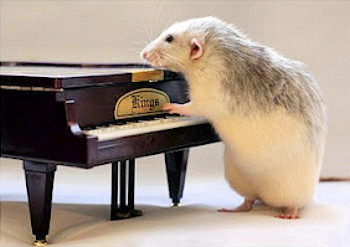
Now it may be that the habit is preferred and to good measure - such as typing or knowing the notes on a piano - certain skills are acquired and the functions of delivery become habitual, so that there is limited consciousness/will directed into such activity. One can then take the activity into a higher degree of function and use such habits as the props for the stage which one works upon- well and good.
We have clearly the ability to adopt habits for the purpose of personal evolvement. When however, a habit has become undesirable and does not work on behalf of the man - in the secondary case - we need then to explore how one may indeed break this cycle of concentrated and individualized Pneu, and be able to divorce oneself from the adopted habit so explained.
As described before, we are in measure continually in a condition of either tension or flex. In the case of which we speak of, the tension is that condition whereupon the will of a man is poised for activity and may be exerted on behalf of the ego when so directed. This is necessarily a state of tension, for it comes with the accompanying build up of forces required for the expulsion of self-proclaimed activity.
In the contextual sense, the condition of flex relates moreover to the suppression of the ego and its directives of will, where the individual has 'breathed out', expired those forces ordinarily summoned, and is ready to inhale or draw in directives from elsewhere (in this case the Pneu, or the personal Pneu).
Overall the ego is still in command of either function, however once retained in the submission of flex, remains so until the cycle it has entered into is played through to the limit of its extent. Therefore in the case of recurring habits, one has such a time during the course of that habit activated, in which one (by choice) is complemented, and bound to seeing it through to its fruition; and then episodes thereafter of making conscious denial, conscious rejection of such compulsion.
But the nature of the habit is that it will present and present again, because of the original adoption. Which depending, may have occurred because of several or several hundred relations with said habit - but did occur nonetheless at that point where the ego was held back, forced out or rendered into submission. Furthermore, it lies within the mission of Pneu that it shall either be used for advancement and evolvement, or shall present again in physical confrontations, until such a time as the ego may make for such amendments as are necessary to cast the unwelcome and unproductive aspect of Pneu out from the body which rejects it.
So the 'upside' of a recurring habit, is that in the fact of its constant representation we may strengthen ourselves to the resistance of such, if it cannot be turned into an evaluated productive employee of the constitution or mind.
The expulsion of a habit requires motivation on behalf of the higher aspects of the individual who foresees from past experience the undesirous aspects which accompany such a habit. Upon recognition and alarm thereby provoked, the individual may begin to exert such will as is required and move to wakefulness in an otherwise sleepy condition. Of course this is not easy, because full recognition has been forfeited from that time of ego-suppression in the first adoption of such habit. Therefore, even though the consequences may be recalled, the moment in time when aspects appeared favorable has overridden the consciousness and subsequent assertions. Therefore the question is: may the roots (the beginnings) of any habit, be cut beneath them? Or is it more the case that through the course of a lifetime are we lumbered with a personal Pneu, which is unchangeable once grafted on?
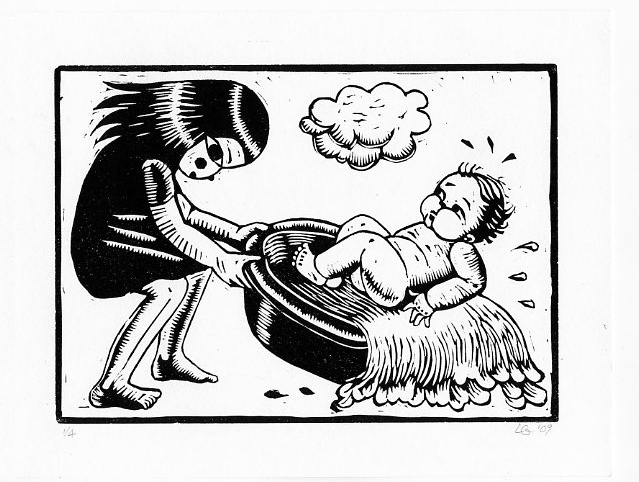
Habits do not determine a man, but they do deter a man greatly- especially when one begins to make effort into full consciousness and pushes to the limits in struggle to become ever more wakeful. It would be unwise for one to attempt to 'throw the baby out with the bath water' by considering all Pneu to be the enemy, for surely it is not. It is both servant and teacher, a great facility and repository for acquired wisdom, skill and evolvement.
Therefore one may not cast war upon those aspects of ego-suppression in which one lends themselves into the confidence of Pneu; be it the larger or the personal. Once established, certain tendencies to which one bows to shall dominate, but be able to take on differing forms. For it is the characteristic with which we imbue all activity, the characteristic which colors the ever-presenting habit thus adopted.
So the swiftest remedy to an unwelcome habit once sighted, is the redetermination of that particular habit so that its aspects may be rendered productive, rather than harmful. This does require conscious effort, but the changeover in this instance is easier than the extraction of the whole.

An explanation of this is forthcoming: If I am to be habitually spiteful, for example, and during such episodes have come to realize the harmful nature of such a habit and wish to change, I may well wish for this undesirous tendency to cease, but find that I lapse into more and more situations where I 'slip in' to this habit, even at the disgust of myself. We may actually modify the characteristic of this habit quite consciously, beginning at first after the event. The abhorrence of the habit brings conflict, as the ego is stimulated into secondary action. The abhorrence could become habitual also, unless actively worked upon. The spitefulness could well be directed upon myself if not checked, and this in no measure would be productive either. So if I am to begin to alter the characteristic of the habit, I am to find an alternative which attaches itself to such spitefulness: the remedy in this case being forgiveness. One can exercise the virtues just as one does exercise the tendons (not muscles, tendons). Eventually the nature of this exercise will also become second nature i.e. when the habit of spitefulness presents, it shall have attached to it its partner remedy which will characterize the thinking thereafter. The ego shall submit to a worthier determination.
In the case of an impending physical malformation (cancer predominately), in that pattern called upon from the Pneu of Man - reference: organ/tissue growth - there has been an explicit division set between the individual and his link to this instinct, and the adoption of unrelated patterns within the constitution. Now whilst this is somewhat simply put, one may question and examine why such tendencies are altered so, and disrupted from the usual course.
There is firstly an ego-resistance pertaining to that part of the constitution. Here the problem is almost to the reverse of the first, as discussed. For one has not so much added to the original, but strayed in some measure from that aspect of Pneu which otherwise would happily incorporate. In this instance submission is required, and here is part of an explanation about the nature of meditation and those folk who are so assisted by the very real consequences of such; for we are empowered to return to the original and underlying aspects which belong to the intrinsic makeover of a healthy constitution. It is here at the beginning and here with us always.
Which lead us into two further considerations:
1) Those who are born with disabilities.
2) The question of old age.
Firstly, the incarnating ego has had prior existence and therefore prior determinations as to their personal resistance to mainstream incorporations as drawn from in the Pneu of Humanity. Therefore it is within their empowerment to be born incomplete, and this shall be discussed at a further date as to why this might be so.
Also added to this, physical interferences can certainly play a part on a physical level, so as to be irrevocably (in today's terms) inflicted upon personal tendencies and patterns of growth. It is as a blockage to reception however, that the organ or tissue may not respond within its capabilities as it should. e.g. If I am bound at the wrists, I am limited in moving my hands even though my arms and hands for that matter, may be perfectly capable.
Secondly, in the case of 'old age' and the deteriorating factor we have two instances to cite. One is the consideration that mankind generally speaking, holds the qualifications within the Pneu which provide not for indefinite manifestation, but rather for scale as regards their incarnating period.
Now added to this there are already aspects given to the body of Pneu which provide for a relatively enhanced and longer life afforded. But as said before, it is reliant too upon those conditions as brought about by the man himself, that through his development set in stages, he may provoke further aspects within himself and that he must go from one to another in succession and be so developed as to unfold them.
The second aspect to this is based upon the ego-identity and general resistance which follows through in adulthood in ways which deny the Pneu its replenishing properties. During the course of a lifetime the man is becoming more and more practiced in an overall tension; or accordingly has adopted a personal Pneu which begins to override his ability to submit to the comprehensive larger Pneu of humanity's designs - that the forces which draw the frame together and revivify, are repelled, that the designs for such revivification are rejected. That life is resisted through the activity of the ego; and the individual slowly begins to 'unravel', dissipate, disincarnate and dissolve - out from this life, Heaven bound.
Conversely too, on other levels it may be that the ego itself begins to withdraw from the frame because of a submission to Heaven herself. All of those who have crossed over call to the elderly: in recollection, in dream, and the desire for the former worlds becomes greater than the desire for incarnation itself. Yet there is before this, a certain rigidity which becomes a man, whereby he resists the world and loses suppleness in the process. The ego can only live so long in the frame before this occurs.
Overall the provision is in the Pneu for now and for future man. But the individual present day, requires the development before he may reach into those processes which will one day override the tendency to age and wither.