Translate

A CLUB OF SUPERNAL INTERESTS Christian Esotericism, Spiritual Science, Esoteric Christianity - All Authored by a Lodge of Christian Teachers (unless otherwise stated.) (All writings copyright) ©

Thursday, November 19, 2009

Marilyn Monroe- 8th February 1992

MARILYN MONROE despised herself- particularly because of the contradictions which were ever made apparent by those attributes which she herself could not make connection with. Most of us carry on through life feeling misunderstood, and whether or not it offends us, to some it may be indicative of self/soul values which are similarly misunderstood.

"Do you love me for myself or for my racehorse?", comes the question. Although we may feel plain or beget an appearance which we think is a mix between frazzle and frump, it is small comfort to be considered with envy of characteristics which appear to oneself nothing extraordinary or exceptional. No amount of reassurance will assist one to reckon with one's physical design. The more one is physically 'beautiful' the more one is uncomfortable, self-conscious and critical, of those said 'looks' - even if those were cast in wax and finely chiselled, there would still be objection and denial. 

Marilyn was not a stupid or senseless individual. In point of fact she was quick off the mark, as far as it goes. She would be second-guessing continually. Most of the company she spent her life with had no notion of her thinking and were basically disinterested anyway. 

She had fed the beast, and the beast became demanding and awesome. She could never understand what the commotion surrounding her entailed. She knew that it worked for her in a limited way, but she could not understand the psyche of her adoring public; and this caused great distress in her personal life.
Did she suicide? Did she take revenge upon the beast, which had robbed her from the very desire she had held lifelong: that of being truly loved, and experiencing this love?

She was ill. She was defeated. She could no longer manage being slave to others' expectations. She was informed of many infidelities whereupon she had cause to question, each and every relationship, and the worth, and the reality, and the senselessness. She could no longer stand rejection.
Yes, she took her life with her own hand, by her own decision.


Wednesday, November 18, 2009

Extraterrestrial Beings- 7th February 1992

IF we are to study and decide for ourselves something about a matter which is outside of our immediate experience, we must take time to observe as best we can what we do know; or at the very least, try to ascertain exactly the question in order that we may weigh the true from the false, the correspondence from the jargon.


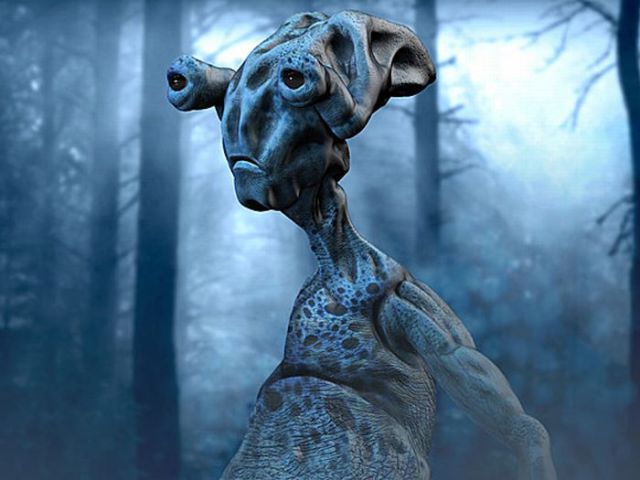
The beings who are purported to arrive and travel in mechanical craft, are certainly here with us today. They are a reality, not to so much in visible terms and not in relation to our proportions. The fact that they are depicted as being from a 'higher technology’ is a key to their nature. They appear naked, without covering, without hair, and are bony, wiry creatures that have a love of science and find it necessary to be incorporated in a craft which has many buttons, doodads and levers. They are assumed to be of great intelligence, but rarely communicative. They inhabit all things electrical, as this is their only manifestation upon earth; they dwell within such activity; and the computers which devise the special effects are so stimulated (operators also) into depicting these creatures as best they can.


Some sensitive individuals can perceive the reality of the world being overrun by these beings, and many assume that the whole of Heaven operates in this fashion. They are not however, someone one should willingly take up with, no matter what the level of initial curiosity - and nor would they directly correspond with all parts comprising that which makes a man a man. We call upon them constantly; they are driven to those parts where they are best employed, and they have now many homes accommodating the life-giving forces implied. 

There have been many eras and instances whereupon man has invited and entertained beings which are so far removed from that of his own development. Usually the pattern is that the connection becomes so overwhelmingly apparent that the creatures do become manifest, and appear in much larger proportions as they are revered as almost demigods, and respected and fed with much sacrifice given in return for their magical talents.

Then as circumstance would have it, there is a direct and immediate breakaway. For as false lovers they are destined to part - and usually by abrupt means with rude awakenings, if they are to be expelled before total damage is done. This is difficult because man has settled into an order of kingdoms which for the time being have given over to semi-quiescent periods, whereby man is encouraged to find identity which is his own; without distraction. And yet also, aside from the mainstream evolutionary kingdoms, we find that there are many beings who should visit and gain 'a footing' upon the Earth and her destiny, and stimulate vast contrasts within Man and his Family.

Men are happily absorbed by all of this technology so offered, and as a child with a new gift, they are intent and thinking only of what it can do for them next. Of course the full extent of this intrusive force has not become realized; nor the natural consequences either.

But what of the beings who may visit and instruct? We blush! For we realize too that we are taken for being exactly so. And what of the fact that we are all extraterrestrial- especially when we are discarnate from this world and Heaven bound. And what of the demons who are deep within the ground, and what of the elementals, which are many and characterized so differently with great distinction? Yes it is true to say that there are indeed many, many beings who exist, coexist, who are not human, whose destinies may cross. 

However there are boundaries respectful to all inhabitants of Creation, and it is only at the extreme of the boundaries (overlapping in time, space, perception), where in the case of this world they shall become visible (but not physically so). Certain conditions or efforts of condition, can produce visibility, visibility which may or may not be true to actual form, for the reproduction may stray from the real appearance depending on will, on perception and on contrivance. 


It is very unlikely that conditions would allow that any of the entities who are not of our family directly, will be able to hold relations with man in a tangible and lasting manner. They can induce certain responses, certain chaos and certain order, and they can reach a man by his affection and attention given inadvertently to them, but they cannot become physical- which by the bye, is a very difficult, extremely difficult thing to do. It is difficult for man to have endured; it is no easy matter and not to be welcomed by those who have far easier vehicles of manifestation at their disposal. They may persuade our physical substance in many ways, but not effect a physical substance that is their own: surrounding and attracted to their mass. 

One must admit that if there were not perimeters set for worlds and for spheres of consciousness, then the chaos would be more than confusing. For it gets back to a question of space- space, which if you consider, you may expand into and become yourself enlarged, if it were not in the same space that others too can manifest and be. Then surely the universe and beyond could not extend past infinity to accommodate all in like manner. If we are infinite by nature (and we are) and have license to travel the length and breadth of many, many worlds, and yet our personal spaces did not overlap as they do, we should be constantly pushing out many others before we could come to their space. But this is not so. There is a triality of accommodation whereby it is fine for many to share common space, and not perceive that this is so. How many Angels on the head of a pin?: All of them.

Therefore it is entirely necessary to this design that we may not become entangled consciousnesses, and are free to explore what we will as we will, without impingement. Otherwise we should become so confused by activity (which is even relevant to ours), that concentration of individuality would be awash and devastated. Thus it is that those beings cannot encroach upon our physical substance to the point where they themselves gain form or mobility in the apparent. But they do not need to do this to become powerful presences amongst us.


And what of the motivation of an entity who presumes to be more advanced and more knowledgeable, who wishes to openly participate in the world of men? Worse still (if one can use the word ‘worse’), oft as not, as it stands to reason, these beings (all of them) are in some ways extremely more developed and advanced than men in their specialities. 

There is no question about this. But they are not on the other hand, balanced in nearly the same ways, nor have they the capacity to understand the complexities which comprise a man and his understanding of the influxing Cosmos and Divine reality. And as with all entities, some are helpful, some are open-minded and interested, and some are frustrated (being not aware of the whys and wherefores of our evolution) and some are antipathetic and have interests of their own to fulfil. And whom do they go to and what do they desire? 

It is natural for men to hold fascination for the concept of there being other beings. For he surely feels isolated, and isolated from realities which are nonetheless present, regardless of his lack of perception. Courtesy never alters, no matter who you are. The first point of an inquiry, such as this, is that we may look individually and decide if they are company preferred, and use all of the standards in which we would rightly and justly, judge any brother. For this one is required to understand right conduct personally, and in so living the life, may be able to assess most accurately whether or not we observe characteristics which are honorable in those entities, of whom we inquire.

One cannot simply extract that which we should like to have and return nothing. All relationships are twofold. In the best of instances they are complementary, in the very worst the weaker party shall cling to the gravity of the compelling.

In short however, man is always taken up with the concerns of others before reviewing himself. He is loathe to actually elevate and develop himself, and searches for the work to be done by another. Without discrimination as to who he may pick, he may provoke exactly the opposite to that which he would hope for.

Were there times former in which 'Gods' or 'Space People' roamed the earth and the two conversed? The twelve tribes originated from twelve differing aspects, twelve different globes, twelve different planets. In this sense, we have had origins ourselves, outside from the Earth, and continue to do so during sleep and after death.

The question then is: Were there beings besides mainstream man and his kingdoms which were manifest concurrently in former episodes? Yes most definitely, when the overall conditions permitted and the Earth and its constitution differed accordingly. One might even speculate that the Earth as we see it today is far removed from its former self, and is representative in a totally different region. The earlier one returns in time, the more the shores do overlap. The consciousness too was more flexible and capable of naturally perceiving images from the spiritual worlds. But this did not make Earth for a planet of a larger community, spawning all manner of entity mix. Some with little regard, would associate us as a melting pot of various streams of individuality, but at all times the beasts have been contained and the Angels semi-withdrawn. 

If a man was truly open to the desire of meeting with a Master who should show him the way to self-betterment and love of humanity, then he (the Master) would not be restrained from making himself apparent. All of the qualities that men say they seek from 'higher intelligences' are so much closer to hand, than realized.

But what do men seek? And what should they prove? It is unfortunate that usually the motives are rarely substantial and enduring. The ever-curious delight in looking, looking, looking, and speaking, speaking, speaking - but (fortunately for them), rarely come to find those exciting 'other beings'. Frankly, they cannot be entirely convinced for there is seldom a follow-up plan; for what they should do or want if their dreams became manifest? The grass may seem greener, but shouldn't they attend to their own backyard first? Or are they on side with those who are frustrated by humanity because of a lack of understanding in the first place?

One must be honest with oneself at all times. Would you really board an alien spacecraft? Would you care to work a laser that was so powerful it could devastate all physical matter? Are you interested in communing with someone entirely unknown, or do you simply wish to know if they exist? Would there be no apprehension before passing through the unknown door? Is there comfort in great secrets? Are you made of the stuff that could be all powerful? And why the interest?

There are wonders to be had - real wonders - which when one takes the time to study and contemplate, become revealed. It always gets back to the point of one defining exactly what they seek and why. It is prudent to self-examine and be cautious, regardless of the stimulation that exciting ideas may comprise. It is only through correct and proper living that we will be able to attract those entities most desirous to entertain. If the heart be black, then what would be the nature of the characters who should be accepted within?

It is we who block the Angels from the doorway, tantalize the snake with a stick. If we shun our brothers then we shun our Heavenly Father also, and all of those who stand by Him, all of those who have worked so long and so hard to cherish and care for us. Divine compassion has to be known within ourselves, and from ourselves throughout our Humanity. And we should not settle for anything less.
As sight requires focus, our inner-sight rests upon our focus also; and at present we as yet do not know ourselves as the extraordinary beings we are.

There is recreation and then there is solemn encounter. The lighthearted may tell you a circus is fine; but participation is not desired. Who cares to step inside the ring? Who cares to put their head in the mouth of a wildcat, or frolic with the clowns?

Tuesday, November 17, 2009

The Mulberry Bush- 6th February 1992

As we ease back into our armchair of comfortable thought and try to profess a longing for infinite wisdom - finite enough to be understood - and sit with T.V., dinner, magazine and footstool. . . 


WHEN we look to those experiences that are most pleasurable in one’s lifestyle it is the familiar and the homely (as opposed to the passions, and the aspect of 'newness' invigorating). It is rather repetition and anticipation of repetition, when we settle down to welcome and enjoy some simple but pleasurable experience.


Some things we never seem to tire of. In point of fact they better with each and every day. We get used to the way that we prepare our own cup of tea, and we savor those favorite recipes within our own home life. Although the slippers are not outstandingly special, they are worn through and made more comfortable with time; and all that we treasure - those objects made special, that invoke such pleasure to be around - they too have their significance, in our happy, settled comforts.

There is of course, pleasure outside of this definition: pleasure, passionate pleasure, in which one indulges and extracts from some entirely new encounter. But this form of pleasure, the excited rather than the simple and the humble, is not of discussion today. 

If we are to prepare ourselves for new experiences, and be open to new forms of thinking - and being for that matter - then are we to sever some of that pleasure which hitherto has come from familiarity; and if so, do we not feel pained by this loss?

One must remember that the beliefs of another are not simply philosophical perspective, objective and unexperienced. Firstly there are elements of truth to every idea (or else the idea itself should not exist) and there are small amounts or large amounts of value placed to each idea - and lastly, furthermore there is the association of man to his ideas, the bonding which holds them dear to him; those which are especially familiar and well known by him. So if we are to expect another to instantly sever themselves from the ideas which they have formerly held and experienced, then we are to understand that they are not merely ideas but concepts held precious, because of the pleasure brought about by their relationship now familiar. Therefore unless one is to upset a man entirely (and this is never advised), then one must look to building upon and enhancing a brother's concepts, rather than trying to wipe away or destroy their familiar base. And this can be done. 

No matter how harsh the conditions were, one will find that one's original home town will be remembered with fondness and endearing recollection. A man may have departed for the most part of his life, but it is that of his youth which impresses him so. Those aspects which he came to know and love simply as a child, will remain and be remembered until the end of his days. 

Here not only have we a point of instruction but also an example of this simple pure pleasure to which we refer: the pleasure of memory, recalling the pleasure from the past; stimulating that same substance which flows down past fingers to toes; pleasure invoking pleasure, the familiar impressions drawing out response to yet more familiar impressions. For this is affinity. 

If we understand this simple pleasure concept, we can also understand in part the nature of the pleasure of affinity. It is where we may find within ourselves a meeting ground of that which is outside of ourselves and that which is inner. In other words, if we were to realize consciously our 'oneness' with the world then the pleasure of affinity should be extreme- these two correspond. 

Because the experiences of simple pleasures do lead a man to greater affinities and pleasure thereby, it is not wise to wish that a man be in any way stripped from this experience, for he would surely become hateful and find criticism everywhere. There would be no loving or comforting face to greet him (in his perception) and no refuge of faith, warm or strong enough to hold him. So if we are to be frustrated that men do not forsake their ideas easily, we must respect if only from this point alone, the importance of their attitude and relationship to their dearest of ideas. 

Conversely, if we are to engage in conversation and agree upon a point or two, then there will be pleasure from this affinity thus established- better at the outset, than trying to do so later on. For if a man has made up his mind that he shall lock the doors lest you disturb his patterns and regime, you yourself have hindered and blocked the possibility of relations.

Now returning to childhood reminiscences: Many of the impressions gained in childhood, those of great importance, are gained by all men without exception. This is because the child-view of the world is uncomplicated and unmuddled and fresh with spiritual insights. Therefore if a man in adulthood has appeared to have lost the wondrous notions and is taken up with fanciful abstractions, he shall have within his recall of experience much happy and pleasurable associations with nature, with affections, with first taste, with experience of expanse and expansion, with sweetness, with color, with wonder at height and wonder at smallness, with friendship, with touch (texture and warmth), with vitality (inner and outer), with excitement and with quiet, with the comfort of bedding, with the peace that comes before slumber, with his dreams before and after sleep, with his natural clairvoyance as a small babe, and so forth. 

No matter how many unhappy experiences he may have suffered in childhood, or disappointments or dismays, he will still have had those founding experiences which will call to him way through into adulthood. It shall be precisely these experiences which shall speak to him again more clearly than later impressions of pleasurable acquaintance, invoked and retained.


In the case of Herr Casper Hauser, we find that apart from all else which was removed from his upbringing, those first intrinsic foundations for experience were so kept from him entirely. Those who were responsible were decided that because he was without these encounters he should become most hateful and most evil when confronting the world as he did as an adult - barren and bereft of past joys, of past associations. Yet, there was the opposite. For here we had all the intensity of the years which he had spent in captivity, and a man who greeted the world as a child: caught up in immediate pleasure in his discovery, with no inkling of hate or of deception, with no enterprise, with no disgust for those who caused his concealment from the world.

It was no mistake that he was made experiment of in this way, for their part or as fate would have it. But their design became undone. For what was not realized was that the world and all of her creation is essentially good.
It was not, by the bye, because of political interests that he was so maltreated. This was a work of evil, conscious evil, on the part of devious and learned men who knew of certain esoteric implications. But because of all of their effort in unlawful intervention, effort was given to that poor child, to save him from insanity and pain - and he was not without help. It was not they who opened the door for him; but it was they who closed it.

Dishonesty between men blocks the affinities and pleasures therefrom. Therefore men who are dishonest or are in the company of such, shall find that they are immediately uncomfortable. Usually one is seeking out something from another, other than friendship. 

Some might be questioning thus: Are we to only understand that which we find complementary to our knowledge and therefore be limited in our capacity to learn? It is possible to jump into 'unknown territory', as we may well be forced to do at given times; but usually it is because a man is provoked to do so, for he shall not easily or comfortably do this. Sanity rests on rhythm and credence; and that which forces 'rethinking' of that deemed permanent, is shocking and disruptive to sanity.

Of course, this is not to suggest that we must seek out the comfortable life and be entirely complacent as regards new thought. Yes the student may prepare for new knowledge, but he has no license to impinge upon another who is unwary and unused to the exercise. For it is a matter of strength, will, practice and openness; and yet an openness balanced by proper discernment. 

When we have understood the mean of simple pleasure, we may actually stimulate the simple pleasure as drawn in from childhood discovery, and begin again to approach the world with those aspects of perception. But again it must be stressed, that this rests upon personal choice and direction, and cannot be enticed in another by someone who would take it upon themselves to interfere and intervene.

Passion shall awaken and stimulate a man into realms of experience which are new and inviting, but shall not last the distance, and recollections of such passion will be vague and without meaning. Passionate episodes help to move a man out from his routine of simple pleasures. There are those who do not willingly work or consciously change until there are circumstances in life which markedly change the familiar concepts they have settled into. 

These great changes will bring pain, disharmony and disruption to the entire thinking process, for they are unprepared and do not understand that compensation is required, inner reckoning called upon, to meet with the 'new' situation at hand. It may be that the changes within their life are of loss, or even for a gain, and the way in which they adapt to such changes which cause great rethinking, will be dependent upon their former capacity for examining their thinking. Whilst obviously there can be no pleasure in suffering loss, there can be comfort in surviving it and renewing one's life. 

Pleasures of habit and pleasures from childhood are to be seen, understood and examined- and not to be cast aside, but occasionally excused for a time that other experience may be incorporated and welcomed in our parcel of familiar acquisitions.

As the elderly tend to invoke more and more of past impressions and pleasure thereby, they are dismissing new experience, as they become less and less able to meet with it and take it into their hemisphere of thought and action. This is a sign of aging if done to excess, for it shall be as an unbroken circle of experience entered into, without escape. But once a man has come to this existence and his consciousness is in a dream condition, and his daily activity rests purely upon routine, then he shall be so until the end of his days. So it is wise to endeavor to keep a mind which is awake and open to new thought and new learning - granted that it will be founded upon a base of necessary and fond familiarity.


As we move from one world into the next, all that which was so homely and pleasurable shall dissolve and be replaced. But the pleasure that we have experienced shall remain with us, and we shall be drawn once again to previous realms of affinity that we have come to know. 

Old friends and old places, for Heaven is not unfrequented but known by us. It is that knowing that we do welcome, and that knowing which implies that in one form or another it shall present again.

Monday, November 16, 2009

Hope & the Sun- 2nd February 1992


HOPE is remedial to hopelessness. One usually finds the powerful presence of hope when no signs of hope are forthcoming. This of course is a paradox and nonetheless true. 

Therefore what exactly is hope?

Hope defies presumption, because presumption is based upon a sequential series of assumptions made prior to the presumption, irrespective of truth itself; being rather truth perceived. We may presume upon a certain outcome and speculate because of previous assumptions that it is likely to be. However hope does not require such reasoning or forethought, hope rests on intention and desire - a certain longing for a particular eventuality.

This is a serious question. All men and women understand and experience hope. There are however, a certain few sorry fellows who come to a condition whereby they are no longer capable of experiencing hope within themselves, who come to suicide - this being the prime reason for a man to take his own life. Whilst we may be faulted here and now for an oversimplification of the desperate that turn to such self-destruction, we would suggest that it is regardless and despite of their personal concerns that they would exit this world hurriedly, not because of them. For even a soul who suffers the most horrendous of conditions has within and without, far more beauty, knowledge and harmony, which is accessible at all times, outweighing the immediate and dire problems inflicted. If this were not so then there would be many, who in poverty, in disease, who would not fight to live, regarding life as precious as it is. 


The mental suffering of a man is a torment of soul and soul condition. This is why the most brilliant of psychologists have difficulty in effecting great healing and wellbeing in their disturbed subjects. Verily, those subjects may be inhibited in expression and experience because of factors exterior to their soul, but pertaining to the soul of a man and not separate: not so divorced as believed to be.

In other words, it is difficult to treat a wound on the arm of a man who has been poisoned by such wound. There comes a point when the removal of the arm, the original problem, does not heal the entire man. And it is for the man, not the arm, which one tries to effect the healing. This is the perspective. 

When a man becomes morbid or morose, poisoned by guilt or poisoned by hate, he is so overcome that the divine qualities (much like the blood), are blocked and hindered, causing much pain. For they rush in, as they always do, but have no circulation, no proper expression; and the man suffers accordingly. For the Administering Angels - who try best to encourage a man - are of what use if he will not receive? Even those qualities of divinity predigested in large or small amount, will not inspire him if he refuses them. And this is within his perimeters of will to choose such neglect.

Sadly it is true also, that a 'bad' childhood may well be accountable for a sorry adult. For the child who is so imbued with heavenly qualities may be badly abused and morally corrupted, that the adult in the forming is rendered incapable of such receiving. And this is a terrible plight. Those who would be charitable have come to understand the men who need it most - those who are left wretched, divorced from their true and glorious selves. It is of necessity that we are not hateful in return to hateful men. 

It is not that which we do hope for that sustains us; it is rather the experience of hope itself, for there is nothing that would satisfy the soul indefinitely that the soul does not already have. And there is nothing so permanent upon the earth that could promise a man such steady happiness. Hope of itself therefore, is an essential provider for the soul. Hope leads desire; it is the well desire springs from. 


The qualities, which are the Heavenly Graces characterized in men, are as the geometrical solids, are as the elements, the fabric and substance of Creation - imbuing, sustaining, comprising, forming, incorporating, exacting and vital - both to Cosmos activity and humanity.

Hope, being one of the Graces, is neither extractable nor measurable, but is continually within and essentially without. That which makes up Creation is of a reality more tangible and more determined, than the manifestation itself. It is not merely a concept 'made up' by man. 

An animal who despairs will die. A plant which despairs will wither.


The sun forces, which are the manifestation of hope, are essential to man and his wellbeing. Without hope we should not have the ability to learn, without love we should not have the ability to know. Without charity we should not have the ability of affinity - therefore to commune, communicate.

Hope streams into our being and we in turn radiate life. It is most fitting to come to understand our beloved Christ in these terms. There is much that might be suggested of humanity, being preordained, predestined by those who desire certain outcome. But Christ Himself is central to humanity and the longings of humanity - and only because He is the manifestation of Hope itself.

Have we the freedom to desire, the freedom to go out and grasp knowledge for ourselves; and the ability to love, the ability to be and become? Not to just simply be, but to become.

My Blog List

Followers

Esoteric Christianity Archive