Translate

A CLUB OF SUPERNAL INTERESTS Christian Esotericism, Spiritual Science, Esoteric Christianity - All Authored by a Lodge of Christian Teachers (unless otherwise stated.) (All writings copyright) ©

Wednesday, September 16, 2009

Futility- 9th September 1991

OF ALL the evils which hold men captive at task there is perhaps none greater than the illusion of futility. The very word is onerous and unworthy of any great meaning - especially as its nature is of itself held within the extreme negative.

However the concept and its carrier word 'futility' exemplifies great submissiveness and depressions which seek to oppress Man. And if nowhere else it has been witnessed and thus expressed in connection with the wars which have left those remaining quite devastated and forlorn. For all of those who suffer and see no cause, perhaps one might understand the common usage of this word to be permitted.

Although there is the extreme example cited, there are those who might put forth the notion that many aspects which coherently conspire within the multitude of events which fill a man's life are futile. There are those who would lay all aside and negligently call life itself in essence to hold no meaning, and express all efforts of men, all ideals and treasured works as becoming less than dust; and conjecturing therefore all aspirations to be futile.

One may come to perceive the dangerousness of this thinking- destructive to the core, unravelling, abandoning. For this one can learn to realize that there are important decisions to be made, there are certain reviews and open terms of reference; that we should all come to acknowledge that either we really see no importance whatsoever in life and its therefore meaningless meanings, or more correctly ascertain, assert and pronounce the very opposite: nay, that within the spectrum and circumference of all Life there is no such thing as futility.

Some would have it that they are undecided. Some would suggest that there is and there isn't. The very nature of our attitude and how we seek to understand the world thereby is totally dependent upon the basis of our adopted approach.

Fortunately it is commonplace today to find that there is a growing concern for conservation and a move towards a less wasteful society. In part these considerations should move towards one becoming instinctively awakened to the usefulness of that which we have formerly regarded as waste. That perhaps the matter might be redirected or not used at all, and that folk who consume have now weighty options put before them considering effects upon environment and ecological systems; upon which they were formerly unaware.

But it can be said that also too, there is much unseen that is wasted by men: lost opportunities, lost considerations. Although there may be little responsibility claimed throughout a lifetime and thought through with great deliberation, even this of itself may not be regarded as futile, however wasteful.
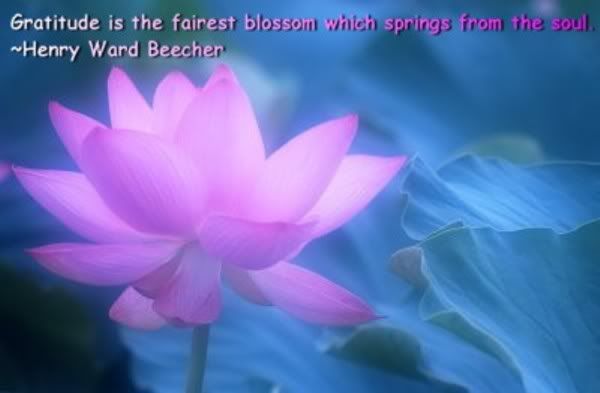

It comes back to responsibility and that wondrous experience of gratitude. The men who shirk from responsibility and condemn those around them to a hopelessness without design, without direction and care less for the needs of their family, care less for their dead or for those generations which are on the advance - those men have not the graciousness of reverential wonder because they are infused with only the immediate considerations of their lower ego. One may not come to know of gratitude until the emmeshed condition of the lower ego is disentangled from the worldly arena and allowed a full perspective of life herself and the larger considerations.

The selfish man is self-interred ever seeking to gratify personal needs and wants; and yet at the same time, in self-inflicted ignorance, presumes that 'in the end', 'all in all', we have futility.

It is this that the despairing suicide presumes so injuriously. It is this that corporations, who battle daily with inflamed impassioned greed, justify their hazardous and irresponsible effects upon the world economy. This one word is but a password into evil and acts thereby. For if consequences were truly perceived and weighed or even considered and asked for, there would be few who would pursue the selfish road which causes so much turmoil to the already disheartened. It is the concept which suggests that all roads have been encountered, that there is no explanation, that there is no hope, or reason or results. 


For the man of faith will ever look for that one road which leads out of a problem and back to the Kingdom. He shall have patience to endure enough to trust that although unseen there is always an explanation, that hope is ever and reasons so many: comprehended or not, they are divinely placed.

The only futility that truly is, is within that of the concept itself. Elsewhere it holds no reality, being only real unto itself. Beware of the knowing impressions which some may impart, suggesting a hopelessness, a meaningless, a dead-end or annihilation. For in essence, corruption seeks to propagate itself and does just that when it is given the soil to seed itself in.
If a man suggests in somber tone that there is futility, ask from what may he base this assumption and if nothing more is it worthy of consideration. No, it may never be worthy; characteristically the notion of futility offers nothing. Absolutely nothing. And so anything else makes for a better consideration. There is simply no excitement or enlightenment to be gained from the concept of futility.

One hears "What do I care! When I am dead, I am dead and there is nothing which remains. I am dust." And the man who claims this, who cares not, does not even move to question the possibility of that being wrong, for he has already decided that it is futile to question, futile to dream, futile to envisage, futile to have concern. It is as a sickness, a death to the soul-life. The ego is bound by immediate considerations and would have no other. It is an inability to commune with the higher aspects that know too well that which is otherwise.

From where does this sickness come, this false notion of futility, the foregone conclusion of doom which suggests to man that life itself is crazy? It comes from those who have vested interests, who are not men but desire men to be as themselves. It comes from the hauntings of shells who died pitiably, who were not pious or of love but did seek and find a hell whilst on Earth. It comes in sleepy whispers from the cheated and the cheating, the revengeful, the deceitful, from the predators, from all vice and sin, in promptings and through recklessness, in the dark of night, before a man jumps before a train or from a cliff or as he takes up the knife.

The illusion of futility suggests that we give up our asking and our higher instincts, that they are not real; and in place gives over to disastrous impulses excused by the fact that life is seemingly disconnected and meaningless.
Most men are destructive unconsciously and without calculation, and if there are acts of violent rage they must be executed swiftly, that the demons who whisper the promptings to outburst allow no time for the conscience to recall, give no time for considerations of reality. So it must always be impressed upon men that all of life holds reasons, consequence and continuum, and that they must seek this out for themselves. A man who knows this to be true and rejects the illusion of futility will not be swayed by actions rash, will not give over himself to evil suggestions. In this we find the importance of the consideration to today's lesson, that it be acknowledged and restated as a beginning to all future actions and intentions of the precious hours, days and eons ahead.


Tuesday, September 15, 2009

Heads & Hats, Being Elusively Allusive- 1st September 1991

THE WOK conducts the heat from the fire and enhances dispersion with concentration, and yet diffusion. Versatile for rapid conductivity, simple in design it looks almost like a Chinaman's hat turned topsy-turvy.

Hats are like that: one receives many forces which radiate down from the top of the head, and the protection from the fiery rays in a manner which conducts and diffuses is similar to the extreme example of the wok.

From one race to another, one people to another, there have been unique preferences for headdress, and of course examples of hair-shaving. All of the preferred appendages have their corresponding results which affect the entire constitution of the man who adorns himself so. In the case of baldness one finds that the man in question is so 'open' to the heavens and the lower substrata rays which impede, that it is quite a remarkable feat, withstanding and directing those untranslated fiery forces.

Usually the tentai, being the hair, serves well in conducting the transmitted rays and can help regulate and assimilate the lower cosmic fodder which respectively channels through from that 'north pole' (being the top of the head) down through to the south (the ends of the feet). And so the man who does summon and gather together the uninterrupted flowing vitalities through bare scalp without hair or hat, has the difficulty of irregular activity concentrated around the head region- much to do with the forces of the will and of thinking. The baldness may either enhance such properties within the constitution or completely negate them depending on the receptivity and the management thereof.

One may witness in the case of illness or aging the loss of hair through expended vitalities, and the redirection which may or may not be necessary in further adaptation for prolonged life. The yogi who seeks to interrupt the currents and redirect, often finds useful the flames on bare head rather than those which are distributed and made diffused.

There are most certainly physical characteristics which enhance or inhibit the inflowing vitalities through the top of the head, for no physical representative goes without its corresponding form, made apparent within the boundaries of a subtler matter and material. And the waves of vitalities received into a man by a man so channeled, are transmuted in a variety of means, causing this and that repercussion (literally repercussion) within the constitution. 

Whilst perspiration exudes something of the man from which it comes, containing many elements so worked upon and exacted with his fiery ethers, it also plays an essential part in the outer conductivity and the buffers, barriers and fields, necessarily pertaining to existence.

Without their being any magic performed, one may take the opportunity to observe certain differences at particular times when one alternates the conditions of the scalp. Not by taking the shaver and shearing the growth, but rather by noticing the variety of hats and scarves, hair-gel or whatever, and witnessing the differences between those and hairstyles.

There is no hard and fast rule as to which best suits an individual. Nature herself is very wise, and the condition of balding which comes naturally is all to a purpose. One can say that Moses for the most part was bald, and Socrates too for that matter.

There can be the risk of obsession and of too much repetition when a man comes to find the marked differences which he will come by. However an intuition that exceeds the calls of fashion, if heeded will prompt a man to recognize that which befits him best in his needs; and certain ills may be rectified: certain maladies of many varieties, by simple observance and application.

The infant is much comforted by the wearing of a hat. Exposure is not always desirable for an infant or a man. This is not only in reference to having 'too much sun', and also need not be relevant to whether or not one is in or outdoors.

One already knows the great difference in attitude and composure between being fully clothed or completely naked. The very gait of a man will alter from one attire to another. Man's nakedness: the fineness of the bodily hair today and being without total covering of fur-like growth all over, is very much an example of the 'open' condition in which he greets the world.

Chemical concoctions which are used as colorants and for hairstyling, can have terrible consequences upon the individual who has covered his or her head and hair so. Apart from the fact that much is absorbed through the skin and so scalp, the hair is made 'dead' and ineffectual in its manner of processing the vitalities in normal ways.

Usually folk consider that the hair is already quite dead, but indeed this is far from the truth. Any part of a man which remains in form and does not dissipate is not without function, nor dead, until dispersed. The connections to that man are his, and have great bonds with him at whatever distance, with living essences that continue until the point of physical breakdown. However, the chemical applications disrupt and interfere with the subtle ethers which surround and encompass their physical counterparts, and by so doing negate further usage. They are deemed inadequate. One might as well go for the bald look, instead of the 'permanent wave', for permanent wave it is!

Whilst on the subject, a hat which is made of animal fiber shall have a marked effect upon the constitution - a hat of vegetable fiber will completely differ, whilst a hat which is of synthetic fiber will be almost useless. Adornments of straight metals are another matter and have been favored for certain reasons throughout the ages by priests, magicians and the like; but most certainly are not worthy of consideration for daily attire. One can leave the crowns for kings, but at the same time come to learn of their wearing the metals and the jewels they saw useful respectful to them.


The 'crown' of thorns was indeed specific to the powers so transmitted into and transmuted thereby. The points of the thorns do travel this way and that, outwardly in receptive form. The purity of the etheric nature of that vine has transcended the 'animal' receptivity of transmutation of the surrounding ethers. And although this is not the time or place to comment further or speculate, one might suggest that at present it is unsuitable for the ordinary man to consider beginning that particular fashion for himself.

One has trouble when picturing the physical characteristics of our Christ when he was so connected in this way to living form, largely because what appeared as one thing was not exactly what it was. An Israelite with flaming orange hair is conspicuous to say the least, and hair-dyes of vegetable origin were easy to come by- the blacker the better or so was the fashion of the time. Now whether or not it was effected by hair-dyes or simply within the vision of men and with what they were used to, is another matter. For the body of Christ being not made by Him, was nonetheless completely imbued and re-exacted at the time of his bonding, and characteristic in every way; in-line and attuned completely.

In summation: one might pay a visit to the milliner without being as 'mad as a hatter' in doing so.


More truths about long hair.

Monday, September 14, 2009

The Waffles of Men - 31st August 1991

“The wispy, wafty, waffles of men,
Conjugate with sticky incline,
Sickly the syrup,
Slippery it slides,
From top of the waffle,
And into the mind!” 

 THERE are parcels of speech which lend themselves to blunt or poignant interpretations, whilst other packaged concepts more delightfully conceal. Some wrappings of presents for example, are so lavishly designed that the present underneath is but a disappointment; and whilst this can be true to say, it need not be the case.


The art of presentation applies not only to food or a gift given, but also to language with all of its radiant stimuli. Certain languages lend themselves better to practical use - some are soul-expressive and of older origins, and many an offspring and a derivative is formed for the application in modern-speak.

One usually does not go about interpreting poems for others, unwrapping so to speak, the prose and the qualitative expressions that the 'essence' of the stanzas become more readily understood. For in doing so, one has lost ten meanings, giving over to a certain perspective of logic which may or may not be highlighted according to the wishes of the writer.

Of course it is all well meant: That we should desire to rephrase and present again, so many ideas which have inspired us and talked to us, with multifold aspects. However, the way to do this in the case of an already pleasurable artwork, is to best display it 'intact', rather than pluck the colors from the painting or make piecemeal rationalizations of a spirited verse.

Even a joke loses much spark upon the second telling.


Sunday, September 13, 2009

The Articles of Association- 31st August 1991

DYNASTIES have long been clung to by those who are in place: being central to the power, the stranglehold of an empire. An empire may be sovereignty in respect to geographical regions, or more precisely assumed lordship over a group of people. 

There are many who have been positioned as leaders, who from past experience carry on as such trying to re-establish more of the same pecking order with them as chief pecker. If it cannot be achieved through the more simple forms of power endorsed - respectfully money - other means will be found in order to cajole a community to subservience.

It is novel to find that there are folk who seek authority and come to such unquestioningly when won over. Often there are mutual ideals bandied about here and there: some pleasing enticements, some promise of personal gain.


Usually the leader of such a group, whether it be local council or local church, submits them to the whims of their beloved, even if degradation is part of the privy to become members. It is uncomfortable to cite these distinctions, but necessary in the consideration of equality, equality in its true perspective. 

Whilst some individuals are certainly capable of bearing far more than others and by heading-up a particular group do serve that group with talents and expertise required, it is also a temptation for them to misinterpret their status and their standing, and also that the others may do the same.

Granted, there is always a Queen bee, and that Queen bee is distinguishably separate and different. But the Queen bee does not need to fall upon artificial means for establishing her role, and presume what she is not. She is what she is because of what she does and this is apparent.

In the case of men who assume the roles of leadership, many are appointed and continually overstate their position with irrelevant acts that pertain more to their standing, than their actual work effort. Badges and uniforms may have practical usage, but moreover are statements and license for a certain superiority assumed. It is quite a bizarre quirk that men in these times still feel the need for ego-identification in this way.

It is necessary for men to be able to be comfortable in almost any attire and greet others in like manner. There are stories which tell of this: stories of beggar-like men, or old wise women, who at the roadside are met by an unsuspecting soldier. Stories of the 'Frog Prince' and also 'Cinderella' - all which speak to us of first impressions and soul impressions, pertaining to judgments which are more relevant.


Costumes are insidious - they represent very little indeed. It is understandable, commendable for that matter, that one should assume a neat and tidy appearance or even embellish one's self with a flair of individuality. To wish to appear to 'look good' is either one step towards self-betterment or two steps towards the deceit of conceit. However, that which is worn not for the sake of the individual and their harmony, but rather as a statement of pomposity and stature, is at best silly.

Replication within a group is viewed as respect to that group and symbolic of the tenuous fibers which cross-link each member throughout; followed by certain customs ordained and patterns of behavior acceptable to the leader and the people in the group.


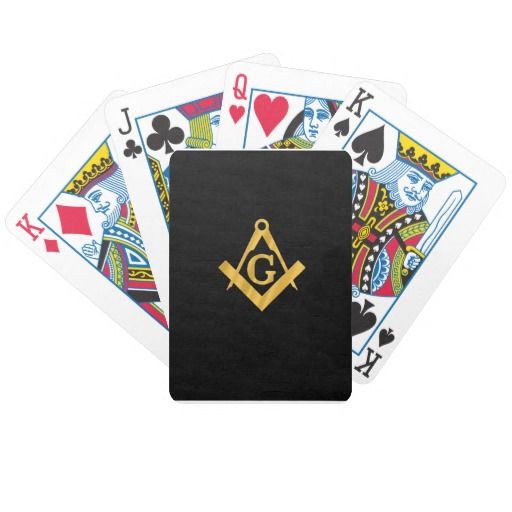
To any outsider who may happen upon such a group (be it Bowling Club or Masonic Lodge) one immediately finds uncomfortable the social statutes that pertain to participation. It is not the theme or the spirit of the group which is so off-putting, but rather all the accessories that accompany the purpose. If one views any club or group of people who have gathered with mutual interest in a particular domain, one will find that usually the organizational demands and the periphery conduct has consumed most of the time given to that group with uneven proportions.


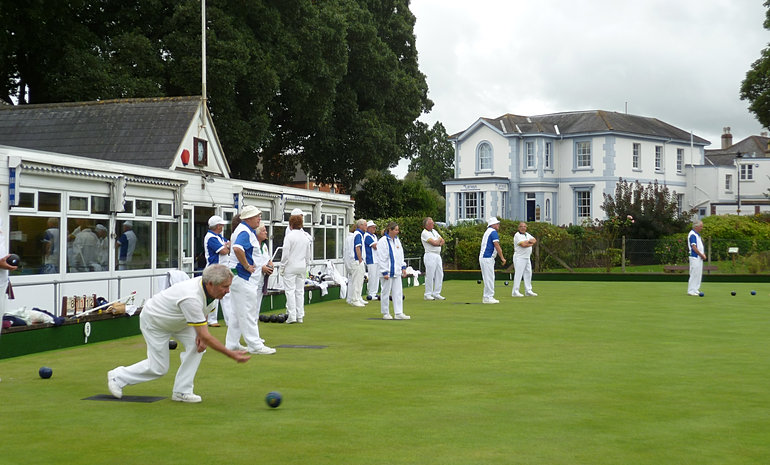
For example: The Bowling Club -
Many folk gather (or so they say) for the love of the game, in this instance bowling. They love also the uniforms, the badges and the trophies, the speeches and the afternoon tea, along with the afternoon gossip. Then there are meetings of designating positions, for there are those required to organize and those who must organize the organizers, and secretaries to the organizers of the organizers, and badges to be bought by someone for the echelon, arguments as to presidencies, Christmas parties and tournaments. None of which relate to the actual playing of the game; and in reality the participants of which, have a great interest in social politics with a little bowling recreation on the side. And so most suitably, one could call the group (of a particular suburb or town), 'The White Faction of Social Discourse and Discovery' or perhaps, 'The Lonely Hearts Club'.

When viewing a club one may call a spade a spade. Look to the heart of the club and find the diamond within. And then decide.

One does not suggest the abandonment of societies, but merely that an overview is essential, especially when conduct is claimed to be of first priority to that particular group. So many who might enjoy the game of bowling might be rebuked by the nature of those periphery activities that the club is so immersed in. They are simply turned away - especially if their desire was to simply play bowls.

Groups are open to misrepresentation. Clubs which are spiritually inclined, with a mix of serious and no-so-serious members, can unfortunately become entangled within limitations that should perhaps more correctly fall under a totally different name. No organization is beyond constant review.

One might ask, "If the people are happy, who cares? Who cares if the name and the activities do not correspond?" Or, "Who are we to judge?" And it is true to say that within the system which best supports an army, no soldier may question the authority of his officer. There is no provision for individuality or conscience and it is deemed acceptable to place infinite trust and responsibility with he whom we might call the 'General'. But is the way of conformity and denial of questioning the way of the Christian soldier? Too often men confuse the superiority of men with the authority of the One who truly gives back all respect paid. The dangers of conformity are the dangers of 'backing the wrong horse', so to speak.

Complacency is comfortable: it is an act of denying the conscience. But men must afford time to review all matters for themselves, and weigh them within their own judgment. Without self-questioning and the habit to cast further inquiries, they shall elevate on false premise only those attributes which in the end are meritless because they are unworked for.

This is not criticism for criticism's sake. It is asking for careful and cautious inquiry, when one meets with an awesome body of men that for whatever reason have gathered under one name. For all groups of men who give over their individualities and presume a particular identity, submit to some other in the association of those conformities. It is to great (as in large) consequence, when this is put to activity. 

Therefore, it is reasonable to ask the true nature of the operation and to be clear with honesty from the outset, and be vigilant that it remains true to its purpose or else restated for what it is.

There is a serious aspect to every activity of Man. Jokes aside, most problems occur because of the deficit of self-consciousness and awareness with honest review, that one may be better equipped with discernment before engaging in any conduct.

Conformity requires that men sleep, that their awareness is negated through habit, through ritual, through the similarities that if they place themselves beneath another, another may do their thinking for them. Although we are equally responsible, one may begin to perceive the dangerousness of compliance.

So many times we do bear from others and give over to their demands - slightly or greatly, we comply and conform. It is one thing to heed one's conscience, and perhaps reluctantly comply; it is better to love one's conscience and love one's duty, and give with complete love. But it is painful to be motivated against one's inner reckoning and force the individuality out from ourselves - and there are so many temptations to man to coerce him to do just that.


To lose one's individuality, to lose what consciousness we have- one can perceive this submission in so many modes of conduct. That we might be more perfect is to realize consciously that perfection. What is the point of perfection if we are to sleep through it? Or if another pre-attains it, on our behalf? Association is not enough. We cannot look to another man and truly expect a little of the glamour to rub off, that he may artificially do our work for us! 

Politeness does not need to go out the window. For in regards to the conscience, we regard its endeavors to meet with people kindly. The conscience will dictate much more about politeness, than conforming to table manners deemed acceptable. So true individuality does not mean to say that we ignore our brothers, and do as we please. True individuality means that we consult our conscience accordingly, rather than conform to another's. That we seek to err on the side of God, than the side of another man.

We try so hard to please others, but there are times when this causes pain to both ourselves and to them. We may do injury to someone by placing more burden of adulation on their shoulders, by asking them to be responsible, when in fact they do what they can, in the way they know how - no more and no less.

Who we choose to associate with and encourage with the submission of silence or with encouragement which is deceitful, that too may be injurious. One must learn to find the ways (tactfully) which severely assess and discriminate that which says it is from that which it really is.

This is what was meant by our alluding to a society which defined 'tea and biscuits' in its articles of association, that all men may partake as 'plate-bearers' and take their turn in the boiling of the water.

My Blog List

Followers

Esoteric Christianity Archive