Translate

A CLUB OF SUPERNAL INTERESTS Christian Esotericism, Spiritual Science, Esoteric Christianity - All Authored by a Lodge of Christian Teachers (unless otherwise stated.) (All writings copyright) ©

Monday, September 7, 2009

A Short Discussion on Keeping with a Good CONSCIENCE- 21st August 1991


MANY classify one's own conscience to be a distinctly separate and wholesome part, which is not entangled or embroiled in dilemma or the concerns of sin. Whether viewed as separate, of angelic or inner voice, the conscience when rarely focused upon, appears as a powerless authority that we may or may not consult should we choose to ignore its jibings and pleas.

That which is a conscience in a man, is that which is most bruised and battered by many a former err and misgiving. Separate be it to the personality, yes, but closer to that individuality which is most properly the man- far closer than the personality will ever be. The forming of the conscience within a man's consciousness and without (held in the auric metabolic memory so impressed) is paramount in retaining those experiences which identify a man with a man, and determine his humanity towards all.

One might suggest that the sum total of a man's progressive evolution is not in faculty enhancement but rather in fulfilling the realization of a high and according conscience.
In this respect when a man finds it most difficult to reach the concept of karma and perceive its instantaneous workings from the outset, one could say that this is extremely beneficial from the perspective of the nurturing of his conscience. That man does not feel duty-bound to acknowledge the law, divine and natural, but instead begins to discriminate out from those experiences and relies upon judgment which is not defined by fear of retribution to his acts. However, it is often the case that when a man's conscience has begun to be realized and is actively in place before all actions and concerns, one will find that the nature of karma is readily accepted and does not irk the individual at all. There is harmony in both viewpoints.

All judgments - and all living requires calls for endless responses namely: judgment - are turned inwards. All sympathies and antipathies return to a man. If a man is far removed from his proper sympathies and determines to dwell in the outer limits of a personality which denies those sympathies, then it is to the detriment of his suffering conscience. It is essential to reach the attitude of spirit whereby all that is connecting with a man may be interpreted and known inwardly. This is conscience. 

Therefore, when any one man steps beyond the bounds of concern, and in invasive act (or thought, for that matter) causes injury or imposition, he is in time made keenly aware of his liberties, so out of line. This is the path of true equality, that one soul may not push another soul out from his universe, his home or his happiness. In divine terms, there must be consideration and also a wonderful empathy so inspired, that through the multitude of kingdoms and divisions we come to find our true selves. This is conscience.

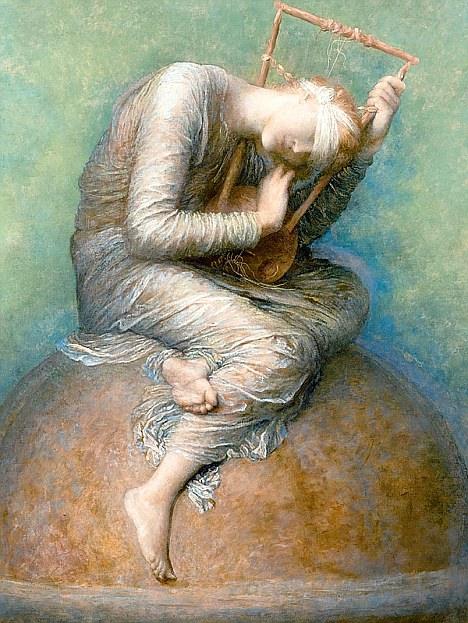
The conscience suffers pain much like physical pain, excepting that the pain is so profound and does not dissolve and is not made better. For in order for man to learn of the outward conditions which he inflicts himself upon, the conscience must suffer repeatedly and endure those sins of the past. One's Recording Angel is one's own conscience, and one's own conscience is in reality one's self. For it does release the soul from the pain which it should carry, and in this sense is separate to the personality. The personality is a refuge, and has privy as to choice of acknowledging or disassociating, according to the lower ego.

If one is to feel sympathy for one's own conscience, then feel also too, that for all others. Yet through this inner sacrifice we come to know of the worlds above and below. And there is much sweetness to endure such intimacy.
It does well to satisfy the cries of the conscience that we hear. Were one to practice listening, it becomes more and more apparent; remembering also, that in pleasing the bruised and beaten conscience we do in fact save ourselves.

After the passing from death to higher worlds, the personality is sheared away and we are what we are. We have full allowance given to us, we must consciously reunite with our higher faculties, and experience is had retrospectively through the recollections that they carry. So within us today we carry our own personal hell and purgatory, which is so saved for the appropriate time of reflection when gathered up and met with in death. 

We must absorb and assimilate those burdens (as well as those graces) which we carried lifelong. This too is a blessing of course, for one is given the opportunity for advanced insight with profound clarity to gauge the impressions one has effected in the world. Were we to be overwhelmed by such and dwelt consciously in the higher aspects of sympathy in daily life, we would probably take to bed and stay there- at least in this way of greeting the sum total of a life all at once. We have contrasts, contrasts which would not have been achieved and viewed if we had not erred at all.

From life to life we absorb this experience accordingly and carry with us the remainder - our conscience, our selves which have passed through the trials of our sins, our complete treasury of sympathies and subsequent intimacies which allow further communion without and within. The lower aspects within the constitution of man would have it that the conscience be suppressed and disregarded. There are many modes of conduct and practices in life which are very effective in temporarily abandoning the conscious acknowledgment of our selves: of our conscience. This is the component of sacrifice: the true martyr, one of our highest aspects and yet cast within a jail of vice; remembering that all sins divide a man from his humanity and injure himself accordingly.

When it is preached that morality is essential to development, there are many good reasons why this is so. Apart from the fact that the substance of Virtue is Cosmic and is life-giving in itself; apart from the fact that Virtues speak to us of the manifold aspects of the Father and His design; apart from the fact that the Virtues are demigods who will not be denied, and as such are imperially important to our understanding of the spiritual realities ... it is also so, that the cultivation of virtue is a wonderful healer to the conscience, that which is indeed ourself. All sins cause necessary, whilst unnecessary pain and confusion.

One could say, "Why wait?" Yes there is learning to be done and many mistakes still ahead - but why add one more or one thousand more, if it can be avoided by good clean living.

There are those who at this point, would query with haughty voice, as to the nature of morality and contest that no one really knows. They speculate that the wrongs and the rights of this world are without substance and so created by the moralists, having no direct bearing on reality. There is an answer to this: that they should begin to listen to their conscience if it is difficult for them to come to the realization: an awareness of 'good' defined and 'evil' so defined. If they cannot reconcile morality with immorality, then they must consult their own conscience.

It is possible that they have not yet the capacity for knowing of the intricate sympathies, that they have gleaned next to nothing in way of experience. Excepting, that we would suggest that if their behavior reflects their sorry attitude, then subsequently there would already be much suffering within their conscience - enough to come to know it, would that they could divorce the babblings of their lower self from the stifled inner voice.
Enough said of that.


A man is not easily defined. The conscience is but one of the higher aspects of an individual. Just as we have fingers and toes, and are yet still a whole person, we do have higher graces with divine implications that extend throughout our experiences. For there is much within Heaven that we may take into ourselves, and in order to do this progressively we must have the attracting constituents in the first place. Our ticket into other worlds, so to speak, is already part of our substance; that we might come to know them.

Did you know that every virtue has its own world and one may pay homage when death ensues? If the visit is to be enjoyed with some measure of consciousness, one must practice the acceptance into one's constitution of those vitalities which are peculiar to that virtue. 

From this hint one may gauge the service of the conscience, not only as protector from one becoming a creator of destruction, not only in acting as recorder and reminder, not only as entering into divine and objective sympathies, but also as a leader into gateways of realms and spheres at present unimagined. For those who enjoy travel and relish the experiences of wonder at those unknown landscapes with such colorful peoples therein, they might guess something of the joy that lies ahead in the heavenly trek.
So we must be mindful and respectful of our beloved conscience. With acceptance of ourselves, our higher selves, we can go forth in a new light of understanding, easing burdens within and without, setting courses of which the itinerary was long before planned.
So be it.


Sunday, September 6, 2009

Rasputin- 20th August 1991

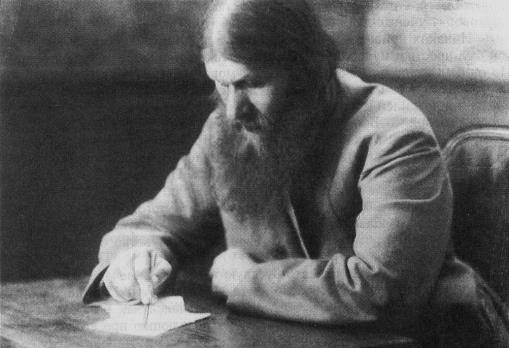
GREGORY EFIMOVITCH RASPUTIN was a man (half man, half wizard), who was a representative of the former ways of his people. Warmly sensual, sincerely sober in aspect, mesmerizingly commanding, he charmed and cajoled with a sophisticated will, with impenetrable eye and deceiving smile.

The European people may be defiant and stubborn, and firm of opinion at times; but they had also held an innocence, a childlike receptivity which embraced life and rejoiced in living; being primarily well intentioned, and where possible, exceedingly well-informed, with interests and curiosities akin firstly to artistic adaptations rather than abstract cunning.

One would expect a bear hug from a Russian man with a bulk that could crush you in an 'overbearing' manner. (Excuse the pun.) However, the point being, that these folk are tender lovers, with a vast capacity for passion. They are neither swift, but compelling, neither greedy, but hungry; neither naturally aggressive, but capable of unleashing a fiery rage if need be.


Had Rasputin travelled the Western worlds today, he should have been very popular indeed. For the cunning and contriving, for the best part, belonged mostly to those regions where men aspire to nobility; if not through blood, by personal conquests.

With centuries of old traditions and mystic doctrines which encompassed the richly embroidered magic of the religious and spiritual interpretations, Rasputin took into himself the essence as it were, and then turned such concoction into living vitalities put to the present. As if he might conjure all the ghosts from the past and bind them to his blood and his being, and pervert them, he was as a robber who came and stripped all that was mystically desirous, and defiled that which he left remaining.* Great injury was the consequence, great deformation, which left the core of the Russian racial soul stripped of its spiritual treasures and degraded.

One might ask how one man can affect a people so. And exactly what was it that he did take and convert? Imagine a holy object, say for example a cup of pure gold, which is a vestment to a church, and in deep ritual has been the bearer of the sacrament over many years, throughout many generations. This cup has significance, yet the robber sees only the value of the gold and does melt it down - perhaps it might turn out to make a chain to adorn the neck, or perhaps with coin to barter a meal. It was this type of betrayal which Rasputin brought upon his people; which dealt in not only the gold of shining ore, but also that of precepts, traditions, of teachings formerly kept locked within every man, woman and child: especial to them.

It is with no surprise that one finds that magicians are usually shunned and never trusted. And magician he was, for it was from the old laws and mystic devices that he practiced so as to take for himself, and put to bad purpose. If there was an overall view in the mind of Rasputin, it was never fully realized. But like a bull set loose in the street, there was so much carnage and mishap from that which he contrived.

When a people's pride has been whisked away and ransomed so, they are forlorn and disheveled. For it is more than difficult to replace in a single century that which has been worked upon for many a century.

However, with this qualification they may begin again, and now set course for an entirely different future. Nurtured in time, many flames will grow from the inward flicker and the challenges of re-embodying with an entirely different ego-awareness, shall be rekindled.

The painful service of Rasputin, has allowed for new opportunities, opportunities that the Eastern world have not. And so Mother Russia will peculiarly be progressively leading in an effort to re-find a spiritual denominator.

The archaic essences are now contained and hidden. Shelved. Much was distributed and lost . . . But much was captured and retained- only no longer held in Russia.

* Rudolf Steiner told Asya Turgeniev in 1916:
Rasputin worked directly on the will. That should not be. But people want that. He really is an unrestrained man, the ‘Rasputin’ (Russian: one without a path). Everything said about him is true, but he is nevertheless a God-Seer, that is an occult term for a grade of initiation. It is only thru him that the spiritual world, the Russian Folk-Spirit, can now take effect in Russia, thru nobody else.”

~Rudolf Steiner, according to Assya Turgeneva in the early years of WW1, recorded in her book Erinnerugen an Rudolf Steiner.

"Thus with the death of Grigory Rasputin Russia was finally 'prepared' for its cross-like destiny."

-Quoted from The Spiritual Origins of Eastern Europe and the Future Mysteries of the Holy Grail by Sergei O. Prokofieff page 213. There is more on Rasputin in this book.

Saturday, September 5, 2009

A Citric PERSPECTIVE- 17th August 1991

CITRUS fruits denote sweet acid. Contemplate the contrasts between the sensations: namely sweetness, fragrance and the sharpness of the accompanying acidic sting ...


We may compare our attitudes of concept forming to that of the experience of a good, freshly picked, juice impacted citrus fruit. When we come to try a teaching or a new thought and weigh it in measure with our former experience, and then by comparisons with spoken and unspoken truths, we may know of those qualities that appeal to our inner senses; just as keenly as we should experience the citrus. 

As concepts go, there are many that hang heavy on the tree of knowledge. To the personal sense, some may have been lost to decompose where fallen unclaimed, and with time spent turn to rancid waste. The acidic elements with water combine, split the skin and then weaken the form. Finally there is shrinkage or dissipation in final breakdown. What of the fruit left unhappily beneath the tree? It returns, absorbed through the ground, eventually making its way back to the bough; unless of course, it has been claimed.
Some might hurry to pluck the unripe and immature fruit - all sour and distasteful, and alarming to the unsuspecting, eager picker. The fragrance brings promise, but the sweetness yet to unfurl, green and unpalatable.

Some prefer marmalade, some prefer the juices expelled. Moreover the vitality is largely spent when one dilutes, adds or extracts long after the fruit has been first pried into.
May we put to test the offerings of wisdom, by the fragrance, the sweetness and the acidic bite. The nature of a truth does surely hold a spirited fragrance, which expels/emits an inner sensory notation, which speaks to us. The sweetness comes from Heaven herself: for all that is in truth cosmic and pure, is pleasing and sweet to the soul. The acid is the action of true clarity and vision, where illusion is put to the quick and dispelled in the light of right knowledge.


Friday, September 4, 2009

A Potpourri of Personalities & Fresh Flowers of Wisdom- 17th August 1991


The Homely man:
Well satisfied and uncomplaining, can make a home wherever the bed be put down, with cushions assorted. At ease with his station, obliging and with an enduring attitude of friendship. A big, broad handshake and smiling countenance. Works tenderly, faithful to family, has much love for simplicity and gives all, with expectations set so as to be achievable. Rarely suffers conflict, is sensitive to criticism. Tends to the garden. Does not speculate on fortune or fame.
Earth man


The Holy man:
With loving concern and much regret, cherishes the world and is pained by injustice. With deep set retrospection, he attempts the awkward, desires the unachievable. Aspires to values that he grieves for. Knows moments of exalted rewards, knows too the moments of depressing failure. Loves to love and hates to hate, and fulfills both. Calling for penance, unsettled in society; cleaves to a community, a people, and longs for the residence of Heaven as a bird who knows the circulations of flight, but e'er must return to stable earth for rest and repose.
Air man

The Artist:
Dances with inspiration through night until dawn, through troubles to glee; and derives much, each being equal. Seeking to remonstrate the beauty perceived, and to touch, to color, to hold essence of beloved Creation. Takes people as he finds them, and is comfortable in any society. Flip and uncommitted, unshackled, unrestrained. Discipline is not in vocabulary. Time and motion are unaccounted for. Bedazzled by experience, in awe of all Creation, be it Heaven or Earth; for does find the two's reflections imparted and in bonded union. Cleaves to glamorous surroundings, be them exotic or elaborate, indulgent, extreme or aesthetically pure. Cares not for moderation. Pays homage to life through the altar of favor and the relishing and embracing of Creation. Furious the passion.
Fire Man


The Quietly Persistent Man:
Ever enduring, with noble aspect and sombre countenance. Reflective and disciplined. Adjusts to circumstance without, whilst inwardly unshakeable. Knows and prefers the quiet existence. Hermit, recluse, divided, undecided. Perceives time and life to be a continuum. Discerns not with detail, but exclusive exactitude. Pursues courses unhindered, following self-directions, but adapts and works changes wherever involved, with a gentle disposition and steady constancy. Reliable, unthwarted, unimpressionable, as he moves within and around the world with inner calm. Melancholic the soul. When stirred to passion, rarely, may have unfathomable outbursts. With preferences evenly distributed, thoughts deeply kept and concealed. Not self-demonstrative. A face in a crowd, who moves amongst the people, keeping to himself.
Water Man

There are many influences and outer conditions, temperaments and qualities, which assist in defining the characteristics of a man and his personality. Whether zodiacal or animal, racial or socially equated, all aspects of an individual's constitution are complete, with some active whilst other aspects remain latent.


Just as one may not experience four seasons in one, or morning, noon, evening and midnight equally at once, man cannot express himself in all ways that are his very substance in existence. Rather he will shift with presumed qualities best suited and expressed, adopting characteristics which best befit him for that time. He will not go about with one eye blue and one eye brown, for example.

The key to understanding the nature of a man is to firstly examine both extremes of that which is plainly of benefit to such characteristics, and that which may be turned detrimental to activities flowing therefrom. The above outline given is to explain something of the extreme positive characteristics, which in their turn do have their lesser examples in personality and personal application.

All qualities have their commensurate weaknesses. The rule of the land certainly indicates this point. Therefore one might have unnatural limitations and unnatural expectations of an individual who is so motivated and expressive, peculiar to a specific type. In our efforts to restrain from judging others, it may be important to hold a concise overview as to the limitations of characteristics and their extreme and most glorious possibilities. This may be achieved without the need for personal criticisms; rather objectively- a lesson firstly in observation, and secondly, a further understanding of the powers and qualities an individual might hold.

Too often we set about to make molds for others, without self-considerations and self-reflections. This is understandable, for it is far more comfortable to realize another's imperfections than to confront one's own. So when one comes to choosing this or that which is desirable in our fellow brother, we may conjecture also, accordingly, of their corresponding qualities which accompany any failings, obvious to us.

Such analysis is relevant to ourselves and our attitudes. We make assumptions daily, consciously known or not. Better to re-establish coherently true value judgments than confuse or disregard an individual because of our unqualified surmise. 

Essentially we bring all judgments into ourselves - all assessments are inwardly weighed. Just as truly as that which we are intent upon is that which we become, also as truly, must we observe correctly each negative point to be balanced by a positive; and the two must correspondingly relate.

A man might be unselfish. He might be aglow with fiery warmth. He might offer many gifts, all of which may be useless.

Contrary to that, a man who does not make of his fellows with selfish intent, might indeed appear dispassionate and unconcerned. He may indulge in passionate activities to distraction, perhaps even to the point of decadence, but also too, impart a vital warmth which embraces all men, all women and all of the world. A man might offer you many a useless gift which is rejected and perhaps even troublesome, but the gift of the giving, and the spirit therein, may be cherished and received in gratitude.

There is a saying, that so and so is not "all bad". Neither have we the capacity of Angels to be "all good". When the 'bad' reforms to 'good' however, and such transformation is acknowledged by the soul, another set of values relative to that heightened status of character replaces the parameters formerly in place. 

From this perspective one may be disheartened unwittingly, but also find comfort that the progressiveness of character renewal is ongoing, and need not be so immediate as to break the individual attempting a personal struggle. Self-development and the panoramas which open out to the soul thereby, offer the individual a true zeal and encouragement in living a life. Contrasts which are born out from different conditions and experiences of expression are exciting and exhilarating to all who awaken to the multitude of variables awaiting new experience.

To cease the path of perfecting self-expression and to deny the skills of adaptation and survival is something of a false interpretation of reality, which is assumed by the smug and the lazy. However, the upshot to this is that the smug and the lazy are rear-end characteristics to being most grateful and content. If one is to shoulder these characteristics and balance them with perspective as to a cosmic insight, one would therefore have to experience in measure the opposing virtues which are dissatisfaction and perpetual striving. The rear-end of these being dissatisfaction and aggressive aggravation/disharmony.

Thus we live a colorful existence. We gain much experience by entering into phases of expression, and experience thereby. One does not disqualify or negate another. When put to the task, the object is to work through characteristics joyfully, proportioning them with the highest attributes whilst discarding the lower.
Every virtue has its rear-end.

My Blog List

Followers

Esoteric Christianity Archive