Translate

A CLUB OF SUPERNAL INTERESTS Christian Esotericism, Spiritual Science, Esoteric Christianity - All Authored by a Lodge of Christian Teachers (unless otherwise stated.) (All writings copyright) ©

Sunday, August 22, 2010

Discipleship- 4th February 1996


THE title of teacher, father, master or instructor, may well be entitled 'gift-giver' as well to explain that true transaction as hoped for by the would-be disciple. Envy of those who hold tutorial positions is quite unfounded and deceitful to the cause, for all good and not-so-good teachers alike, bear such great responsibilities towards their pupils, their investments, that said student could indeed cause their personal downfall into many lost eons of contaminated karma and subsequent learning.

Think not that the 'status' as held by any teacher outweighs in glory the solid and grueling responsibility he enters into. When a man assumes any form of authority over another, and that is so accepted by that other, it then becomes an agreement on many condescending planes: that he who has assumed the more advanced vision has offered in promise the truth of its reality, and he then does owe such by said promise; and depending upon how such knowledge is valued and used, the teacher is most answerable also. So it is no easy or light matter for any teacher to advertise and want for his brothers to seek his offerings out.

For this reason it is that we may examine the three parts to discipleship in earnesty, understanding that a sensible teacher hesitates before imparting any true and valued gift, and we would be prudent to do so likewise. True teaching is active loving - meeting needs and concerns pertinent to the individual, rather than for amusement or pseudo-status. Teachings are to be applied and not pontificated; having said that, may we begin.


The three parts to discipleship are:
  1. the call
  2. the training
  3. the commission.

The disciple, or the learner, has the material 'givens' in order that he may qualify - that the necessary preparations have been set in place for him to be responsive to the call.

There are several strata to great knowledge as it works its way out from and into this world. True knowledge is holy; its substance both feeds the angels and streams from angels in an oncology which survives the perturbations of insultuous perversion.

Let us explain: Within each and every man resides the microcosmic mirror-wisdom. Indelibly placed in spirit's own substance, we each hold memory, deep memory of those beginnings of our being and of all being and all things as was and yet to be. Our Christ within us, our own alpha and omega gnosis, enables us to come to great definition, which in time is contrasted against other such wisdoms, all of which fly loose in time and space, projecting forth into manifestation and out again.

When a young bride leaves her house to go to another house she may be known as then being from one of two families. To some they may recognize her as they have known her only in the context of her maiden household, whilst to that newer circle of relations and companions she will be recognized as belonging to that family of her husband. And she is all the while, the same person. This is how it is with the truth.

We have departed our Father's house, our cosmic heritage and spirit's wisdom, in order that we may take on a new relationship, that our egos seek out a knowledge which comes of a different name. Knowledge which is coupled with experience has that factor of experience to enhance it, and so it is with worldly learning.


We began as perfect beings and in truth that still remains the same. But now we go out into the world and seek to make addition to that virgin wisdom - we shall mature our thought and meditations, we shall pray and be prayed for, envelop and enhance, rely on and cause to hunger for a spiritual companionship in the wisdoms that we now seek to share. It is by mutual realizations that we cause to set the definitions within infinity and make further cause to those agreements, such as would manifest within their own making.

So it comes also that there are souls who have exceeded their brothers' capacities and by such advancement are then obliged to make apparent where asked.

The angels are perfectly coordinated to the original truths. Their bearings are set on the past, and it is from there, as the unwed maiden, that they travail from. However, and in comment to this, we find that Christ Himself departed from such innocence that was known only in His Father's House and came to be as Man that he might deliver Man and make him more: For verily he took not on him the nature of angels, but he took on him the seed of Abraham. (Hebrews 2:16)

So to the call (or the 'caul', as we jokingly put it), being something in which the lesser cannot demand upon the greater. We may entreat our Father God, we may beseech Him and implore Him, we may plead and grieve until we are met with His Compassion, but we must never believe that we are entitled to insist our case. We therefore need ask, but then wait with the patience which is prerequisite to all good learning.


Whyfor to learn? It is a pitiable notion which suggests that there is no need within a man for betterment - and betterment is learning. Although we all do inadvertently bring many good lessons amongst ourselves, it is far wiser to acknowledge those who are more capable whose example may be profitable, and recognize our inadequacies, working upon, repairing and building what we can, than to try to become a teacher in what we are not.

It was said by another that "to follow is to understand leadership", and we would add to this to say that before one can ever seek to take the lead they should understand what it is to follow - the reverse interpretation is misleading as one cannot ever come into obedience by seeking to overrule.

We would differ on the term 'spiritual equality' as a given, in us being all teachers and pupils, for this in relation to development is a misnomer. If there is anything Heaven is bereft of, when it comes to individual beings of hierarchies (so named for a purpose) or simply in the divisionings of men, it is spiritual 'equality'. That we have an individual distinction is shared, and are loved by God regardless of our many differences is shared, but in no sense can we assume an equality, as being upon being cannot be placed into comparisons or likenesses - having individual attributes fractioned from God with unequal portion and proportion. Without the comprehension of that position, in which we hold to our deficiencies, then we have no means to correct them and no gifts worth giving to pass on. 'Following' per se is not honorable within itself, but rather what glorious light we may choose to follow in an otherwise murkitroyd world, denotes its worth.

For there is nothing hidden which will not be revealed, nor has anything been kept secret but that it should come to light. If a man have ears to hear, let him hear. Then He said to them, Take heed what you hear. With the same measure you use, it will be measured to you; and to you who hear, more will be given. (Mark 4:22-24)

When Christ works through us we become as Him, speaking as for our Father ("For it is not ye that speak, but the Spirit of your Father which speaketh in you." Matthew 10:20) for whatever time, in the capacity of teacher, we call upon the soul within another to respond and hear well. In the larger sense there also comes a time within the development of an individual when he is 'called' to acknowledge his spiritual allies and choose with conscious deliberation where his soul best sits - to what corner it belongs. This is most important, most relevant, and cannot be assumed for another. No amount of cleverness can meet with divinity here; even some wisdoms cannot discriminate in the choices which are set before Man.

Some issues go beyond the simple learning; whilst they are intrinsic to our Manhood they may be lost to sophisticated striving, should we forget our elders and believe ourselves to be the uppermost examples of humanity. When we depart from those who would guide us well we begin the solitary and dangerous route, having left their protection and their pathway. We can therefore be grateful to those who have gone ahead and literally illumine our way before us. We may trust in their being, that for each man who beckons them with need, they shall turn back from their own upward trek in order to guide their brother further forward.

The training - the second part to the discipleship - is offered by those who may give it. Whilst it may be regarded as 'life itself', there are those individuals who may offer guidance, and do it well. It can be said that in this we may establish two things, that firstly a pupil does not equal his teacher, however and secondly, he may represent his teacher as though he were that teacher, and in this way he too may impart the gifts also.


The disciple is not above his master, nor the servant above his lord. It is enough for the disciple that he be as his master, and the servant be as his lord. (Matthew 10:24)

And the training precedes the commission, necessarily; for as it was aforementioned, it is a perilous task in deed and in word as well, were one to teach (to give out) something proven heinous by their student.

The teacher, no matter how exalted, takes to himself the actual development of he whom he earnestly endeavors to teach. This must be so, because once the karma is implicated and the responsibility set, he is then tied to that outcome for better or for worse. Therefore, if as a teacher we have brought the knowledge of poisons as medicine before our pupils, but they have then used them in murder, we too shall fall into that afterworld of hell and suffer the death and the consequence and the karma of our knowledge.


I
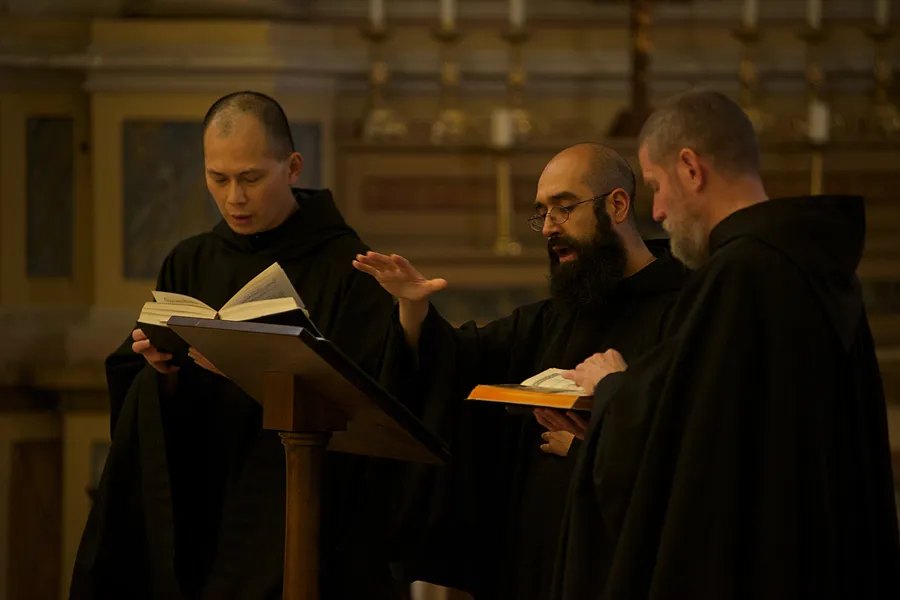
t is for this reason that certain souls do not dally amongst the weaker in humanity. Fain to promote, some individuals who advance out from their brothers recoil from association; just as the hermitage monks who would avoid the diseases of the soul and the afflictions of the lesser's sin. There are risks, more than rewards, in being and becoming a teacher.


Behold, I send you forth as sheep in the midst of wolves: be ye therefore wise as serpents, and harmless as doves. (Matthew 10:16)

In this we may find our guidance in understanding the offerings of good teaching. The wolves of the world would shred us to pieces and surely ravage our goodness by their very untamed natures. And so as sheep, we are sent forth, but with wisdom, as our mercy and goodness of intent are to be our savior. Here it is that Christ has delivered the teaching profession - can you understand here where the cycle was broken once and for all? It was never in the name of defiance that this be so, but it was for the sake of all goodness to survive and be protected.

Before Christ, those who were 'at the top of the tree' were continually toppled by the weight of the stragglers there beneath them. It is a simple equation, men will make mistakes, and there were fewer that could assume immediate disciplines, fewer still who had the heart qualities and character of their beloved teacher. Fate decided time and time again that teachers and pupils suffered alike. The waters were contaminated and the sympathy and suffering abounded.

The transformation Christ brought here was to release the teachers from the all-consuming nature of this karmic bond. Were they to enter into their guiding instructions 'as harmless as doves', as pure in intent with only the purpose to give in His Name, then it was that their assurety was assumed and the teachers did not risk the liabilities of their pupils.

However, two things do remain - should any person assume authority and show the way to injure, or go the way without Christ, then there is equal karma shared between the two.


Out of the same mouth proceedeth blessing and cursing. My brethren these things ought not to be. Doth a fountain send forth at the same place sweet water and bitter? (James 3:10)

The 'fountain' has by character a need to be as harmless as a dove, sweet and true to the purity that it would impart. There is no reliability in a man to whom words spill forth in defamation, and then to issue the 'truth' of the angels. The teacher needs be with "wisdom that is from above first pure, then peaceable, gentle and easy to be entreated, full of mercy and good fruits, without partiality and without hypocrisy." (James 3:17). Or let him rather be a good pupil then, than hazard the vocation of the would-be master-instructor!

We call for sympathy to be afforded to all teachers in the World - whether they be apt or not capable, specific, technical or logically reprehensible. The deep regard which may spring from the heart of the admiring pupil may come too with the knowledge of the very risks that other soul has taken upon their selves for the sake of their own.

A teacher may well lose his elevation - not in relation to his pupil in likelihood, but more because the pupil can be the very cause of it! And so we all cling and cleave to Christ to deliver us safely from that conceit which pre-empts and excludes our true salvation and that of our brothers, and pray hard for us all!


Amen


How brittle and cracked were my bones without Him,
As each splintered and tore at the flesh beneath skin,
And I bled and I wept,
And it hurt as I breathed,
And my time was complete, for my life was diseased.

How hopeless my fortune,
Barren my lot, without Him,
As I called from the void,
With a voice cracked and grim;
In ineffable turmoil,
This dark sea of scream,
Forming yet another tear-fall,
Into the eyes of a waiting angel.

I should lie wasted,
Sore-tested,
Without Him,
Stripped of will, vulnerable to the demons of Sin,
Those Carnivores who set upon Man,
That brother upon brother, as cannibals became.

The waters should recede into nothing without Him,
Back into the spaces before Time, time and time again.
Withdrawn, the Holy Powers back,
As spectrums quelled, converge to black.
And Father God with parent's grief,
To lose His Son would surely weep,
With ceaseless wails throughout that time,
As Love's defeat from depths would climb,
Out from the cold and into the slime,
Making swamp of the active Waters Divine.

And now it comes to this - the dread,
His Life now gone, His Passion dead.
Oh Christ return! Come forth this day!
Leave not our souls to death's decay!
Please live for us, as we for You,
And know our love to be pure and true.



Saturday, August 21, 2010

Man Knows Woman & Woman Knows Man- 23rd January 1996

And He said unto them. With desire I have desired to eat this passover with you before I suffer: For I say unto you, I will not any more eat thereof, until it be fulfilled in the kingdom of God.

-Luke 22:15


WHEN a man experiences desire, he has hold of that action of the Holy Spirit working within his otherwise complacent system. He is fired and motivated and moved out from and into the activities which work productively or corrosively. It is desire which initiates his pump and power, and this desire he employs is most feminine.

When a woman lives passively, surrendering her ego's willing and wanting to a yet higher law which convenes within her soul experience, when her intuitive foresight and bearing overrides the projections of any self desire but rather goes to the heart of that goodness she may work to maintain, this working connection to our Father in deep intuitive living is masculine. 


Man without desire becomes sinless. And it was to the female that Desire attributed Sin within the male then so faulted.

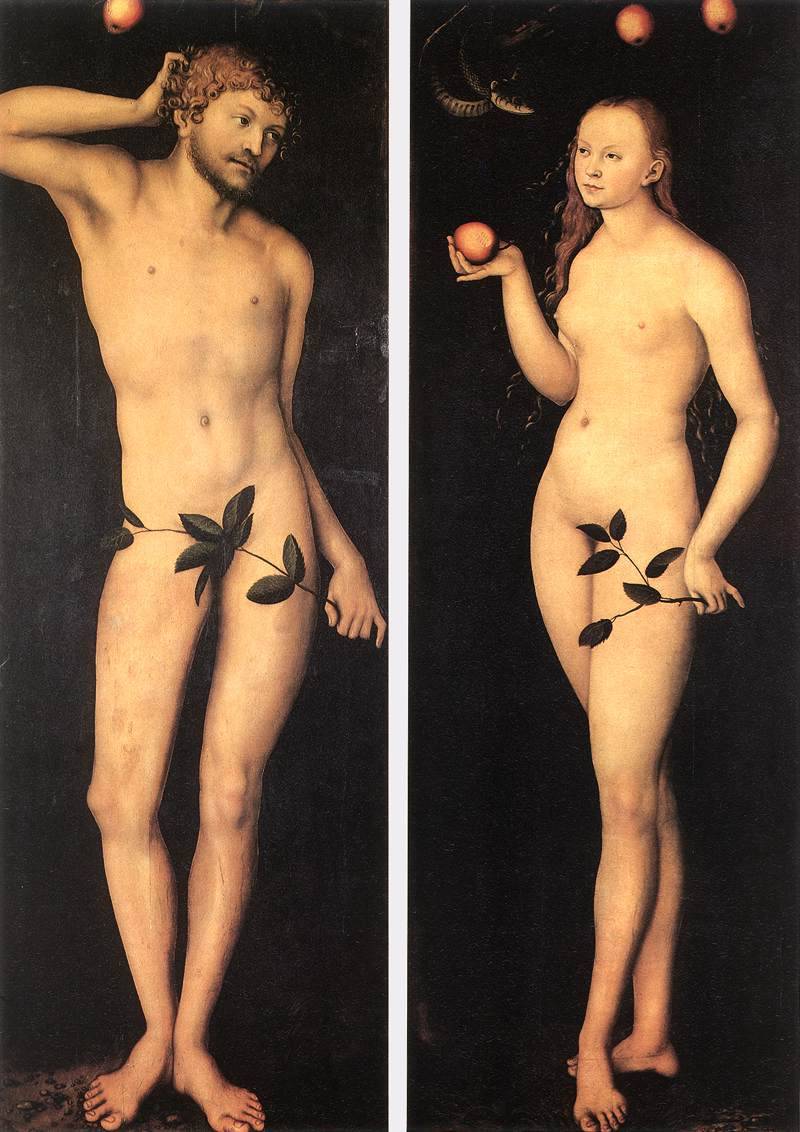
Lethargy due to God-consciousness in the male who denounces his 'sin' and spirit, comes from desirelessness - unless of course he may convert this action into yet higher desires, which work no less within the fiery movements of his inner streams and soul causeways. In this way Adam could well blame Eve as he tripped out from the peace and the protected relationship he had then enjoyed with Father God. His personal life took on a chaos, Man had begun to be actively placed in relation to his concerns, no longer just an onlooker to Creation, he became a sub-planner, master builder and laborer all in one.


The tasks set before a man within his worldly life contrast greatly from those in which a woman is placed. If we consider that there are experiences offered a soul in which he has incorporated both divine aspects over successive lifetimes, then we should not in any way look to these differences with a competitiveness, concern or complaint; for they are what they are, different and distinct, quite splendid each within their usefulness, both being experienced by every soul in turn.

Furthermore it is conjectured that as time goes by the two shall make a blend, so that the sexes themselves will make union within the one body during the one incarnation, sublimating themselves if you will. However this would be no fair exchange to lose such definition, and although pictorially it serves to bring images together of the procreative forces which shall mature in Man, it does not serve to explain that the distinctiveness of the two forces will indeed remain. Souls shall prefer one to the other and make manifest accordingly.

There is the question: Do men make for more effectual priests than women? To this we can say, yes most definitely. The priestess, the sibyl and the inspired eunuch, all have an inverted presence. When they call upon the ethers to make a spiritual connection subjugated and impregnated with etheric forms, they have not the desires complete enough to carry the blendings into existence. They can however, sustain them once there, and it was often in this that a woman was so utilized that she could supply the causal fluids about herself in which visions could be made to materialize and be supported. The nature of the woman gives the buoyancy to the waters with prayers adrift. The desire promotes the sails, just as the wind invisibly holds direction and impetus. Thus it comes to be in a mixed congregation during prayer that it is the men who summon the angels in and it is the women who cause them to remain once there.

The power of blessing as is accredited to the priest requires two parts to its effectualness: firstly, after having much preparation - i.e. a repetitive petitioning, which in time builds upon his etheric powers and are stored within his body; absolutions, upon many rehearsals purging as best can the vessel then given over to Christ's margin; determination, that he does consciously put to effort the heavenly proprieties and then knows what he has set out to have done - this preparatory status entitles the first part, whilst the second is as the tinder to the fuel, that in the magical moment he reaches up into the Heavens with his desire to make that connection and so is answered.

Now in the instance of the woman who tries for commensurate powers of blessing, she too may prepare herself to make for a clean and perfect witness to God, but when it comes to making the call she is impotent, as impotent as a solar house during an engaging eclipse. However, what she can bring about as emissary between worlds, is not the gift of being a ritualistic initiator, but instead she may be the 'tea and trolley' lady, she can be an illustrious example of those forces within the higher worlds which permeate the physical essences, sustaining and nourishing, containing and bemothering. She offers, outstretched, the sanctified arms of a tenderness which holds the spirit high above the ruins of any disappointment, she brings the atmosphere itself in which all bright expectation can drive out into and return fulfilled.

So when a woman has fixed herself within the priestly ritual and begins to initiate a ceremonious blessing, she has the capability (if so prepared with a wholesome disposition) to make welcome those beings of influence which bestow their remedies and retorts as required. These beings can bring enlightenment and spark a sought-after wisdom within the consciousness. They may bring a comfort, not only to the mind but in answer to the nature of the trouble also. They may be muses to the empty of inspiration, they may ride the tea trolley with an innocent humor that would simply and joyfully lift the spirits and lighten the heart.

So the action here becomes an individual one, necessitated by the men who are present about the prayers and receiving of the womanly priest. Her congeniality makes way for the mysterious implications, but does not of itself have the power to bring them to be; and so it may or may not be the case that they are, depending upon the concentration and intent of the men presenting at that time also.


Of course, when we speak of priests’ offices and their effectiveness within the ritual, we can also add that the male offering requires that his desire be perfect to the mark in order for him to make the right and proper heavenly connection also. There is no usefulness in accreditation alone, for every moment, especially in heavenly reality, is important unto itself. One cannot simply get by on the strength of that which has gone before. There is no more an honest proving ground than right here in the spiritual democracy.

If the priest has been without his meal and desires his food in a most natural way unto hunger, then it can mar his effectiveness in desiring the conjoining of himself with Christ as the moment does call. Should he desire his sleep or a holiday also, then the congregation shall be empty of the task completed and the service will be but a cheerful performance, if that. Things cannot be what they are not, though facades may give appearance without substance, it is the soul that will know regardless.


Men become partners with desire, women become partners with godly knowing, and as great Desire enspirits the Divine Wisdom, she, Sophia, keeps Desire alive and ongoing. 

"With Desire I have desired..." that Christ brought to Himself her company and her great fires to seal the now immortal pact, that by similar desire, same known amongst the men, the kingdoms shall become infused and know Him as He knows them, now and for ever after.

Amen


Friday, August 20, 2010

Men, Women & God- 19th January 1996

Question:
Dear Teachers,
I have been reading a book which is about ways that a woman may learn to act out from her instinctual nature, her intuitive knowledge and her soul-self, and this is achieved with the study of certain stories that bring soul-pictures and understandings back into our beings, helping us to draw upon an inherent and noble strength (Christos?) within.
My questions are: What do you think of this, and furthermore how is it in relation to men and their ways of perception and knowing? Can men deepen themselves similarly and search their psyche for a deeper intuitive way of living? Do the paths differ for men as for women? Is there a preferred emphasis you suggest upon either?


WHILE it is that men view the world from the outside in, women tend to perceive it contrariwise, peering from the inside out. Man finds himself in the world at large, he gathers, he wins, he attacks, he must search, and he shall do this in conference all the while with that part of the self which maintains the inner reside.


Women must find their world through meaning - meanings which are implied rather than actuated. Suggestions of life sustain all life beginnings, and this is where the woman can be - she goes before and she goes after and she brings completion. She does not search for herself in the woody recesses or watery passes, for her 'sense' of time and place belong in the soul regions, which she must pass the gate before every thought, every care and deed accomplished. 


She brings the warmth to the flame, whilst he brings the light.


Oh pierced now, this unlit space,
With soldier force and brazen flame,
You contrast me as night does day.

So it is that the man has an opportunity to enter into his perceptions in that incarnation of manliness, with a purpose and a continuity which is not shared alike with that of the female incarnation. Whilst it is that the soul and the spirit of Man are amphimorous, they are characteristically female and male also - just as all odd numbers are masculine, and even numbers are feminine; the number one (that number of Father God Himself ) contrasts the duality of soul in which we know consciousness and come to know all others.

There are the two ponds of sight: one in where the foot is caught and held by weeds, the other to where we drown completely - that in men they are held and fixed to the specifics that they envision, whilst in womanly aspect we are immersed in the whole - the entire panorama does take us with its 'overallness'.


  • Aspect - Male
  • Patronage – Female
  • Time, in increment and divisioning – Male
  • Continuum - Female

The question brings rise to a state whereby a man may act out of such a meditative preliminary that he may access the higher knowing; both of his own and the corporate knowing of all men and of Christ. Of course this is possible, for in isolation man would be a sorry creature of intellect only, and whilst intellect canvasses the graph, it is not of itself, the conforming and non-conforming structures within.

When a man references God, Father God, he must travel past himself, negotiate the opinions and fixations of all others as well, that he may come further to the truth of that which preoccupies him. He is removed, that he may return. He can then be decisive, and decisive objectively.

When a woman references God, same God but that of His Holy and Quickening Spirit, she travels within herself and then hones in all the closer, ever closer to that which she must understand. She is neither removed nor temporarily static by nature, but impelled to search out the very nature and spirit of that which concerns her. In this we find that the ponds are transversed - women are then held by the particular (the male aspect of their knowing), whilst the men are given to the overall picture (the female aspect of their knowing).

To feel sure-footed, to be equipped, to feel firm within the world with a 'soundness' of reasoning, a deliberate purpose and a kindly nature which consummates in kind, means that we may meet with all living beings in the spirit so given in the original Paradise. We are humbled before life and marvel at its tenacity. We are neither blocked nor confused, but rather clear, detailed and divine.

This is so and not so when it comes to a man's most ordinary life. For it is that we often do not have such soundness to qualify our reasoning - our ground beneath is hesitantly trod, our kindness has withdrawn from our offering; for we are tight-bound with fear, fear of such uncertainties that feature in this our life.

So men (and men it is in particular) may be convened by daunting uncertainties which inhibit and restrict and cripple the pathway to God. The fears and offspring of anxiety are translated into activity, i.e. work or collapse. However, it is but a side-step to resolve, to exchange occupation for preoccupation. And it was that many great cathedrals were built in this manner - momentous works set about and made real, all by men who were fraught with such inner dilemmas which made them worldly productive.

For the women who are so taken by self uncertainty and conflicts of soul and self, the response and result can be quite different. 'Busyness' can step in and take over, without the great achievement that a man who is removed from Father God is caused to create. But when a woman is removed from the spirit and nature (of herself and of those things around her), she has all the flurry and disquiet of the ever-moving Spirit, but not the containment necessary to make perfect the moment or the situation.

The problems which ensue become more obvious and compounding in time. She will give rise to details which though highlighted are unimportant - unimportant to her in reality and to that which she endeavors to do. In other words, she, having temporarily lost her way inward to the connections with life-spirit to matters before her, becomes fixated with the inanimate and uninspired bearings that press into her consciousness with ferocity which the Holy Spirit drives.


Eventually, should a man 'work himself to death' (i.e. creativity over-bounds, but has not referred to God for resolution and is problem driven to the extreme, that Father God shall take him) he will enter into the Heavens carrying those worldly perplexes, and these may carry over and affect his bodily substance in future incarnations.

This is why it is to good reason that a man may cease his greater activity towards the end of his life and give over to 'finding God' in the quiet. To the extreme however, we may find that men who are peaceable and content with their relationship to Him may suffer a lethargy (no worldly enterprise), and this in the young is inappropriate to life. Ironically this too will weaken the future bodies of men as there are always the two forces implied in existence: that of sustaining and that of creating.

Our worldly activity does invoke and incorporate heavenly response, forces which are drawn upon and called upon only by our very actions here within the physical realm. In this way worldly activity is paramount to heavenliness. The soul of man does know this as it is his answer to remedy the feeling of lack of soul-life within himself. That his soul aspect is not insinuated causes the aggravation which entitles the work. He is driven by lack of, more often that not.

Yet! What should arise should a man come to both? That he is productive and active working out from such certainties which only Father God may maintain. It becomes then not so much a matter for the physical gestures within his time, moreover he begins to build his towering forms of creativity within the spiritual hemispheres: our future world.


What merit has esoteric thought for a man to become so ever effectual? Often this is deliberated, and not only amongst the novices who are understandably confused and mistrustful of its leadings. One may well wonder why we should cross kingdoms with our comprehension and come to study those unseen things, that some would maintain God Himself has kept secret from us. Argument comes also maintaining that loyalty to Christ is quite enough to bring us into a future of being. But we must add to this that it was Christ Himself that created the associated kingdoms, and though it is that Man is deft to some degree, he is also, comparatively speaking, immature and inexperienced. In time, as experience comes to him, he shall find that what was formerly unseen and held to be mysterious, is but as natural and as normal as what he now may encompass and accept.

Both men and women may learn to return to the quiet in order that they may confer with our Father God and therefore become with such intuition as is His. That a man may travel outwards from himself and the woman inwardly in search so also, our higher natures require a kindness and forgiveness of self. For no amount of quiet may be maintained in the chaos of self-contempt. 

Whether it be a vanity or a matter of conscience, there are persistent self-doubts which do verily wear away at a man to no good effect. We may gauge the valueless self-doubts from the useful self cautions by way of asking: do they strengthen or weaken, do they enhance or degrade, do they uplift or deflate?

The saints were not brought into personal and consuming sorrow because of their guilts and repentance. To this end the saints were joyous. When they did cry it was not for themselves but for the stragglers who were then bound for Hell. In ecstasy they would cry also, but this being an expression of mute adoration and the conjoining with Spirit as it touched their soul-mind.

Where are the examples of the textbook morality? In adult consciousness there are none so adapted as to be carefree and guiltless. However, (and this we say with emphasis) know your own sins and you know the world also. Know of them, rather than ignore them, but keep them housed with a tender compassion. Do not engage with overfeeding a self-doubt, for this only brings vitality to the very thought-forms so related.

We need to remember that the elemental thought-beings which comprise our personal atmosphere, enjoy upset as is remonstrated, and do encourage it, rather than peace. For in peacefulness there is no vitality to feed these accompanying creatures and they will moan all the more begging attention; for a time.

Truly a man, or woman, may well weigh all within their heart as the moment requires. The true conscience cannot ever be set ahead of time, for it is an active conference alongside the issues of the moment. Men must come to know for themselves, but also and more importantly, to rely on the proper means of this knowing, for no longer may exterial rules carry through with reliable compliance. There are many 'good' men who are dying from the less obvious sins which atrophy the heart.

Our highermost instinctual selves become presently known when we may manifest a likeness in active love. Such love may be witnessed in a concern for another, a true study for the study's sake, or in periods of deep empathy or communion when we are also encompassed by those angelic beings who bring light to the consciousness and then help to guide our worldly maneuvers and transactions.

Angelic influence such as this, does not bring monetary wealth to a man (as is often hoped), for money in itself does not appear tangibly within the associated spiritual realms. They bring to Man the causeways and the opportunities, the clear runs through, dictated by his desires then made enlivened. By desire it is meant "that which seeks, and promotes a man to go beyond himself, by the nature of that seeking". This is what desire is.

Desire furthers that which is. Desires target outcomes. Man then learns to discern the most 'desirable' outcome to infill his desire so invested in. There are lesser and greater desires. Beyond the greater, there are those which are sublime for which we hold an intrinsic understanding:
  • Desire to know God
  • Desire to be God
  • Desire to live (active)
  • Desire to thrive (aspire)
  • Desire to be (passive)
  • Desire to conform (the great laws which contain us)
  • Desire to maintain (Godly concern)
  • Desire to commute (to travel out)
  • Desire to arrive (to fulfill future, to grapple thought)
  • Desire to know
  • Desire to cease aloneness
  • Desire to excel
  • Desire to desire
  • Desire to be worthy (of God's love)
  • Desire to be worthy (for existence)
  • Desire to create (and procreate)
  • Desire to make known (to be seen to be tangible)
  • Desire to fulfill (others)
  • Desire to invoke love
  • Desire to invoke beauty
  • Desire to invoke chaos
  • Desire to empower self
  • Desire to contain self
  • Desire to empower God (and Christ)
  • Desire to contain God (and Christ)
  • Desire to incorporate the World
  • Desire to incorporate all men
  • Desire to promote unity
  • Desire 'Godsight' - divine interpretation (intuitive divination)
  • Desire for aptitude
  • Desire for potency and commensurate strength
  • Desire for surety and guarantee (universally given)
  • Desire for furtherance (for self and for others)
  • Desire for deliverance (for self and for others)
  • Desire for continuance (for self and for others)
Amen

These basic and inherent desires when thought of, shall help retrieve our personal sense of likeness to God, just as prayers and hymns which invoke elements of these, also may bring us both outwardly and inwardly to that primordial self which is independent of the worldly glamor. (Glamor in this context implies: garment of magical presentation - the glamor is an attractive facade, but facade nonetheless.)

We may couple those things on our table so given, after having worked through a primary contemplation, as each one may be added to all else and meditated upon in dual relation.

This avoids the vitality going out into specifics, and yet does make for potent reckoning, bringing impulse afresh to the very specifics we may target in our day to day life. It is important to bring the lively forces into those desires within our beings, because often as not the specifics if solely characterized, do not answer these needs, whereas the fundamental desires as inherited, stimulate the future in Man for all men and women alike.


Thursday, August 19, 2010

The Miracles Translated- 14th December 1995

SIMON, dear Simon [Peter], brought many men to Christ whose destinies then altered; and during their submissions Simon would hope that his score could many the rest. None would allay his own doubting however, as this too had brought him to persevere, to search for those men who might qualify his reasoning and become his very mainstay. It was not a doubting of Christ as Lord, nor was it ever a question of His having being, it was moreover an uneasiness which rested within his own soul, particularly when the darkness was about to be quenched with a light invasive.

As if the breath is caught in expectation, our soul's cavity may seize when invaded with a life drama, and with Simon there were suggestions that he confused himself with Christ, and this also made him quick to comment otherwise. [Luke 22:61]

Can one imagine the many forces commanding which our Christ continually beckoned forth? And all of the mightiness that was contained by His Presence and brought to perfection! The forces which bring sight to the blind are the same as the forces which bring Man into this World. The entering into incarnation is made possible by Christ, moreso than before, because He now has protected each child and pledged their souls completely.

When men used to arrive into matter to be born amongst their particular people in a given skin and organism, there came to be a mingling of karma and a confusion of self which for the main, overrided the sense of the individual soul. In this way incarnating was extremely perilous to the ego, because a succession of lifetimes induced falsehoods within the consciousness whereupon a man was only partly himself and incorporated greatly with ancestral incandescence.


For Christ to bring those same forces which correspond and invoke our visual perception, he commanded that same discrimination, but which was now differentiated perceptibly within the consciousness also. No longer would a man believe that he was none other than whom he had been. He was now free to develop quite naturally along his own inclinations without the cooperative of his forefathers.

Accelerated developments did succeed because of ancestral tallying; however as a means to an end it was quite useless because the effects were only good given a single lifetime within the body itself and its surrounding influences. Men seldom retained the better qualities inherited unless they could consciously endorse them within their own egos. This of course took effort - and without effort (because it was already in place) it was not what it was.


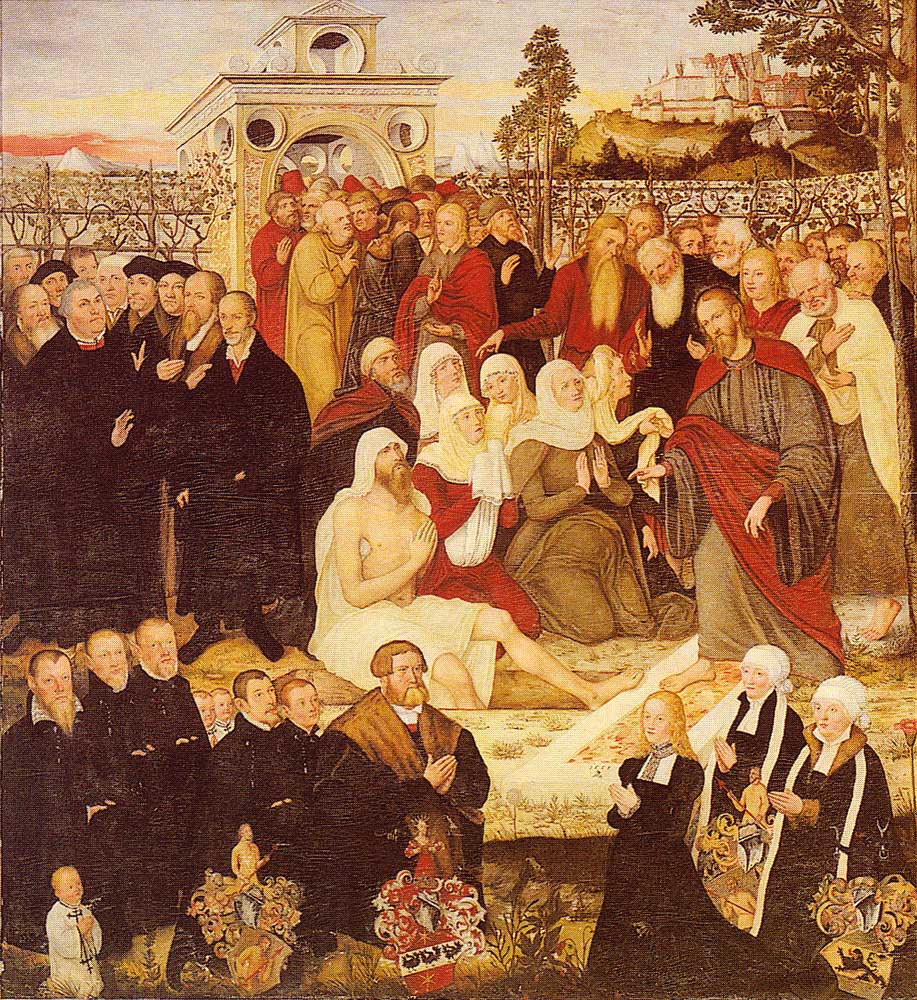
For the lame to walk, the Christ forces brought to bear the same motivations as those which metabolize the furies. A man maintains his mobility and activity and connections within his parameters because of those forces which combust with the fires of creativity. Traveling hither and thither, Man busies himself within the world. We walk this way and forever on, the man being happiest when he is moving forward upon an active course, and here Christ assists us all in bringing also those forces which course the World at large. When man moves, everything else moves away from him.

Our weight gives us the augmentation to drive our wills as well as our limbs - and where more importantly than in the imaginative forces? Creativity pushes against the impulses of law and of will, and of presiding realities. Imagination defies all of these very rigid parameters thus defined, and yet because of Christ we have imagination which may go on to negotiate and walk against the winds of stagnant thought. The strength in the legs is the same strength that takes the mind into creativity, and this He brings. Before this men had not the abilities as they do now, to move forward in their thinking ahead of their experiences.

The lepers are cleansed: there may be two causes of premature death, one being decay and lack of life, whilst the other may be too much life overriding another. Decay itself comes from the desistance of life. Men would decay overnight were it not for the etheric influences which permeate their spirit's flesh. They would simply fall into dust, as was often occurrent in past times, when men were loosed from their etheric doubles.


Death by life may appear unconvincing, and yet we find that Man is host already to so many other life organisms and ethereal entities that he is unaware of; remarkable, that as a community he may exist with cooperation at all! This is predominantly our Christ's influence here as well.

Cleansing the lepers, in forces translated, implies that the commodity of flesh has been purified by Christ Himself. By His incarnation we know that the body of all Men is prepared for divinity to be properly housed, and those elements which cooperate in Man are made welcome, whilst all else are given no privileges and in time shall be cast off most permanently.

Our physical development is ongoing and far from perfection, however the forces now introduced have made way for such development which is to be fully realized as we go along. Of course we invite Christ to ourselves in our similarity to Him, and in this we must also invoke the forces He makes possible accordingly. As the soul of Man matures, and the ego also, he will introduce unto himself the possibilities for complete and perfect health. This will take time if it is to be individually won.


That the deaf can hear brings us to our correspondence with the interpretive faculties and forces that work within and without Man. Once it was that a man was only receptive to that which he understood, that he could not achieve comprehension or even acknowledgment of anything outside of his experience. Christ enabled men to interpret just this, and fortunately so, else none would have come to wonder of even He, if it weren't in the history of their family or their own.

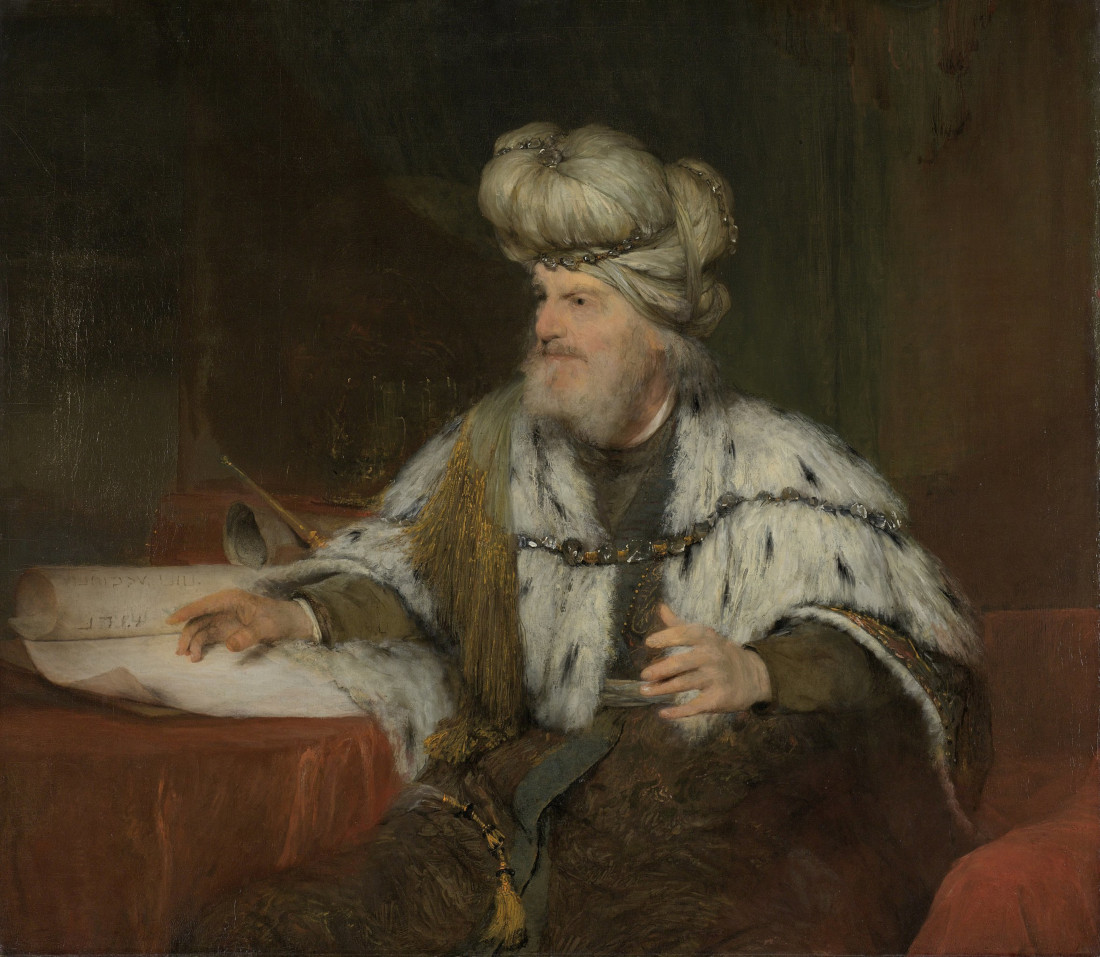
Of course even He was introduced into the World by preparing somewhat with an earlier arrival. In this way He could connect again with those souls to whom it was required. He was in part, King David.* David brought two lines of Man into being. It was the east and it was the west, and it came because there were two distinct types of soul so manifest.

Half of the men then born were truthful 'white-foots': they were pure and passionless and reluctant to incarnate. The other half were barbaric and uncouth, and with concentrated vim they broadcast their indulgences pushing irregularities with hearty defiance. Spirited and dangerous, these men were a prelude to the teams to follow, who as mentioned afore, began to be aware of selfhood before association. Christ became King David, although King David did not become Christ. He entered into the very forces of that propagation which inspired the offspring to follow. This appeared necessary that in the periods later such men would come to fully accept His presence as placed within the physical makeover then given.


David was John (Baptist-John). He was on envoy then, having tried unsuccessfully for incarnation some ages previous. It is not to say that other grand souls with lesser parts do not make their appearances - there are characters reoccurring throughout - yet the captain soul who was responsible for men before they came to this world, had to lead the path in that many more might follow and resume their corresponding connections. His influence ceased to be and was relinquished into the greater Christ at his death - John the Baptist shared then an identity so sublimely extreme that his departure took with him the appearance (countenance) of his beloved Christ. It was as if there were two to look upon him. [Matthew 16:14] (Or three, counting Simon-Peter). (Here lies a clue about James.)

The forces for raising a man out from his death are those same inspirative forces which motivate a man out from his sleep - consciousness! and our driving connection into this world. Christ brought a distinction here, for hitherto a man rarely knew the difference between his waking time and the world beyond in his sleep. Rather than there being a concentrated consciousness which maintained this world completely, the dreaming man was prone to death because the spiritual worlds offered no anchor for Man.

That Christ promoted the 'here and now' is evident by His call to repent. Repentance requires summation and conclusion, and as it is affirmed within a man it makes change possible. However and likewise, at the same time he is freed from past consciousness because he is enabled to forsake that which is not necessary to him, and retain in the present all that is worthy and wonderful to him. Therefore by repentance one may come to settle within the moment with all the joys of selfhood in that very moment, being freed from the scourge brought by unnecessary radicals within corrupting behavior. 


That the poor may have the Gospel preached to them offers a range of contradictions to a system which promoted 'fitness' and nobility of 'right'. We have a universe of good angels and principalities, but also introduced in conjunction with this world is a compassion which may bring the divine properties of angelic influence into the realms of demons and lower man. Worthiness was no longer solely won by merit. All beings have been considered worthy of the highest exaltation solely by merit of the fact that they are united and conjoined and born of the Father. Man is truly blessed when he may incorporate these new forces into his composite self. We can study quite readily what happens when spiritual malady befalls and corrupts these empowerments and the old ways return.


  • The false spirituality discourages men to meet ever with this world, but rather calls them to veil their earthly eyes and only seek out 'heavenly' visions. They are misplaced in time, and caused to great dissatisfaction. The world becomes acutely painful when a man closes his eyes to the happenings around him and does not wish to see the poverties but only the beauteous.
  • The false path deprives a man from his will and motivation and he becomes less and less effective within the world. He would rather lay down and die than lift the food into his mouth. His desire is vanquished and he becomes prematurely old. The limbs lose their purpose, as he too shall faint away.
  • The false path welcomes death, in that it will corrupt the organism recklessly. A consciousness which is derided by alcohol or narcotic stupor is but a lepered consciousness deformed and maligned. If occult practices cause the heart or mind deformity by over-stimulating other centers beyond their capabilities, then this too is an example of the retrograde forces as opposed to Christ's positive effect made possible.
  • The false path can also be indicated where no longer may the man comprehend the truth. Self-interred, this comes through lack of active loving whereupon he may truly find his relationship within actuality. We are insensible to the world by our selfishness.
  • The false path would dissuade a man from incarnation and lead him obviously into forgoing his consciousness. Christ's duplicity allows for Man to be able to commune in such a way that he can 'share' egos for a time and surrender consciousness at will; all the while the man retains his selfhood and may resume his own ego having gained from that experience of communion. However, the false path would encourage a man to give over his consciousness having no desire to return to it enriched or otherwise.
  • The false path would determine the recipients of its generosity. It is particular and full of pride, and so one may quite readily find those who have not the Christ forces developed in true charity and community, but prefer only certain company and believe that entitlement is especial. Beware these thoughts of fancy!
Blessed are they who may recognize Christ as He sweeps through the order bringing healing to our wanting souls. May He be received wholeheartedly and knowingly, incorporated into our prejudice and dilemma; known to us by His Perfect love made evident.

Amen


*David’s verses from Psalms: "My God, my God, why hast thou forsaken me? why art thou so far from helping me, and from the words of my roaring? " 22:1

"For dogs have compassed me: the assembly of the wicked have inclosed me: they {pierced} my hands and my feet.
"I may tell all my bones: they look and stare upon me.
They part my garments among them, and cast lots upon my vesture." 22:16-18

My Blog List

Followers

Esoteric Christianity Archive