Translate

A CLUB OF SUPERNAL INTERESTS Christian Esotericism, Spiritual Science, Esoteric Christianity - All Authored by a Lodge of Christian Teachers (unless otherwise stated.) (All writings copyright) ©

Tuesday, May 24, 2011

The Magic of Christianity- 21st July 2004


REPENTANCE
When a man entertains a thought, the thought itself will take the liberty of returning - whether called for or not.

There are times when thoughts find their way to the consciousness, but are unworthy of the attention they might gain there. Usually it is that along with these thoughts (with all thoughts, that is) there are elemental beings of the finest, and fundamental variety, that with certain character take residence alongside the person who has unwittingly invited them. 

Eventually such beings do desist when they tire - when they are depleted of the very vitality that fed them, i.e. the man himself does not give his life-energy to these thoughts and beings any longer. However, an instant dismissal is all the while possible through the inner act of sincere Repentance.

By repenting the thoughts we do not wish for, we recant them back to God, literally. And it works every time! Rather than laboriously feeding beings with hostility or aggressive guilt, far be it better to consciously commit the regretted thinking to a sincere, but one line repentance, which effectively not only closes the door, but seals it also against that particular being attending.


REDEMPTION
Redemption is the principle of borrowing 'grace' from a higher realm that it might transmute the material from that of the 'lower' or current realm. 

(Please note: the term 'lower' is relative and applies throughout all spheres of being - both here and in the divine worlds throughout, this principle carries through.)

By this definition we are redeemed during the act of Holy Communion- whereby the callings and the offerings are pertinent to the higher borrowing and subsequent change therefrom.


'Redeeming' is not just a 'saving' but moreso a re-determining, so positively that there is a re-making and readjusted qualification to the reincarnated value.

The 'born again' Christian finds this principle of redemption and being thus 'born again' throughout all spheres of material and spiritual life. The lower realms suckle from the higher worlds with an infantile dependence. The higher spheres nurture the principles and properties of all that lies beneath them.


Monday, May 23, 2011

The Rights- 3rd June 2004


There is wisdom in much!

  • YOU HAVE THE RIGHT TO REMAIN SILENT (TO KEEP TO ONESELF).
  • YOU HAVE THE RIGHT TO SEEK DIVINE COUNSEL (TO ALWAYS REFER TO GOD FOR CONSCIENCE).
  • EVERYTHING YOU SAY AND DO WILL BE ACCOUNTABLE FOR, KARMICLY. 


Sunday, May 22, 2011

The Ecstasy & the Agony- 24th May 2004

ALL life lives and revolves around the greatest of ecstasy.

People often wonder what it is that motivates the essences of life itself, what inspires the movement and existence, the constant unfolding, changing and navigation through and through. If you think about it the entire compilation is remarkably forceful. It is a production that would be, in itself unbelievable, were it not for the fact that it does exist and goes on!

To sense what is there at the core of every living entity within the mainframe of this immensity, is to sense the blissfulness which is Life, the ecstasy and pure fun of Being.

Life itself would fail to get up each morning if this were not so. Within Humanity (at present) there exists a difficulty which the heavenly beings do not participate in. They can suffer grief and pains, which we will make mention of a little later. They know what it is to desire and be unfulfilled, disappointed and spent, helpless for a time etc., but even the disruptive individuals (and not-so individual, individuals) are energetic in their movements and feelings and do not suffer the inertia that is spiritually experienced living in the world today of the mundane. 

You see, the reality of Life (as aforementioned) is anything but that. For in truth, it is unreal to be disassociated, uninvolved, apathetic and not sensitive to the lively joys that are very much a part of the exuberant orchestra of beingness.

A moment ago you asked yourself or me the question "where is this going?" and there was an element of doubt in that question that it was going anywhere at all. This is earthly thinking, because of course it is going somewhere! In spiritual terms one expects everything to be going somewhere, and usually our dialogue certainly does!
Furthermore, the point just having been made in itself got somewhere. [The Teacher is not cross, but humorous here.]

However, in relation to your question about The Passion of Christ [movie], there are a few ways to view the offspring from this artwork of course. In a considered view it is important to note first up, that we do suffer pain in many different ways. Our very detachment from the true ecstasy which is our common way of being is veiled, but the greatest pain of all to be experienced. 

You must realize please, that having said this, this is a dangerous teaching to ponder too long or incorrectly, and we will now cover as to why this truth must be thought through ever so carefully if you will.

When Christ wished for us that we could know again our relationship with our Father, it was not for the sake of our Father, so much as it was and is for our sake. 

Experiencing our Father is a good, great fantastic feeling. Once again, there have been earthly thoughts, which promote a drudgery, duty, unhappy propriety, sad and pitiful sobriety (as differing from a gay sobriety) - all in all a hangdog summoning, rather than an elevation of spirit and a comprehension of the Divine, which is uplifting and exalting.

On the other hand there are folk who by any means possible, will try to recapture the exaltation and exhilaration of life and of knowing Him, through means other than perceiving the truth straight out. Whilst it is understandable that this occurs, we know the effects of narcotic and luciferic experiences actually cause more problems in the long run.

So why are the gates locked to a common spiritual experience in Man? Why do folk experience a heavy dullness instead of the light and levity within and without? 
The word 'humor', came from the context and meaning of 'fluidity'. This is interesting because in keeping with the concept that Life in its ordinary fashion is most joyous, we can ascertain that the fluidity of life as known to us, is experienced, when all and we are happy. When this is not experienced there are 'blockages' experienced, in our thinking, our being, our feeling, our perceiving, our knowing and our outpouring.

Humor itself has suffered negative meanings, indicating what it is at its worst representation. But what actually is it? What is causal to the 'flowing', this fluid nature; what is manifest within its own?

True humor is a soulic knowing; that knowing which connects beings in a living recognition that is happiness combined. The experience of humor is not frivolous in the negative context, but is frivolity at its best.

The word frivolous also grew horns not so long back - indicating something was quite misspent and useless. There has been less and less value given to humor by most races, and it is/has been dismissed as a sidetrack rather than a fast-track to anywhere. Frivolity (a cousin to Joviality) does indeed distract us out from the one direction the mind or intent has focused on, but does not have to detain us from the heart of the matter we are trying to deal with. This is speaking of the positive variety of course, whereby there is a great gift to us in the practice and understanding of the forces involved.

A negative frivolity, we all know from unproductive people who may use it as a means to disrupt another. But in our own life's defining we can enjoy its [frivolity] benefits completely. We have a certain right to disrupt our own patterns of thinking - particularly when they have begun to resonate so low there is no coming back from them!

One can only imagine the depressing dredge of thought that hovers every city, where men and women are insatiably grumbling or complaining or reiterating some past moment - not escaping their fixed position, not alleviating their situation, and not comprehending how this frivolity could instantly snap them into a differing direction. Yet it can, and with productive results.

It is more than just putting a smile on one's face. It is actually a huge and powerful truth. Usually this truth is dismissed because it appears dismissible. How can we be serious about the non-serious? But we can.

Seriousness needs credibility. It needs to be pertinent to the moment (only that moment) and it needs to have value. As men (women included of course) we are Christ-filled and Christ-given, we can be serious about something and direct our will in such a way that the very seriousness is felt from one planet to the next. Our effects that come from our being; our consciousness and our wills, rock the heavens with inordinate shaking.

Whilst this is forgiven by our neighboring fellows, it is careless and also has an unhealthy affectation upon us. The overly serious person will of course lack humor (true humor) and frivolity.

This is how it works afurther:
  • Serious 'A' is when an individual takes his thinking or his action into a situation that requires intense willing - for further action or further working. It is usually something important (not frivolous in the overall scheme) - important as in something constructive.
  • Some people (serious 'B') have a talent for making little things serious or overly important and exercise their will and this action too readily. But hand in hand with this seriousness there must be some measure of doing. If there is no doing, then heaven knows that we are not truly serious but rather just summoning these forces to enjoy the forces themselves. So with the man or woman who is difficultly serious, you find much talk or thunder, but no constructive action amounting from that individual.

The serious element requires follow-up. We cannot afford to be serious if we do not use the powers that are inpouring to us, that befit the work or thought ahead, and then do nothing with them. It then becomes a cosmic madness to receive and not use as is required.

Of course a seriousness that is not constructive often spends its forces through anger. However, anger itself just seems to enjoy more seriousness to fire its coals, and so it goes.

Seriousness is a great springboard into further thought, further action etc. Seriousness that is not utilized for this is detrimental.

Frivolity is a great springboard out from unproductive seriousness. Frivolity becomes unproductive therefore also, and difficult, when it interrupts a productive seriousness. This is what gives frivolity a bad name. However, with personal application it is a saving grace, particularly when the seriousness has outworn its usefulness and is causing more ill than good.

Pursuing ecstasy is dangerous because of one simple fundamental principle, and that is that life does not reward self-gratification. It does reward striving, self-work and self-discipline, self-kindness and care, but not gratification through just the unit of one. 

The true spiritual ecstasy has its primary placement in the perception of the bliss of others, not in the experience of the bliss within oneself (which occurs naturally and secondarily to the bliss in others). (Also, contributing to the wellbeing and bliss of others of course.)

Self-seeking gratification by way of taking a pill or doing a spiritual exercise with the purpose to experiencing this bliss, is of course nonsense in the light of what has just been said. It goes further than the serious individual summoning the forces of action and then doing nothing. What it does is just experience the 'hall of mirrors' in the astral of past experience (personal or otherwise); and so it is life deceased and not life inspirited, being experienced through false and selfish means.

This life deceased has the poison of deathliness within its kernel. Most of all it brings with it a death to our perception, or a glimpsing of the true bliss and joy outside of the cemetery, and the individual forfeits their discretion and deciding. 

Healthy individuals will love babies, babies are blissful (they experience it in everything everywhere naturally) and we can readily experience them experiencing this bliss and so forth. Then later on, when the egoic forces begin to descend, the child begins to mimic seriousness - 'monkey see, monkey do' - all the while feeling pretty jovial beneath it all. When an infant cries through hunger or discomfort (or later through a tantrum of sorts - a conflict of wills etc.) the individual does not actually experience upset as we would imagine. There may be an expression of upset, but the joviality is there, and the output of tears or yelling is not unhappiness, just signal.

Now this is not speaking of a pitiful circumstance of great pain (teething, illness or injury), but rather the crying from discomfort or difficulty. Often if pain or emotional pain is being experienced, the infant will have periods of undue quiet - much like an adult who locks down within themselves. However even this experience is nothing like that of the older child or adult, because the egoic consciousness simply is not there to interpret their own suffering.

Individuals have a mournful expression with grades of suffering, and like the baby we can have expressions of upset which are no more than loud signals of discomfort, whilst the very same expressions can denote the toughest of trials and of crisis. This makes it extremely difficult to be around and interpret. For the ordinary individual who is naturally empathetic it is persuasive and consuming of course.

Here we can begin to gauge the seriousness again with the adult's howling predicament, by asking privately to ourselves in the assessment what is being done here.

Have you ever seen a gravely ill person make jokes about themselves? This is not only to care for the person they are with, by trying to intimate that they are 'all right', but also it is a great example of using frivolity in a way that brings them out from a seriousness that is getting them nowhere. They have every reason to be serious, but recognize that they are at a point where it is unproductive, and so will use little jokes to cease the hardened thought, and in that there will be a healing, not a hardship. So it is not just pathetic to have an ill person or troubled person do this, it is actually very useful that they can. This is not to say that it is called for all of the time, and there may be other moments where the seriousness can be useful in their making decisions and so forth, but certainly cannot be sustained all of the time.

And so, with the complaining adult who howls like an infant, we can also check the breadth of gravity by quietly asking if they themselves are doing anything about the problem.

Often folk will have a way of throwing all blame outside of themselves. It not only self-justifies, it is the signature of an inactive person. The inactive person, who is not reviewing what they could or should be doing to help a situation, is a person who is not truly serious (at the heart of their expression of seriousness), with what it is they are complaining about.

If a person maintains their seriousness dramatically, violently trying to injure themselves or others, saying it is because the world is not a better place, or their marriage partner a disappointment or their own self has been used or abused, what is the sense of making oneself feel worse about it? Isn't it enough once over? Furthermore, is it relevant in the now? Thirdly and lastly, what are they doing to make the world a better place, to be a more loving and therefore needed partner, and to stop the abuse or abusing?

As simple as it sounds, it clearly is not understood, going by the amount of whining and complaining that is out there in day-to-day dialogue - misspent words and thoughts, that have no place in seriousness because they are not qualified in action or intention. 


With the portrayal of Christ in the film of The Passion, there are gruesome outer events, which do not on the whole invoke the happy or the humorous. The creative artists behind this production have believed that it takes this level of persuading seriousness to reach the watching public, and that the subject, nor the Christ, could never be seriously enough presented, no matter what was shown by way of a movie.

The story of Christ has lent itself to so many forms of artistry - even depicting Him as a deer for example - and whatever the creation there has been in each and every one of them a hidden blessing.

So also in answer to the question, there is such a thing as 'too serious' - when it is not acted upon. Seriousness in itself is a means to a happy end, rather than an end within itself only.

Was it the whole story? Of course not. We cannot presume to know the colors and character of experience our beloved Christ knew; only to say that it must have been infinitely worse and infinitely greater than a morbid beating with whip and word. 

Life itself is not serious - serious itself does not get close! It is so powerful and enduring, and it is only ourselves that falter with this knowing.

Faith at present, needs be tempered with both resolve and good humor, that somehow we can remind ourselves that holy purpose is generally happy purpose. We all have such great abilities, finding this mirth in places you would not have thought of looking for before; and remembering that the Red Sea was parted with a laugh and not a with a tempest! 

Saturday, May 21, 2011

Ten Men went a'Hunting....10th May 2004

Steeled, and with tamed enthusiasm,
The marksmen waited in a line of ten.
Each, one bow, many arrows also;
In cordial relay, they tensed in lateral readiness.
The Deer of Christ came dancing by,
His horns gold,
His face a soft brown fuzz.
His eyes, intelligently peeked with a knowing,
Sought those of all ten men;
Whilst His soft and panting breath a'glowing,
Frisked the air with the vapors of Eden.

Long while it seemed the challenge was on.
With calm authority, the Deer paced the ground.
It was Marksman One who saw the flame upon,
And His Divinity,
He addressed them most somberly -

"Fellow hunters, this is just no ordinary deer.
Not the 'breathing meat', as might first appear;
This Deer is blessed,
And He comes with a purpose.
Should we follow His Service,
We will find our true contest."

And on their knees,
The ten knelt down before Him
(Clenching the fist).

Their names were:
Egbert, Herald, Mars,
Adonis, Chapman, Mercurii,
Psyche, Reaper, Plutarch
and Oblique.

When the Deer with the golden antlers
Came to Egbert,
He had known where he would be taken.
Out from the ten,
In sole requisition,
He followed the holy creature,
Without fear or insult in his station.

Oddly however, Herald did chase behind.
Long time companion to Egbert,
Supporting every excursion even before;
He would not stop now, pursuing his cause.

And like a Rumplestiltskin,
But with a sleepless dream (not dreamless sleep),
Egbert aged in rapid time -
For time had hastened,
Or his own strength abandoned,
And when the Deer came finally still,
Egbert was a weary soul,
Now come to his life's end.

He began to see ghosts all around -
And in his reasoning,
Felt not far from dissolving
Out from this world in a similar way.
These ghosts were accusative,
Demanding also.
Grief overcame our Egbert,
For this was not the outcome
He had hoped for.

Herald who had not been far behind,
Came forward and held up his beloved Master.
His vigor did seemed replete,
As he puzzled at the ghosts all around.

"They have no substance Master Egbert"
He said with good cause.
And the ghosts vanished back
Into their shadowy doors.

Inconsolable Egbert, saddened for himself,
Distraught at the thought of the others' expedition,
He had encouraged them so, into this perdition.
Perhaps this animal was no more
Than foul and mischievous enchantment?
Certainly he had ventured thus
With no reward or commission apparent.

The Deer stamped his hoof - three times,
Thud, thud, thud -
And the dirt from the earth
Became beads of gold in the wind.


On his left there were a gathering of servants,
Angelic he could ascertain,
For their goodness emanated from them.
It was impossible to count them,
But they appeared as a multitude at the ready.
This vision was most comforting,
And as he looked across this one body of beings,
He saw also the ranges and the terrains he had traveled.

Clouds and fountains, texture and colors,
Worldly formation came and swept across
This angelic grouping -
That in mix and mingle had pieced together
The world he had known
In the greatest obeisance.

To his right was a darkened hole of exaggerated terror.
Noises and smells arose out from that gape,
And the fear in contagion gripped at his throat,
And his chest stifled also, contemplating that pit,
Trying his best to see past, it invoked yet more fright.

And yes, there was a fine rope bridge,
That from one side to the other,
With all of the meaning of a fairytale
Awaited his courage a'further.

The Deer spoke to him through His eyes.

"Egbert, you are frightened,
Because the pit before you is frightening.
Your Humanity is appalled at its existence,
And your own spirit's sense of mortality startles before it.


"This pit and what is in it,
Is not of your own making.
The gods of old left their mess in there,
Long before you thought it your own.

"Do you concede that sin originated in you?
Can you truly own its sorry refuse?
I think not.
For the decadent turmoils that transmute
Into the disease of the world,
Came not of Man,
But of decadent gods."

Deceptive doubts now hissed warningly out from the hole.
"Do not believe him,
We are yours, we are Man".
And Egbert himself edged a little closer now
To hear better, only half afraid,
Feeling more able, more capable of tolerating this filth.

The stench all at once turned into scent,
Musk-filled, ever stronger, saturate with sex,
The aroma of exotic smoke, of liquor's ferment,
The odors of excitement, and of aggression's excrement.

The voices eked out louder now....saying:

"Give us Herald,
And you can see what we make of him.
Throw him down to us,
Throw him down....
And make it quickly!"

And for one black moment
Egbert considered this idea.
And then in another he saw their cunning most clear.

Although Mars had not quite the height of these two,
He was known well to all for his fantastic strength;
From the ferocity he bore rather than lone muscle,
And his temperament, which unwavered,
Even with a dubious moment.

An uncomplicated fellow with a veracious edge,
Mars was at his best as the righteous warrior -
Straightforward and explicit, in all things.
His manner was duly abrupt, but not unkindly,
Just matter of factly, decidedly flattening.

Plain food and a simple life was his creed.
And contrary to his talent,
He bore a constant of peace.
When the Holy Deer had come to Mars,
He had envisioned a panorama
Of the little Heavens there before him;
A concordance of tenuous connections -
And a sequential cast of beings.

Firstly it had felt right,
That each place was filled most properly.
And the tension which was life,
Was quite perfect.
And on this day he was the happiest
That he had been - probably ever.

He sensed correctness everywhere.
He understood the parallel function
True strength enables.
Even the strength in his manhood felt
Mighty and holy and perfect.

Looking hard at the deer,
He saw ten roses spry out from His horns!
And so, regarding with gratitude,
He pried each off the tip,
And collected the petals,
Into the bag on his hip.

Adonis had meanwhile found savor,
In the inspiration of his companion from afar.
He did not perceive the Heavens
In their orderliness quite like Mars,
But he did feel empowered by their Graces.

Throughout his vision he was led to an altar,
Whereby a communion cup was waiting,
And the bread laid out beside.

"This is the table of your Marriage"
Spoke the Deer to Adonis, through his eyes...
"And this, you cannot do alone".

Adonis was sad all at once,
For clearly he had gifts before him
That were not his to take solely,
Yet he was all by himself,
Save for that mystical Deer.


The Deer approached him
And Adonis buried his head in the fur of the neck and wept.
His left hand touched one branch of the golden antler
And for a moment his breath departed his soul.

For he was given yet another vision of the altar,
But this time it was a marriage bed,
And death bed all in one.
There laid upon this holy piece,
Was the one he knew to be his wife -
And in knowing that, it was as natural as him as he knowing himself.

"Both my death and my life are to be in this union"
He said.

Chapman and Mercurii started out
Carrying each other's packs -
The Deer approached them and spoke to them, through His Eyes.
"You can ride me if you will",
And lowered Himself before them.
Mercurii helped Chapman (who was a little more portly than Mercurii)
Lift himself atop the beautiful creature,
Then very nimbly, did the same.

As soon as they were secured,
The Deer took off at a rapid pace!
Faster than a prospector falls down a mine!
Faster than sweet disappears in a child!
Faster than the sled-ride into death and out the other side!

These two podgy arrowsmiths laughed the whole event,
Such was their congeniality,
And in that, their heartfelt merriment.

Psyche did sit quietly,
In muse's counsel,
Waiting for the Deer to approach in His good time.

He was the only one out of the ten,
To not see the Deer as an animal of the Woods,
But instead, as the God of the gods of Little Heaven.

"Dark is the Forest" he said in low tones.
"Yes."
"Are you fearful?"
"No."
"Are you desparate?"
"I think not."
"Are you with hope?"
"I am Hope."

The pulse of Life became stronger between the two,
And they sat together in the leaden silence.

Reaper had listened in to this discourse.
He had come from a faraway place,
And was considered most foreign to the ten.
An immigrant with an insidious charm;
As often was his own misfortune to appear at those times
When the very world was crumbling;
Never at the beginning, always at the end.

The Deer took pity on him at once.
Reaper had suffered his annihilating and killing,
Yet was no mean reformer,
Just a huntsman with a perfect shot -
The nightmare of the world,
The mercenary of a defining heaven.
He had no living part or plot amongst these men,
Yet his presence was there nonetheless.
"Reaper" called the Deer through his tear-filled eyes,
"See now the ebbing finale".

And before this marksman
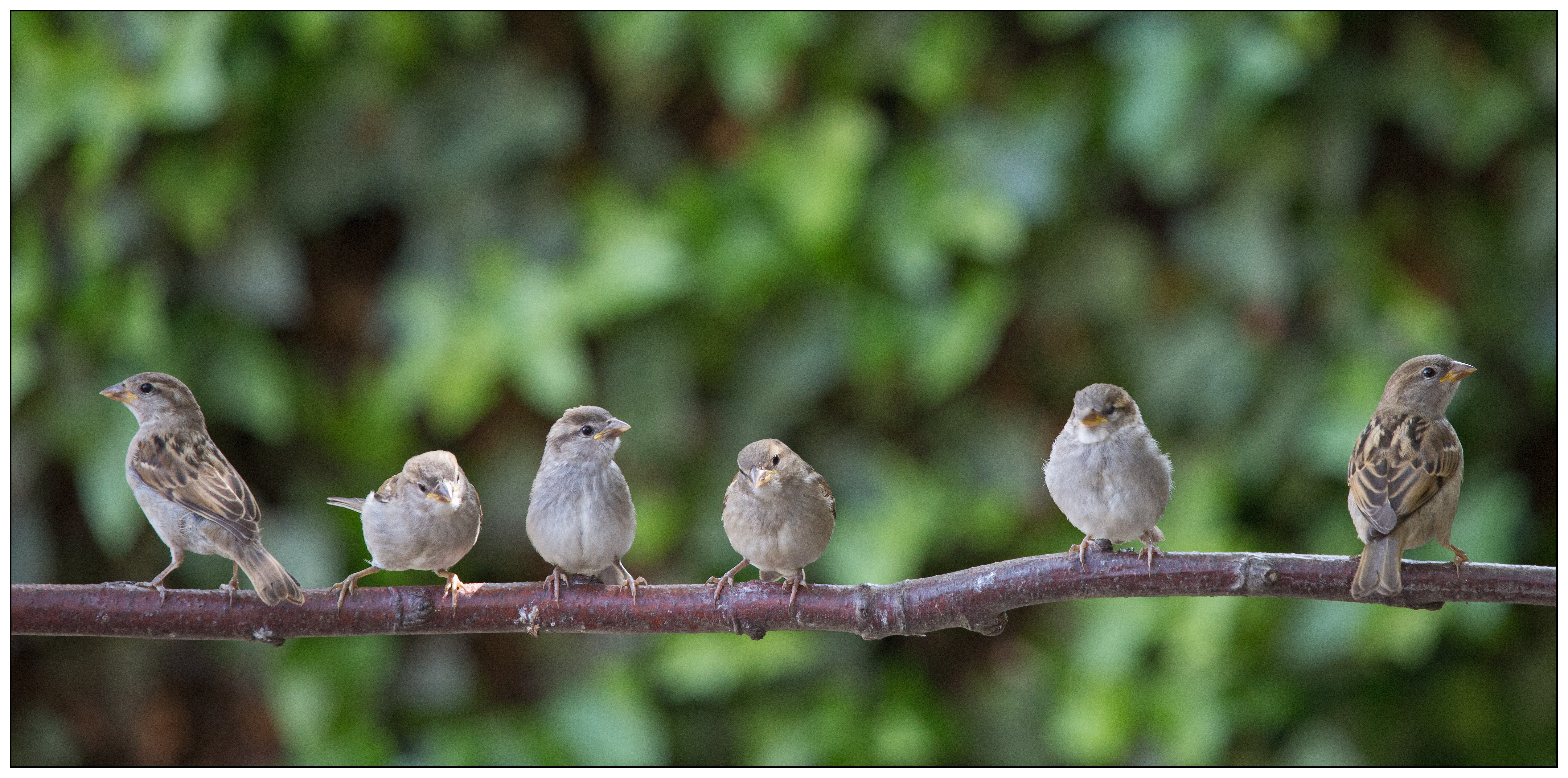
Ten sparrows alighted all around.
One sparrow flew to the altar
Where Adonis lay beside his love,
Now spent, with his heart grown cold.
Reaper knew of this withdrawal -
From the cavity, and the pledges of passion,
Into that space absorbed.

Another sparrow hastened its way
Through to a mother giving birth.
Just as the infant was being brought into the world,
There was Reaper,
That she might let go of her child.
For without the Reaper's insistence,
This mother would have labored indefinitely,
The womb is protective of its kin
And would hold to its love eternally.


A sparrow flew to the side of the marksman Egbert,
And bid him come from the edge of the pit,
That he still lingered by.
Intoxicated and now fearless, he had remained -
That is until the bird had called to him,
And brought him back nearly witless.

Some singing was heard in the distance -
Plutarch and Oblique making rhymes,
And tunes to their party of fun;
Dancing around and around and around and around....
Same time comprehending,
What it means to sing songs of freedom,
Counting on the fingers, ten,
A pentatonic leaven.

My Blog List

Followers

Esoteric Christianity Archive