Question:
Dear Teachers,
I have a question related to the synonymity of sin and sickness. It seems that, by and large, both traditional scientific medicine, and the more recent natural and homeopathic remedies, ignore sin. Involved in both of these streams, physical substances, together with etheric and astral forces, are used.
However, we have been asked to always bless the remedy before use. This act is of enormous importance, particularly in respect to the said remedy being the forgiveness of Sin as well as the healing of sickness.
Can you please teach us more about this ritual act of the blessing of remedial substance and also the subsequent workings in the recipient on the levels of both sickness and sin?
Love,
John
TO be made apparent, to become revealed, for want of acknowledgment, in need of defining - to be, but not yet found - in plan, in seed, in a dormant pre-existence, Goodness sits and waits Man's finding.
The science of health has followed the science of social politics, i.e. one of understanding illness in terms of attack and eradication, saying that defense ennobles death caused by insult, and finally that murder is good if it is justified (assuming that it is justified). It is not unusual to hear it said that there is a 'war' going on within a man's body who suffers a sickness, and it is with this approach of slaying the said enemy that we understand, as best we can, the concept of a subsequent conquering. However the health of a man does not need such aggressiveness in its defense. In kindness to self and to the conditions in which we harbor, we may learn a peaceable road to tolerance and to radiant health, one which is exceptionally good, rather than exceptionally evasive to the ailment.
Redemption of sin is just that. It is the forgiveness and redeeming of sin, of Sin itself! It is not as an assault, neither is it a slaying; and though we may well be advised to cast off an affliction, it may only be done so with love rather than despisal.
The keys of Man both physically and spiritually, are entwined with Sin, and it is through the existence of Sin that men have been tested, tried and delivered into much greater experience than would have been without. Its two faces, the one of the gorgon, the other of great beauty, did herald an appraisal of life hitherto unknown.
They are as the chocks of the soul. Just as 'black' contains the as yet unseen colors, so too does sin contain the space for greater virtue to become realized in Man.
Our question today begins with the surmise that physical remedies for sickness ignore sin in their application. We may come to this discussion two ways. Firstly we can ask if there is a respondent to Sin within the physical aspect, an element or quality of virtue which has a wisdom within it which may address a given sin within a man.
The action of prayer in the aspect of willing is a driven, (not a given) empowered and empowering directly from the longitude of the Holy Spirit. All things are quickened by the Holy Spirit, including the powers of any given virtue. As the heat exorcises the flower from bud and furthers the perfume, our powers brought in and brought forth from the governing wisdom of the 'engine', of the holy spiritual powers, impel remedies to mature within the physical representation.
Without the consultation of heavenly endorsement we find that the physical properties are present but immature, incomplete as it were. To say that there are useful properties nonetheless there, even though they are far less than what they could be, is also true.
Secondly, we may view this point with a further question, namely, to what extent may a physical remedy identify any particular or given sin? Is it possible for virtue to know what it is not? And can we afford to ignore the causal factors in our prescription?
When the blind man was healed [John 9:1-25] he maintained that he did not know of the sin, but that he did know that he was once blind and now could see. From this we find an indication in the nature of Man that his perception of self quite often comes to him in a secondary sense. The immediate and presenting problems are more readily comprehended in an abstract manifestation.
I will open my mouth in parables I will utter what has been hidden since the foundation of the World.
-Matthew 13:35
Our parabolic understanding began with the picture images which live retained within our souls. Pictures of events long past represent many inspirations to us, even though we have not the eyes or the glass to view them as they are, whilst we are within the earthly senses. Yet this World is as a living parable to Spirit, and Creation's beginnings are carried within the memory of Christ, who may recall them for us.
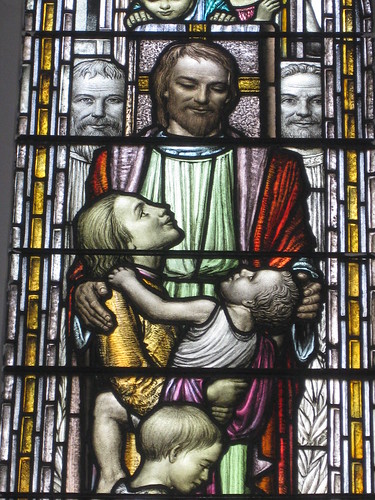
Our mortal selves, that which breathes and suffers the need for renewal, the transient qualities which comprise a man's lesser bodies, they too are in parable to the Higher Self which is causal to the least. In Christian law we are asked repeatedly to give consideration to the very least in all things, and no less to that of ourselves, just as to that of our brother. That in the small we find great, that by youth we may come understand eternity, that our Father God does not measure as we do, for He is particular when we are vague, and He is broad visioned, all visioned, when we are but small-minded.
Amongst all of this we often live in analogy or parody to our true selves, living secondary responses, which come close to the reality of being - alongside it - but are not directly responsive to it.
In this we may acknowledge the certain efficacy of various remedies (providing that they have come from a virtuous stock in the first place). However, observation of the ignorance of their action of atonement may be viewed thus:
If I am not doing the works of my Father, then do not believe me; but if I do them, even though you do not believe me, believe the works, that you may know and understand that the Father is in me and I am in the Father.
-John 10:37 38
If the action of a remedy works upon a man so that his health has improved and his disposition also, it can be said then a man shall come to know his Christ moreso by this happening. If the sin has not itself been redeemed then it shall surely manifest in other problems along the way, but in this also shall the man come to know his Christ self, through that peril and through the saving from.
If a child goes to the edge of a steep decline and is brought back by the arms of a protecting elder he shall not know of the fall that lay ahead, and it may be that he shall return back to the same place, to be yet retrieved again. He will not know of the danger, but he will come to know of the arms that draw him back. By this he will know that he is not to pursue a harm.
We may sense a sin but do we ever really come to know it as it is? Were a man to see his accompanying sin about him and of the world as well, then he should be witless as a result of the shock; he would excarnate with such a rapidity ne'er to return! Such is the hideous and horrific reality of sin! Seemingly is this the Dweller on the Threshold, yet still we say only in part! How protected we are, how safe as babes we are, from this horrid realization of the grotesque and obscure forms, untamed and uncouth, that we suffer.
Yet to this we may add that Man has hidden also from him his remarkable beauty, such is as his spiritual wealth, his divine and glorious countenance, when unclothed and bare to the spirit within. Men know of this handsomeness in love, from one to another, in glimpse and adoration, being then parabolic to God.

It is true to suggest that the remedy to sickness is inherent in substance, given its relation to the many bodies of Christ as are Him. These belong to His qualities as so do we, "particularly in the light of", yes particularly in the Light of. However, there is this difference, that in the calling to Him we call directly to He who shall respond not just in substance, but in consciousness. If I call across a room to nothing, nothing in particular shall respond. If I call out across a room to a vegetable it shall not perceive much of my message to it and shall not respond. If I call out to a sound activated electric light it may accordingly flash on. If I call out to Christ He will know that I have called, He will consciously perceive my presence and my need; and although not seen, He will be there.
So you see that when we talk about the effectiveness of substance and the calling in of Christ in this regard, it is not as much as to say that the tonic or the cure is more potent along lines of its own simply; or even that its enhancement is the whole story - for that alone, divorced of the consideration as to Christ's being, with individual regard for Him, is just magic.
To conspire spiritually is to perform a magic. When we call Christ, we do not have the power ourselves to summon Him. That is not our place. It is He that has the power and we who ask His mercy at all times.
For this reason my Father loves me, because I lay down my life, that I may take it again.
No one takes it from me, but I lay it down of my own accord. I have power to lay it down and I have power to take it again; this charge I have received from my Father.
-John 10:17 18
That He lays down His very Life in consideration for us and for our needs, this is something we could never command to be so, no matter how professionally a ritual was conducted. There is not enough magic within the world to actually convince or coerce our Christ's presence where He would not have it be. It behooves us to have the correct attitude when coming to consider His Healing and how we should call to Him. (Unfortunately the sin of arrogance can thwart the original intention in the process, and it is arrogant for any man to assume authority over Christ. However, although this thought may seem of little concern, we can say that it is prevalent amongst so very many who believe that they can petition or commission Christ to be as they will. As a result of this sadly, the prayers are blocked and useless in the exercise.)

We can return for a moment to the beginning of this work where it was suggested that the mentality of most is to assume health and illness to be something of a saga of war. If this were the case then our assumption would be that indeed it is Christ who is the most powerful in terms of might against such. Simply put, we counter this by saying that we would not choose to kill ourselves in order to save ourselves from sickness, and that Man and his sin are so linked that the answer must be that both sin and its polarizing virtue be harvested together. Just as the weed and the wheat must be let to grow alongside, sin and its corresponding remedy must come together in Man.
As to the ritual act of blessing the remedy concerned:
For this people's heart has grown dull, and their ears are heavy of hearing, and their eyes have closed, lest they perceive with their eyes, and hear with their ears and understand with their heart, and turn for me to heal them.
Matthew 13:15
It is paramount to our calling that this is known in the heart afore all else. As we have discussed, much of our impressionings and perceptions are secondary, they are not direct or pure to the immediate truth of that which lies within us or without us.
Love, as experienced in Man, brings forth a greater clarity than any other expression. When we love truly it becomes as Christ's Love bringing His vision and His endearment. When we are moved to pity for another and call to Him on their behalf, the remedy is immediate, even though the apparent symptoms of the sickness, sin or both may still remain. In time, and overall, we can be assured that these symptoms will dissipate. This is promised to us by Christ of God. Each man may be saved, if only the compassionate love of another, one that is selfless and moved with a compunction of mercy, has called to our Christ from need. There is no doubt as to the power of Man which lies in his spiritual love.
 Question:
Dear Teachers,
Regarding healing, what comes to mind is our knowledge of the initiates trained in the mystery schools to heal; also the witch doctors in primitive tribes and the medicine men in early civilizations. These people 'called down' the spiritual forces to enable the healings.
What was so different with Christ Jesus and His healings? He seemed to heal from within Himself and went on to say that all men have this 'individual ability'. He seemed surprised at His own power or energy when the woman touched His garment and He felt drained.
I have the impression that it was all new to Him also. It also appears that all the healings Jesus did were asked for: a one-to-one experience from the heart rather than the calling down of spiritual forces. What is the difference (as in end result) of their healings - if healed, why is one better than the other? When is a healing not good?
Thanks again,
Jocey
Question:
Dear Teachers,
Regarding healing, what comes to mind is our knowledge of the initiates trained in the mystery schools to heal; also the witch doctors in primitive tribes and the medicine men in early civilizations. These people 'called down' the spiritual forces to enable the healings.
What was so different with Christ Jesus and His healings? He seemed to heal from within Himself and went on to say that all men have this 'individual ability'. He seemed surprised at His own power or energy when the woman touched His garment and He felt drained.
I have the impression that it was all new to Him also. It also appears that all the healings Jesus did were asked for: a one-to-one experience from the heart rather than the calling down of spiritual forces. What is the difference (as in end result) of their healings - if healed, why is one better than the other? When is a healing not good?
Thanks again,
Jocey
THE words sin and sickness are synonymous. Such synonymity, although heralding a confusion, brings also much to answer Christ's healing as opposed to that healing without Him.
"Blessed is he who is not offended by me" [Luke 7:23] - it is the sins that indignantly protest our Christ within and are offended by His Being and His Presence, not a man, who by mercy may be released from his sin and his sickness were he to relinquish them to Christ.
When is a healing not effective? Precisely when the wineskins are old, for should it be that a man is outwardly cured of his sickness, yet his sin lingers on within his soul then he shall continue in illness, whether it is seen or unseen.
Neither is new wine put into old wine-skins; if it is, the skins burst, and the wine is spilled, and the skins are destroyed; but new wine is put into fresh wineskins, and so both are preserved.
Matthew 9:17
There is a power which is greater than an energy, a power which belongs alongside the essence of all Creation, rather than moves as an isolated element in amongst it. This power of powers, if you will, is our Christ. There is nothing which is not at His disposal, nor nothing above His command. He does not tire, nor does Man ever surprise Him. The very image of Christ being so, usurps our confidence most radically, and we should be cautioned as to regarding Him in such an ordinary fashion alike to the responses within an ordinary man.
However, and having said that, there were and still are, moments of long and drawn out suffering which He goes on to endure. That He is beyond this suffering, yet endures it, also brings us to the similar question as to why He must tolerate those who hold no faith in Him and keep their faith safe until such time as they shall turn to Him.
His Power, so named, is polarized. His dimension is this dimension, so that rather than by 'calling down', we may draw in; and by our faith, by our trust, this is effected. The energies of life and of deathly life assume rank one upon another. The laws entitle them to find their domains and rent their issue with mutual consideration. Christ holds the ribbons of energy as though they were streamers flying from a stick, but He has no use for them when it comes to the being of Man to rid him of his illness.
So we can ask why is it that a man is not so instantly good? Why can't we win perfection in just the moment of that desire? Yet to do this we must perfect that desire also. We must come to know what it is that we truly wish to be, and then how it is to be.
Christ answers the immediate, this is so. The affirmations of His Love must be maintained forever on and into the future - our proclamation of love for Him is not just a once-of utterance. We learn to revitalize our faith and diminish our sins in daily conquest. We learn also our differentiation in such matters that afford the heart and its determining, so that we become keen to respond to the need in the world, and not only to that of our own self's salvation.

Before you go I have to ask, did the motion move complete?
Were the Autumn's gold,
And the Season's mask too warm, too cold,
Too brief?
In one tallying breath or thought, now gone,
Of a mood barely felt of a faraway song,
Can we know what was meant?
Or make good the intent,
And simply be done?
As a man we begin self styled humors all told,
By the Spirit's grace,
Yet with aged face,
All soon takes its place,
In tribute to self.
We exchange a provision for creating the compound,
Skip skies and cluster clouds,
Heave waves and then we firm the ground,
Tow the rope that pulls this world around,
Coal the furnace to stoke our beloved Sun.
Come to me now my company,
Come to me, my dear soul friends,
That we may all give thanks together,
For moments known and moments shared,
For scenes and dreams and in betweens,
And even all those could have beens.
Behind the milk glass pane awaits great friendships to renew,
Of lovers and children, angels anticipate,
Of parent and sibling there too.
And here in best robes, the soul's drapery,
We move about in the light and warmth of our God in our finery;
Magnetic our love, to this and that one,
Magnetic our drive to His Grace and His Love.
Snow is naught but snowflake,
Our world comprised of people.
Life is causal deep engrossed in voluminous divinity;
Death's mildew dissolves in this new day soon won,When together we wake to same morning, same Sun.
BEFORE there was sorrow there was milk. Before there were tears expired, then remote to sadness, long before those who now know how to weep had wept, there was milk.
All substance is profound, yet some substances have eternal implication. Salts for example, remain residual in chaos, in Heaven, after mist. Before time and prominently after time, the testimonial salts remain.
Milks have secreted from plant, animal and heavenly being - substance as sustenance, imparted to further yet another life other than their own. Here the principle turns to nurture that which is upon its own plane, that rather than from hierarchical domain, comes impulse and influence to nurture. Upon its own does it create to fulfill its own, and that is the outstanding nature and principle of milk.
Yes, the fluid of milk transports soul-life and soul-love, certainly in ways immeasurably greater than any other substance imbuing, save the clear water itself which is transmuted. However, this principle just mentioned also gives us the cosmic picture in this lateral equation.
When divinities themselves cease to merely "pass through" from their way, on their way, it is then when like can heal like, like can be like, like can further like, upon its own level. This principle is necessarily understood as regards ourselves and our dealings with others. Likeness need not be understood to be as sameness, for to be 'in like' is similar, not same. Yet also may we know that there can be other accompanying variables which incorporate men and their mix as well.
To be one and the same, to be individually contrasted yet in likeness to also, is party to the healing and sustaining found upon the arms of the Cross. Our world must heal itself in ways that spirit cannot penetrate from the top only down. You may picture, if you will, how small the opening is into this and that vessel, whilst how greater the spread may be when the spirit moves laterally out into the world at large. But it must meet world with world. For this there must be a mutual speak, a mutual comprehension and a mutual grasping.
Like souls seek out the company that will sustain them for a good reason. Without such true companionship they would be bereft of their vessel to give to and receive by, in understanding and in connection, in spirituality and in kinship; as need there is for outpouring and receiving with those in likeness to one's being.
How often the answers are here and all around us! The poet and the artist, the geometrician, the scientist, the problems that quiz the mind in random search are often found answer to in the immediate natural world, which has inspired the truth of the question there and then. How frequently too the troubled may look to the 'ordinary' world about them and find an illustration of some wonderful story which unfurls itself within the reach of their soul.
It is when we meet, just as stones in the road with successive sequence ongoing, that we advance, both on this plane, but also into the higher realms as well. This fundamental principle involves our Father God and His presence in this transaction. Picture: Father God resides at the beginning, and then as we move away (are pushed with forces extreme), our links remain, our channels back are in place, however we are removed. And then to cease the descent and level out, give over the forces laterally to a good and greater purpose, Father God is brought in, His Presence becomes in the giving between two. In the travel out and down we have one solitary action. By combining, in the giving, we have as was His initial Creation, that one gives life unto another. Never was there a holier principle than this.
When plants gave milk to men and sustained them, there were also combined with the men, those natures of the plant-world which belonged as expression, to higher beings. The plant was brought to manifest as an organ belonging to an angelic soul, one which gave itself in the love of Man to be as 'mother' to man, then in incarnating infancy.
At this point men could not fathom other men, although they viewed each other internally upon reflection. Directly, there was as though no sight, there was warmth, there was world, but no outer ego recognition. Father God here was experienced in the receiving, but not in the giving from each young soul.
But prior to this, before the attempt at physical incarnation, the spirits of men held intercourse with lively recognition and were suited and matched with definition and with prominence. The negotiations which have been labored, have brought to men a little of a dishevelment; yet always the 'bright sparks' they were; beginning as such they shall return to be so.
In early ages the wisdom of each man exceeded that of the lesser gods. The comprehension encompassed the spiritual mind of man so that wherever he sought inquiry he found instant understanding. A man's spirit was so gifted that he held an eager love for every ongoing fascination and he was transported here and there in wonder continually; but with no containment to speak of! However, with containment came stupidity, and Man had to then work his way through the corridors of finding one by one.
The word "trust" can be mentioned here (again). The infant does trust in the goodness of the milk and takes it. If the infant did not have this trust, all of the process to follow would be blocked. So in this principle we can examine what is necessary for the receiver in his relation to God and to gift, that not only does it involve a mother giving to her young in the outpouring, but it does also require the complete trusting of they who are to receive.
Our reliance upon one another is unquestionable. We are impelled into incarnation for the corporate will of Man decrees this so. Even though there becomes an individual merit and placement within the worldly field of being, there is an overwhelming attachment we have to the greater man who guides us in precedent. Because the archetypal man follows particular cosmic pathways through to repetitive incarnation, we by higher instinct, know the way to follow in progressive steps. The spiritual plotting of the charts has preceded our individual movements amongst the stars, for one reason that can be readily understood: that without a select guidance, inborn and innate, we would surely be lost to the countless other regions that we hold keys for but no relation to, at this point of time. Man has been limited in his travels, even though it appears that his opportunities are vast, the cosmic fields are innately cordoned and his spheres of activity are select and few.
The instance of a man wishing to cease from incarnating altogether has been questioned, asking if he is indeed obliged to return. For this we may first examine the suicide, who does at the extreme, by action and by idea, protest life, incarnation and the desire to further re-embody.
Oddly, as paradox would have it, he is firstly bound for a definite time to the one region that he sought to escape from. The ego who has defied his own instinct to express himself through earthly life is bound to the same, body or no. When comes the proper and designed time for the Angel of Death to receive him, he does find the same sweet peace as is then, and only then, in normal due. This parting experience secures the ordinary soul for the return journey. The man, whether tortured in life or after life in quasi-life, shall still be met with such an angel as does bring the supplication required to heal all pain.
The second instance of denying incarnation is that of the spiritually offended. Should the grass be reluctant to receive the burdensome weight of the dew-drop? Does the cow mistrust the sweetness of the dew-moist grass? Shall our gratitude fall into hapless suspicions and afeared outcomes?
A man may be split so that he ceases his manhood and becomes, in part, an entity which no longer rides the tide with humanity. However if this has been achieved by him - the cessation to incarnate - then it is not just a hesitation but a deprivation forever on. As to the retrieval of such souls, we cannot say- lost to systems and states, some divine and some demonic. All are still embraced by Father God and loved accordingly. Not all will remember who they are or what has passed.
So to answer that question in full, it is not just a simpleminded objection to incarnation that shall hold a man back from his destined pathway here. Yet if it does come to the bent of the ego and the spoil of his nature, having rid himself of all good earthly involvements and meaning, then it shall be as he declares for himself, eternally.
The disdain and recoil from the physical world is misplaced, insofar as it is innocent unto itself and naive to the frustrations of the spirit. We may coax ourselves into a greater compatibility - a harmonious health - if it is that we are welcoming to life itself and trusting to it.
The evils which thwart Man were not from the Earthly domain but rather from the spiritual worlds:
Put on the whole armor of God, that you may be able to stand against the wiles of the devil.
For we are not contending against flesh and blood, but against Principalities, against the Powers, against the world rulers of this present darkness, against the spiritual hosts of wickedness in the heavenly places.
Ephesians 6:11-12
So we may understand that where life meets life upon this plane, where life gives life and there enters God, there is goodness. When it comes to pass that we seek to withdraw, and no longer trust in this life that would sustain us then we withdraw from the experience of God also.
God is incarnate through our giving to one another. Likeness alone is not sufficient. The world itself could shaft away from its spiritual origins were it to be content upon itself, without the infilling presence of God. Man to man, upon this plane, does not satisfy the spirit or our God. All things within this world naturally concur amongst themselves, in those likenesses they share. Order, law and subsequent harmony come not from such likenesses in total but from intervention from the 'above' making possible the mix of greater differences.
We may take the physical example and employ the same principle within our spiritual needs. Our benefactors and our deliverers can meet with us at same station, at appointed time, feeding the need and bringing ease to the soul. Selflessness implies God. The sharing of self inspires God. It is with the love of a parent or same love of a child we can understand our relationship to God.
He that loveth father or mother more than me is not worthy of me: and he that loveth son or daughter more than me is not worthy of me.
- Matthew 10:37
If father is set upon his child or child against mother as the Scripture implies (Matthew 10:34), it is because the father is no longer a true father, in God, or the daughter, a true daughter to the mother whom she is set upon. To love one another, before loving Christ, before loving God, is a self-love in likeness alone. To love Christ firstly and embrace God before that love of person, is to greet that person in the highest esteem, permitting a love that knows both likeness and difference. If love is to be based upon likeness only, then it stands to follow that arguments will sooner or later ensue. If love is to incorporate the Heavenly grace of a greater love than is consciously understood, then we may revere the person, by firstly revering our beloved God and Christ.
Each man who comes to us as representative of Christ in goodness, who by deed or by word has been touched with his active love, is an emissary of God that we must not turn away lest we offend Him. This is so.
The physical substance of mammal-milk today is imbued with properties to which all milk subscribes namely:
- coagulants (stability) (within place)
- fluid (heavenly ego permeated with sacrifice, rejoicing life and life-giving)
- imaginings (impressionable to dream-bearing, increases drowsiness in return to latent Father God).
My Blog List
-
Differences Between Boys & Girls - Rudolf Steiner
-
We can then see, beginning at puberty, in the outer behavior of both girls
and boys, something that often baffles their parents and teachers,
something t...
-
Wagner & Buddhism
-
There is an amalgamation of Buddhism and Christianity in *"Parsifal".*
This, as we know, is also one of the hallmarks of Manichaeism.
Richard Wagner was...
-
Chapter 14- Reaching for the Stars, Exercise 1
-
*Exercise 1*
*Tools required:*
- *A Questionnaire*
- *A conversational partner*
Concluding a conversation, ask the person you have been in ...
-
Augustine Asks the Big Questions
-
Augustine in his Confessions 6:9 asks: tell me, O merciful One, in pity
tell a pitiful creature whether my infancy followed yet an earlier age of
my life t...
Esoteric Christianity Archive


