Translate

A CLUB OF SUPERNAL INTERESTS Christian Esotericism, Spiritual Science, Esoteric Christianity - All Authored by a Lodge of Christian Teachers (unless otherwise stated.) (All writings copyright) ©

Tuesday, November 17, 2009

The Mulberry Bush- 6th February 1992

As we ease back into our armchair of comfortable thought and try to profess a longing for infinite wisdom - finite enough to be understood - and sit with T.V., dinner, magazine and footstool. . . 


WHEN we look to those experiences that are most pleasurable in one’s lifestyle it is the familiar and the homely (as opposed to the passions, and the aspect of 'newness' invigorating). It is rather repetition and anticipation of repetition, when we settle down to welcome and enjoy some simple but pleasurable experience.


Some things we never seem to tire of. In point of fact they better with each and every day. We get used to the way that we prepare our own cup of tea, and we savor those favorite recipes within our own home life. Although the slippers are not outstandingly special, they are worn through and made more comfortable with time; and all that we treasure - those objects made special, that invoke such pleasure to be around - they too have their significance, in our happy, settled comforts.

There is of course, pleasure outside of this definition: pleasure, passionate pleasure, in which one indulges and extracts from some entirely new encounter. But this form of pleasure, the excited rather than the simple and the humble, is not of discussion today. 

If we are to prepare ourselves for new experiences, and be open to new forms of thinking - and being for that matter - then are we to sever some of that pleasure which hitherto has come from familiarity; and if so, do we not feel pained by this loss?

One must remember that the beliefs of another are not simply philosophical perspective, objective and unexperienced. Firstly there are elements of truth to every idea (or else the idea itself should not exist) and there are small amounts or large amounts of value placed to each idea - and lastly, furthermore there is the association of man to his ideas, the bonding which holds them dear to him; those which are especially familiar and well known by him. So if we are to expect another to instantly sever themselves from the ideas which they have formerly held and experienced, then we are to understand that they are not merely ideas but concepts held precious, because of the pleasure brought about by their relationship now familiar. Therefore unless one is to upset a man entirely (and this is never advised), then one must look to building upon and enhancing a brother's concepts, rather than trying to wipe away or destroy their familiar base. And this can be done. 

No matter how harsh the conditions were, one will find that one's original home town will be remembered with fondness and endearing recollection. A man may have departed for the most part of his life, but it is that of his youth which impresses him so. Those aspects which he came to know and love simply as a child, will remain and be remembered until the end of his days. 

Here not only have we a point of instruction but also an example of this simple pure pleasure to which we refer: the pleasure of memory, recalling the pleasure from the past; stimulating that same substance which flows down past fingers to toes; pleasure invoking pleasure, the familiar impressions drawing out response to yet more familiar impressions. For this is affinity. 

If we understand this simple pleasure concept, we can also understand in part the nature of the pleasure of affinity. It is where we may find within ourselves a meeting ground of that which is outside of ourselves and that which is inner. In other words, if we were to realize consciously our 'oneness' with the world then the pleasure of affinity should be extreme- these two correspond. 

Because the experiences of simple pleasures do lead a man to greater affinities and pleasure thereby, it is not wise to wish that a man be in any way stripped from this experience, for he would surely become hateful and find criticism everywhere. There would be no loving or comforting face to greet him (in his perception) and no refuge of faith, warm or strong enough to hold him. So if we are to be frustrated that men do not forsake their ideas easily, we must respect if only from this point alone, the importance of their attitude and relationship to their dearest of ideas. 

Conversely, if we are to engage in conversation and agree upon a point or two, then there will be pleasure from this affinity thus established- better at the outset, than trying to do so later on. For if a man has made up his mind that he shall lock the doors lest you disturb his patterns and regime, you yourself have hindered and blocked the possibility of relations.

Now returning to childhood reminiscences: Many of the impressions gained in childhood, those of great importance, are gained by all men without exception. This is because the child-view of the world is uncomplicated and unmuddled and fresh with spiritual insights. Therefore if a man in adulthood has appeared to have lost the wondrous notions and is taken up with fanciful abstractions, he shall have within his recall of experience much happy and pleasurable associations with nature, with affections, with first taste, with experience of expanse and expansion, with sweetness, with color, with wonder at height and wonder at smallness, with friendship, with touch (texture and warmth), with vitality (inner and outer), with excitement and with quiet, with the comfort of bedding, with the peace that comes before slumber, with his dreams before and after sleep, with his natural clairvoyance as a small babe, and so forth. 

No matter how many unhappy experiences he may have suffered in childhood, or disappointments or dismays, he will still have had those founding experiences which will call to him way through into adulthood. It shall be precisely these experiences which shall speak to him again more clearly than later impressions of pleasurable acquaintance, invoked and retained.


In the case of Herr Casper Hauser, we find that apart from all else which was removed from his upbringing, those first intrinsic foundations for experience were so kept from him entirely. Those who were responsible were decided that because he was without these encounters he should become most hateful and most evil when confronting the world as he did as an adult - barren and bereft of past joys, of past associations. Yet, there was the opposite. For here we had all the intensity of the years which he had spent in captivity, and a man who greeted the world as a child: caught up in immediate pleasure in his discovery, with no inkling of hate or of deception, with no enterprise, with no disgust for those who caused his concealment from the world.

It was no mistake that he was made experiment of in this way, for their part or as fate would have it. But their design became undone. For what was not realized was that the world and all of her creation is essentially good.
It was not, by the bye, because of political interests that he was so maltreated. This was a work of evil, conscious evil, on the part of devious and learned men who knew of certain esoteric implications. But because of all of their effort in unlawful intervention, effort was given to that poor child, to save him from insanity and pain - and he was not without help. It was not they who opened the door for him; but it was they who closed it.

Dishonesty between men blocks the affinities and pleasures therefrom. Therefore men who are dishonest or are in the company of such, shall find that they are immediately uncomfortable. Usually one is seeking out something from another, other than friendship. 

Some might be questioning thus: Are we to only understand that which we find complementary to our knowledge and therefore be limited in our capacity to learn? It is possible to jump into 'unknown territory', as we may well be forced to do at given times; but usually it is because a man is provoked to do so, for he shall not easily or comfortably do this. Sanity rests on rhythm and credence; and that which forces 'rethinking' of that deemed permanent, is shocking and disruptive to sanity.

Of course, this is not to suggest that we must seek out the comfortable life and be entirely complacent as regards new thought. Yes the student may prepare for new knowledge, but he has no license to impinge upon another who is unwary and unused to the exercise. For it is a matter of strength, will, practice and openness; and yet an openness balanced by proper discernment. 

When we have understood the mean of simple pleasure, we may actually stimulate the simple pleasure as drawn in from childhood discovery, and begin again to approach the world with those aspects of perception. But again it must be stressed, that this rests upon personal choice and direction, and cannot be enticed in another by someone who would take it upon themselves to interfere and intervene.

Passion shall awaken and stimulate a man into realms of experience which are new and inviting, but shall not last the distance, and recollections of such passion will be vague and without meaning. Passionate episodes help to move a man out from his routine of simple pleasures. There are those who do not willingly work or consciously change until there are circumstances in life which markedly change the familiar concepts they have settled into. 

These great changes will bring pain, disharmony and disruption to the entire thinking process, for they are unprepared and do not understand that compensation is required, inner reckoning called upon, to meet with the 'new' situation at hand. It may be that the changes within their life are of loss, or even for a gain, and the way in which they adapt to such changes which cause great rethinking, will be dependent upon their former capacity for examining their thinking. Whilst obviously there can be no pleasure in suffering loss, there can be comfort in surviving it and renewing one's life. 

Pleasures of habit and pleasures from childhood are to be seen, understood and examined- and not to be cast aside, but occasionally excused for a time that other experience may be incorporated and welcomed in our parcel of familiar acquisitions.

As the elderly tend to invoke more and more of past impressions and pleasure thereby, they are dismissing new experience, as they become less and less able to meet with it and take it into their hemisphere of thought and action. This is a sign of aging if done to excess, for it shall be as an unbroken circle of experience entered into, without escape. But once a man has come to this existence and his consciousness is in a dream condition, and his daily activity rests purely upon routine, then he shall be so until the end of his days. So it is wise to endeavor to keep a mind which is awake and open to new thought and new learning - granted that it will be founded upon a base of necessary and fond familiarity.


As we move from one world into the next, all that which was so homely and pleasurable shall dissolve and be replaced. But the pleasure that we have experienced shall remain with us, and we shall be drawn once again to previous realms of affinity that we have come to know. 

Old friends and old places, for Heaven is not unfrequented but known by us. It is that knowing that we do welcome, and that knowing which implies that in one form or another it shall present again.

Monday, November 16, 2009

Hope & the Sun- 2nd February 1992


HOPE is remedial to hopelessness. One usually finds the powerful presence of hope when no signs of hope are forthcoming. This of course is a paradox and nonetheless true. 

Therefore what exactly is hope?

Hope defies presumption, because presumption is based upon a sequential series of assumptions made prior to the presumption, irrespective of truth itself; being rather truth perceived. We may presume upon a certain outcome and speculate because of previous assumptions that it is likely to be. However hope does not require such reasoning or forethought, hope rests on intention and desire - a certain longing for a particular eventuality.

This is a serious question. All men and women understand and experience hope. There are however, a certain few sorry fellows who come to a condition whereby they are no longer capable of experiencing hope within themselves, who come to suicide - this being the prime reason for a man to take his own life. Whilst we may be faulted here and now for an oversimplification of the desperate that turn to such self-destruction, we would suggest that it is regardless and despite of their personal concerns that they would exit this world hurriedly, not because of them. For even a soul who suffers the most horrendous of conditions has within and without, far more beauty, knowledge and harmony, which is accessible at all times, outweighing the immediate and dire problems inflicted. If this were not so then there would be many, who in poverty, in disease, who would not fight to live, regarding life as precious as it is. 


The mental suffering of a man is a torment of soul and soul condition. This is why the most brilliant of psychologists have difficulty in effecting great healing and wellbeing in their disturbed subjects. Verily, those subjects may be inhibited in expression and experience because of factors exterior to their soul, but pertaining to the soul of a man and not separate: not so divorced as believed to be.

In other words, it is difficult to treat a wound on the arm of a man who has been poisoned by such wound. There comes a point when the removal of the arm, the original problem, does not heal the entire man. And it is for the man, not the arm, which one tries to effect the healing. This is the perspective. 

When a man becomes morbid or morose, poisoned by guilt or poisoned by hate, he is so overcome that the divine qualities (much like the blood), are blocked and hindered, causing much pain. For they rush in, as they always do, but have no circulation, no proper expression; and the man suffers accordingly. For the Administering Angels - who try best to encourage a man - are of what use if he will not receive? Even those qualities of divinity predigested in large or small amount, will not inspire him if he refuses them. And this is within his perimeters of will to choose such neglect.

Sadly it is true also, that a 'bad' childhood may well be accountable for a sorry adult. For the child who is so imbued with heavenly qualities may be badly abused and morally corrupted, that the adult in the forming is rendered incapable of such receiving. And this is a terrible plight. Those who would be charitable have come to understand the men who need it most - those who are left wretched, divorced from their true and glorious selves. It is of necessity that we are not hateful in return to hateful men. 

It is not that which we do hope for that sustains us; it is rather the experience of hope itself, for there is nothing that would satisfy the soul indefinitely that the soul does not already have. And there is nothing so permanent upon the earth that could promise a man such steady happiness. Hope of itself therefore, is an essential provider for the soul. Hope leads desire; it is the well desire springs from. 


The qualities, which are the Heavenly Graces characterized in men, are as the geometrical solids, are as the elements, the fabric and substance of Creation - imbuing, sustaining, comprising, forming, incorporating, exacting and vital - both to Cosmos activity and humanity.

Hope, being one of the Graces, is neither extractable nor measurable, but is continually within and essentially without. That which makes up Creation is of a reality more tangible and more determined, than the manifestation itself. It is not merely a concept 'made up' by man. 

An animal who despairs will die. A plant which despairs will wither.


The sun forces, which are the manifestation of hope, are essential to man and his wellbeing. Without hope we should not have the ability to learn, without love we should not have the ability to know. Without charity we should not have the ability of affinity - therefore to commune, communicate.

Hope streams into our being and we in turn radiate life. It is most fitting to come to understand our beloved Christ in these terms. There is much that might be suggested of humanity, being preordained, predestined by those who desire certain outcome. But Christ Himself is central to humanity and the longings of humanity - and only because He is the manifestation of Hope itself.

Have we the freedom to desire, the freedom to go out and grasp knowledge for ourselves; and the ability to love, the ability to be and become? Not to just simply be, but to become.

Sunday, November 15, 2009

Casting On- 2nd February 1992

The world's one giant ball of yarn,
A cat does toss and tease,
Until his master comes along,
To knit as he does please.


Perhaps a cap? Perhaps a coat?
Or a blanket,
Lest the Cosmic winds do blow!


Scurry cat!
Your paws are black,
With sharp attack,
They fray the yarn.


Untwist, unwind,
Unkind the pounce;
With measured grace
The cat does dance -
It is no fair play,
This imaginary prey.


Unravel this riddle,
And pick up a needle;
Click-klack, click-klack,
Pearl to plain,
Front to back,
And back again.

Saturday, November 14, 2009

Imaginative Cognition- 27th January 1992

Life goes on, and round and round,
Inside out, and up and down.


The people climb, they slip and slide,
Upon the ice they skip and glide.


A piece of this, a piece of that,
A piece of happy happenstance.


We move to and fro, around we go,
Out from the world, and into the Know!
Knowing this and knowing that,
One hat, two hat, three hat, Fohat.


The scales do summon, the music plays,
Out from the night and into the day,
We skip and slide, we cross the night,
We jump the cliff and into flight!


(Warming up- it's like tuning an orchestra!)

TO be completely comprehensive, untouched and untampered-with and natural to its own, is the mark of a genuine article. "Genuineness" is a concept which needs be defined to be looked for; and the importance of there being intrinsic value to genuineness rather than second best or derivatives three, four and so on - removed with synthetic overlay. 
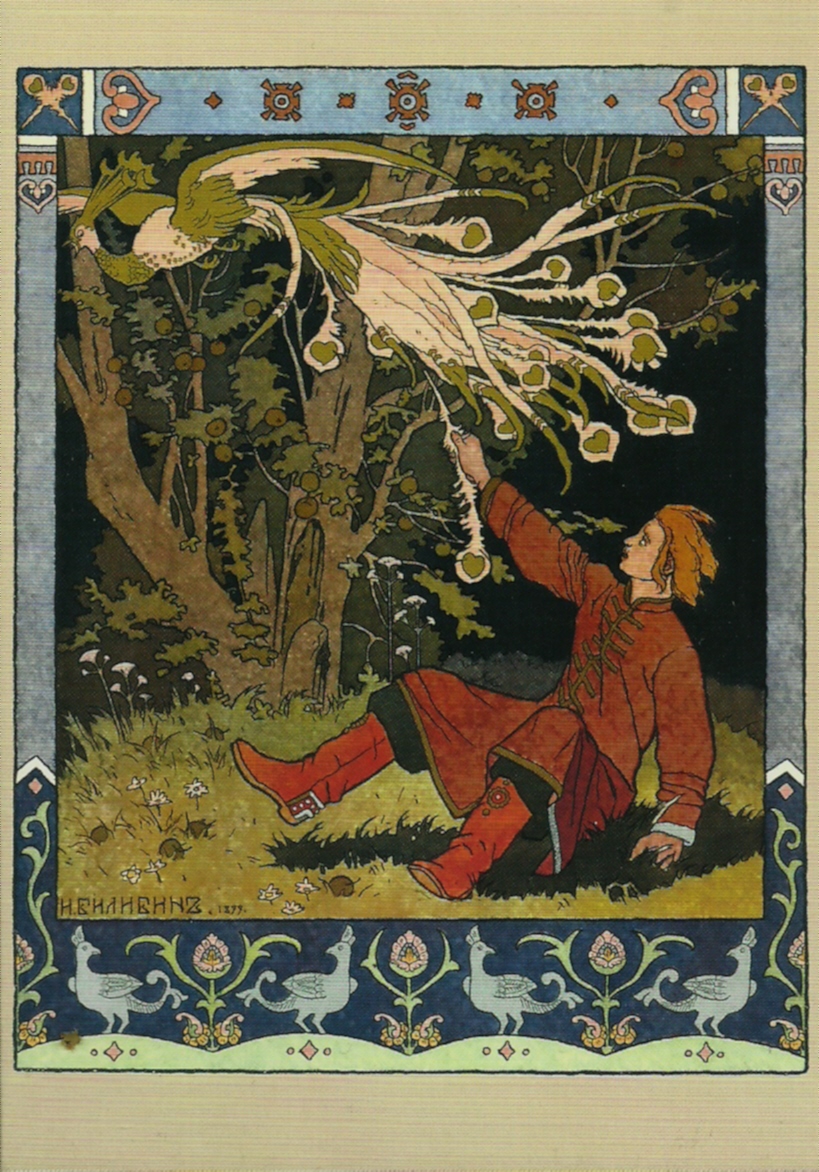
When the would-be prince set out to return with a feather from the Phoenix, it should not have sufficed for him to have fetched it merely from a seagull and painted the plumage red, green and blue. It simply would not have completed the story or the task well at all. Many a grail has been recovered and honored, and interestingly enough, they were all crafted in metals! 

There are many who would deceive and many who would eagerly welcome such deception. But do we seek for convenient results or do we seek to find something truly worthy of a wonderful find? We must ask this of ourselves and ask it honestly. 

Men have most powerful imaginations which presently are mostly underused. The imaginative powers are not only conjective, but productive and may of their own creating skills preclude forthcoming eventualities. Man may summon many images and designs before his inner mind, and will one day be so definite and practiced in this, that he may command all physical form in the immediate (within reason- forgive the pun), as he does after death.

Here we come to an interesting philosophical point. For when we go further and discover the motivating cognating elements which comprise the imagination, one can argue that the creativeness is born from fantasy, which is anything but real. It then appears contradictory to suggest that one must perfect the visions and gauge 'genuineness' that we might be more potent in the calling forth of such imagery, and therefore reality. 

But it is certainly within one's power presently to pre-empt an action with an initial thought to do so, before carrying out the then existing motions of actuality. This we can understand, e.g. I may think to myself that I should like to make a cup of tea, and may then go on to carry out the task. The desire prompts the thinking, the thinking inspires the activity to follow. None of the above may be classed as fantasy. It is acceptable to plan. The conditions of success rely on the aspects of knowing how to make a cup of tea, what is required and what the tea should look like, taste like and so forth, that I may work properly and thoroughly to produce it. 

Imagination is no different in man. The essential rudiments are not in any way made of pure fantasy. It is that we are ill-defined for end results, for perfect visions, that we may confuse our confusion with rudimentary ability. Therefore, if it is put forth that one must understand the 'genuineness' before one may work the imagination thoroughly, it is not contradictory to say so.

If one believes that the imagination works from creative conflicts that have no true substance, that are rooted in madness, then the notion appears contradictory. Except to say that if one does believe that the imagination is so undependable and so ridiculous, then one could still go by the theory of perfecting genuine visions, for they should be no more ridiculous than anything else also envisioned. The follow on argument could be that seeking out perfected visions may become restrictive and therefore not imaginative, however one would have to exercise the imagination to come close, and such exercise would imply anything but sclerosis of the powers.

Imaginative cognition requires two elements. Firstly it is brought into play when the man governs the calling forth of thoughts, rather than responding to his immediate environment. Rather than answering and responding to exterial subjections (even mathematical equations), he has divorced himself from necessity and withdrawn into an inner chamber protected from such demands. 


Secondly the man must know that which he seeks out in the higher realms, to which in thought, he withdraws to; and decipher accordingly. There is a bridge laid from which he may travel, from inner reality to outer world. This is a very complicated and busy process. In order to fire the cognitive powers of the imagination he must identify that which he seeks to call forth. The more aligned the initial vision is with cosmic reality, with spiritual base and spiritual certainty, the more he shall recover and return with consciously. 

One might ask at this point - but how does he know what to search for if he does not know in the first place? The point is that he is to be both 'open' to genuineness and choosy for genuineness. To be mindful at first, consciously mindful, is the first key to this practice. 

One cannot arrive logically at a complete soul picture of spiritual teachings. Logic works well, on a single flat-planed grid, and is fine on that plane to which it relates to. Even though the teachings should and do comply with all logic, they also go beyond worldly logic, as must do; and it requires imaginative cognition to begin to comprehend the spiritual natures of spiritual applications.

One cannot therefore, try to convince anyone of anything. It is the same as one trying to educate the computer, who is a master logician, at such teachings. By way of logic we may formulate and speculate, and project more formulae - and this is commendable and exceedingly needy. But logic must necessarily be governed by higher instincts and higher wisdom for the logic itself to become valuable.

Logic rests on certain realities. Logic defines those realities. It says something is what it is. It also speaks of accuracy and predetermining. The logician works on the basis that all formula will remain the same and therefore all outcome will do also. But he cannot account for larger formulas that he may not incorporate, for they are unknown to him. 

Furthermore, Creation works by way of laws - and here is another interesting philosophical point: which came first, the law or Creation? Creation, by nature, is anything but predictable.

It is precisely the balance between the two, the harmony which coincides, which gives license to both; that there are higher determinations predicating the manifestation of lower extensions of such impulses, of both law and Creation.

Therefore it is incorrect to perceive all of that within the world as mere chance offspring or self-enclosing formula - and the visions which reach into higher spheres are necessary to truly begin to examine our reality,

When we begin to work the imagination we do not pluck nonsense from accumulated banks of impressionable knowledge. We endeavor to enter into realms above the immediate by means of a higher door. If we reach into our imagination and seek nonsense, then we shall produce some recollection of such. If we task ourselves to find some genuine reality, which at present we are consciously divorced from but is true and correct, then we begin to establish a relationship between ourselves and the imaginative/cognitive reasoning. 

It is as though a man does swell and become much larger, in that, the field of auric vitality and activity, when he endeavors to strengthen his imaginative comprehension. The peripheries enlarge. The span of consciousness widens, but it is entirely dangerous when artificially induced and rapidly propelled, for there are conditions whereby a man who has not the practice of will, of daily connection, of exercise, may jump headfirst into a headless practice of imagination. If one is to be drugged or 'lit up' like a shopping mall Christmas tree; charged with the vitality from outer sources all at once, one enters into the imaginative realms seeking nothing in particular. The question of 'genuineness' is not even made account of.

After such experience there is a greater shaft between the consciousness of that individual's reality and imagination than ever before - because there is no bridge; because the overwhelming experience has no foundation or relation which translates back into the daily experience. He is not enriched, but bereft. There is no determination of will, for this is forfeit in the acute, overwhelming, indulgent experience. Enhancement in this way, of exaggerated swelling, is dangerous to one's mental stability and dangerous also to that of the psyche. It is as with a stomach quite empty, being loaded with ten times more than it can contain. It cannot be digested. The vitality must expend the vessel; the vessel inflates with such rushes of force, undirected. Therefore, those who seek fast and furious experience of this nature must be wary to the concerns of forfeiting general health and mental capacity.

It is a question of plucking the feather from the Phoenix and returning without being burnt.

My Blog List

Followers

Esoteric Christianity Archive