Translate

A CLUB OF SUPERNAL INTERESTS Christian Esotericism, Spiritual Science, Esoteric Christianity - All Authored by a Lodge of Christian Teachers (unless otherwise stated.) (All writings copyright) ©

Monday, November 9, 2009

The Denial of Life- 1992

FIRST Steersman Pucker drove the buoyant seas like one gigantic slippery-dip. So reckless was he that the scruffy crew of Her Lady Magnifico Splendouralous, happened upon his talents one day, whilst he, on the pier, chewed the hind legs of a Caesar crab. The crab was still alive at the time.

He had traveled far in search of the land of the Bon-Bon tree, but had failed to reach destiny, as his previous charge had unwittingly been swallowed by storm and sea. The crew's captain had retired into a madness which only the ocean-bound did at times, become inflicted. It came, thought they, when drinking seawater, and this rumor was upheld by many. 


Steersman Pucker was qualified, for he held papers in which marvelous testimonies did tell of exotic freights and passages; which none other had heard of. They presumed that he must have already traveled far, for the stories so told were bewildering and fascinating, and bore no known relationship to local waters.

The cargo was hauled and fixed on deck, bound thrice over and attached as thought sufficient - one mammoth statue engraved and worked upon; a most cumbersome figure wrapped and concealed; destined for the garden of a holy man who had set the commission. A few other trifles and truffles, beverages and salt-meats, kegs of sour, kegs of sweet, and the usual animal passengers: a variety, from monkey to rat. 

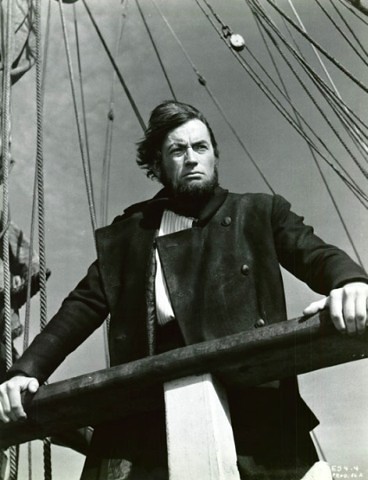
The waters were alarmingly calm, and the crew - with now, new captain (whom one might imagine as Gregory Peck) - were motivated to resume their voyage. For to the seaman life itself is a continual voyage, with every seaport considered an interruption to their watery land. But also too, every new consignment promised its reward; and eagerly they chortled off with grand expectation of special payments for this one.

On the seventh night, still flouncing on an ever quiet sea, Captain Pucker divorced himself from the main company and sought seclusion down by the ornament, which groaned with the ship's movement, tensing and straining at the bondages wrapped and bound. There was much superstition and a tingling apprehension regards this form lying heavy on the deck. The men had begun to speak jovial remarks when passing, but feigned to touch it; and did joke of what lay so concealed and so wrapped. Until three days later; weird imaginings had seized every man on board, and they stopped their remarks for many had begun to hear replies. Of course, not one did intimate this to another, but the frenzy was plain.

Pucker was amused and made point of resting himself on the head of this form. He was assured of gathering his thoughts uninterrupted, and was not caring or curious about this reliquary of import.


On this night, of the seventh, a snake did happen out from the garments, which though constrained well, did have many a fold in which the serpent might have made home back on land. The Captain notified the shiphands, calling for instant removal; and the glistening whip snake was duly flung over. The men, now caught with ever more suspicion, suggested that the snake was an omen of this illegal cargo.

Three nights later Captain Pucker was disturbed from his nightly contemplations, yet again in similar fashion. Another snake did slither out, and became erect, looking eye to eye, beside the Captain. Somewhat startled and complaining, the Captain did beckon his mates and rebuked them for not attending to the matter when first asked. For he did presume that this was the first snake, and considered not that there were two.


"It's enchanted, that's what it is!" they exclaimed with alarm; and all the while the snake, poised on statue, stared motionless. Pucker threw a net, and so covering the reptile, took a great iron chain, and smashed it over and over, with dramatic movements and curses, well satisfied with his trembling audience. Overzealous he became, and when casting the net over, found to his upset, white crumbles at his feet- one quite large. Shrewdly he shuffled the marble fragments under the tarp, and began to make bold of his achievements of the night. The men returned to sleep, and the Captain was again alone, alone with the now defiled and desecrated artwork.

"Bloody nuisance cargo!" was all that sprang to mind.

The wind had become icy colder, his stomach churned, he had never been partial to snakes, or regret. He comforted himself that perhaps with chisel and brazing-stones, he might make aright the craftsmanship gone wrong. And he so retired for the night, looking forward to the next, when he planned to unrobe the cold marble figure and confront the job ahead.

It was a moonless night as the sky was cloud-filled, and Captain Pucker required a little lamp for assistance with his restoration. The men were subdued and kept to themselves. The opportunity had come for him to strip bare this secret figure discreetly. With ropes untied, and further cords cut, Pucker pulled away one sheath of calico to find another underneath. Seven in all enrobed the marble figure, six he removed away from the head, until he came to the seventh, when he despondently leapt back, dismayed with disgust. For upon stripping back the final cloth, a defiling sticky paste caught his hand; viewed in the light of the flickering lamp . . . it resembled blood!

The Captain was rarely at a loss for immediate action when required, and prided himself so in daring and in confidence. It flashed through his fevered mind that he too might be drinking seawater, come morning. Unnerved and reluctant, he reviewed his good intentions, and with loathsome hand, rewrapped and rebound the solemn figure, deciding it better remain concealed; for he could not bring himself to view the face.


Never before had he encountered a magic unexplained. Many a story is told and received, and of course, he had known practically all the stories passed on. He was brought up on them. He had met with strangers who were curious, lecherous, exotically garbed and heavenly inspired; and disregarded all such individuals as one of the same.

Had the figure been a man so enshrouded, who had met with a common death, he should not fain glance into the face. But he was bewildered with the prospect of confronting that which he did not know- so foreign to experience and expectation.

Captain Pucker could not appease his tiredness with fresh, sweet sleep that night. He lay in blankets, all in an itch. His legs took to a trembling as he wrestled with the demons of imaginings. He tried many a consoling thought, with the promise of morning ahead.
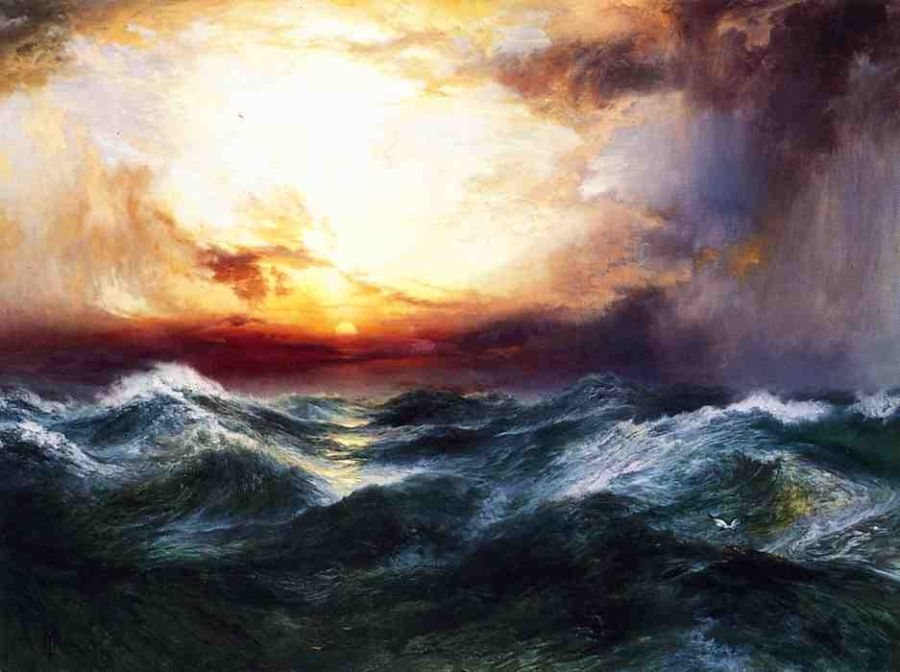

A storm had been brewing however, with veritable force. The night was challenged by cracks and crazes of light, in thunderous episodes. The boat, truly tiny in respect now to the mountainous tumultuous waves, was seized and taunted perilously. After weeks of complaining that the waters were almost too quiet, it often happens that one is given such grace of certain pleas in overwhelming abundance.

"How so?" thought Captain Pucker, as it was not the season for storms.

However, he was glad for distraction and leapt from his bed to attend. It was a sad peculiarity that Pucker was remiss ever slightly, that when he had retied the ropes on his cargo he had hurriedly done so, too loosely to hold. The weight of the figure was shifted this way and that; and the bonds became weaker until finally they snapped.

The men were busy bailing and restraining ropes and rudders; their concentration spent on keeping certain balance. The Captain sung his favourite ballad, which was especial to inhospitable weather. The crew from this, worked well, with one mind, managing the elements, each with his own duty duly performed.


Finally the winds abated, the swirls ceased and a rosy glow streamed over the horizon. The ship creaked slightly as it gently glided into the port. The men were looking forward to their due nourishment and were glad that they might peruse the new town. Captain Pucker had given notice that he should not be making the voyage back, but rather chose to investigate the prospects of a merchandising franchise and apply his talents to market trade.

But before disembarking each man did have to wait. For their main commission had to be claimed and paid accordingly for, as the charge was their much-needed salary. The recompense was to last them three months or more.

But no one came. A full seven days passed, with word sent and waited for. But still no one came for the marble model.


Restless and weary of their charge, the men one by one, would make short daily departures, returning at night. What was unknown to the crew was that the rightful owner of this peculiar cargo had deceased shortly after making the arrangements for the statue to be transited. Having paid one quarter of the fee outstanding, it was small comfort to the men to be left the legacy of the unclaimed reliquary.

The Captain had desisted their attempts to view this marvel, as he feared the repercussions of their finding its demise. But after days had turned to weeks and weeks past the length of the month, the crew had decided it time to cut losses and depart. Having seen all there was to see locally, they became as irritable tourists, homesick.

The funds from the remainder of the cargo were sold, gained and now spent, the decks refilled with menagerie and curio, cloth and spice and luxurious intricacies so called for. But still remaining with position taken on deck was the mighty marble statue awaiting removal.

Carved from a frozen Tear of God, the name of this art-piece had spread throughout the local (and distant) communities of the holy. They had awaited its presence, but had not known the details of which ship to port- as many did come and go. The traffic was by the hundreds.

The search for the commission was extensive. So it took a small company of monks many months before reaching the correct vessel, in good time. They had ventured into that region a matter of days before its arrival, and departed to other parts before returning with perseverance and hope of finding this acquisition.

Pucker, who was still resident upon the ship, eyed the hooded, plain-garbed troop who gathered at the walkway entrance. They had been murmuring to one of the crew, deliberating with restrained excitement of their finding, implying that they had come to collect.

This did satisfy the men to make suitable arrangements, as only that day they had assumed total readiness for departure. There was no argument as to payment. The monks had brought much gold, and did not hesitate when asked to pay twice over the initial price agreed upon.

With hoist and lever, a push and a pull, the clumsy strained efforts of twenty men did heave the marble piece from the side of the ship onto rodded ladders of iron bands, and suitable attachments to hoist such a bulk.

The men, much satisfied, bid goodbyes to Captain Pucker. Their transit was coast-bound, and they left, content to manage without him.

The Captain inquired as to the monk's destination. Perhaps he might follow them, and view the piece naked - as he had spent many months a'wondering and could not bring himself to depart this mystical work. The monks consented to his company and in goodwill Captain Pucker brought many provisions for their travel. His guessing had got the better of him, and he provoked haste with hurried promptings. But one may never hurry a monk, and his efforts were unrewarded.

The passage through to the holy community was lengthy, tedious, and mostly (it seemed) uphill. They would venture forth in two or three hour treks, stopping at intervals for prayer and privileged feasts. At night they would camp, and he did slumber amongst the chants that drove into the darkness to greet the morning. His ways of worldly assertion and mean outlook were educated by the presence of these twelve strangers- not a sigh or a grumble, in the great treasured haul.

Through ranges and down uncut pathways, from town to town and into ever more countryside, they travelled on for the best part of a year; until one fateful day when a mighty illness struck each and every one. Greatly fatigued and depleted of life, the entire company took camp, lay down and had not the strength to rise.

Pucker was delirious and quite helpless, as he watched the monks so quickly weaken. One by one their last prayers, on last breath, were murmured. One by one, they did abandon him, passing on to Heaven.

Had he the strength to laugh at his folly, with this affection for the unseen statue? Might he beseech the Father, to grant him more essence of life? Where could he go to if his legs could but more carry him? Was this figure so wrapped, accursed to him and his for his failings?

He knew not what to do with the twelve bodies that listlessly slumped before him. With respectful prayers, he clasped each hand in farewell and performed rites he felt most suitable. For in the time that he had spent journeying so, he had come to love these twelve.


He then went to the marble form and knelt beside. Throwing himself over the figure, he wept for the injury he had caused it, so long ago. For now he knew that this piece was surely special, if it had been treasured by these monks in a way that offers life itself for beauty.

Dare he behold the form for what it truly was? So many configurements he had speculated and presumed. With knife attending he drew each layer of shroud back from the form, until he came to the seventh and last.

Just then, as with a vision more vivid than life, there came and stood an Angel who beckoned him to come.

"But I must first take away this veil, and then I shall follow you wherever you will."


But the Angel intimated that his time had all been spent and that he must heed now, not later, not even one minute later. Without anxiety, without despair, Pucker did go, as he was asked to.

For the Angel's presence was well known to him, and he did recognize what he had come to love. For he needed not a statue to behold her Holy Face. And this burden of his life was surely redeemed in happy death.


Sunday, November 8, 2009

The days deny…..6th January 1992

The days deny, what the nights decry -
Of the velvet substance of dark repose,
Of the glimmers and shadows,
The subtle innuendoes,
Of that which must glow,
To be known.

Saturday, November 7, 2009

The Seven Most Powerful Truths- 3rd January 1992

WE all love to be loved, really loved! Some would have it that they seek appreciation only, some would say they do not look for another's approval, and when they do it may be that both have the strangest ways of becoming fulfilled. However and regardless, it is undeniable that all men and women, as with all entities under God's Kingdom, crave His love.
 
This is the first need, and being so the first glory and the first upset within a man. Those of the evil ways who seek to break a man, would have him deprived of this knowledge and furthermore of such a realization. This is the most powerful meditation there can be.

There are two ways the soul-condition can respond to such thought and contemplation. For in sorrow for such love we are answered, and that the sorrow be painful, the measure of outpouring love becomes evident- for no one would go without who is asking to receive.

It is the denial of such receiving which upsets a man. It is the distraction away from this primal truth which leads a man into the world and into the illusion of separateness. That he believes constantly that he stands apart and alone and is content to be so and withers accordingly as a dead limb that may not be nourished, may no longer be part of. If we are to be entirely honest and completely calm, then it is of first importance that we return constantly to this all-humbling fact and arrive at that condition which is 'open' to this, and therefore many truths besides. The truth does not hurt, it never hurts. It is rather, the shafting away of certain lies within ourselves- lies as painful scabs irritate afore their dropping from our personage. 


The second most powerful truth which we live by is that we in turn are so loved by God that we might be. Although it is painful to throw up the possibility of non-existence and entertain that premise (that if it were not for God's loving attention, we certainly would not be), it is also quite positive to reconcile our needs and be explicit as to say that "Without Your Divine Grace, I would be no longer. Therefore as surely as I speak, I am forever indebted to you for my ongoing existence. And it is this I humbly pray for."

The third most powerful truth is that being a man, of men, we not only seek the company of men but seek also their continuance. For it is only through the mirrored aspects of others that we might come to find identity perfected and claimed ourselves. Therefore, we love too as the Father loves, all of Creation, but firstly we know those of our own kind and seek community, true community, with our fellow men. All obstacles of difference and indifference, become thin and so transparent, that before us we envision a sea of faces, a massive ocean of souls alike to ourselves. And we pray that these too are infilled with the Grace of an undying love and commitment, that they may become strong in an ever increasing, expanding cosmic whorl of activity. 

And who among this veritable ocean shall stand amongst and be so strong - who might we approach and go to? The fourth most powerful truth is that of our dear Christ who is amongst us. His Face is unforgettable, and His Face has been viewed by all. He who we entrust our future to, for there must be one perfect that we may grow to, and come to know in time how man is to become perfected.

This essential truth gives us promise of a vision made perfect through Him, for their needs be one that the many may follow; without which our future would be indefinite. This is no synthetic being - we are all a mix of kingdoms - here is divinity (as we are also) giving over the model for perfect man. And this is attainable. 

Therefore the fifth most powerful truth is that perfection is attainable. And let no man who is mistaken to believe otherwise, cajole you into such remission. Never consent to the possibility of failure, for it is disastrous to block the essential and mighty truths. We have still the power to become self-prophets and make of our future what we will. But it is unalterable nonetheless, that the ways to perfection are attainable, and so being so are to be striven for with certain knowledge and comfort in this.

Man is only as frail as he would allow himself to be: this being the sixth most powerful of truths. We are all afforded opportunities time and time again, and qualifying decisions will be made. Each must seek out the light for himself, and natural current provides the tendency to 'go with' the progressive path.

Each has responsibility unto himself and also to his fellow man. Although we are all awkward in establishing new ways and encompassing the old, the only prohibiting obstacle between ourselves and the realization of perfection is determined by ourselves and none other. Already one can perceive this readily, that we choose one way before another. That our inclinations are not determined by extraneous fate, but that our destiny is responding to that which comes firstly from those actions, those applications which are from us.

We are afforded opportunities time and time again, presenting to us situations in which we may or may not take hold of in line and in light of the truth. And this is not a 'one chance' offering; however it is wise to act as though all are. If we are seriously striving to live in accord with the Law, rather than interrupt the streams of Cosmic influence then we are to begin to reassess all situations as we would on judgment day. 

The seventh most powerful truth is that both angels and demons do weep for our wellbeing. That the power and presence of Man and all that he may offer his neighboring kingdoms extends way through into their futures, into their concerns. Our mishaps and our achievements are so closely viewed with eyes of necessity, because not only Man is dependent upon Man's exalture. It is with 'breath held' in anticipation that the gentle kingdoms and even the aggressive lowly fellows, watch on. And so Man does not only decide for himself, and therefore his choosing is more weighty than first presumed. His responsibility extends past that of his own concerns, for the soul-folk who wish him greatness, suffer with him with every slip and fall. And this we are bound to consider, and it is good because it is possible to be ever reminded, even just before one dashes into the rocks, that many fall with us. Perhaps this of its own will win back many a heart.

If we are to be mindful of these seven essential and most powerful truths, we shall come to see many reasons behind our daily situations. When we depart the home and go outdoors and into the garden, taking too this meditation, we shall observe that they are apparent and uttermost to our being, inwardly.

When equipped with a powerful knowledge nothing may come between you and your heavens. You may depart for a while, you may forget the solemn awesome Countenance, but you will be reminded, and truly too, you will be glad. For all the hustle and bustle and words blurted which deny these sacred truths shall make less and less of an impression.

If one truly seeks the higher self, then one must talk to the higher self in language and in attitude which it understands. If a man fains to greet in full and knowledgeable communion that which is indeed his spirit, his essence inner, his flame of divinity, then it is necessary to do so graciously, being mindful of one's true stature and truthful to their glorious self.

If we are patient, in time we shall learn the language that spirit understands, when we are in align with said higher aspects; and one may not force this relationship, nor elevate the dross. So there are distinctions and much development to be sought and worked for.

Morality is not preached because the path is to "unnecessarily hard". It is simple matter of flex and tension, and strength from true and proper exercise of soul. It is what it is, and actually quite wondrous and happy becomes the man who finds his way to true development. It is much harder to live against one's soul and hold attitude against the world, much harder indeed.

We may draw much inspiration towards us if we are to hold and expel these seven truths. The student may try this continually for themselves. After contemplation they may like to take notes of those inspirations which immediately follow - and there will be many. For when one sights and names an essential truth there is much activity, much good 'magic' a'woven in close proximity.

Firstly, there are beings who are so affected and so grateful to 'drink in' even that which you might hold silently to yourself. And much excitement, for they can perceive the flames which surround the soul who has come to this acknowledgment. Those flashes are wonderful! For you can imagine what it is, that a man comes to the most sacred of truths and holds them for a time! It can truly light up a night sky! And the men too, who are so charged by the contact of this man aflame, they also are affected and changed, because they too are touched by the truth.


When one calls upon a cosmic truth which comes from the highermost sources, then the radiance from the source it streams from emits the most efflorescent light, which ejaculates within the man who has thus consummated his love with God. For all that God has ever asked for in return of His love is recognition, loving recognition. We are of Him, and what is first for us, is first in Him. And here we return to the first most powerful of truths. .

Friday, November 6, 2009

Self Correction- 1st January 1992

THERE is no recess universally which is not filled. There are no gaps nor holes, nor quadrants of space. There are no certain and indefinite darknesses ill-defined… nothing that may not be illumined. There is only order and reorder, and space which is made to incorporate yet more. But all voids are filled and are never remaining; even if we hear of the great horizons too distant to encounter, we must also give credence to more of the same. There is no thing as nothing, no thing at all...

Man is aghast at the prospect of overwhelming confusion - not emptiness. Illusions of emptiness are temporal, and they come from the dictates of the perceptor, not from actuality. When he who perceives can no longer take to him of that reality, he closes in within himself and draws a cloak around his consciousness and holds it fast.

The selfless individual is ever busy and so consumed by activity that the days are never long; there is much to do, so much to do. Those who are 'self inclined' may find that there are tedious times and empty spaces, for they are unfriendly to reality, and reality appears unhappy to them.

If we are caught by a misery, and for whatever reason we are tortured in circumstance, then time itself appears to ceaselessly drag unbearably, presenting an inner conflict which suggests that one wishes wholeheartedly to escape - to flee rather than throw one's self courageously before the mouth of the lion. To varying degrees we all know this calamity, however some would live completely in such conflict and hesitate to breathe. 


One day you may go out and view the night-sky and see what truly is there. But this will be most likely the day of your earthly departing - so much for the good news/bad news joke. But life is like that, is it not?

For now however, there are the optimists who may speculate, and the pessimists who ever deny and object and maintain that the universe is dreary and hateful. Also, there is you: those optimists who prefer to wish to seek with open eyes and be ready when the curtains are drawn back; who wait with happy anticipation. 


To have the eyes to see and ears to hear, applies of course also to the preparedness of being able to see and hear that which is unfamiliar, perhaps also alarming. To view 'inner nature' we must begin to view that inner nature which is of our own. In order to correctly and accurately view this we must know where to look beyond our imperfections. Often the imperfections block true perspective, so the first application is the lifting of these imperfections and where possible, the removal or at least the making lighter thereof.

The study of our selves may at first glance be alarming. One wonders how such a feeble creature, so loosely connected with unconstrained and undisciplined consciousness, can function at all. One also comes to obeisance for that which motivates the constitution, which 'chugs along' regardless of the slipping consciousness. It can appear at first look that there is much amiss. We are never exactly what we should wish to be - far from it. At this point one must not despair and close the curtains. Even though the familiar is more pleasing and more comfortable, it is worth pursuing an inner trek.


Every acquired bad habit and imposing trait may be 'turned around' - not necessarily dumped, but turned around. But it has to be seen first. An evil transformed is a worthier companion. Soul-sickness and personality-malady may be corrected if worked through and transformed; the simple exercise of self-viewing immediately lessens their effectualness.

One is eased greatly by vigorously pursuing all imperfections with conscious aptitude. Of course, not dwelling nor encouraging, nor enlivening the given problems, but sighting them and giving name to them, and proposing them to be otherwise.

A certain problem is best seen in its entirety. This is why no man may accurately judge for another - there is little point to that. Men happily do this of course, in preference to viewing problems which are the same or similar within themselves; but they had best attend firstly to their own condition. 

A spendthrift for example, may not hold a problem which relates to carelessness at all, although it may appear as symptomatic of such. A spendthrift may in fact hold to such a temporal view of the world that so lives for the minute, rather than tomorrow, or conversely, may mistake the physical gains for higher values, therefore caring too much rather than too little.

Now the temporal view may be handy when put in place of a true reality. The spendthrift wishes for 'outpouring' but has not the discipline to regulate. Therefore there is a specific calamity as regards to regulation. They also may have great difficulty in keeping time and keeping fast. They may not regulate their eating habits nor regulate their tempers. Therefore the problem relates to regulation, firstly.

The remedy is to acquire the habit of regulation as regards anything - but worked upon, to adopt the skill, and make so much of it that the being is capable in any regard, that the haphazardness of this personality may be turned around. If so worked upon, music is a perfect complement, music which holds a regular rhythm. Even if they were to draw forty dots upon a page every day, and hold to this, they would soon become transformed.

Alternately, there are those who are so rigidly inclined that they may not move out from any area familiar to them, being so 'locked in' to patterns and ways set from the first. This too can be a problem, whereupon the individual cannot loosen enough in order that higher emotions may establish themselves; inspirations are divorced from daily order.

One may find that the man is a walking crystal - upright, sturdy and fixed completely. The remedy is not womanizing or gambling - and yet (as you laugh), often as not this is symptomatic of that particular problem. Erratic and unrelated, uncharacteristic to main behavior, the individual will do something that he regrets later, having broken his own patterns so abruptly with a bang! For no one may be so rigid as those who have the stressful problem of being so, not even they! And through obscure means, or break down, they perform contradictory acts which are meant to suppress and defy their usual selves.

This of course is destructive to the stability of home life and their relationships, to themselves and to others; and most confusing - as confusing as the original 'unregulated' individual, who with similar but more consistent results, appears the same. 

Now we can find within us those upsets which mar our otherwise higher selves. We can look and perceive them, if in quiet study we choose to reflect. The over-orderly folk may be softened by higher inspirations, if they so allow themselves to be moved inwardly, and seek out the spontaneous, through divine possibility. The unregulated would be wise to make study of the divine order, rather than the miracle, so as not to inflame such love for the erratic.

One can see from these two examples that it would be difficult for either individual to come to larger truths - to see more or to hear more which is outside of their capabilities of receiving. It is not too much change but correction and readjustment that is required.

Inwardly the changes will come, slow and steady - and life itself presents impulses which push and shove us along such a path of needed change. But for that which we can do for ourselves, we can begin the refinement with careful correction and loving attention. Not to distraction, but in order.

My Blog List

Followers

Esoteric Christianity Archive