Translate

A CLUB OF SUPERNAL INTERESTS Christian Esotericism, Spiritual Science, Esoteric Christianity - All Authored by a Lodge of Christian Teachers (unless otherwise stated.) (All writings copyright) ©

Tuesday, March 15, 2011

A Question of Perfection - as to the quest & the perfection- 26th October 2001

DIVINITY by its nature, divines and transmutes.

To divine is to hold the ability to seek out, to be able to discern what one is seeking out and to know it when it is found, to recognize, to discover and uncover by an inner process which is intuitive, imaginative - of prophesy, of qualification, of knowing, of likeness and higher likeness - with an internal sensing for the goodness, greatness and godness of the inherent, the attribute, and soul of that within.

To transmute is to effect a change which is sequential and somewhat predictable, however needful of a catalyst, a power and a motivation, a governing foresight, an inner calling, a creative willing and cooperating, whilst also not changing the formal structure of the provisions at hand. Where worlds meet, we can find this process at the conjuncture, where there is a mutual exchange occurring.

To divine and transmute as divinity does, is that happening in which divinity recognizes portions of itself in that which is lesser than itself - divining therefore that which it knows - and by its own recognizing and loving powers, motivates the forces within and without to exude that goodness forth, which in turn and by so, affects the substance and condition of the surrounding dross relative to that goodness, becoming then causal to an exceeding and prevailing goodness, seeing that substance then furthered.

The plants seek out the light because the light seeks out the plants and calls to them. This is the working principle in example, and so it also becomes in all phases of evolution. Evolution is only ever effected because of the original design and goodness within a higher being, which calls forth a similar likeness and kindness to become responsive. Sometimes it is entirely a gift from above, so to speak.

As hard a truth as this is, and as vulnerable as it might make us, there is no equality within the spiritual worlds amongst beings as beings; and the lesser beings owe their gratitude for what they are and are to become, to those which are the higher. Father God's Life is borne within each and every one of course, however the actuality of their being which distinguishes them in capability and characteristic is apparent, and is dependent upon the goodness of others, for the place and the bearing that they hold. 

The mission of divinity, as to reform and provide such ongoing encouragement, is therefore evident, and a consideration of the uppermost charity - also self evident within each and every realm. That which is unworthy of the interest of the heavens eventually dies back, falls away and transforms, adjoining with that which has gained more life by divine consideration. 

The divine aspects of man and the reformation of lesser charges are exampled continuously, not only in conduct but by the many and varied processes of incarnating. Throughout the layers of hosts which attend each man, there will be similar involvements. Even the thought-world's population of thought-creatures is furthered in like way through the loving interests of any man.

Likewise to the above description of divinity, also can we parallel completely the multifold man who exhibits all range of cosmic activity within his own being concurrently. The very same processes as are operating in the highest principle of divinity are within him. The faculties which are called upon to discern and divine, and as also to reform thereby, are in working progress.

This is considered high practice. Therefore, suggested on this note alone, a man cannot despise his lower attributes or their appendage, as it is well possible that for him to continue on according to this principle, he will always bear this contrast within his being - relatively perhaps, but nonetheless holding aspects of the less-than-perfect, which are both part and parcel of his selfhood.


The morality of a man and his individuality, are both interdependent upon the amount of love he has come to know and has personally given as well. Not love in words or assumed persona, but in actual remonstration. 

Although a sense of general morality is understood to lend a man an objective and empathetic perspective when called upon, it is driven firstly by love itself rather than by duty, obligation, karmic requirement or social/religious law. Morality is often associated with judgmental pessimisms, whereas true morality of the heart displays affection at all times. Love inspires knowledge and understanding, further empathy and onto a fulfilling morality. Criticism which is negative or condemnatory, often falsely represents a morality in place of the love-driven and love-inspired conduct which is the living morality.

Similarly, with exactness one's own individuality and loyalty to one's true self, is effected through loving and not by condemnation or judgmental criticisms. Self-improvement may be begun with sound reasonings, observations and strivings for certain attributes to be acquired. However, once again this will occur through expressions of and receiving love and not through a shame that shrinks from life or from selfhood.
Expectations from the Divine calling to Man, stream into his being and his consciousness in prismatic concord

There is not just one being which looks in upon us (individually) and calls us forth, but many; with one notable difference for us, contrasting us with many other beings besides - that we do decide much upon the forces and characters that we emulate. 

Sometimes we are stimulated into activity by lesser gods who are persuasive or handsome, but we are privileged enough to hold the will and the deciding to refuse even their expectations of us. A god may shape a plant or foster a flock of creatures, but not own the shaping of a human individual. Neither by same warrant may another human being - parent, teacher or partner - assume the right or the license to shape, change or direct another to fulfill such expectations. People are strange like that. It simply isn't coherent with the freedom of men to ever do more than offer and then graciously withdraw if unrequired.

What of Christ in all of this? He knows us in this moment. In this moment there are no expectations, for we are to become but an experience completely of what we are, in His Love. Transcending the shortfalls, incorporating all and assuming them into His Perfection, His attention is not only for that part of us we may deem worthy, but for all of who we are. He is never frightened or repulsed. His Love is not conditional upon some future deed or perfection gained. In Him we have everything now, should we go to Him and ask to be received (and soothed).

Expectations from Man calling to the Divine often incur a tension within the man
It is not uncommon for an individual to try to effect change within a being, invoking his will this way and that. Innocently even, yet thoughtlessly so, there are many times the priest will go to the sacrament with expectations of a certain fulfillment, not asking, nor realizing his true place in the event about to take place. It is never a given that Father God is willed by us, and all graces, all matters of holiness and every angelic cooperation is directed from above, never from the man himself.
How does Perfection ever become realized in Man? 
There are many philosophies and religious systems which are responsive to the faces of encouragement and direction that would inspire humanity, and all of these would assume a measure of perfection being the goal for the aspirant (in their eyes). 

There are also mechanical landmarks that are spoken of:
• stages accomplished,
• chakras ignited and enlivened,
• schools of initiation and consciousness,
• spheres traveled to and known,
• temptations resisted
and so forth, which inspire the levels of perfection worked for. However and exceptionally there is also the paradisiacal perfection hearkened after or alluded to, which is often vague though imbibed with much meaning.

This end-of-the-journey Master/God/and Christ type of perfection is characterized in the thinking as being a 'pure' individual, a still-water soul, a saintly yet impenetrable ego, a calm-at-all-times rather dependable character - magical, if not an all-powerful nature-loving, adorable man or woman, adorned with wings and emblazoned with light. This description seems to be what most would probably come up with if formulating their thoughts as to the future individual they should progress into at some later stage. 

They picture themselves to be
• benevolent (yet not wanting),
• charitable (yet rich enough to give without it hurting),
• sympathetic (higher than those they are feeling sorry for),
• humble (and proud of the fact, considering their position),
• joyful (there is no pain at the stage they have arrived to - or if there is they shall overcome it by some extraordinary means which means little at all),
• incredibly attractive (but beyond the sensory urgings),
• loved by life (with a saintly distance) and demi-god in the very least.
Their place of residence is an all time Golden Age, fragrant and sweet, equal to their own beauty - plentiful, opulent, luxuriant: a six star club of permanent abode for perfect citizens who enjoy a friendly environment with gentle breezes, even temperatures and like-minded souls. The animals never bite, the insects never sting, and the fountains bubble melodies to accompany the gentle whispers of their polite and complementary conversation. 

Is this your ideal of perfection?

Conceit and sloth, conceit and perfection
The term 'perfection' often denotes an arriving - an arriving at a completion in which there is no more to be done or achieved once perfected. How closely related the concept of perfection can be to the sloth which does not promote the striving. There is a paradox. If one is not careful they can be striving for a slothful condition which renders itself static - not moving forward anymore or leaving room for greater possibility to ensue. This we find implied in the very notion of an attained perfection.

True love in freedom is as common as it is rare. All of Creation is an immediate expression of Love - living love - and we know this firsthand. We experience it within our beings uniquely. 

The love that the higher beings hold for us brings only good things and teaches us to do the same. The love that the higher beings hold for us and demonstrate to us is given freely from them to us.

Now, the funny portion… 'love in freedom' - comment:
All love (true love) is freely given - all of it - given in freedom, not enslaved, and freely given without price, both.

Breaking from expectations and false divining as a practice
As explained, it is natural for us to look for the good in something or someone. It is natural for us to draw out such goodness and affect the surrounding nature into the bargain, for the better. However, there are times when these divine principles become a little off balance and are misguided - that we divine something which is not, expect something which is refused or inadequately provisioned; and we become deflated in ourselves and our instincts because of it.

An example of this becomes in the expectations a father might hold for his son. In earthly terms (not speaking of the spiritual realities here), it is understandable for a man to seek out in his offspring that which he would commend within himself - hope and watch for it to manifest - particularly at his prompting, loving and guidance. How very natural, when understood in the light of the divine principle of this working within our own individuality and throughout every being around. 

Yet, as discussed beforehand, the son may refuse even the best of envisionings for himself. The father tries to find himself in the son and is not permitted. He may or may not be there in part. The constant disappointment is tremendous. It appears to go against the divine principle, in that it doesn't work! How can this be? How can the unresolvable be resolved?

Now to the spiritual, to Father God Himself, to our Christ, how must it follow that a man should refuse their love? Their trust? Their investiture? Their part of Themselves living within him? One cannot suggest that Their Love is ever misplaced or misguided. In point of fact the key to it lies in the fact that it is there and apparent regardless of whether we refuse it or not. We may be entitled to do many things which would not be the way or will of our Father or of Christ, but Their Love is always there for us keeping us alive here and in the hereafter. 

So we do learn that expectations which are focused on actions - on deed, words, declaration and commitment - are quite separate to our loving and being loved. 
In relationships we have a range of perfect and imperfect sharings. If we are free to exhibit both and still be loved, then we know an exceptional Love as given through the Son and the Father. This is the most intimate of loving, a true accepting, a true knowing, as they know us. 

We can strive for this mutual honesty and consideration. Usually when folk hide the truth about themselves it is not because they consider themselves unworthy of love, were that their real self was known, but rather there is a measure of contempt for 'allowing' the other person to become honest about themselves in return. They believe themselves unable to love that person fully if their real nature was revealed in just response (which may or may not happen). 

In other words, they can come to believe that love is threatened were that the other person was exposed (by their response to the truth put before them). It is a process of concealing the other by concealing oneself. This is an example of misplaced perfectionism.
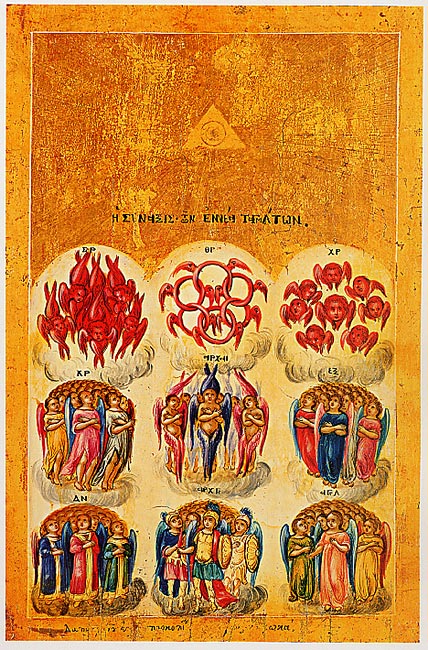
Confusing self-divining with the Spiritual Hierarchy 

Spiritually there can be a further difficulty encountered when individuals turn their perspective inward and see such potentiality within their microcosm; it defers their outer life out of existence! Certain periods of history feature distinct problems, this is not a time when this occurs to any great extent. There is far more of a difficulty for individuals to be impassioned or excited with the spiritual enthuses to be had, rather than be lost amongst the wonders of their outer or inner realities!

Expecting nothing and getting nothing. Expecting something wonderful and getting more …

Psilos Jim
Did a very silly thing,
He caught a fair bird,
And then plucked off her wing.

He then stuck wax and goo,
Shiny polish, feathers too,
Onto the hinge of her shoulder,
Hoping his invention the better.

And the bird made a nest on his head,
Sitting hot there it hatched a bright egg!
The egg broke revealing its life,
First two legs and then two shiny eyes.

With a squawk and a squeak it gave forth,
This tiny bright bird given birth;
To its mother it brought a spare wing -
Immeasurable love for its dad, 
Psilos Jim.  


Monday, March 14, 2011

The Holy Church & the Holy Man's Trials 2


What is experienced in Man is also experienced within the Church. The inner experience of Man is inseparable from the efficacy of the Church and the trials it attempts to meet with and put to reform.

We have come to expect that in all probability and with due hope, that the Christian man who strives spiritually will be rewarded with a greater strength and depth of egohood becoming evident within his character. However and for all to come to understand, there also exists a set of heightened problems perceived around him, which are naturally difficult and at times incredibly oppressive - made all the more apparent because of his efforts to incorporate the spiritual realities, dedicating himself to higher concerns.

Out from an honorable and almost ridiculous courage the Church has withstood the sorest of these realities - well informed of the shades that so inflict Man, defending and maintaining those places where the darkness cannot dwell, prayerful about its presence, bravely trying to do something it cannot achieve alone. The Church itself can really not be held accountable for any failings that it might suffer, for it can only be as real or as abstract as the living souls may make it be. Sincerely let us gather these souls in.

Consider the points mentioned and take yourself into regard with much charity and carefulness. Never believe that harshness is a safe approach to yourself or to others, because there are already so many degrees of sadness accrued and so few reprieves out from the heaviness that follows. Sternness can surely be more thoroughly served with joy.

The Promise of Christ was that we could come to Him to find rest in our souls, that the burdens, such as have just been named above, will be relieved from us.

Dearest Christ,

I call upon You in this moment and for always…
To become my chief defender,
To enlighten and infill every empty space needing You,
In those alley-ways in between ego and soul;

Where my knowing cannot meet,
Where my sensing is inflicted,
Where my charity is incomplete,
When I have no answer for what is asked or is needed,

Please be with me in every failing,
When I hesitate and doubt myself,
When I fright at the faces of evil,
When I tire with the contests about,

In the unknown realms I seek to charter,
Through complexities and ill-designed woe,
In amongst the pressures from others,
And the hardships I cause, though unknown.

As my innocence exchanges for wisdom,
And I try and I strive for a freedom,
As I pledge to love greater and yet greater still,
Yet I pray for His way, that I know His Will.

As I speak this for all of my brothers,
And I plead this for each part of Hell,
Giving over to You now the trouble,
I thank You for soothing me so.

Amen 


Sunday, March 13, 2011

The Holy Man's Trials 40

39

40. Leaving the Group Soul and distinguishing ourselves from the animalia.

With the awakening of the egoic forces within our beings, the individual withdrew his consciousness out from the corporate reality into a self-determined focus and viewpoint. 

Nowadays all 'external' life is perceived as an accessory rather than an attached portion of the consciousness. At the very first separation there was a sorrow experienced, and this sorrow still travels with us. 

Oddly and wonderfully enough, there is a period we all experience in which we return to the old consciousness and combine yet again - and that is during the time of ingestion, when a soul is attached to the infant as it develops within the physical womb of its mothering soul and splendid auric cover. For this special time we experience the world as ourselves, and our combining once more with all.

Saturday, March 12, 2011

The Holy Man's Trials 39

38


39. Loneliness in religious thought.
The path to Father God does, in actuality, bring us to the love and understanding of others through His Love and His Understanding. There is a combining comprehension, which can only enhance our own natures into a maturity, enabling a greater companionship with others to follow.

Having said this, there becomes also three coinciding aspects which occur - the one being that the individual who refers, defers and walks with our Father firstly (before all other men or women), does this at the exclusion of others. This relationship between an individual and their Father is impenetrable, and does disregard and leave out all others.


Others, understandably, have their own indissolvable relationship with Him. They, by Divine Right, walk alone and confer alone with Him also. No two spirits will ever 'walk the same walk'. This is loneliness number one. It is not so much a painful loneliness in itself, rather quite the opposite (I am sure you will agree); but when the individual is amongst other people and yet feeling strong in his or her relationship with Father God, it can happen that there is a secondary loneliness discovered, simply in point of the awareness of the first. 

Thirdly, when our faith causes us to depart ethically, thoughtfully, reasonably, philosophically, spiritually, fundamentally, from the behavior and thought-world of our friends and associates, there does become a further pain of isolation as we feel ourselves more distinctly defined away from them, rather than close; though the desire may be for that closeness and humanity.
40

Friday, March 11, 2011

The Holy Man's Trials 38

37
 
 38. Sadness at death and for loss, e.g. at each sunrise as it dissolves into day.

Although it may be hard to imagine, there are all kinds of depressions which affect us in ways so small they are hardly recognizable. Yet they occur in a fundamental and elemental way.

Our egoic processes expand when we are curious and happy and they contract when we are met with a cautionary upset. You can see the vitalities pull back a little; the contraction appears to be a deflation of sorts, and the brilliance of emanation momentarily dulls a little. All of the conditions so far described, visibly pass over, pass through the ego in such a way - little depressions, little sighs of the ego, sometimes little sighs of the soul. 

Things which delight the soul - like a sunrise - capture its attention and it is genuinely surprised and disappointed when the experience passes. The soul itself cannot grasp death in any way. One can picture the reality which it firstly and lastly lives in, a reality richly studded with all of the treasures it has ever acquired, lastingly remaining in a connective perceptible manner. 

For the soul itself, through the ego, to come to a cessation of that which it takes pleasure in, there is (understandably) a set back in morale, and a sigh of sadness in the perplexity of it all. Watch a little child when something they are so absorbed in is taken from them… their reaction of surprise and then the wailing! Our internal reaction (once again on a daily basis in just shifting from one thing to another) is one of the same.


39

Thursday, March 10, 2011

The Holy Man's Trials 37

36


37. Sadness of the animalia and the jealousy of the lower kingdoms.
It should be said in preface to this, that the lower kingdoms enjoy their lot and a saddened reflection is not characteristic of their evolutionary status - in most respects. Yet divorced from Man as they are, there is a certain pain at the necessary separation.

Furthermore, as time has passed and many of the elementals have developed, there has been more than a growing interest or need from the group-souls and the fey folk, as to what humanhood does and could mean to them. 

Whether articulated or not, there is a feeling lying in these realms which is both cautionary, anticipatory and at times a little jealous. The individual once again who is at the threshold of becoming self-conscious in his imaginative cognition will sense this disgruntlement as a pain and protest within his own being from time to time.


38

Tuesday, March 8, 2011

The Holy Man's Trials 36

35
36. Pretense and denial of self.


Every transaction which comes before a man or woman is significant. Often a man is called upon to show himself or prove himself, or answer something audibly which determines who he is or will become. Each time we pretend to be other than who we are, there is an injury felt coming from two concerns: one being the simple consequence of going against ourselves, whilst the other involving the changing of our future circumstance because of what we have said or done to imply something different. What a man presents himself to be, he will be on track to eventually become. This can be good and useful; it can also be contrary as well, and tension causing in the very least. 

The individual who seeks 'to do no harm' is immediately caught within an impossible dilemma here. There are many episodes in which truthfulness would, for others, present difficulties. We can be reminded however that beyond the spoken word and beneath the covering action there is already a spiritual reality which is undeniable. People, on inner levels, know that reality. The people we may set about to deceive (albeit with good intentions) know that reality. There is a differing pain caused therefore when we negate ourselves believing others to be our chief consideration when they are in fact feeling the pain of the discrepancy, the pain of yourself, and the pain of the existing reality as it contrasts their will with that of your own. 

Withholding information is a matter of personal right and privacy. This is not a negation of self, but an endorsement of self. It is also a responsible courtesy, as it is preferable to wait for another to ask of you anything, rather than just offer it up unprompted. Karmicly you are responsible to another if you introduce them to a thought and they have not formally asked for that thought. Personal opinions are not always welcomed for obvious reasons, but also we need consider that even the loftiest and purest of concept can be delivered ill-timed and turn sour for the receiver. 

If however, one is asked audibly to declare a truth about oneself there is a responsibility to reply as truthfully as is possible. It is not for us either to decide for another how they are to react, learn or utilize the information at hand. Equally it is not theirs to ask you to be other than who you are (unless of course we are speaking about a murderous intent!).

Fearfulness of declaring one's true nature and desire is within each and every incarnate who has previously come to great harm in the past because of such declaration. Most of us have been put to death (often painfully) because of an 'I am' type statement. It may have been relatively unalterable or even unpretensable! But there, settled in amongst our deepest of recollections (and intense they are, because the ways in which we have departed this Earth, hold one of the strongest forms of impression for us) we now carry this apprehension on into our lives, being fearful of the consequences of many small things which might 'give ourselves away'. 

The Holy Man's Trials 35

34

 35. Being apologetic. 

It is not unusual for the conscientious individual to debate with themselves continuously. This does not come from a weakness of character, but rather from the ability to exercise the philosophical and moral mind, the empathies and also realize many possibilities at the one time. There is never one view to anything, nor any one just single truth which is not complemented by another. So this debate, often moving backwards and forwards in the consciousness, brings about an effort, and secondarily a condition when finally the individual must rest upon that which he is content to choose. 

This we name the 'apology', for there is always a sadness known for the candidates who are deliberated but left unchosen. From this we fall back into apology for ourselves, which may not be rational, but is actual. This of itself is yet another tension experienced in the ego.


36

Monday, March 7, 2011

The Holy Man's Trials 34

33

  34. The conflict of one's knowing - soul versus egoic wisdom. 

We often work knowledge over in a variety of ways and each time we do this a little of the former wisdom is spent because of the new adoption. This is not something one eases into. 


We sometimes leap into the new knowing and forgo or suspend the old, but the being who has invested themselves in that former knowledge and thus identified with it as well, feels (at the soul level) a difficulty in the transaction.

Added to this the ego itself can find it awkward to make change. Even though this is part and parcel of its application, it is nonetheless a stressful maneuver to accomplish. This is exampled best by all of the dear folk we observe who do not attempt to learn anything new - particularly in the last half of their lives. 

Fortunately, although interpreted and sensed, this is one area which becomes much more with ease through the Living Christ. The spiritual man more readily makes the leaps, regardless of this founded hesitation.


35

Sunday, March 6, 2011

The Holy Man's Trials 33

32
33. The sadness of fallen souls is deeply felt by all men who strive toward betterment.
Our brothers who have slipped beyond the care and concern of this World, who have forsaken Humanity and therefore their own humanity, these lost souls who have left the mainstream are still in part, a sore presence by their absence.

As one can begin to envisage, there are many, many varieties of knowing within us. These knowings do not by any means consume us (praise be to Father God); they are the shadow aspect of much happier truths to follow. Yet surrounding the stump of a tree which has been felled; in the ongoing atmosphere of where a murder has taken place and instantly dismissed what was to be, or in the grave instance of a soul becoming deceased from further incarnating in this world, this too is a trial we relate to - in possibility of it occurring with ourselves, and for the pain of the other who has endured this end.

34

Saturday, March 5, 2011

The Holy Man's Trials 32

31
32. The state of dis-grace.

Paradoxically there is a condition which befalls a man prior to him receiving Grace - and that comes with a pitiable form of 'emptying out', being so forlorn that Grace does come to supplicate him.

The Grace infills the dis-graced - the true nature of Divine Love is to go where needed and where received. We know this pre-grace condition, and are thusly so moved to greater piety and sympathy because of it.
33

Friday, March 4, 2011

The Holy Man's Trials 31

30


31. The sadness of great beauty.
There was a deflation mentioned above in regards to our perceiving things which are 'not right' or unbeautiful, and yet there is also a certain sadness experienced by the sensitive individual when beauty is struck within them and then goes. 

When on special occasion, a most wonderful perfection does reign, when everything else dies back in comparison, when we see through privileged eyes and begin to sense our own smallness (yet splendor), there is an emptiness which does follow, that that very knowing and experience will somehow be gone and we will be without it. 

Poets understand this melancholy, and the spiritual man who continually defers to Father God knows it well, because much of his prayer life slips quickly in and out and away from the paradise he longs for. As many heartbeats as there are in a day we can experience this loss of beauty we just came to.


32

Thursday, March 3, 2011

The Holy Man's Trials 30

29

30. Elemental servitude. 

There is a part of our nature which we rely upon that utilizes an etheric memory for repetition (the constant re-building of our bodies for example, or the referencing of certain instinctual or pneumatic knowledge), and the binding continuity brought about in the local astrality, which is also given to a systemic repetition. Whilst also within our own thoughts, habits and desires, there is an elemental component which assists as a foot servant with the relaying of repetitive endorsement. 

We relate to this obeisance of repeated action, in the larger context of cycles, to the smaller as known by the servitude of the elemental beings. However, for that portion of us which begs to break into new person, new future, new finding, new life, for themselves and for the world, there is a heaviness experienced within this realm of continuum also. Quite easily men can fall into the service of the very elemental thought-forms that first served them - obsessive, addictive behaviors are example to this (e.g. gambling, diet, kleptomania, over-worry etc.).

31

Wednesday, March 2, 2011

The Holy Man's Trials 29

28

 29. Perceiving the discrepancies between men's willing and that of the Greater Will. 

The forces of floundering or immature egos reflect disquiet within the frame of one's own willing. There is a great gift of power and creativity bestowed upon the soul of Man, however it is yet to be begun at large. The conscientious man continually reflects upon the Higher Will, and subjects himself to all manner of inquiry. During this clarifying time he is sorely aware of those who do not enter into this process of conferring and is likewise troubled.


The Holy Man's Trials 28

27
 
 28. The ecology of wills.
There are difficulties encountered (not necessarily spoken or manifest) negotiating the wills of others with that of our own. The Christian soul is driven by good works and to charity and is often blighted by the tensions caused by the differing wills surrounding. 

Deferring to the Greater Will relieves this and then however manifests the tension by … 29

Tuesday, March 1, 2011

The Holy Man's Trials 27

26


 27. We sense other folk's difficulties compressing memories and reconciling truths and times - those alive and deceased; as the thought-atmosphere is imbued with these struggles also.
And so there exists a dialogue which is constantly reviewing the past with the present and contesting identity. We come to sense this dialogue in a variety of ways. It takes a very strong presence of ego to simply stand still and be silent amongst much of this. Furthermore, there are hopes and projections as well! 

The condition of Alzheimer's is very much given over to the reality of this memory-realm, yet receptive to the confusion of many at the one time, to the point where the self-consciousness is relinquished.

28

Monday, February 28, 2011

The Holy Man's Trials 26

25

26. The presence of that which bears historical record of ourselves from a time of identity from which we have since departed.
There becomes an internal struggle/tension with the discrepancies as they are portrayed in comparison with who we are today. This may refer to the akashic, the talismanic or merely the representational as in a photograph or another's memory recollection. 

A sensitive man may also have difficulties with his own memories as they do not 'match up' with the person he has grown to be or become to prefer. There is a painfulness in perceiving ourselves to be 'less than', or alternatively there is the simple problem of the 'ill-fitting' as described above. 

Since the consciousness may only be in the one place at the one time, it is easily confused when presented (even to self and even in the carrying of self) with multifarious images of what once were. It has little difficulties with 'could-bes' however. For although the 'could-be' excites the imagination, it needs to have a foothold in reality before being taken seriously. If the 'could-be' is a spiritually foreseeable reality then it is perceived as the epitome of 'fitting' - not being merely desirable, but the actual reality upon which all else is measured (from which we are largely disheartened by). 

When we glimpse our true spiritual natures and futures they are known to have been something in place, given out a very long time ago. The difficulties we have with our own memories or those of others of ourselves, lies in the seeming incoherence and unrelatedness of both our modern-day selves and our spiritual natures as well.


Sunday, February 27, 2011

The Holy Man's Trials 25

24


25. The presence of astral poisons largely contributed by the thought forms as given out, or general atmosphere as contaminated by individuals who we share proximity with, which are ill-tempered, emanating more of the same.
Similar to the protest and affright which is experienced by our physical constitution when it is exposed to poison, so too our astral bodies are sensitive to the magnetic discrepancies between peaceable natured individuals and disruptive ones. Astral toxicity is something we often equate with specters after death, and yet the voracity, the nature, the force, the toxicity, the activity of a specter begins with a live person and just continues on after death. The live person is far more difficult to cope with than the disempowered disinspirited ghoul! 

Saturday, February 26, 2011

The Holy Man's Trials 24

23
24. The presence of physical poisons carried within the body - taken into, or unable to be released.
There is a sense of danger we live with when certain toxins are remained within our bodies, or even our bodies are exposed to them (even cigarette smoke for example). It is natural for our bodies to feel alarmed at any threat and although it happens unconsciously for the most part, we do 'sense' that alarm as it is experienced.


25

Friday, February 25, 2011

The Holy Man's Trials 23

22
 23. Those aspects within the spiritual nature which confer or coincide with the unredeemed condition of Lucifer as is. 

This burdens a man to endure. Whilst the entire cosmos is reflected within our beings in part, there are realities which are independent of our time or our perception of our time, which we indefinitely carry as well. And so, distinct from those things which are needed in Man, of Christ and of our own selves etc., distinct from the pleadings and needings of others, of lower kingdoms, of neighboring realms, there is also that part of us which knows and responds to Lucifer - else we would not have any relationship with him at all. (And yes, there is also the Lucifer [redeemed] which is now named differently.) 

This in part becomes a sad and sorry story, speaking of the first sadness in the world incorporated in Man. It is not healthy to meditate upon such matters, but to know simply that we carry many varieties of burden upon us and this is certainly one of them.

Thursday, February 24, 2011

The Holy Man's Trials 22

21
22. The collective weight of humanity's karma.

Even though much is addressed and alleviated there are compounding factors and fresh insults to the spiritual worlds daily, which are also experienced by the sensitive man. The body of men which currently are incarnate in the world do affect the world (the Planetary Being, the Planetary Council, the being of Man, and the lower and higher hierarchies) on a daily basis. This is something which is also felt very strongly by the growing individual who struggles to have humanity free from the condition it is generally currently perpetuating.

The mention above refers to conditions of karma which can affect us from also the deceased in our communities and family; things which just by natural consequence alone may infect a town or a place due to past actions which still continue in effect. However this passage deals with the living men, who as one corporate mind and being, represent Man in the world on this calendar day. This too is a force and a feeling to be recognized.

Wednesday, February 23, 2011

The Holy Man's Trials 21

20

21. The weight of one's racial and family karma.
This too travels with us at all times. Although there have been many laws lessened according to our Christ's Presence amongst us, and the way in which our karmic bonds relate, there are still (if not binding) karmic ties we perceive and acknowledge that affect us and our communities too.

Tuesday, February 22, 2011

The Holy Man's Trials 20

19
20. The weight of one's own personal karma as known (generally unconsciously experienced until active) and the sadness at incurring the more difficult aspects so borne.

This has a very large reality to it, for heaviness is experienced whilst also integrity as well. Every piece of our karmic responsibility travels with us and is ever present before our soul's eye. Our days are blended by such events, brought and wrought by such a karmic response to our previous callings. 

So this is how we function, but not without a measure of apprehension into the bargain.

21

Monday, February 21, 2011

The Holy Man's Trials 19

18

19. Constant disappointment as a general condition firstly (then highlighted later by conscious discernments which are generally predictable).
There are a few phases to be noted about this disappointment. Firstly, disappointment can live with us just as generally without specificity, as Certainty does. It just is. Repeated disappointments confirm the bank, and then follows the larger disappointment that we were disappointed at all. 

The word 'disappointment' however, implies some element of surprise, and yet most of our disappointments are in fact very predictable to us. So the largest disappointment comes of our falling into such a pattern of a depressed disappointment, and by being sadly surprised by something which was not really surprising and not much of a let down far from a place than we were at already!

The onset of disappointment degenerates further acts and hopes, fulfilling its predictability given at the outset. It is good therefore to be aware of it and to dismiss it once committed to the ideal. At the very least we will be surprised the next time, if it happens upon us again. Let's be truly disappointed!!! and not give way to the mundane affliction of just the partial disposition!


20

Sunday, February 20, 2011

The Holy Man's Trials 18

17

18. The need for a greater physical experience (to contrast the mundane) as perceived by the spiritual yearnings which require more understanding of the physical processes they permeate.
There is a further discrepancy the consciousness recognizes between how fully we do incarnate within our physical and astral complines, and to what is or may be possible in this regard. 

It is natural to seek out a greater physical experience and there are many ways we see this manifest in ordinary human behavior; although largely the means are unsatisfactory in themselves. The mystery of it seems to be that there is a natural joy which comes from overworking the physicality with a variety of ethers.

The higher etheric vitalities are present when called into the physicality, and this occurs through a higher means than merely what is naturally present in the material substance as is. In other words, significance becomes the key which raises the material out from its simple flavor, act or experience we may try. Any discontent comes from knowing of this possibility yet being immature in regard to finding what this may mean right now to the future of Mankind and his astral 'fit' into a tenuous body.


Saturday, February 19, 2011

The Holy Man's Trials 17

16
17. The need for a greater experience of one's spirituality (perceived to be combating the material existence to date).


For the aspiring individual there is an underlying need to be fulfilled by some qualifying spiritual experience, and it can be said that as the world is at present, it is almost impossible to satisfy the ego in this regard. It is a sadness known to modern man. Even the Masters have to look outside of the physical realm to find enough spiritual experience at this period. It simply cannot be maintained here in a way which is concretely apparent.

At best things may appear substantially spiritual, however until the realms have combined fully through transubstantiation it is not negotiable. Insights do make up for this to some extent though. It is interesting because for every insight a man tenuously 'feels' as a matter of inspiration or correctness in his spiritual striving worked for, he will actually have the commensurate experience in full 'technicolor' after death. This is a most marvelous happening to watch, let alone be the creator of the doors to! So for this part during our life, we accept to be discontent, knowing of the future revelations to come, when it is possible.


My Blog List

Followers

Esoteric Christianity Archive